Kirjojen hintavertailu. Mukana 11 244 527 kirjaa ja 12 kauppaa.

Kirjahaku

Etsi kirjoja tekijän nimen, kirjan nimen tai ISBN:n perusteella.

1000 tulosta hakusanalla Alfred Trumble

Alfred Marshall: Progress and Politics (Routledge Revivals)
First published in 1987, Alfred Marshall: Progress and Politics provides an enlightening insight into Marshall's thoughts on social improvement, adaptive upgrading, policy and polity. He planned books on these subjects which he never subsequently wrote, but the thesis of this work is that a close study of such writings as Marshall did complete makes possible a very detailed reconstruction of the important contribution which Marshall was capable of making to Victorian evolutionary thought (much in the shadow of Darwin and Spencer). In the ongoing debate on the political element in political economy, he reveals himself to have been as much an eclectic as was Adam Smith and as much a man of commitment as was T. H. Green.
Alfred Marshall's Mission (Routledge Revivals)
Alfred Marshall was anxious to do good. Intended by an Evangelical father for the vocation of clergyman, the author of the mould-shaping Principles of Economics remained to the end of his days a great preacher deeply committed to raising the tone of life. First published in 1990, Alfred Marshall’s Mission explains how this most moral of political economists sought to blend the downward sloping utility function of Jevons and Menger with the organic evolutionism of Darwin and Spencer, how this celebrated theorist of social alongside economic growth sought to combine the mathematical marginalism of Cournot. Thunen and Edgeworth with the ethical uplift of Green, Jowett and Toynbee. The conclusion reached is that perhaps Marshall was, after all, too anxious to do good. Far more economists, however, have been not anxious enough; and that in itself gives this study of Marshall’s life and times a present day relevance which would, no doubt, have appealed strongly to the shy Cambridge professor who is its subject.
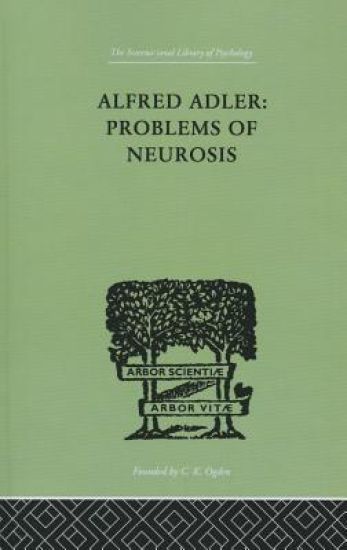
Alfred Adler: Problems of Neurosis

Alfred Adler: Problems of Neurosis

Philippe Mairet

Routledge
2014
nidottu
First Published in 1999. This is Volume XV of twenty-one of the Individual Differences Psychology series. Written in 1929, this study gathers together case histories of Adlerian psychology and the science of Individual Psychology that teaches that the recurring theme of all neurosis and conflict is a sense of discouragement and inferiority.
Alfred Adler

Alfred Adler

W. Beran Wolfe

Routledge
2013
nidottu
First Published in 1999. Alfred Adler has given us the key to this understanding in his monumental contributions to modern psychology, but before the compilation of this volume of case histories the student of the methods of Individual Psychology has been compelled to search for his case material among the German publications of Adler and his pupils. Many of these published cases deal with conditions germane to continental environments, but puzzling to American readers. The principles and practice of Individual Psychology, however, are universally valid in their application, as this volume of purely American cases demonstrates.
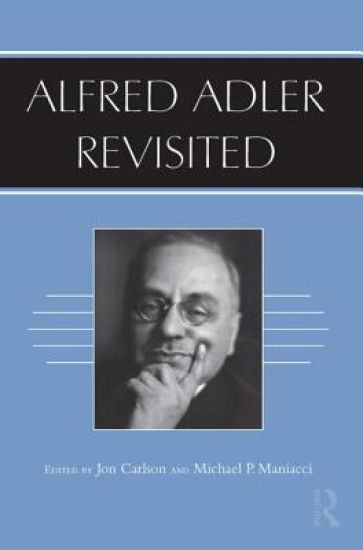
Alfred Adler Revisited
Alfred Adler was one of the most influential thinkers in psychotherapy – a physician, psychiatrist, author, and professor who wanted to answer the questions that plagued people during a significant time in history. His original ideas serve as a foundation for most modern theories of counseling and psychotherapy, ideas and writings that are brought back to life in this volume. Within, contemporary experts comment and introduce Adler's work through the lens of the 21st century. In doing so, they pay tribute to, analyze, and disseminate his classic, seminal papers that have significantly impacted the therapy field. The 23 papers included were chosen because of their relevance to today's issues, and their importance in Adlerian theory and practice. They detail the core elements of his theory, the tactics he used to advocate change in individuals and systems, and emphasize how contemporary his ideas are. Alfred Adler Revisited not only plays homage to a great professional, it revives his ideas and encourages debate over fundamental human issues.
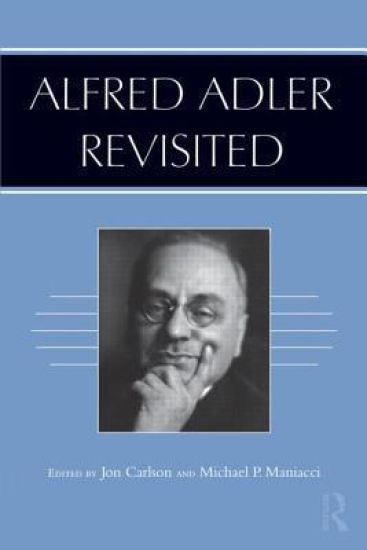
Alfred Adler Revisited
Alfred Adler was one of the most influential thinkers in psychotherapy – a physician, psychiatrist, author, and professor who wanted to answer the questions that plagued people during a significant time in history. His original ideas serve as a foundation for most modern theories of counseling and psychotherapy, ideas and writings that are brought back to life in this volume. Within, contemporary experts comment and introduce Adler's work through the lens of the 21st century. In doing so, they pay tribute to, analyze, and disseminate his classic, seminal papers that have significantly impacted the therapy field. The 23 papers included were chosen because of their relevance to today's issues, and their importance in Adlerian theory and practice. They detail the core elements of his theory, the tactics he used to advocate change in individuals and systems, and emphasize how contemporary his ideas are. Alfred Adler Revisited not only plays homage to a great professional, it revives his ideas and encourages debate over fundamental human issues.
Alfred Hitchcock

Alfred Hitchcock

Jane E. Sloan

University of California Press
1995
pokkari
Here is the definitive resource for fans and students of the films of Alfred Hitchcock. For the paperback edition, Jane Sloan has updated the annotated bibliography and indexes.
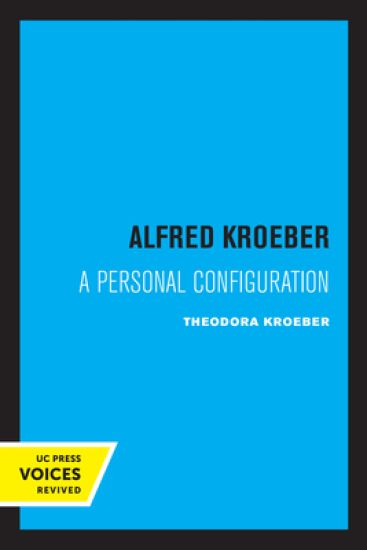
Alfred Kroeber

Alfred Kroeber

Theodora Kroeber

University of California Press
2022
pokkari
The Handbook of the Indians of California, written by Alfred Kroeber between 1916 and 1917, is the defining work by which he is widely recognized. Known beyond academic circles, the Handbook remains a primary reference for many on California's Indigenous cultures. Kroeber embraced this association with his work, considering it the “first fruits” of his career and a testament to his early fieldwork. His later explorations into broader theoretical concepts were deeply rooted in these experiences with the living cultures of Native Americans, which began on his early field trips to Wyoming and Oklahoma, and ultimately California, where he made his lifelong home. Kroeber's westward journey marked a turning point, setting him apart from his East Coast roots. Arriving in California in 1900, he immersed himself in fieldwork, traversing the state to study Native American communities in rural areas. Known as the serious young anthropologist with his black beard and pockets full of tools and treats, he quickly became a respected figure among the Indigenous tribes he worked with, particularly the Yurok of northern California’s Klamath River and the Mohave of the Colorado River. His interest lay in California's landscapes—the rivers, bays, and coastline—which paralleled the natural surroundings of the Indigenous cultures he studied, reflecting his deep connection to the Pacific and its waterways. Despite the powerful draw of the West, Kroeber’s formative years were shaped in New York, amidst the waterways surrounding Manhattan. He grew up in a close-knit family, with friendships that spanned his life despite geographic separation. This early foundation influenced his work and perspective, anchoring him in both his professional discipline and personal relationships. His early life on the East Coast contrasts with his later dedication to California’s Indigenous cultures, highlighting the unique, dual influence of these landscapes on his approach to anthropology and his lifelong commitment to understanding and documenting the rich cultural heritage of Native American communities. This title is part of UC Press's Voices Revived program, which commemorates University of California Press’s mission to seek out and cultivate the brightest minds and give them voice, reach, and impact. Drawing on a backlist dating to 1893, Voices Revived makes high-quality, peer-reviewed scholarship accessible once again using print-on-demand technology. This title was originally published in 1970.
Alfred Kroeber

Alfred Kroeber

Theodora Kroeber

University of California Press
2022
sidottu
The Handbook of the Indians of California, written by Alfred Kroeber between 1916 and 1917, is the defining work by which he is widely recognized. Known beyond academic circles, the Handbook remains a primary reference for many on California's Indigenous cultures. Kroeber embraced this association with his work, considering it the “first fruits” of his career and a testament to his early fieldwork. His later explorations into broader theoretical concepts were deeply rooted in these experiences with the living cultures of Native Americans, which began on his early field trips to Wyoming and Oklahoma, and ultimately California, where he made his lifelong home. Kroeber's westward journey marked a turning point, setting him apart from his East Coast roots. Arriving in California in 1900, he immersed himself in fieldwork, traversing the state to study Native American communities in rural areas. Known as the serious young anthropologist with his black beard and pockets full of tools and treats, he quickly became a respected figure among the Indigenous tribes he worked with, particularly the Yurok of northern California’s Klamath River and the Mohave of the Colorado River. His interest lay in California's landscapes—the rivers, bays, and coastline—which paralleled the natural surroundings of the Indigenous cultures he studied, reflecting his deep connection to the Pacific and its waterways. Despite the powerful draw of the West, Kroeber’s formative years were shaped in New York, amidst the waterways surrounding Manhattan. He grew up in a close-knit family, with friendships that spanned his life despite geographic separation. This early foundation influenced his work and perspective, anchoring him in both his professional discipline and personal relationships. His early life on the East Coast contrasts with his later dedication to California’s Indigenous cultures, highlighting the unique, dual influence of these landscapes on his approach to anthropology and his lifelong commitment to understanding and documenting the rich cultural heritage of Native American communities. This title is part of UC Press's Voices Revived program, which commemorates University of California Press’s mission to seek out and cultivate the brightest minds and give them voice, reach, and impact. Drawing on a backlist dating to 1893, Voices Revived makes high-quality, peer-reviewed scholarship accessible once again using print-on-demand technology. This title was originally published in 1970.
Official Papers of Alfred Marshall

Official Papers of Alfred Marshall

Alfred Marshall

Cambridge University Press
2009
pokkari
This book constitutes a supplement to the 1926 account of Alfred Marshall's Official Papers edited by John Maynard Keynes. The book presents material which Keynes did not include, editorial notes and introductions to the various pieces. It focuses on the advice that Marshall, a founding father of modern economics, offered to the British government in the late nineteenth century. The topics covered include education, the role of women, trade unions, unemployment, public enterprise, the quantity theory of money, inflation and trade, benefits of free trade and dangers of protection. The material offers valuable insights into policy thinking at the time, much of which has a surprising degree of relevance to pressing policy issues during our own time. The contents facilitates understanding this doyen of British economics and founder of the Cambridge School of Economics.
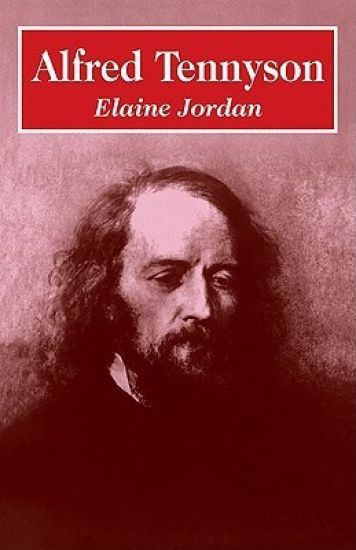
Alfred Tennyson

Alfred Tennyson

Jordan Elaine

Cambridge University Press
1988
sidottu
This book provides a valuable introduction for students and other readers of Tennyson's poetry and presents an account of its major themes and concerns. Elaine Jordan examines Tennyson's uneasy position as a writer of the male middle-class ascendancy and shows how his poetry reveals ambivalent attitudes towards manliness, war, and nineteenth-century scientific rationality. In his early Idylls she finds him experimenting with different political attitudes, investigating the relationship between individual happiness and general progress; in his monologues he is caught between motion and stasis, calling into question the Romantic quest to integrate the language of self with its object; in The Princess he addresses contemporary debates on the role and status of women; his In Memoriam explores loss and relationship through images of the body and questions of language; Maud deals with images of masculinity and femininity in relation to to violence and sexual love; and Idylls of the King, his most imperialist and most pessimistic poem, highlights his regard for intuition and vision in the face of scientific 'laws' of nature and society. The study introduces these themes and shows how they relate to each other.
Alfred Tennyson

Alfred Tennyson

Elaine Jordan

Cambridge University Press
1988
pokkari
This book provides a valuable introduction for students and other readers of Tennyson's poetry and presents an account of its major themes and concerns. Elaine Jordan examines Tennyson's uneasy position as a writer of the male middle-class ascendancy and shows how his poetry reveals ambivalent attitudes towards manliness, war, and nineteenth-century scientific rationality. In his early Idylls she finds him experimenting with different political attitudes, investigating the relationship between individual happiness and general progress; in his monologues he is caught between motion and stasis, calling into question the Romantic quest to integrate the language of self with its object; in The Princess he addresses contemporary debates on the role and status of women; his In Memoriam explores loss and relationship through images of the body and questions of language; Maud deals with images of masculinity and femininity in relation to to violence and sexual love; and Idylls of the King, his most imperialist and most pessimistic poem, highlights his regard for intuition and vision in the face of scientific 'laws' of nature and society. The study introduces these themes and shows how they relate to each other.
The Mystic Life of Alfred Deakin

The Mystic Life of Alfred Deakin

Alfred J. Gabay

Cambridge University Press
1993
pokkari
Alfred Deakin (1857–1919) is recognised as an architect of the Australian Federation and served three terms as Prime Minister. Though his life has been well documented, no previous biographer has studied the intense spiritual life of this would-be poet, preacher and mystic. Drawing from volumes of Deakin's private journals and prayerbooks, in this 1993 text Al Gabay presents us with a complex man who had a profound sense of history and who, being convinced that his political life had a divine mandate, yearned for an understanding of his true duty. Throughout his life he was absorbed and influenced by the Occult and this book reveals the implications of this private spirituality for the political history of Australia. This illustrates not only the intellectual climate of Deakin's era but Victorian ideas of religious doubt, evolution, and reform.
Official Papers of Alfred Marshall

Official Papers of Alfred Marshall

Alfred Marshall

Cambridge University Press
1996
sidottu
This book constitutes a supplement to the 1926 account of Alfred Marshall’s Official Papers edited by John Maynard Keynes. This book presents material which Keynes did not include, editorial notes and introductions to the various pieces. It focuses on the advice that Marshall, a founding father of modern economics, offered to the British government in the late nineteenth century. The topics covered include education, the role of women, trade unions, unemployment, public enterprise, the quantity theory of money, inflation and trade, benefits of free trade and dangers of protection. The material offers valuable insights into policy thinking a century ago, much of which has a surprising degree of relevance to the pressing policy issues at the end of the present century. The contents facilitates understanding this doyen of British economics and founder of the Cambridge School of Economics.
The Correspondence of Alfred Marshall, Economist

The Correspondence of Alfred Marshall, Economist

Alfred Marshall

Cambridge University Press
1996
sidottu
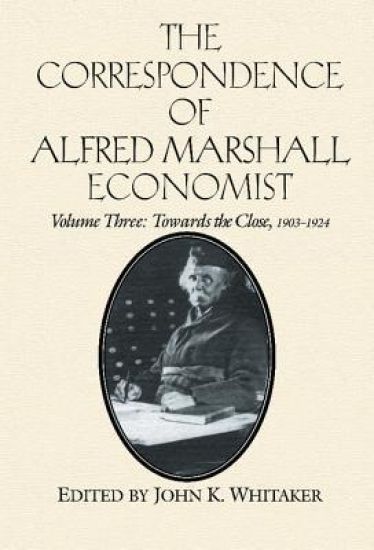
This is the third of a three-volume work constituting a comprehensive scholarly edition of the correspondence of the English economist, Alfred Marshall (1842–1924), one of the leading figures in the development of economics and the founder of the Cambridge School of Economics. The edition fills a long-standing gap in the history of economic thought with hitherto unpublished material. Students will find it a basic resource for understanding the development of economics and other social sciences in the period since 1870. In particular, it provides much new information about Marshall’s views on economic, social and political issues, his struggles to promote the teaching of economics at the University of Cambridge, and his relations with colleagues in Cambridge and elsewhere. Marshall’s letters are notable for their frankness and spontaneity.
The Correspondence of Alfred Marshall, Economist

The Correspondence of Alfred Marshall, Economist

Alfred Marshall

Cambridge University Press
1996
sidottu
This is the second of a three-volume work constituting a comprehensive scholarly edition of the correspondence of the English economist, Alfred Marshall (1842–1924), one of the leading figures in the development of economics and the founder of the Cambridge School of Economics. The edition fills a long-standing gap in the history of economic thought with hitherto unpublished material. Students will find it a basic resource for understanding the development of economics and other social sciences in the period since 1870. In particular, it provides much new information about Marshall’s views on economic, social and political issues, his struggles to promote the teaching of economics at the University of Cambridge, and his relations with colleagues in Cambridge and elsewhere. Marshall’s letters are notable for their frankness and spontaneity.
The Correspondence of Alfred Marshall, Economist

The Correspondence of Alfred Marshall, Economist

Alfred Marshall

Cambridge University Press
1996
sidottu
This is the first of a three-volume work constituting a comprehensive scholarly edition of the correspondence of the English economist, Alfred Marshall (1842–1924), one of the leading figures in the development of economics and the founder of the Cambridge School of Economics. The edition fills a long-standing gap in the history of economic thought with hitherto unpublished material. Students will find it a basic resource for understanding the development of economics and other social sciences in the period since 1870. In particular, it provides much new information about Marshall’s views on economic, social and political issues, his struggles to promote the teaching of economics at the University of Cambridge, and his relations with colleagues in Cambridge and elsewhere. Marshall’s letters are notable for their frankness and spontaneity.