

Kirjahaku
Etsi kirjoja tekijän nimen, kirjan nimen tai ISBN:n perusteella.
1000 tulosta hakusanalla Alvar Mould

The Account: Alvar Nunez Cabeza De Vaca's Relacion
aAlvar. Nauanez Cabeza de Vaca
Arte Publico Press,U.S.
1993
nidottu


Vikingapojken Alvar följer med sin ökänt hetsige far Thorbjörn på en lång resa längs med ukrainska flodvägar till den stora handelsstaden Miklagård. Trälen Vide får också följa med utan att han själv har något att säga till om. Alvar och Vide har vuxit upp tillsammans på gården i Audas by, och delar en vänskap som de inte får låtsas något om. En storbondes son och en träl kan aldrig vara vänner. Alvar Ormstungne är första delen i den historiska serien Järn och jade. En berättelse som sträcker sig från vikingarnas Svitjod till den rika staden Miklagård, och vidare österut genom heta öknar längs med Sidenvägen, ända bort till Mittens Rike, dåtidens Kina. Detta är tredje boken av Lena Wall som vann Ronneby kommuns kulturstipendium 2021 för kapitelboken Samir hittar hem, utgiven samma år på Idus förlag.

Die Medizingeschichte in den "Naufragios" von Alvar Núñez Cabeza de Vaca
Sandra Ilg
Grin Publishing
2012
pokkari



A personalised storybook for girls called ALVAR. The story is based on the letters of the child's own name. All books are different from one another. The girl wakes up but can't remember her name. Magic Mouse knows how to solve the problem. They go on a wonderful adventure in the Magic Bus Translated and adapted by the author from the top-selling Finnish language children's namebook series "Tytt /Poika, joka unohti nimens ". The beautiful hand-drawn pictures will delight both the young and the young-at-heart Looking for a namebook "What's my name?" but couldn't find a book for the name you are looking for? Please don't hesitate to contact me with your name request -Tiina Walsh Author fb.me/whatsmynamestorybooks for more details about the storybooks

Das Missionierungsbestreben in Amerika zur Zeit der Conquista am Beispiel des Berichtes von Alvar Núñez Cabeza de Vaca
Nikolas Nimptsch
GRIN Verlag
2020
nidottu

Building That Disappeared. The Viipuri Library By Alvar Aalto
Laura Berger
Aalto-yliopisto
2019
pokkari
This dissertation explores the question of how one building can achieve a role as something much more than a building, even ‘larger than life'? The case is the Viipuri Library, designed by Alvar Aalto. This building has international reputation as a seminal early work of Aalto, and as a key example of modern architecture. Simultaneously, the meanings associated with the Library stem from its geopolitical location: The Library was originally opened to the Finnish city of Viipuri, but at the end of the World War II the city along with the wider area referred to as the ‘lost Karelia' were annexed to the Soviet Union. Since 1991 the building has been located in modern day Russia. The title of the thesis comes from the widely spread misunderstanding that the Library has been lost at war, and future generations can learn about it only from drawings and images.From the early 1900s up to today, this one and same building has appeared in extremely different types of materials, ranging from beautiful architectural publications, to war histories and newspaper articles. This work unfolds the ‘life' of this Library in four thematic chapters, each presenting a totally different perspective to what this building is all about: First, the context of the city of Viipuri, second, the Library as a work of Aalto, third, the time period of the Second World War and the Soviet Union, and last, the international restoration project. In the last part of the research the case of the Library is analysed with use of an anthropological theory of art, outlined by Alfred Gell. With aid of the theory, it is possible to analyse how very different, even discrepant perspectives have become associated with this one particular building, making it something larger than the parts it is made of. In many places, the real events this building has experienced are more curious and whimsical than any fiction writer could have possibly come up with.
Spanish Explorers in the Southern United States 1528-1543: Original Narratives of Early American History: The Narrative of Alvar Nunez Cabeca de Vaca,
Various
Createspace Independent Publishing Platform
2014
nidottu
Le Prince Kouchimen, Histoire Tartare, Et Don Alvar del Sol, Histoire Napolitaine
Lambert
Hachette Livre - BNF
2016
pokkari

Structural Dynamics Fundamentals and Advanced Applications, Volume I
Alvar M. Kabe; Brian H. Sako
Academic Press Inc
2020
sidottu
The two-volume work, Structural Dynamics Fundamentals and Advanced Applications, is a comprehensive work that encompasses the fundamentals of structural dynamics and vibration analysis, as well as advanced applications used on extremely large and complex systems. Volume I covers Newton’s Laws, single-degree-of-freedom systems, damping, transfer and frequency response functions, transient vibration analysis (frequency and time domain), multi-degree-of-freedom systems, forced vibration of single and multi-degree-of-freedom systems, numerical methods for solving for the responses of single and multi-degree-of-freedom systems, and symmetric and non-symmetric eigenvalue problems. In addition, a thorough discussion of real and complex modes, and the conditions that lead to each is included. Stochastic methods for single and multi-degree-of-freedom systems excited by random forces or base motion are also covered. Dr. Kabe’s training and expertise are in structural dynamics and Dr. Sako’s are in applied mathematics. Their collaboration has led to the development of first-of-a-kind methodologies and solutions to complex structural dynamics problems. Their experience and contributions encompass numerous past and currently operational launch and space systems.

Structural Dynamics Fundamentals and Advanced Applications, Volume II
Alvar M. Kabe; Brian H. Sako
Academic Press Inc
2020
sidottu
The two-volume Structural Dynamics Fundamentals and Advanced Applications is a comprehensive work that encompasses the fundamentals of structural dynamics and vibration analysis, as well as advanced applications used on extremely large and complex systems. In Volume II, d’Alembert’s Principle, Hamilton’s Principle, and Lagrange’s Equations are derived from fundamental principles. Development of large structural dynamic models and fluid/structure interaction are thoroughly covered. Responses to turbulence/gust, buffet, and static-aeroelastic loading encountered during atmospheric flight are addressed from fundamental principles to the final equations, including aeroelasticity. Volume II also includes a detailed discussion of mode survey testing, mode parameter identification, and analytical model adjustment. Analysis of time signals, including digitization, filtering, and transform computation is also covered. A comprehensive discussion of probability and statistics, including statistics of time series, small sample statistics, and the combination of responses whose statistical distributions are different, is included. Volume II concludes with an extensive chapter on continuous systems; including the classical derivations and solutions for strings, membranes, beams, and plates, as well as the derivation and closed form solutions for rotating disks and sloshing of fluids in rectangular and cylindrical tanks. Dr. Kabe’s training and expertise are in structural dynamics and Dr. Sako’s are in applied mathematics. Their collaboration has led to the development of first-of-a-kind methodologies and solutions to complex structural dynamics problems. Their experience and contributions encompass numerous past and currently operational launch and space systems.
Drawing on his investigation of over one hundred mid-Victorian British newspapers and periodicals, Alvar Ellegård describes and analyzes the impact of Darwin's theory of evolution during the first dozen years after the publication of the Origin of Species. Although Darwin's book caused an immediate stir in literary and scientific periodicals, the popular press largely ignored it. Only after the work's implications for theology and the nature of man became evident did general publications feel compelled to react; each social group responded according to his own political and religious prejudices. Ellegård charts the impact of this revolution in science, maintaining that although the idea of evolution was generally accepted, Darwin's primary contribution, the theory of natural selection, was either ignored or rejected among the public.
Published in 1542 to an astonished and captivated public, Chronicle of the Narváez Expedition tells the unforgettable story of a sixteenth-century soldier turned explorer who, along with three other survivors of a shipwreck, makes his way across an unknown geographic and cultural landscape. This Norton Critical Edition is based on David Frye’s new translation. It is accompanied by Ilan Stavan’s introduction, the translator’s preface, the editor’s detailed explanatory annotations, and a map tracing Cabeza de Vaca’s journey from Florida to California. “Alternative Narratives and Sequels” enriches the reader’s understanding of and appreciation for Cabeza de Vaca’s chronicle, which can be read both as historical record and as fiction (Cabeza de Vaca having written his account years after the events took place). Gonzalo Fernández de Oviedo y Valdéz’s General and Natural History of the Indies (1535) provides a different account of the same journey, while sequels can be found in a 1539 letter from the Viceroy of New Spain to the Emperor and in Fray Marcos de Niza’s Relación on the Discovery of the Kingdom of Cibola (1539). The Spanish explorers, soldiers, and missionaries of the period saw the New World as a place of enchantment, riches, and opportunity. This spirit is captured in “Contexts” with documents including a 1493 letter from Christopher Columbus to a potential benefactor of his future travels; Hernán Cortés’s 1520 letter from Mexico; and an excerpt from Fray Bartolomé’s Brief Account of the Destruction of the Indies (1542). A selection from Miguel León Portilla’s Broken Spears provides readers with the viewpoint of the vanquished. “Criticism” includes five major assessments of Chronicle of the Narváez Expedition spanning eighty years. Contributors include Morris Bishop, Rolena Adorno and Patrick Charles Pautz, Paul Schneider, Andrés Reséndez, and Beatriz Rivera-Barnes. A Chronology, Selected Bibliography, and Index are also included.
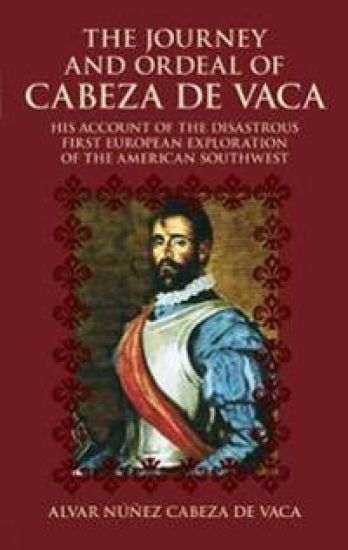
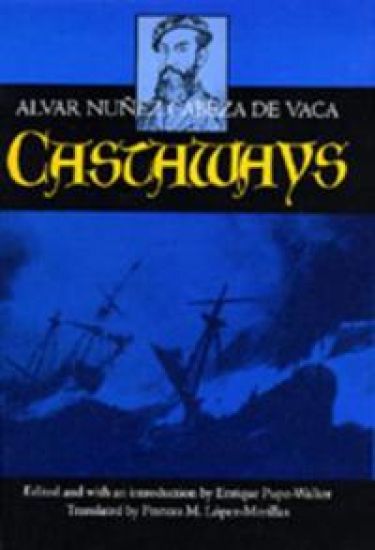
This enthralling story of survival is the first major narrative of the exploration of North America by Europeans (1528-36). The author of "Castaways (Naufragios)", Alvar Nunez Cabeza de Vaca, was a fortune-seeking nobleman and the treasurer of an expedition to claim for Spain a vast area that includes today's Florida, Louisiana, and Texas. A shipwreck forced him and a handful of men to make the long westward journey on foot to meet up with Hernan Cortes. In order to survive, Cabeza de Vaca joined native people along the way, learning their languages and practices and serving them as a slave and later as a physician. When after eight years he finally reached the West, he was not recognized by his compatriots. In his writing Cabeza de Vaca displays great interest in the cultures of the native people he encountered on his odyssey. As he forged intimate bonds with some of them, sharing their brutal living conditions and curing their sick, he found himself on a voyage of self-discovery that was to make his reunion with his fellow Spaniards less joyful than expected. Cabeza de Vaca's gripping narrative is a trove of ethnographic information, with descriptions and interpretations of native cultures that make it a powerful precursor to modern anthropology. Frances M. Lopez-Morillas' translation beautifully captures the sixteenth-century original. Based as it is on Enrique Pupo-Walker's definitive critical edition, it promises to become the authoritative English translation.
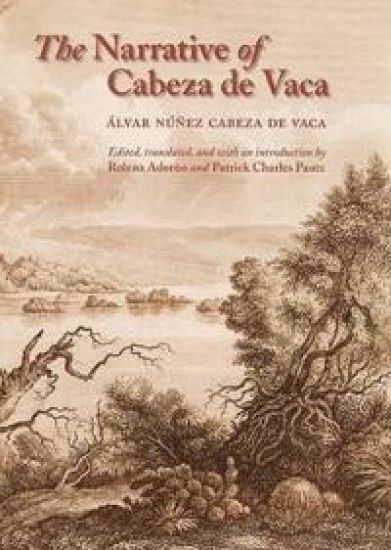
This edition of Alvar Nunez Cabeza de Vaca's "Relacion" offers readers Rolena Adorno and Patrick Charles Pautz's celebrated translation of Cabeza de Vaca's account of the 1527 Panfilo de Narvaez expedition to North America. The dramatic narrative tells the story of some of the first Europeans and the first-known African to encounter the North American wilderness and its Native inhabitants. It is a fascinating tale of survival against the highest odds, and it highlights Native Americans and their interactions with the newcomers in a manner seldom seen in writings of the period. In this English-language edition, reproduced from their award-winning three-volume set, Adorno and Pautz supplement the engrossing account with a general introduction that orients the reader to Cabeza de Vaca's world. They also provide explanatory notes, which resolve many of the narrative's most perplexing questions.This highly readable translation fires the imagination and illuminates the enduring appeal of Cabeza de Vaca's experience for a modern audience. Rolena Adorno is the Reuben Post Halleck Professor of Spanish at Yale University and the author of several books, including "Guaman Poma: Writing and Resistance in Colonial Peru". Patrick Charles Pautz holds an M.A. in Spanish from Princeton University and is an independent scholar. Adorno and Pautz coauthored "Alvar Nunez Cabeza de Vaca: His Account, His Life, and the Expedition of Panfilo de Narvaez" (Nebraska 1999), winner of the American Historical Association's 2001 J. Franklin Jameson Award, the Western Historical Association's 2000 Dwight L. Smith Award, and the New England Council of Latin American Studies 2000 Best Book Award.
The Narrative of Cabeza De Vaca
Álvar Núñez Cabeza de Vaca
University of Nebraska Press
2003
pokkari
This highly readable translation fires the imagination and illuminates the enduring appeal of Cabeza de Vaca’s experience for a modern audience. This edition of Álvar Núñez Cabeza de Vaca’s Relación offers readers Rolena Adorno and Patrick Charles Pautz's celebrated translation of Cabeza de Vaca’s account of the 1527 Pánfilo de Narváez expedition to North America. The dramatic narrative tells the story of some of the first Europeans and the first-known African to encounter the North American wilderness and its Native inhabitants. It is a fascinating tale of survival against the highest odds, and it highlights Native Americans and their interactions with the newcomers in a manner seldom seen in writings of the period. In this English-language edition, reproduced from their award-winning three-volume set, Adorno and Pautz supplement the engrossing account with a general introduction that orients the reader to Cabeza de Vaca’s world. They also provide explanatory notes, which resolve many of the narrative’s most perplexing questions.