Kirjojen hintavertailu. Mukana 11 244 527 kirjaa ja 12 kauppaa.

Kirjahaku

Etsi kirjoja tekijän nimen, kirjan nimen tai ISBN:n perusteella.

1000 tulosta hakusanalla Arthur J Butler

Building the Enterprise of the Future: Co-Creating and Delivering Extraordinary Value in an Eight-Billion-Mind World
As we look ahead to an eight-billion-mind world, we face many new challenges and opportunities. This will demand bringing all of our collective knowledge to bear. Traditional business and organizational models impede the flow of knowledge and will not work. We need to design new business models and strategies, even entirely new business ecosystems. We call this the Enterprise of the Future. Such an enterprise must be able to innovate and learn at least as fast as, or greater than, the speed of change in the market. This means transforming traditional, knowledge-hoarding organizations into enterprises with a culture that promotes rapid innovation, learning and knowledge-sharing. This book gives you a simple step-by-step approach for making this transformation happen, based on decades of research and field practice. Over time, you'll see measurable improvements in learning rates, concept-to-development cycle times, and time-to-market. Through a systematic process of leading, connecting, co-creating, and discovering, you'll be able to not only respond to, but lead, the changes in your market. Here's what authors and industry leaders are saying about "Building the Enterprise of the Future..." "This book provides a framework and the key ingredients needed to lead a successful enterprise in the age of knowledge." - Hassan Syed, Founder and CEO: Bir Ventures "A holistic and insightful treatment of the key dynamics of the knowledge economy and enterprise - with an added bonus of 'How To' make it work for your organization. A must read for the 21st century organizational leader." - Dr. Michael Stankosky, Co-founder: Institute for Knowledge & Innovation; Professorial Lecturer, Knowledge Management: The George Washington University "A clever book to tackle current uncertainties with certainty." - Dr. Charles Chow, Managing Director: East-West Group, Singapore "Given the knowledge-based nature of today's work, and the collaboration complexities of today's organizations, this book provides the essential success principles for the future enterprise - which are actually needed today." - Dr. John Lewis, Author: The Explanation Age "Anyone who wants to lead an Enterprise of the Future will transform the way they think about a firm's knowledge and its role in shaping the future of both business and society itself." - Dr. Dan Holtshouse, Director Corporate Strategy (Retired): Xerox "I have read many multidisciplinary books. And yet, there was something different about this one. It raised two important questions: Where are we going, and why are we going there? After finishing the book one realizes that we need to be not only thinking about the future, but at the same time thinking about how to prepare ourselves to make that future better." - Dr. Kamen Lozev, Associate Professor and past Fulbright Scholar: South-West University 'Neofit Rilski' - Blagoevgrad, Bulgaria "This masterpiece becomes part of our ever-changing realities just ahead of time, that is, raising our awareness to future choices, the future that is already here and the one that is accelerating towards us. We are asked to embrace our role as co-creator and together, as eight billion interconnected minds, share and expand our knowledge to move into the future. This book serves to clearly and succinctly answer the question, 'How do we get there'" - Dr. Alex Bennet, Mountain Quest Institute; Professor of Knowledge and Innovation Management: Bangkok University "Dr. Art Murray's writings are akin to multiple courses of a 5-star internationally reputed restaurant: Each course (chapter) delights and enlightens; at the end you're booking a seat for the next gourmet offering " - Dr. Francesco Calabrese, Founder/Executive Director: International Institute for Knowledge & Innovation; Professor: Bangkok University
Musical Curiousities, Oddities and Liszts [sic]

Musical Curiousities, Oddities and Liszts [sic]

Arthur J. Lieb

Squeeze Box Press
2017
nidottu
"Musical Curiosities, Oddities and Liszts sic]" is a popular book written for lovers of music. It does not require an "expertise" in musical knowledge. As the author states in the introduction- "This is a book of total enjoyment. It is not meant to be read in one evening or even a week. It is full of information that will not make you rich, get you a promotion, or even make you smarter. But I do hope for some "wows," a chuckle, and a 'boy, that is interesting.'" "Musical Curiosities, Oddities and Liszts sic]" is a collection of little known facts, events, and lists about the composers, music, and performers of classical music, the Broadway stage, and jazz. It concentrates on music from the Baroque to contemporary performance artists. There are quizzes, a list of the full names of composers, classified lists of program music (insects and animals, celebrations, sports, transport and places, etc.), musical humor and satire, the firsts of everything in American music and performance, and a section on the shortest and longest of everything music. The book includes several anecdotes written and supplied by well known composers, accomplished performers, academicians, and music administrators. There is a section devoted to music written to be performed in the sky, in a swimming pool, around Arctic ice floes, and a caf . Politicians and world leaders are represented in sections on their musical abilities and political censorship. Children composers, musicians with handicaps, unusual deaths of musicians and a pictorial spread of buskers and another of unusual pianos are included. To round out the book are sections on the history of recordings and broadcasts, a list of unusual music museums, and another on music festivals. A suggested reading list includes a list of two dozen "off beat" books on music. The book is profusely illustrated by photographs taken around the world by its author and engaging and humorous line drawings by Kim Borrego, a well-known Boulder artist.
'Then it Was Destroyed by the Volcano'

'Then it Was Destroyed by the Volcano'

Arthur J. Pomeroy

Bristol Classical Press
2008
nidottu
Depictions of the ancient world on the stage and in art have always competed with a scholarly approach to the reconstruction of the past. The rise of cinema and television has heightened the difficulty in distinguishing between 'elite' and 'popular' culture. On American TV, "Buffy the Vampire Slayer" has incorporated aspects of the classical within the high school horror genre. In art cinema, the films of Theo Angelopoulos seek to reclaim Greek myth from academia and claim its recognition as part of a living modern culture. Alexander the Great has been recreated in an animated Japanese television series, not as the western conqueror who spread Hellenistic values through Asia, but as a figure of destruction and renewal. Heroic male values may be reasserted in cinema as part of a conservative agenda that relies on the cultural capital of the past, or subjected to humorous critique or feminist reinterpretation in TV series such as "Hercules" and "Xena". "Then it was Destroyed by the Volcano", by studying the multiple depictions of the ancient world on screen, emphasises its continuing importance for the re-evaluation of the present.
In the Shadow of the Miracle

In the Shadow of the Miracle

Arthur J. Alexander

Lexington Books
2002
sidottu
Japan is living in the shadow of its economic miracle. Its stagnation and decline relative to other advanced economies since the early 1990s is a consequence of business and government difficulty in breaking away from once-successful practices. The Japanese postwar economic miracle created the world's second largest capitalist economy. This remarkable performance, in the face of such enormous obstacles, helped solidify, even sanctify, the institutions, methods, and political arrangements associated with the economic miracle. Based upon a decade of research articles distributed in the Japan Economic Institute's weekly report on Japan, In the Shadow of the Miracle analyzes the sources of Japanese growth and the nature and scale of its current economic problems. Chapters examine the steps being taken by Japan's government and business leaders to address the mounting national economic problems and the impact on Japan of the wider Asian financial crisis (1997-99). A final section addresses the question of whether Japan is fundamentally different from other advanced economies.
In the Shadow of the Miracle

In the Shadow of the Miracle

Arthur J. Alexander

Lexington Books
2003
nidottu
Japan is living in the shadow of its economic miracle. Its stagnation and decline relative to other advanced economies since the early 1990s is a consequence of business and government difficulty in breaking away from once-successful practices. The Japanese postwar economic miracle created the world's second largest capitalist economy. This remarkable performance, in the face of such enormous obstacles, helped solidify, even sanctify, the institutions, methods, and political arrangements associated with the economic miracle. Based upon a decade of research articles distributed in the Japan Economic Institute's weekly report on Japan, In the Shadow of the Miracle analyzes the sources of Japanese growth and the nature and scale of its current economic problems. Chapters examine the steps being taken by Japan's government and business leaders to address the mounting national economic problems and the impact on Japan of the wider Asian financial crisis (1997-99). A final section addresses the question of whether Japan is fundamentally different from other advanced economies.
Western and Chinese Arbitration

Western and Chinese Arbitration

Arthur J. Gemmell

University Press of America
2008
nidottu
Seasoned businesspeople, especially those engaged in international business, are keenly aware of the fact that no matter how pleasant their pre-arrangement business courtship has been post-arrangement disputes may occur. While some disputes may be settled amicably, other resolutions leave the parties unsatisfied due to prolonged and costly litigation. Dr. Arthur J. Gemmell asserts that an understanding of the international arbitral system will enrich and sustain business while serving as a viable avenue for commercial dispute resolution. To explore the arbitral system, Dr. Gemmell uses the Chinese and Western arbitral systems, past and present, in order to understand what can be accomplished from their examples and errors. The term 'arbitral chain' refers to the linkage of one arbitral era to another. It is as essential term in the understanding of how successive eras built or modified the standards of arbitration on what had worked in the past.
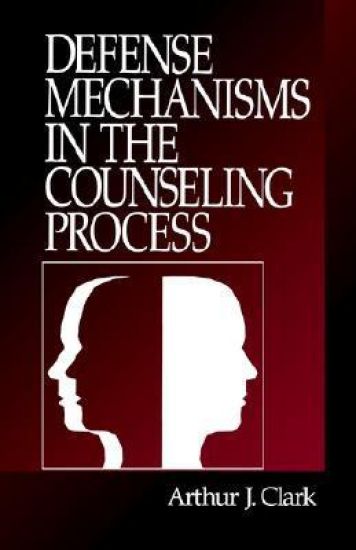
Defense Mechanisms in the Counseling Process

Defense Mechanisms in the Counseling Process

Arthur J. Clark

SAGE Publications Inc
1998
sidottu
What causes clients in therapy to resist change? What mechanisms and devices do they use to defend against therapeutic progress? How can a therapist identify and work with such defenses in their clients? Understanding defense mechanisms is essential to understanding clients, managing resistance, clarifying conflicted behavior, and engendering more adaptive functioning. In Defense Mechanisms in the Counseling Process, author Arthur J. Clark discusses various specific defense mechanisms that arise in the course of working with a client in counseling. He presents each mechanismÆs theoretical origins, psychopathology, and definitionsùand then the methods (organized according to the three-stage model of the counseling process) for "processing" it through discrete stages. Extensive examples throughout the book from diverse populations illustrate the defense mechanisms themselves, as well as the therapeutic change that can result in spite of them. He also provides an integrative case example, demonstrating the changes in clientsÆ defenses through the counseling process. Combining a theoretical and practical perspective, Defense Mechanisms in the Counseling Process is ideally suited for professionals and academics in clinical and counseling psychology, psychology, social work and group work.
Defense Mechanisms in the Counseling Process

Defense Mechanisms in the Counseling Process

Arthur J. Clark

SAGE Publications Inc
1998
nidottu
What causes clients in therapy to resist change? What mechanisms and devices do they use to defend against therapeutic progress? How can a therapist identify and work with such defenses in their clients? Understanding defense mechanisms is essential to understanding clients, managing resistance, clarifying conflicted behavior, and engendering more adaptive functioning. In Defense Mechanisms in the Counseling Process, author Arthur J. Clark discusses various specific defense mechanisms that arise in the course of working with a client in counseling. He presents each mechanismÆs theoretical origins, psychopathology, and definitionsùand then the methods (organized according to the three-stage model of the counseling process) for "processing" it through discrete stages. Extensive examples throughout the book from diverse populations illustrate the defense mechanisms themselves, as well as the therapeutic change that can result in spite of them. He also provides an integrative case example, demonstrating the changes in clientsÆ defenses through the counseling process. Combining a theoretical and practical perspective, Defense Mechanisms in the Counseling Process is ideally suited for professionals and academics in clinical and counseling psychology, psychology, social work and group work.
Bounty and Benevolence

Bounty and Benevolence

Arthur J. Ray; Jim Miller; Frank Tough

McGill-Queen's University Press
2002
nidottu
Arthur Ray, Jim Miller, and Frank Tough draw on a wide range of documentary sources to provide a rich and complex interpretation of the process that led to these historic agreements. The authors explain how Saskatchewan treaties were shaped by long-standing First Nations' Hudson's Bay Company diplomatic and economic understandings, treaty practices developed in eastern Canada before the 1870s, and the changing economic and political realities of western Canada during the nineteenth and early twentieth centuries. Ray, Miller, and Tough also show why these same forces were responsible for creating some of the misunderstandings and disputes that subsequently arose between the First Nations and government officials regarding the interpretation and implementation of the accords. Bounty and Benevolence offers new insights into this crucial dimension of Canadian history, making it of interest to the general reader as well as specialists in the field of First Nations history.
Telling It to the Judge

Telling It to the Judge

Arthur J. Ray

McGill-Queen's University Press
2011
sidottu
Arthur Ray's extensive knowledge in the history of the fur trade and Native economic history brought him into the courts as an expert witness in the mid-1980s. For over twenty-five years he has been a part of landmark litigation concerning treaty rights, Aboriginal title, and Metis rights. In Telling It to the Judge, Ray recalls lengthy courtroom battles over lines of evidence, historical interpretation, and philosophies of history, reflecting on the problems inherent in teaching history in the adversarial courtroom setting. Told with charm and based on extensive experience, Telling It to the Judge is a unique narrative of courtroom strategy in the effort to obtain constitutional recognition of Aboriginal and treaty rights.
Telling It to the Judge

Telling It to the Judge

Arthur J. Ray

McGill-Queen's University Press
2012
nidottu
Arthur Ray's extensive knowledge in the history of the fur trade and Native economic history brought him into the courts as an expert witness in the mid-1980s. For over twenty-five years he has been a part of landmark litigation concerning treaty rights, Aboriginal title, and Metis rights. In Telling It to the Judge, Ray recalls lengthy courtroom battles over lines of evidence, historical interpretation, and philosophies of history, reflecting on the problems inherent in teaching history in the adversarial courtroom setting. Told with charm and based on extensive experience, Telling It to the Judge is a unique narrative of courtroom strategy in the effort to obtain constitutional recognition of Aboriginal and treaty rights.
Aboriginal Rights Claims and the Making and Remaking of History

Aboriginal Rights Claims and the Making and Remaking of History

Arthur J. Ray

McGill-Queen's University Press
2016
sidottu
Forums such as commissions, courtroom trials, and tribunals that have been established through the second half of the twentieth century to address aboriginal land claims have consequently created a particular way of presenting aboriginal, colonial, and national histories. The history that emerges from these land-claims processes is often criticized for being "presentist" - inaccurately interpreting historical actions and actors through the lens of present-day values, practices, and concerns. In Aboriginal Rights Claims and the Making and Remaking of History, Arthur Ray examines how claims-oriented research is often fitted to the existing frames of indigenous rights law and claims legislation and, as a result, has influenced the development of these laws and legislation. Through a comparative study encompassing the United States, Canada, South Africa, Australia and New Zealand, Ray also explores the ways in which various procedures and settings for claims adjudication have influenced and changed the use of historical evidence, made space for indigenous voices, stimulated scholarly debates about the cultural and historical experiences of indigenous peoples at the time of initial European contact and afterward, and have provoked reactions from politicians and scholars. While giving serious consideration to the flaws and strengths of presentist histories, Aboriginal Rights Claims and the Making and Remaking of History provides communities with essential information on how history is used and how methods are adapted and changed.
Aboriginal Rights Claims and the Making and Remaking of History

Aboriginal Rights Claims and the Making and Remaking of History

Arthur J. Ray

McGill-Queen's University Press
2016
nidottu
Forums such as commissions, courtroom trials, and tribunals that have been established through the second half of the twentieth century to address aboriginal land claims have consequently created a particular way of presenting aboriginal, colonial, and national histories. The history that emerges from these land-claims processes is often criticized for being "presentist" - inaccurately interpreting historical actions and actors through the lens of present-day values, practices, and concerns. In Aboriginal Rights Claims and the Making and Remaking of History, Arthur Ray examines how claims-oriented research is often fitted to the existing frames of indigenous rights law and claims legislation and, as a result, has influenced the development of these laws and legislation. Through a comparative study encompassing the United States, Canada, South Africa, Australia and New Zealand, Ray also explores the ways in which various procedures and settings for claims adjudication have influenced and changed the use of historical evidence, made space for indigenous voices, stimulated scholarly debates about the cultural and historical experiences of indigenous peoples at the time of initial European contact and afterward, and have provoked reactions from politicians and scholars. While giving serious consideration to the flaws and strengths of presentist histories, Aboriginal Rights Claims and the Making and Remaking of History provides communities with essential information on how history is used and how methods are adapted and changed.
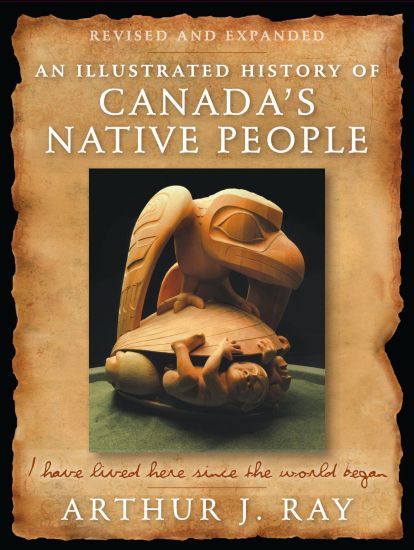
An Illustrated History of Canada's Native People

An Illustrated History of Canada's Native People

Arthur J. Ray

McGill-Queen's University Press
2016
nidottu
Canada's Native people have inhabited this land since the Ice Age and were already accomplished traders, artisans, farmers, and marine hunters when Europeans first reached their shores. Contact between Natives and European explorers and settlers initially presented an unprecedented period of growth and opportunity. But the two vastly different cultures soon clashed. Arthur Ray charts the history of Canada's Native people from first contact to current land claims. The result is a fascinating chronicle that spans 12,000 years and culminates in the headlines of today. In the preface to this new edition, Ray elaborates on the increasing effectiveness of Indigenous peoples and their leaders in bringing demands for justice to centre stage. He discusses recent court decisions, the final report of the Truth and Reconciliation Commission of Canada, and the hope for change following promises made by the new Trudeau government.
NAFTA Tax Law and Policy

NAFTA Tax Law and Policy

Arthur J. Cockfield

University of Toronto Press
2005
sidottu
Under the North American Free Trade Agreement (NAFTA), Canada, the United States, and Mexico continue to maintain their own distinct tax regimes, jealously guarding their sovereign right to do so. At times, these different tax systems harm the economic welfare of the trade bloc by imposing barriers to cross-border flows of capital. In NAFTA Tax Law and Policy, Arthur J. Cockfield analyzes these different tax systems and proposes a number of recommendations to reduce the harm caused by these barriers.Cockfield argues that it is unrealistic to expect the NAFTA countries to negotiate comprehensive reform efforts such as full-fledged tax harmonization. Rather, a strategy of heightened multilateral tax coordination is the appropriate solution as it permits the countries to maintain national tax differences, but strives to smooth over many of the problems created by the interaction of the tax regimes. The NAFTA countries should promote binding arbitration for transfer pricing disputes, multilateral tax treaty negotiations, the elimination of parent/subsidiary dividend withholding taxes, and enhanced administrative cooperation to reduce tax compliance costs for multinational firms. Only then, can NAFTA function in the way it was designed to.
Globalization and Its Tax Discontents

Globalization and Its Tax Discontents

Arthur J. Cockfield

University of Toronto Press
2010
sidottu
Increasingly linked by regional and global ties, national economies depend more than ever on international investments and trade. Agreements such as NAFTA in North America and the regional integration of the European Union facilitate cross-border commerce. While trade has become international, however, taxation has remained national, preserving and strengthening one of the few remaining barriers to the flow of cross-national investments. In Globalization and Its Tax Discontents, some of the world's leading international tax scholars identify the ways that taxes can inhibit or promote international investments, and assess both government and private market responses to present challenges. Given the lack of meaningful government cooperation, the contributors integrate economic theory with elements of history, gender theory, and international relations to explore the potential development effective international tax rules and processes to tax international investments. Innovative, interdisciplinary, and comprehensive, Globalization and Its Tax Discontents sheds light on one of the last real policy battlegrounds of globalization.
Life's Worth

Life's Worth

Arthur J. Dyck

William B Eerdmans Publishing Co
2002
pokkari
Today there is growing acceptance of the idea of physician-assisted suicide. Even Christians are beginning to factor the possibility into their ethical understandings. Would it not be compassionate to acquiesce in a terminally ill patient's request to end it all? This sentiment seems reasonable, even humane. But as Harvard ethicist Arthur J. Dyck shows in this powerful work, there are solid moral and practical bases for the existing laws against assisted suicide in the United States and elsewhere. Over the course of four interconnected, tightly reasoned arguments, Dyck takes readers from a basic concern for human suffering -- the main focus of those who support assisted suicide -- to the deeper truths of life's inherent worth. Dyck begins by examining the arguments of some physicians, moral philosophers, and theologians for making assisted suicide available. He also discusses the alternative practice of comfort-only care, explaining why it differs morally from assisted suicide and euthanasia.Dyck then explores and defends the moral structure underlying the West's long tradition of homicide law as well as current law against assisted suicide and euthanasia -- laws designed to protect both freedom and human life. Finally, Dyck shows that the moral structure undergirding our system of law is compatible with the views of Christianity, and he points to certain Christian beliefs that provide comfort and hope to those who are suffering, dying, or experiencing the death of loved ones. Throughout the book, Dyck staunchly maintains that assisted suicide is unacceptable in any and all circumstances. The practice denies terminally ill patients the possibility of recovery and robs them ofthe chance to rethink the meaning of their lives or to achieve spiritual growth. Furthermore, because it undermines the shared moral structure that makes community possible, assisted suicide bodes ill for society as a whole. "Life's Worth" is a must-read for anyone grappling with this hotly debated issue.
Success in Early Intervention

Success in Early Intervention

Arthur J. Reynolds; Edward Zigler

University of Nebraska Press
2000
sidottu
This book is a valuable source of information on the long-term effects of early intervention programs on the education of children living in economically disadvantaged areas and in other contexts. Early intervention programs such as Head Start enjoy popular and legislative support, but until now, policymakers and practitioners have lacked hard data on the long-term consequences of such locally and federally mandated efforts. "Success in Early Intervention" focuses on the Child-Parent Center (CPC) program in Chicago, the second oldest (after Head Start) federally funded early childhood intervention program. Begun in 1967, the program currently operates out of twenty-four centers, which are located in proximity to the elementary schools they serve. The CPC program's unique features include mandatory parental involvement and a single, sustained educational system that spans preschool through the third grade. Central to this study is a 1986 cohort of nearly twelve hundred CPC children and a comparison group of low income children whose subsequent activities, challenges, and achievements are followed through the age of fifteen. The lives of these children amply demonstrate the positive long-term educational and social consequences of the CPC program. Arthur J. Reynolds is a professor of social work, educational psychology, and child and family studies at the University of Wisconsin-Madison.
Success in Early Intervention

Success in Early Intervention

Arthur J. Reynolds; Edward Zigler

University of Nebraska Press
2012
pokkari
This book is a valuable source of information on the long-term effects of early intervention programs on the education of children living in economically disadvantaged areas and in other contexts. Early intervention programs such as Head Start enjoy popular and legislative support, but until now, policymakers and practitioners have lacked hard data on the long-term consequences of such locally and federally mandated efforts. Success in Early Intervention focuses on the Child-Parent Center (CPC) program in Chicago, the second oldest (after Head Start) federally funded early childhood intervention program. Begun in 1967, the program currently operates out of twenty-four centers, which are located in proximity to the elementary schools they serve. The CPC program's unique features include mandatory parental involvement and a single, sustained educational system that spans preschool through the third grade.Central to this study is a 1986 cohort of nearly twelve hundred CPC children and a comparison group of low income children whose subsequent activities, challenges, and achievements are followed through the age of fifteen. The lives of these children amply demonstrate the positive long-term educational and social consequences of the CPC program.