Kirjojen hintavertailu. Mukana 11 244 527 kirjaa ja 12 kauppaa.

Kirjahaku

Etsi kirjoja tekijän nimen, kirjan nimen tai ISBN:n perusteella.

1000 tulosta hakusanalla Arvind Yadav

Sikhism: A Guide for the Perplexed

Sikhism: A Guide for the Perplexed

Arvind-Pal Singh Mandair

Bloomsbury Academic USA
2013
nidottu
Sikhism’s short but relatively eventful history provides a fascinating insight into the working of misunderstood and seemingly contradictory themes such as politics and religion, violence and mysticism, culture and spirituality, orality and textuality, public sphere versus private sphere, tradition and modernity. This book presents students with a careful analysis of these complex themes as they have manifested themselves in the historical evolution of the Sikh traditions and the encounter of Sikhs with modernity and the West, in the philosophical teachings of its founders and their interpretation by Sikh exegetes, and in Sikh ethical and intellectual responses to contemporary issues in an increasingly secular and pluralistic world. Sikhism: A Guide for the Perplexed serves as an ideal guide to Sikhism, and also for students of Asian studies, Sociology of Religion and World Religions.
Sikhism: A Guide for the Perplexed

Sikhism: A Guide for the Perplexed

Arvind-Pal Singh Mandair

Bloomsbury Academic USA
2013
sidottu
Sikhism’s short but relatively eventful history provides a fascinating insight into the working of misunderstood and seemingly contradictory themes such as politics and religion, violence and mysticism, culture and spirituality, orality and textuality, public sphere versus private sphere, tradition and modernity. This book presents students with a careful analysis of these complex themes as they have manifested themselves in the historical evolution of the Sikh traditions and the encounter of Sikhs with modernity and the West, in the philosophical teachings of its founders and their interpretation by Sikh exegetes, and in Sikh ethical and intellectual responses to contemporary issues in an increasingly secular and pluralistic world. Sikhism: A Guide for the Perplexed serves as an ideal guide to Sikhism, and also for students of Asian studies, Sociology of Religion and World Religions.
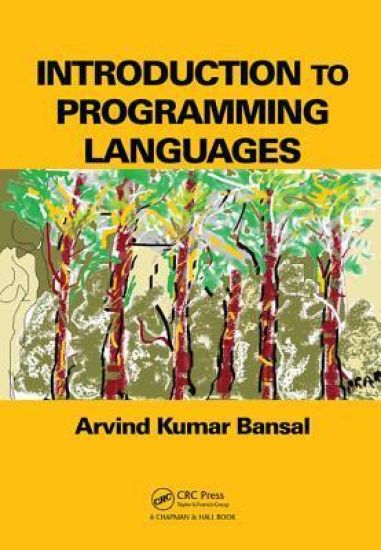
Introduction to Programming Languages

Introduction to Programming Languages

Arvind Kumar Bansal

CRC Press Inc
2013
nidottu
In programming courses, using the different syntax of multiple languages, such as C++, Java, PHP, and Python, for the same abstraction often confuses students new to computer science. Introduction to Programming Languages separates programming language concepts from the restraints of multiple language syntax by discussing the concepts at an abstract level.Designed for a one-semester undergraduate course, this classroom-tested book teaches the principles of programming language design and implementation. It presents: Common features of programming languages at an abstract level rather than a comparative levelThe implementation model and behavior of programming paradigms at abstract levels so that students understand the power and limitations of programming paradigms Language constructs at a paradigm levelA holistic view of programming language design and behaviorTo make the book self-contained, the author introduces the necessary concepts of data structures and discrete structures from the perspective of programming language theory. The text covers classical topics, such as syntax and semantics, imperative programming, program structures, information exchange between subprograms, object-oriented programming, logic programming, and functional programming. It also explores newer topics, including dependency analysis, communicating sequential processes, concurrent programming constructs, web and multimedia programming, event-based programming, agent-based programming, synchronous languages, high-productivity programming on massive parallel computers, models for mobile computing, and much more. Along with problems and further reading in each chapter, the book includes in-depth examples and case studies using various languages that help students understand syntax in practical contexts.
Piers Plowman and the Reinvention of Church Law in the Late Middle Ages
It is a medieval truism that the poet meddles with words, the lawyer with the world. But are the poet’s words and the lawyer’s world really so far apart? To what extent does the art of making poems share in the craft of making laws, and vice versa? Framed by such questions, Piers Plowman and the Reinvention of Church Law in the Late Middle Ages examines the mutually productive interaction between literary and legal "makyngs" in England’s great Middle English poem by William Langland. Focusing on Piers Plowman’s preoccupation with wrongdoing in the B and C versions, Arvind Thomas examines the versions’ representations of trials, confessions, restitutions, penalties, and pardons. Thomas explores how the "literary" informs and transforms the "legal" until they finally cannot be separated. Thomas shows how the poem’s narrative voice, metaphor, syntax and style not only reflect but also act upon properties of canon law, such as penitential procedures and authoritative maxims. Langland’s mobilization of juridical concepts, Thomas insists, not only engenders a poetics informed by canonist thought but also expresses an alternative vision of canon law from that proposed by medieval jurists and today’s medievalists.
Introduction to Computational Health Informatics

Introduction to Computational Health Informatics

Arvind Kumar Bansal; Javed Iqbal Khan; S. Kaisar Alam

Productivity Press
2020
nidottu
This class-tested textbook is designed for a semester-long graduate or senior undergraduate course on Computational Health Informatics. The focus of the book is on computational techniques that are widely used in health data analysis and health informatics and it integrates computer science and clinical perspectives. This book prepares computer science students for careers in computational health informatics and medical data analysis.Features Integrates computer science and clinical perspectives Describes various statistical and artificial intelligence techniques, including machine learning techniques such as clustering of temporal data, regression analysis, neural networks, HMM, decision trees, SVM, and data mining, all of which are techniques used widely used in health-data analysis Describes computational techniques such as multidimensional and multimedia data representation and retrieval, ontology, patient-data deidentification, temporal data analysis, heterogeneous databases, medical image analysis and transmission, biosignal analysis, pervasive healthcare, automated text-analysis, health-vocabulary knowledgebases and medical information-exchange Includes bioinformatics and pharmacokinetics techniques and their applications to vaccine and drug development
Why Growth Matters

Why Growth Matters

Arvind Panagariya; Jagdish Bhagwati

PublicAffairs,U.S.
2014
pokkari
In its history since Independence, India has seen widely different economic experiments: from Jawharlal Nehru's pragmatism to the rigid state socialism of Indira Gandhi to the brisk liberalization of the 1990s. So which strategy best addresses India's, and by extension the world's, greatest moral challenge: lifting a great number of extremely poor people out of poverty?Bhagwati and Panagariya argue forcefully that only one strategy will help the poor to any significant effect: economic growth, led by markets overseen and encouraged by liberal state policies. Their radical message has huge consequences for economists, development NGOs and anti-poverty campaigners worldwide. There are vital lessons here not only for Southeast Asia, but for Africa, Eastern Europe, and anyone who cares that the effort to eradicate poverty is more than just good intentions. If you want it to work, you need growth. With all that implies.