Kirjojen hintavertailu. Mukana 11 627 380 kirjaa ja 12 kauppaa.

Kirjahaku

Etsi kirjoja tekijän nimen, kirjan nimen tai ISBN:n perusteella.

1000 tulosta hakusanalla Barbara P. Semonche

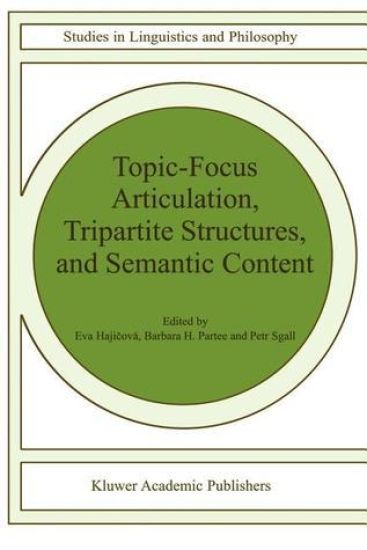
Topic-Focus Articulation, Tripartite Structures, and Semantic Content

Topic-Focus Articulation, Tripartite Structures, and Semantic Content

Eva Hajicová; Barbara B.H. Partee; P. Sgall

Springer
1998
sidottu
1. 1 OBJECTIVES The main objective of this joint work is to bring together some ideas that have played central roles in two disparate theoretical traditions in order to con­ tribute to a better understanding of the relationship between focus and the syn­ tactic and semantic structure of sentences. Within the Prague School tradition and the branch of its contemporary development represented by Hajicova and Sgall (HS in the sequel), topic-focus articulation has long been a central object of study, and it has long been a tenet of Prague school linguistics that topic-focus structure has systematic relevance to meaning. Within the formal semantics tradition represented by Partee (BHP in the sequel), focus has much more recently become an area of concerted investigation, but a number of the semantic phenomena to which focus is relevant have been extensively investi­ gated and given explicit compositional semantic-analyses. The emergence of 'tripartite structures' (see Chapter 2) in formal semantics and the partial simi­ larities that can be readily observed between some aspects of tripartite structures and some aspects of Praguian topic-focus articulation have led us to expect that a closer investigation of the similarities and differences in these different theoretical constructs would be a rewarding undertaking with mutual benefits for the further development of our respective theories and potential benefit for the study of semantic effects of focus in other theories as well.
Comprehensive Literacy Basics: An Anthology by Capstone Professional

Comprehensive Literacy Basics: An Anthology by Capstone Professional

Timothy Rasinski; Barbara A. Nelson; Michael P. Ford

Capstone Classroom
2017
nidottu
Teaching English language arts at grades K-5 is both a science and an art. Educators must teach literacy skills and content with best practices, while also keeping focus on each student's individual needs. They are challenged to monitor students working independently while also conducting small group instruction. And they must focus on providing differentiated support with a rather complicated text. With increased attention to rigor, requirements, and personalized instruction, it can be a challenge to make sure all students are receiving instruction that is just right. Comprehensive Literacy Basics: An Anthology by Capstone Professional contains useful tips to support educators. Chapters focus on each part of the literacy and language arts block, including whole group, small group, writing, and differentiation. A collection of expert authors specializing in literacy and language arts instruction contributed chapters to the book. The quick tips and suggestions within will reinforce current practices while providing an invaluable go-to reference. FAMIS #902792539
Teaching for Inquiry

Teaching for Inquiry

Ruth Small; Marylin P. Arnone; Barbara K. Stripling; Pam Berger

Neal-Schuman Publishers Inc
2011
nidottu
The American Association of School Librarians (AASL s) Standards for the 21st-Century Learner define inquiry as a stance toward learning in which the learner is engaged in asking questions and finding answers, not simply accumulating facts presented by someone else that have no relation to previous learning or new understanding. Inquiry follows a continuum of learning experiences, from simply discovering a new idea or an answer to a question to following a complete inquiry process. Inquiry is a crucial vantage point for teaching information literacy, but where can school librarians turn for help meeting those standards? Written by a dream team of school library leaders, Teaching for Inquiry will focus on this process, helping school library media specialists actively engage and motivate their students in learning. The authors go over the most important instructional models and help readers integrate these and new standards into their own teaching. The book even comes with a companion Web site including videos of librarians teaching and student learning that bring the various teaching techniques and motivational strategies described in the book to life! The planning tools, models, and methods featured in Teaching for Inquiry will provide essential guidance to librarians looking to engage their students in the world of information.
Modelling Regional Scenarios for the Enlarged Europe

Modelling Regional Scenarios for the Enlarged Europe

Roberta Capello; Roberto P. Camagni; Barbara Chizzolini; Ugo Fratesi

Springer-Verlag Berlin and Heidelberg GmbH Co. K
2008
sidottu
The aim of this book is to tackle the question of what the European territory will look like over the next fifteen years by providing quali-quantitative territorial scenarios for the enlarged Europe, under different assumptions on future globalisation strategies of BRIC (Brazil, Russia, India and China) and East and West European countries. The approach is as neutral as possible vis-à-vis the results, leaving to a new forecasting model, the MASST model, built by the authors, to produce the tendencies and behavioural paths of regional GDP and population growth in each individual European region under alternative assumptions on the competitiveness strategies of different blocks of countries. The results are accompanied by strong policy messages intended to encourage long-term strategic thinking among a wide range of actors, scientists and policy makers in response to the risks and opportunities that the European territory will face.
Modelling Regional Scenarios for the Enlarged Europe

Modelling Regional Scenarios for the Enlarged Europe

Roberta Capello; Roberto P. Camagni; Barbara Chizzolini; Ugo Fratesi

Springer-Verlag Berlin and Heidelberg GmbH Co. K
2010
nidottu
The aim of this book is to tackle the question of what the European territory will look like over the next fifteen years by providing quali-quantitative territorial scenarios for the enlarged Europe, under different assumptions on future globalisation strategies of BRIC (Brazil, Russia, India and China) and East and West European countries. The approach is as neutral as possible vis-à-vis the results, leaving to a new forecasting model, the MASST model, built by the authors, to produce the tendencies and behavioural paths of regional GDP and population growth in each individual European region under alternative assumptions on the competitiveness strategies of different blocks of countries. The results are accompanied by strong policy messages intended to encourage long-term strategic thinking among a wide range of actors, scientists and policy makers in response to the risks and opportunities that the European territory will face.
Topic-Focus Articulation, Tripartite Structures, and Semantic Content

Topic-Focus Articulation, Tripartite Structures, and Semantic Content

Eva Hajicová; Barbara B.H. Partee; P. Sgall

Springer
2010
nidottu
1. 1 OBJECTIVES The main objective of this joint work is to bring together some ideas that have played central roles in two disparate theoretical traditions in order to con­ tribute to a better understanding of the relationship between focus and the syn­ tactic and semantic structure of sentences. Within the Prague School tradition and the branch of its contemporary development represented by Hajicova and Sgall (HS in the sequel), topic-focus articulation has long been a central object of study, and it has long been a tenet of Prague school linguistics that topic-focus structure has systematic relevance to meaning. Within the formal semantics tradition represented by Partee (BHP in the sequel), focus has much more recently become an area of concerted investigation, but a number of the semantic phenomena to which focus is relevant have been extensively investi­ gated and given explicit compositional semantic-analyses. The emergence of 'tripartite structures' (see Chapter 2) in formal semantics and the partial simi­ larities that can be readily observed between some aspects of tripartite structures and some aspects of Praguian topic-focus articulation have led us to expect that a closer investigation of the similarities and differences in these different theoretical constructs would be a rewarding undertaking with mutual benefits for the further development of our respective theories and potential benefit for the study of semantic effects of focus in other theories as well.
Career Development for the Department of Defense Security Cooperation Workforce

Career Development for the Department of Defense Security Cooperation Workforce

M Wade Markel; Jefferson P Marquis; Peter Schirmer; Sean Robson; Lisa Saum-Manning; Katherine Hastings; Katharina Ley Best; Christina Panis; Alyssa Ramos; Barbara Bicksler

RAND
2018
nidottu
Security cooperation's importance, scale, and complexity have grown substantially in recent years, but efforts to develop and manage the Department of Defense security cooperation workforce have lagged. This study informs the development of career models for the security cooperation workforce, assesses potential requirements for competencies and experience, and identifies potential job families within the workforce to facilitate management.
Positiv psykologi - positiv pædagogik

Positiv psykologi - positiv pædagogik

Mihaly Csikszentmihalyi; Martin E.P. Seligman; Jørgen Lyhne; Ruut Veenhoven; Martin Führ; Daniel Kahnemann; Timothy D. Wilson; Daniel T. Gilbert; Hans Henrik Knoop; Barbara L. Fredrickson

Psykologisk Forlag
2008
nidottu
Hvordan kan positiv psykologi bruges pædagogisk? Hvordan kan positiv psykologi skabe optimale læringsmiljøer? Positiv psykologi sætter fokus på glæde, trivsel, lykke og det gode liv.Antologien præsenterer den positive psykologis bagvedliggende teori og de deraf følgende pædagogiske implikationer i forhold til optimale læringsmiljøer, ledelse, undervisning, læring og arbejdsliv. Antologien henvender sig primært til lærere, pædagoger, psykologer, ledere og studerende.
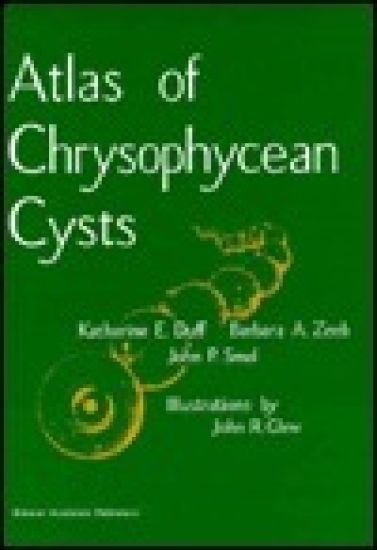
Atlas of Chrysophycean Cysts

Atlas of Chrysophycean Cysts

K. Duff; Barbara A. Zeeb; John P. Smol

Springer
1994
sidottu
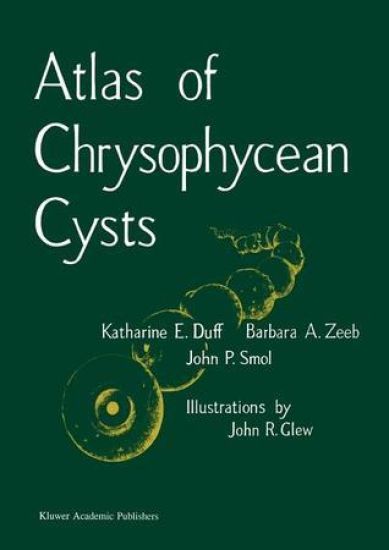
Chrysophycean algae are a diverse and often abundant group of primarily freshwater phytoplankton, characterized by the endogenous formation of siliceous cysts or stomatocysts (also called statospores or statocysts). Cyst morphology is highly variable, but believed to be species-specific. Recently, cysts have received considerable attention from phycologists and especially paleoecologists who wish to use these indicators for assessments of environmental change. Nonetheless, attempts at using cysts have often been hampered by taxonomic problems. This Atlas dispels some of the mystery surrounding stomatocysts, facilitating the accurate identification of individual cyst morphotypes, and encouraging other workers to begin using these important indicators. The terminology used to describe cysts is outlined in detail, followed by detailed descriptions of cyst morphotypes, following International Statospore Working Group (ISWG) guidelines, complemented by scanning electron and light micrographs, as well as line illustrations. Any available biogeographical and ecological information is also provided. These descriptions will further accelerate the continued effort to link cyst morphotypes to the algae that produce them. For paleoecologists who wish to include stomatocysts in their studies, researchers working with living chrysophycean algae, and those interested in the morphology and ultrastructure of cyst morphotypes.
Atlas of Chrysophycean Cysts

Atlas of Chrysophycean Cysts

A.N. Wilkinson; Barbara A. Zeeb; John P. Smol

Springer
2002
sidottu
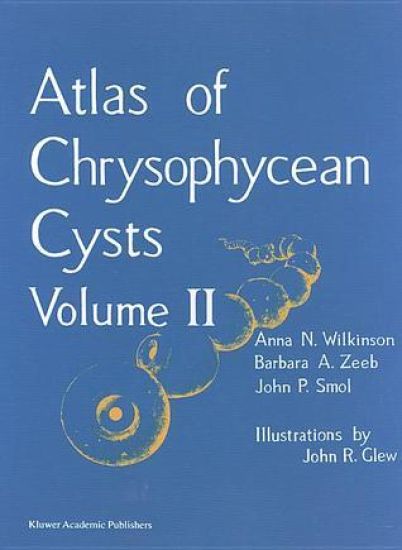
This Atlas attempts to dispel some of the mystery surrounding stomatocysts, to facilitate the accurate identification of individual cyst morphotypes, and to encourage other workers to begin using these important indicators of environmental change. The terminology is outlined in detail. This is followed by detailed descriptions of cyst morphotypes, which continues from work completed in the first Atlas. Any available biogeographical and ecological information is also provided. We believe this Atlas will be useful to paleoecologists who wish to include stomatocysts in their studies. We also expect this book will be used by researchers working with living chrysophytes, and those interested in the morphology and ultrastructure of cyst morphotypes. Hopefully these descriptions will further accelerate the continued effort to link cyst morphotypes to the algae that produce them.
Atlas of Chrysophycean Cysts

Atlas of Chrysophycean Cysts

K. Duff; Barbara A. Zeeb; John P. Smol

Springer
2011
nidottu
Chrysophycean algae are a diverse and often abundant group of primarily freshwater phytoplankton, characterized by the endogenous formation of siliceous cysts or stomatocysts (also called statospores or statocysts). Cyst morphology is highly variable, but believed to be species-specific. Recently, cysts have received considerable attention from phycologists and especially paleoecologists who wish to use these indicators for assessments of environmental change. Nonetheless, attempts at using cysts have often been hampered by taxonomic problems. This Atlas dispels some of the mystery surrounding stomatocysts, facilitating the accurate identification of individual cyst morphotypes, and encouraging other workers to begin using these important indicators. The terminology used to describe cysts is outlined in detail, followed by detailed descriptions of cyst morphotypes, following International Statospore Working Group (ISWG) guidelines, complemented by scanning electron and light micrographs, as well as line illustrations. Any available biogeographical and ecological information is also provided. These descriptions will further accelerate the continued effort to link cyst morphotypes to the algae that produce them. For paleoecologists who wish to include stomatocysts in their studies, researchers working with living chrysophycean algae, and those interested in the morphology and ultrastructure of cyst morphotypes.
Atlas of Chrysophycean Cysts

Atlas of Chrysophycean Cysts

A.N. Wilkinson; Barbara A. Zeeb; John P. Smol

Springer
2010
nidottu
This Atlas attempts to dispel some of the mystery surrounding stomatocysts, to facilitate the accurate identification of individual cyst morphotypes, and to encourage other workers to begin using these important indicators of environmental change. The terminology is outlined in detail. This is followed by detailed descriptions of cyst morphotypes, which continues from work completed in the first Atlas. Any available biogeographical and ecological information is also provided. We believe this Atlas will be useful to paleoecologists who wish to include stomatocysts in their studies. We also expect this book will be used by researchers working with living chrysophytes, and those interested in the morphology and ultrastructure of cyst morphotypes. Hopefully these descriptions will further accelerate the continued effort to link cyst morphotypes to the algae that produce them.
The Human Use of Animals

The Human Use of Animals

Tom L. Beauchamp; F. Barbara Orlans; Rebecca Dresser; David B. Morton; John P. Gluck

Oxford University Press Inc
2008
nidottu
The Human Use of Animals reports the facts about some of the most compelling and difficult issues about animal welfare that confront society today. Fully revised and with four new chapters, the 16 case studies in the present volume explore a variety of controversies about the human uses of animals that have emerged over the last 40 years or so. The book begins with a lengthy exploration of applicable ethical theory. It then presents the facts of the 16 cases, followed in each case by analysis of pertinent theoretical and practical ethical issues. This volume offers a discussion of controversies within a range of contexts that includes biomedical, behavioural, and wildlife research, cosmetic safety testing, education, entertainment (zoos and circuses), the food industry, commerce, companion animals and animal uses in religious practices.
Veteran Employment

Veteran Employment

Kimberly Curry Hall; Margaret C. Harrell; Barbara Bicksler; Robert Stewart; Michael P. Fisher

RAND
2014
pokkari
Eleven companies cofounded the 100,000 Jobs Mission in 2011 to promote veteran employment. The coalition has grown to more than 175 member companies, representing almost every U.S. industry. These companies have hired more than 190,000 veterans as of September 2014, already far exceeding the original goal. RAND interviewed member companies to capture lessons and experiences and to identify further improvements to veteran employment opportunities.
Cotton Fiber Chemistry and Technology

Cotton Fiber Chemistry and Technology

Phillip J. Wakelyn; Noelie R. Bertoniere; Alfred D. French; Devron P. Thibodeaux; Barbara A. Triplett; Marie-Alice Rousselle; Jr. Goynes; J. Vincent Edwards; Lawrance Hunter; David D. McAlister

CRC Press
2019
nidottu
Annual cotton production exceeds 25 million metric tons and accounts for more than 40 percent of the textile fiber consumed worldwide. A key textile fiber for over 5000 years, this complex carbohydrate is also one of the leading crops to benefit from genetic engineering. Cotton Fiber Chemistry and Technology offers a modern examination of cotton chemistry and physics, classification, production, and applications. The book incorporates new insight, technological developments, and other considerations. The book focuses on providing the most up-to-date information on cotton fiber chemistry and properties. Written by leading authorities in cotton chemistry and science, the book details fiber biosynthesis, structure, chemical composition and reactions, physical properties and includes information on biotech, organic, and colored cotton. The final chapters examine worldwide production, consumption, markets, and trends in the cotton industry. They also address environmental, workplace, and consumer risks from exposure to processing chemicals and emissions. Tracing the conversion of cotton fibers from raw materials into marketable products, Cotton Fiber Chemistry and Technology offers a complete overview of the science, technology, and economic factors that impact cotton production and applications today.
Cotton Fiber Chemistry and Technology

Cotton Fiber Chemistry and Technology

Phillip J. Wakelyn; Noelie R. Bertoniere; Alfred D. French; Devron P. Thibodeaux; Barbara A. Triplett; Marie-Alice Rousselle; Jr. Goynes; J. Vincent Edwards; Lawrance Hunter; David D. McAlister

CRC Press Inc
2006
sidottu
Annual cotton production exceeds 25 million metric tons and accounts for more than 40 percent of the textile fiber consumed worldwide. A key textile fiber for over 5000 years, this complex carbohydrate is also one of the leading crops to benefit from genetic engineering. Cotton Fiber Chemistry and Technology offers a modern examination of cotton chemistry and physics, classification, production, and applications. The book incorporates new insight, technological developments, and other considerations. The book focuses on providing the most up-to-date information on cotton fiber chemistry and properties. Written by leading authorities in cotton chemistry and science, the book details fiber biosynthesis, structure, chemical composition and reactions, physical properties and includes information on biotech, organic, and colored cotton. The final chapters examine worldwide production, consumption, markets, and trends in the cotton industry. They also address environmental, workplace, and consumer risks from exposure to processing chemicals and emissions. Tracing the conversion of cotton fibers from raw materials into marketable products, Cotton Fiber Chemistry and Technology offers a complete overview of the science, technology, and economic factors that impact cotton production and applications today.
A Step-by-Step Guide to Case-Based Collaborative Learning (CBCL)

A Step-by-Step Guide to Case-Based Collaborative Learning (CBCL)

Henrike C. Besche; Richard M. Schwartzstein; Randall W. King; Melanie P. Hoenig; Barbara A. Cockrill

Springer International Publishing AG
2022
nidottu
This book is about Case-Based Collaborative Learning (CBCL) for medical educators. CBCL combines elements from team-, case- and problem-based based learning using a flipped classroom model. This book presents a detailed “how to” guide on how to create CBCL classroom materials, how to facilitate vivid discussions, and how to support students and faculty in a CBCL curriculum. The first chapter explores the CBCL method in context of established educational principles. The second chapter provides a step-wise guide to creating CBCL teaching materials from scratch or adapting existing resources. Chapter three discusses how to support both - faculty and students - in making the most out of in-class case discussions. The last chapter explores modifications to the CBCL method that have evolved over time in adapting to teaching remotely, as well as promoting self-directed learning skills in students. While originally developed in context of undergraduate medical education, the CBCL method is of interest to anyone in higher education that values flipped classroom methods and discussion-based teaching.