Kirjojen hintavertailu. Mukana 12 390 323 kirjaa ja 12 kauppaa.

Kirjahaku

Etsi kirjoja tekijän nimen, kirjan nimen tai ISBN:n perusteella.

1000 tulosta hakusanalla Barbara Raue

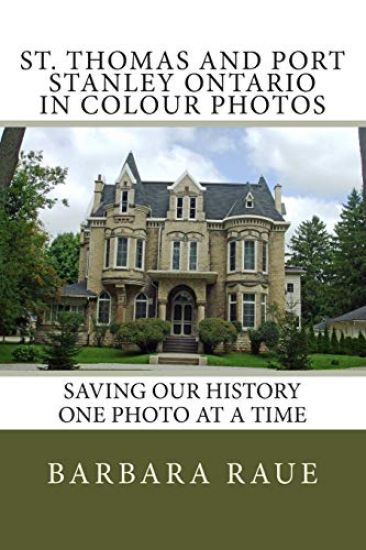
St. Thomas and Port Stanley Ontario in Colour Photos: Saving Our History One Photo at a Time
St. ThomasColonel The Honourable Thomas Talbot (1771-1853), the founder of the "Talbot Settlement", was born at Castle Malahide, Ireland. In 1803, after serving in the British Army, he was granted 5,000 acres and settled in Dunwich Township. He promoted colonization by building mills, supervising the construction of a three hundred mile long road paralleling Lake Erie, and helping establish thousands of settlers in the area. In 1817 St. Thomas, located south of London and north of Port Stanley, was named for him. St. Thomas, located in Southwestern Ontario at the intersection of two historical roads, was first settled in 1810. It was named the seat of the new Elgin County in 1844 and became a city in 1881.The founder of the settlement that became St. Thomas was Captain Daniel Rapelje. In 1820, Rapelje divided his land into town lots for a village. He donated two acres of land for the building of Old St. Thomas Church.In 1871, the developing village of Millersburg, which included lands east of the London and Port Stanley Railway, amalgamated with St. Thomas.In the late nineteenth century and early twentieth century several railways were constructed through the city and St. Thomas became an important railway junction. A total of twenty-six railways have passed through the city since the first railway was completed in 1856. In the 1950s and 1960s, with the decline of the railway as a mode of transportation, other industry began to locate in the city, mainly primary and secondary automotive manufacturing.In 1824, Charles Duncombe and John Rolph established the first medical school in Upper Canada, in St. Thomas, under the patronage of Colonel Thomas Talbot. Duncombe's house now forms part of The Elgin Military Museum complex. Between 1881 and 1988 the city had a private woman's school operating called Alma College which was destroyed by fire in 2008.Port StanleyLieutenant-Colonel John Bostwick - 1780-1849 - Born in Massachusetts, Bostwick came as a child to Norfolk County. He was appointed high constable of the London District in 1800 and sheriff in 1805. A deputy-surveyor, he laid out some of the earliest roads in the Talbot Settlement and in 1804 was granted 600 acres at the mouth of Kettle Creek. After serving as a militia officer throughout the War of 1812, he settled on the site of Port Stanley and founded this community. Bostwick represented Middlesex in the legislative assembly 1821-24. He donated the land for this church, which was completed in 1845, and he is buried in its churchyard.Port Stanley is located on the north shore of Lake Erie at the mouth of Kettle Creek. It was part of an important early route from Lake Erie to other inland waterways for a succession of explorers and travellers of the seventeenth and eighteenth centuries, serving as an important landing point and camping spot. Adrien Jolliet, brother of Louis Jolliet, landed here in 1669 during the first descent of the Great Lakes by Europeans. A settlement named Kettle Creek was founded here in 1812 by Lieutenant-Colonel John Bostwick. Around 1824, it was renamed Port Stanley after Edward Smith-Stanley, 14th Earl of Derby, who had visited nearby Port Talbot. Lord Stanley later became Prime Minister of the United Kingdom and the father of Frederick Stanley, 16th Earl of Derby, Governor General of Canada, and an ice hockey enthusiast and donor of the first Stanley Cup in 1893.
Jarvis and Port Dover Ontario in Colour Photos: Saving Our History One Photo at a Time
JarvisJarvis is located near the towns of Simcoe, Cayuga, Port Dover and Hagersville. Jarvis is strategically located at the junction of Highways 3 and 6. Jarvis has some excellent examples of brick architecture. Many of the historic homes were built after 1873. Many of the town's restaurants and shops are clustered around the intersection of the highways. The majority of the buildings are red brick.Port DoverIn 1794, Mr. Peter Walker was the first settler of this community known as Dover Mills. During the War of 1812, there was an American raid here on May 14, 1814. After making their landing on the shore, 750 American soldiers launched a surprise attack on the village's civilians. Scattered elements of nearby militia and regular units tried to defend the village without any success. The survivors rebuilt Port Dover further downstream on Patterson's Creek on the north shore of Lake Erie. Port Dover is the southern terminus for Ontario Highway 6 located 480 kilometres or 300 miles to the south of the Northern Ontario community of McKerrow. This highway stretches northward as a two-lane, undivided highway until the traffic flow increases to four lanes shortly after it departs from Caledonia. This highway allows Port Dover residents direct access to the city of Hamilton, and on to Toronto. The community once had its own railway station with frequent service from the Lake Erie & Northern Railway, owned by Canadian Pacific Railway. The Port Dover beaches caused most of the passenger traffic to occur during the summer months. A railway ticket to the "distant" community of Galt cost $1.55 per person during the late spring of 1949 (about $15.63 in today's money). Rail service was also offered on the Port Dover & Lake Huron Railway (later purchased by Canadian National) line from the Caledonia Train Station to Port Dover.In 1974, the town was amalgamated into the new city of Nanticoke within the Regional Municipality of Haldimand-Norfolk.The first Port Dover lighthouse was a twenty-four foot high wooden structure built on the west pier at the mouth of the Lynn River in 1845 as a small harbour light for the active shipbuilding, square timber trade, inshore fishery, and, later, coal and railway shipping. It burned down in 1846 and was rebuilt in 1847.
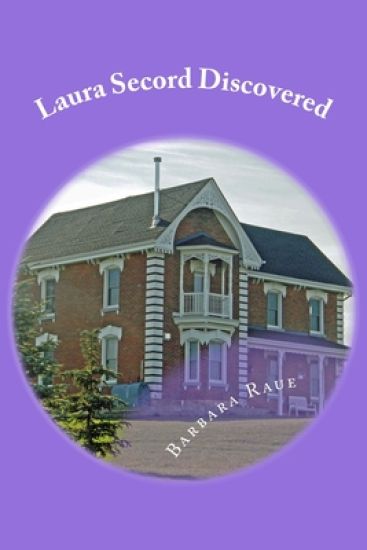
Laura Secord Discovered

Laura Secord Discovered

Barbara Raue

Createspace Independent Publishing Platform
2014
nidottu
About 500,000 colonists remained faithful to the British crown. Many loyalists agreed that America had suffered wrongs at the hands of Britain, but unlike the rebels, they believed that the solution to those ills could be worked out inside the Empire.Over the course of the war between thirty and fifty thousand Loyalists joined Loyalist regiments. Despite the steadfast service of the northern Loyalists and their almost unbroken string of victories, the war did not go well for the British. The entry of the French on the side of the rebellious colonies in 1778 was a heavy blow. The British army was defeated. The Loyalists were forced from their land in the United States, and they wanted to own their own land. The British government made treaties with the Indians to obtain land for the settlers.Tom and Betsey O'Donnell are introduced early as the pioneer family followed in their early years of starting a farm in the wilds of Upper Canada.Andrew and Mary Parker, former neighbours of the O'Donnells, are introduced next. Andrew is a carpenter and thoroughly enjoys his creative work. Mary is a loving wife who looks after their home and vegetable garden. When we first meet them, Mary is expecting their first child.Andrew gets his lumber from John Cripps and Mary enjoys a visit with Catherine while the men discuss business. Catherine's daughter-in-law, Elizabeth, comes for a visit as well. Elizabeth is also expecting her first child and the three women have questions, concerns and knowledge to share.Mary Parker reads an article in The Church magazine about a woman named Laura Secord who walked a long way to warn the British of a planned American attack. This begins a search for more information.The Parkers visit the O'Donnells and solicit information from Betsey from her parents who live in the Niagara area.The War of 1812 was fought between the United States and Great Britain from 1812-1815. From the end of the American Revolution, the American colonies had been irritated by the failure of the British to withdraw from American territory along the Great Lakes, their backing of the Indians on America's frontiers, and their unwillingness to sign commercial agreements favourable to the colonies. Resentment grew during the French Revolutionary Wars and the Napoleonic Wars in which Britain and France fought. Neutral shipping was interfered with by laws passed by both of these countries which affected the American colonies. The American government leaders felt that American honour could be saved and British policies changed by an invasion of Canada. The United States declared war on Canada on June 18, 1812.Laura Secord travelled a long ways on a hot June day to warn the British of a planned American attack. This trek was kept fairly quiet for years for the safety of Laura and her family. . Laura cold not take a direct route as there were American soldiers in the area. In the woods there was some respite from the heat, but the mosquitoes were swarming around her. As she neared the British, she stumbled upon a native encampment and had to convince them that she had an important message for the British. She was exhausted by this time but would not rest until she had delivered her message. The natives escorted Laura to the British and she warned them of the planned attack. The British and the natives prepared for the American attack and were able to rout the Americans and take a large number captive.The lives of the O'Donnells, Parkers, Cripps, and Secords are followed through to the Confederation of Canada, to the building of canals, and the building of the railway to connect Canada from shore to shore and add British Columbia as another province in the country of Canada.The book concludes with the impact left behind by Laura Secord and the great service she provided for the Canadian people.
Elmira Ontario Book 1 in Colour Photos: Saving Our History One Photo at a Time

Elmira Ontario Book 1 in Colour Photos: Saving Our History One Photo at a Time

Barbara Raue

Createspace Independent Publishing Platform
2014
nidottu
Elmira is the largest community within the Township of Woolwich in the Regional Municipality of Waterloo and is located 15 kilometres (9 miles) to the north of the city of Waterloo.The land comprising Woolwich Township originally belonged to the Huron and then the Mohawk Indians. The first settlers arrived in Woolwich Township in the late eighteenth century. In 1798, William Wallace, one of the first settlers in the area, was deeded 86,078 acres of land on the Grand River for a cost of $16,364.In 1806, Wallace sold the major portion of his tract to Mennonites. Benjamin Eby, the secretary of the Germany Company came to the area with his friend Henry Brubacher. The young men liked Wallace's Woolwich. Eby returned to Pennsylvania where he formed a land company. The following year, he returned with a barrel of silver dollars, and the Musselmans, Martins, Hoffmans, and Gingerichs to settle in the area. Wallace sold the Germany Company 45,185 acres of land at $1.00 an acre.In 1834, Edward Bristow became one of Elmira's first settlers when he purchased 53 acres of land here for 50 cents per acre. A community by the name of Bristow's Corners was in existence in 1839 when a post office was assigned there. In 1853 the community was renamed Elmira. In the 1850s, German settlers moved into the community, including Oswald, Esche, Steffen and Tresinger. Like most of the township, the primary settlers in the Elmira area were Mennonites who still form a significant proportion of the population today. The town still retains much of its traditional Pennsylvania Dutch character.
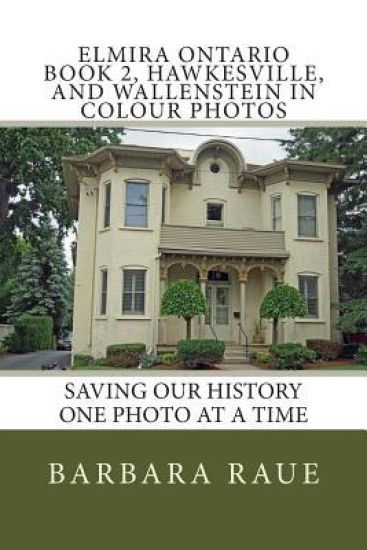
Elmira Ontario Book 2, Hawkesville, and Wallenstein in Colour Photos: Saving Our History One Photo at a Time
ElmiraElmira is the largest community within the Township of Woolwich in the Regional Municipality of Waterloo and is located 15 kilometres (9 miles) to the north of the city of Waterloo.The land comprising Woolwich Township originally belonged to the Huron and then the Mohawk Indians. The first settlers arrived in Woolwich Township in the late eighteenth century. In 1798, William Wallace, one of the first settlers in the area, was deeded 86,078 acres of land on the Grand River for a cost of $16,364.In 1806, Wallace sold the major portion of his tract to Mennonites. Benjamin Eby, the secretary of the Germany Company came to the area with his friend Henry Brubacher. The young men liked Wallace's Woolwich. Eby returned to Pennsylvania where he formed a land company. The following year, he returned with a barrel of silver dollars, and the Musselmans, Martins, Hoffmans, and Gingerichs to settle in the area. Wallace sold the Germany Company 45,185 acres of land at $1.00 an acre.In 1834, Edward Bristow became one of Elmira's first settlers when he purchased 53 acres of land here for 50 cents per acre. A community by the name of Bristow's Corners was in existence in 1839 when a post office was assigned there. In 1853 the community was renamed Elmira. In the 1850s, German settlers moved into the community, including Oswald, Esche, Steffen and Tresinger. Like most of the township, the primary settlers in the Elmira area were Mennonites who still form a significant proportion of the population today. The town still retains much of its traditional Pennsylvania Dutch character.HawkesvilleThe Township of Wellesley is the rural, north-western township of the Regional Municipality of Waterloo. The township comprises the communities of Bamberg, Crosshill, Hawkesville, Heidelberg, Kingwood, Knight's Corners, Linwood, Macton, St. Clements, Wallenstein and Wellesley.Hawkesville never got the railroad. On a hill itself, ringed by the flat of the Conestogo River, itself inside a ring of tall hills, it was deemed too difficult a task to bring the trains through town. Hawkesville has maintained the charm of the surrounding sugar maple woods and the quiet river banks.Wellesley Township was surveyed in 1842, but settlers were in this area long before. In 1837, John Philip Schweitzer from Germany squatted at what is now Hawkesville, and had 40 acres of land cleared over the following nine years. Then, John Hawke received government permission to buy the clearing for $700.00 on the condition that he build a grist mill for flour and a sawmill within two years. When the Waterloo County boundaries were established in 1852 to include the townships of Waterloo, Wellesley, Wilmot, Woolwich, and North Dumfries, John Hawke was named the first reeve of Wellesley and the first township hall was built in Hawkesville. When the decision was being made for the location of a county seat, Hawkesville originally anticipated being chosen over Berlin and Galt. However, John Hawke had the deciding vote, and he cast it in favour of Berlin. With the railroad and the county seat, Berlin began to grow rapidly and kept on growing; Hawkesville flourished until the end of the century before diminishing.Before the dawning of the 20th century, the area was home to doctors, blacksmiths, and merchants, as well as a tannery, hotels, and churches. Into the early 1900s, the village carriage and wagon maker, George Diefenbacker entertained his grandson, John Diefenbaker, each summer.
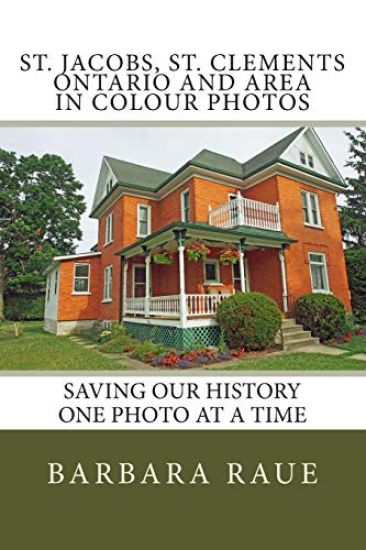
St. Jacobs, St. Clements Ontario and Area in Colour Photos: Saving Our History One Photo at a Time
St. JacobsSt. Jacobs is located in southwest Ontario just north of Waterloo with a Mennonite heritage. The Conestogo River, which powered the village's original gristmill, runs through the village.St. Jacobs was settled in 1819 and was first known as "Jakobstettel" which means "Jacob's Village". The St. was added to the name to make it sound more pleasing and the pluralization was in honour of the combined efforts of Jacob C. Snider and his son, Jacob C. Snider, Jr., founders of the village.St. Jacobs' developed as a thriving business community throughout the 1800s with a felt factory, tannery, glue factory, flour mill, saw mill, and furniture factory. Situated on Arthur Road, St. Jacobs boasted four hotels by 1852. One of these - today's Benjamin's Restaurant and Inn - is still operating today.St. Jacobs features dozens of artisans in historic buildings, such as the Country Mill, Village Silos, Mill Shed, and the Old Factory. Visitors may watch artisans make pottery, quilts, designer clothes, jewellery, glass vases, woven wall hangings, tiffany lamps, stained glass doors, miniature doll houses, and more. There are also two blacksmith shops to visit. The Visitor Centre is a Mennonite interpretation centre providing information and education on the Mennonite people in the community.St. Clements, Heidelberg, Crosshill and Bamberg are communities in the Township of Wellesley.
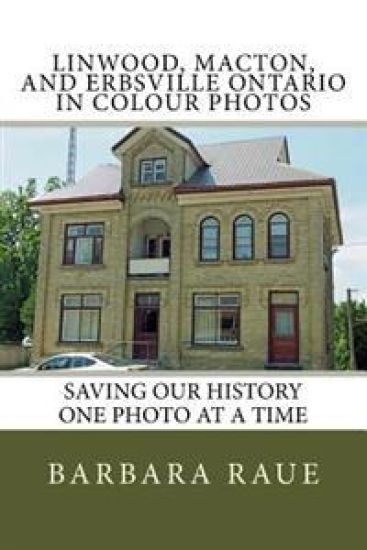
Linwood, Macton, and Erbsville Ontario in Colour Photos: Saving Our History One Photo at a Time
The Township of Wellesley is the rural, north-western township of the Regional Municipality of Waterloo. The township comprises the communities of Bamberg, Crosshill, Hawkesville, Heidelberg, Kingwood, Knight's Corners, Linwood, Macton, St. Clements, Wallenstein and Wellesley.The country scenery and rolling hills, along with its small town feel, have transformed the township into a commuter town with the population travelling into the nearby cities of Kitchener and Waterloo for work.Wellesley Township was surveyed in 1842, but settlers were in this area long before. The town of Wellesley's original name was Schmidtsville, derived from its founding settler, John Schmidt. In 1851, the town was renamed Wellesley after Richard Wellesley, 1st Marquess Wellesley, the eldest brother of Arthur Wellesley, 1st Duke of Wellington. The community quickly grew to be the largest economic centre in rural Waterloo Region with a wood mill, feed mill, grain mill (which still stands after being constructed in 1856), leather tanner, cheese factory, restaurants and housing, and many other businesses that also brought much trade to the town from the nearby farms and farming villages.When the Waterloo County boundaries were established in 1852 they included the townships of Waterloo, Wellesley, Wilmot, Woolwich, and North Dumfries.The first library in Wellesley Village was incorporated in 1900. The current branch is located in the former S.S. No. 16 Wellesley Township public school building. The school closed its doors in 1967.MactonMacton is on the northern boundary line of Wellesley Township, three miles northeast of Linwood, twenty miles northwest of Berlin, three miles east of Wallenstein. Macton was settled later than St. Clements, mostly by Irish people.ErbsvilleErbsville is located about five miles west of Kitchener.
Wellesley Ontario in Colour Photos: Saving Our History One Photo at a Time

Wellesley Ontario in Colour Photos: Saving Our History One Photo at a Time

Barbara Raue

Createspace Independent Publishing Platform
2014
nidottu
The Township of Wellesley is the rural, north-western township of the Regional Municipality of Waterloo. The township comprises the communities of Bamberg, Crosshill, Hawkesville, Heidelberg, Kingwood, Knight's Corners, Linwood, Macton, St. Clements, Wallenstein and Wellesley.The country scenery and rolling hills, along with its small town feel, have transformed the township into a commuter town with the population travelling into the nearby cities of Kitchener and Waterloo for work.Wellesley Township was surveyed in 1842, but settlers were in this area long before. The town of Wellesley's original name was Schmidtsville, derived from its founding settler, John Schmidt. In 1851, the town was renamed Wellesley after Richard Wellesley, 1st Marquess Wellesley, the eldest brother of Arthur Wellesley, 1st Duke of Wellington. The community quickly grew to be the largest economic centre in rural Waterloo Region with a wood mill, feed mill, grain mill (which still stands after being constructed in 1856), leather tanner, cheese factory, restaurants and housing, and many other businesses that also brought much trade to the town from the nearby farms and farming villages.When the Waterloo County boundaries were established in 1852 they included the townships of Waterloo, Wellesley, Wilmot, Woolwich, and North Dumfries.The first library in Wellesley Village was incorporated in 1900. The current branch is located in the former S.S. No. 16 Wellesley Township public school building. The school closed its doors in 1967.
Listowel Ontario in Colour Photos: Saving Our History One Photo at a Time

Listowel Ontario in Colour Photos: Saving Our History One Photo at a Time

Barbara Raue

Createspace Independent Publishing Platform
2014
nidottu
Listowel is located in the municipality of North Perth, northwest of Kitchener/Waterloo, and west of Elmira on Highway 86.Settler John Binning arrived in 1857 and was the first to create a permanent residence in the area. The community was originally named Mapleton, but the name was changed when a post office was established. The new name was chosen by a government official and refers to Listowel, Ireland (a market town in County Kerry situated on the River Feale, 28 kilometres, or 17 miles, from the county town, Tralee.) The majority of early settlers were of Protestant Irish origin.In 1907, hydroelectric and telephone services came to the town with the Princess cinema. During World War II the theatre was renamed the Capitol and remains Canada's oldest operating cinema.In 1871 the Wellington, Grey and Bruce Railway extended its line to Listowel. It was joined in 1873 by a second railway, the Stratford and Huron Railway, and Listowel became an important shipping point. The population doubled when industries, including a woolen mill, a sawmill, a planing mill and a tannery, were established. In 1891 the Morris, Field, Rogers Company Ltd began to manufacture Morris pianos in Listowel. The Campbell Soup Company was a major local employer for 48 years, operating a frozen, foodservice and specialty food plant in Listowel. The factory closed in April 2008. The surrounding area is mostly agricultural land located on the Perth Plain, dominated by the beef and pork industries.
Dorchester to Aylmer Ontario in Colour Photos: Saving Our History One Photo at a Time
Thames Centre is a municipality in Middlesex County located in southwestern Ontario a few kilometers east of London. Communities in the township include: Avon, Belton, Cherry Grove, Crampton, Cobble Hill, Derwent, Devizes, Dorchester, Evelyn, Fanshawe Lake, Friendly Corners, Gladstone, Harrietsville, Kelly Station, Mossley, Nilestown, Oliver, Putnam, Salmonville, Silvermoon, Thorndale, Three Bridges, and Wellburn. Dorchester is the residential and commercial core of the township.MossleyUntil 1840 the Mossley area was an untouched wilderness of pines, maples, and beeches. The first settlers from England, Scotland, Ireland and Wales worked hard to clear the land for farming. They came with few tools but great hope for a better way of life, and they prospered. In the 1800s this area was known simply as "The Corners". In 1865 John Henry Amos opened a general store and was the first postmaster. The name Mossley was chosen from two family names, the Mossips and the Lees. Mossley had a hotel, a cheese factory, a harness repair shop, and there were dressmakers and music teachers.Malahide Township was named for Malahide Castle in Malahide, Ireland, birthplace of land grant administrator Colonel Thomas Talbot in 1810. The township comprises the communities of Candyville, Crossley-Hunter, Copenhagen, Dunboyne, Fairview, Glencolin, Grovesend, Jaffa, Kingsmill, Lakeview, Little Aylmer, Luton, Lyons, Mile Corner, Mount Salem, Mount Vernon, Ormond Beach, Orwell, Port Bruce, Seville, Springfield, Summers Corners and Waneeta Beach.
Fergus Ontario in Colour Photos: Saving Our History One Photo at a Time

Fergus Ontario in Colour Photos: Saving Our History One Photo at a Time

Barbara Raue

Createspace Independent Publishing Platform
2014
nidottu
Fergus is the largest community in Centre Wellington, a township within Wellington County. It lies on the Grand River about 25 kilometres north of Guelph.The first settlers to this area were freed slaves who formed what was known as the Pierpoint Settlement, named after their leader, Richard Pierpoint. Along with half a dozen other men, Pierpoint was granted land in Garafraxa Township in what is now Fergus.Adam Fergusson visited Canada in 1831 to investigate emigration for the Highland Society of Scotland. In 1833 in partnership with a fellow Scot, James Webster, they purchased over 7,000 acres of uncleared land in Nichol Township. Attracted by the abundant water power, they laid out the town of Fergus. Webster took up residence there and supervised the settlement's early development. The first house was built in 1833, then a hotel, a saw mill, grist mill, church and school.They established a vibrant economy using the waterfalls on the Grand River as power for local industry. The Scots built solid stone houses, factories and other buildings which have characterized Fergus to this day. Many of the houses and factories built by these early settlers are still in use today.Originally Fergus was known as Little Falls, because of the scenic waterfalls downtown between the Public Library and the Fergus Market.St Andrew Street runs parallel to the Grand River on the north side and is the heart of downtown. On the south side of the river is Queen Street where the newly renovated Fergus Market is located.
Elora Ontario in Colour Photos: Saving Our History One Photo at a Time

Elora Ontario in Colour Photos: Saving Our History One Photo at a Time

Barbara Raue

Createspace Independent Publishing Platform
2014
nidottu
Elora is located in Wellington County on the Grand River and is about twenty kilometres north of Guelph, and twenty kilometres northeast of Kitchener-Waterloo.Elora was founded in 1832 by Captain William Gilkison, a British officer recently returned from India. Originally called Irvine Settlement, the village was renamed Elora when the post office was established in 1839. Gilkison named the community after his brother's ship, which was itself inspired by the Ellora Caves near Aurangabad, Maharashtra, India.The Elora Gorge, located at the western edge of the village, is one of the most scenic areas in Southern Ontario with its limestone cliffs descending 80 feet into the Grand and Irvine rivers where small caves, rapids, falls and quiet waters beckon visitors. At the foot of Mill Street stands the Elora Mill, one of the few early Ontario five-storey grist mills still in existence.David Boyle, born in Scotland in 1842, came to Canada in 1856 and settled in this area. As a local school teacher, he began an extensive collection of native artifacts and became an archaeological authority. In 1886, Boyle was appointed the first curator of the Provincial Archaeological Museum in Toronto. He was dedicated to the study and retention of artifacts and he initiated an active programme of excavation and acquisition. Through his work on Ontario prehistory, Boyle gained international recognition as a leading Canadian archaeologist and anthropologist.
Palmerston Ontario in Colour Photos: Saving Our History One Photo at a Time

Palmerston Ontario in Colour Photos: Saving Our History One Photo at a Time

Barbara Raue

Createspace Independent Publishing Platform
2014
nidottu
Palmerston is located in Wellington County, west of Arthur, northeast of Listowel, and northwest of Kitchener and Waterloo.The opening in 1871 of a station on the main line of the Wellington, Grey and Bruce Railway soon to be completed from Guelph to Southampton, provided the nucleus around which a community developed. In its original concept the railroad was to run from Guelph to Harriston and would not have gone through Palmerston. Listowel needed to be linked to the railroad and it was decided to bend the route toward Listowel. It was also decided that a yard with maintenance shops would be needed. As soon as the railroad decided where it would build, people started buying property around the area for businesses and homes.Thomas McDowell was the first settler in 1854 on the site. In 1872 McDowell and William Thompson who owned adjoining land, began selling town lots and by 1873 the community had 150 inhabitants. In 1873 a branch line to Listowel was completed and a post office called Palmerston, named after Lord Palmerston, a celebrated English statesman, was opened.
Drayton Ontario and Area in Colour Photos: Saving Our History One Photo at a Time

Drayton Ontario and Area in Colour Photos: Saving Our History One Photo at a Time

Barbara Raue

Createspace Independent Publishing Platform
2014
nidottu
Centre Wellington is a township in south-central Ontario. The primary communities in the township are Elora and Fergus. Some of the smaller communities are Alma, Salem, and Speedside.Parker was a settlement in Ontario, located along the Elora-Saugeen road. Settlers moved to the area to begin new lives and to farm. To provide accommodation for travelers in horse-drawn vehicles, a hotel opened in 1850. In 1865, Thomas Burns opened a post office which brought a few neighbouring businesses to the area. As travel became more modern, the need for overnight stay diminished and the town began to dwindle. It is still used for farming today but the hotel and post office have closed. The school house is still standing and is a private home, painted pink.Conestogo Lake Conservation Area is in the heart of Mennonite country. It is on a y-shaped lake that stretches six kilometres up each arm. A unique feature of this area is the huge concrete flood control dam and reservoir surrounded by large tracts of forest, giving the appearance that the park is in northern Ontario. This is a multi-recreational use park for camping, power boating, sailing, water skiing, canoeing and fishing.Glen Allan is located in Wellington County southeast of Conestogo Lake.Yatton is located in Wellington County. The area was settled by people in the early 1820s, when Black Loyalists, African-Canadians and African-American immigrants arrived in the wilderness of the Queen's Bush. Until the late 1840s the Queen's Bush remained an unorganized territory. Three African-Canadian churches were constructed in the Queen's Bush and one of them was in Yatton which Reverend Samuel H. Brown established on his farm.Drayton is a community in Wellington County. The village is on the corner of Wellington Road 8 and Wellington Road 11, and is located northwest of Fergus and southwest of Arthur.
Tillsonburg Ontario in Colour Photos: Saving Our History One Photo at a Time

Tillsonburg Ontario in Colour Photos: Saving Our History One Photo at a Time

Barbara Raue

Createspace Independent Publishing Platform
2014
nidottu
Tillsonburg is a town in Oxford County located about 50 kilometers southeast of London on Highway 3 at the junction of Highway 19 which connects to Highway 401.The area was settled in 1825 by George Tillson and other immigrants from Massachusetts. A forge and sawmill were erected and roads built which led to the establishment of a settlement on the Big Otter Creek originally called Dereham Forge.In 1836 the village was renamed Tillsonburg in honor of its founder. It was also in this year that the main street, Broadway, was laid out to its full 100-foot (30 meter) width. Because the village was predominantly a logging and wood product center, the street width was to accommodate the turning of three-team logging wagons. This width has become a benefit toward handling the pressures of modern-day traffic by providing angled parking. The extension of Broadway north was called Plank Line and is now known as Highway 19.The water system supplied pure water for domestic use, and provided water power to such industries as a sawmill, planing mill, grist mill, spinning mill, pottery and a tannery. Many of these new establishments were owned, started, or financed by George Tillson.In 1915, a Public Library was built with funds provided by the Carnegie Foundation, and the town's Memorial Hospital was constructed in 1925. In the 1920s, major enterprises included milk production, manufacture of shoes, tractors, textiles and tobacco.
Rockwood and Limehouse Ontario in Colour Photos: Saving Our History One Photo at a Time
RockwoodRockwood is located on Highway 7 between Acton and the city of Guelph. The Eramosa River runs through the centre of the village.Early settlers to this area were Quakers. John Harris, the first settler, erected a shanty in 1821. In 1840 Colonel Henry Strange settled and brought further development to the area which became known as Strange's Mills. Strange was the Deputy Provincial Surveyor and he opened a lime quarry which provided stone for building mills. In the 1850s the community became known as Rockwood which reflected the lovely river valley, mixed forest, high rocky hills, and geological potholes. The Eramosa River provided power for John Gamble's sawmill which was the first in Wellington County. Grist, flour, oatmeal, stave, and woollen mills followed. A post office was opened in 1853 and the Grand Trunk Railway opened a station in 1855.LimehouseLimehouse is a community in the Town of Halton Hills in southern Ontario. It has a population of about 800 people and its closest neighbours are Georgetown and Acton. Limehouse has many hills, trails and a small school.