Kirjojen hintavertailu. Mukana 12 390 323 kirjaa ja 12 kauppaa.

Kirjahaku

Etsi kirjoja tekijän nimen, kirjan nimen tai ISBN:n perusteella.

1000 tulosta hakusanalla Barbara a. Dolan

The Middle Ages

The Middle Ages

Barbara A. Hanawalt

Oxford University Press Inc
1999
sidottu
A brisk narrative of battles and plagues, monastic orders, heroic women, and knights-errant, barbaric tortures and tender romance, intrigue, scandals, and conquest, The Middle Ages: An Illustrated History mixes a spirited and entertaining writing style with exquisite, thorough scholarship. Barbara A. Hanawalt, a renowned medievalist, launches her story with the often violent amalgamation of Roman, Christian, and Germanic cultures following the destruction and pillaging of the crown jewel of the Roman Empirethe great city of Rome. The story moves on to the redrawn map of Europe, in which power players like Byzantium and the newly-established Frankish kingdom begin a precarious existence in a "sea of tribes" (in the words of a contemporary). Savage peoplesthe bloodthirsty Germans, the wild Visigoths and Ostrogoths, the fierce Anglo-Saxons, and the Slavs to the Eastas well as the sophisticated and ever-expanding Arabs threaten each others borders, invade cities and have their own cities sacked, fight victorious battles and get conquered in turn. Hanawalt charts the spread of Christianity in Europe, maps out the trail of misery and mayhem the Crusades left in their wake, explains feudalism and Church reform, familiarizes us with the astrolabe and the masterpieces of Romanesque and Gothic architecture, tracks the progress of the Hundred Years' War, and brings great historical figures--such as Charlemagne, King Henry II, Joan of Arc, Dante, and Justinian--to life.Spanning the millennium between the fifth and the fifteenth centuries, The Middle Ages: An Illustrated History captures the major historical and political events in great depth and clarity, but never loses sight of the plain and often-overlooked facts of lifelife as lived by peasants and townsfolk, kings and monks, men and women. Hanawalt offers fascinating tidbits on diverse facets of medieval society, from herbal medical cures to table etiquette and drinking habits, from tabloid-worthy court scandals to a unique listing of the rules of a monastic order. She examines rare textsfrom illuminated manuscripts to Carolingian minusculeand takes us inside the awe-inspiring Hagia Sofia in Constantinople.Barbara Hanawalt makes use of eclectic source material, including inscriptions, chronicles, artifacts, and literature, from the Koran to the Scriptures, and from Omar Khayam to the Goliardic poems. Fascinating stories--like that of the discovery of the burial site of an Anglo-Saxon chieftain which contained, among other treasures, an entire 86-foot long shipare interspersed among the chronicles of great historical upheavals. The author takes a sweeping approach to the subject, building a comprehensive, animated portrait of every aspect of life in that period by including material on women's place in medieval society, agriculture, art and literature, religion and superstitions, philosophy, and weaponry. Lavishly illustrated with art, photographs, documents, artifacts, and maps, The Middle Ages also includes a glossary, index, chronology, and suggestions for further reading. A collection of lavishly illustrated single-volume histories, Oxford Illustrated Histories present well-documented chronologies on topics like Britain, theater, Greece, opera, English literature, modern Europe, and more. Each history includes color and black and white illustrations, as well as photographs, and is compiled by a taskforce of leading scholars in its respective field of interest. These titles are ideal for any casual reader and also, because of the scholarship, serve as companions to any budding researcher's reference collection.
Of Good and Ill Repute

Of Good and Ill Repute

Barbara A. Hanawalt

Oxford University Press Inc
1998
nidottu
In eleven interrelated essays, including three previously unpublished works, Hanawalt explores the roles that community, family and society played in maintaining social control in Medieval England. Focusing on gender, criminal behavior, law enforcement, village arbitration, and cultural rituals on inclusion and exclusion, Of Good and Ill Repute reflects the most current scholarship on medieval legal history, cultural history, and women's cultural studies.
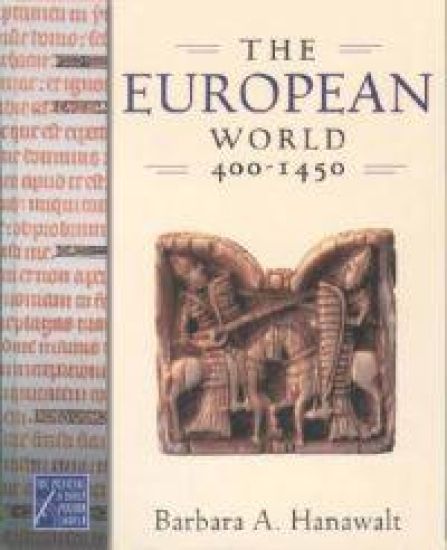
The European World, 400-1450

The European World, 400-1450

Barbara A. Hanawalt

Oxford University Press
2005
sidottu
As the Roman Empire began to crumble and lose its long-held dominance over Europe, new civilizations were emerging to fill the void. Germanic tribes like the Goths, the Franks, and the Vandals, as well as the Huns and Visigoths all fought for control of the land. Christianity became a more acceptable religion throughout Europe, while the Islamic religion was born in the Middle East and quickly spread, eventually making its way into Europe. The blending and conflict of cultures and beliefs helped to create what we now call the Middle Ages. Fascinating new characters were also rising in Europe like the emperor and empress of the Byzantine Empire Justinian and Theodoraambitious leaders who made one final push to recapture the west and regain the past glory of the Roman Empire. Meanwhile in the west Charlemagne had come to power by crowning himself emperor. A popular leader he spent much of his time travelling through his land on horseback accompanied by an entourage that often included an elephant Vikings from Scandinavia began raiding parts of Europe until eventually they were stopped by Alfred the king of Wessex in England. By 1066, however, the Scandinavians got their revenge when William the Conqueror invaded England and took over. Filled with intrigue, conflict, power struggles, and colorful characters and based on primary source materials Barbara Hanawalt's The European World is an adventure at every turn. From Attila the Hun to Joan of Arc, from the fall of Rome to the Plague this pivotal moment in history comes alive.
Student Study Guide to the European World 400-1450

Student Study Guide to the European World 400-1450

Barbara A. Hanawalt

Oxford University Press Inc
2006
nidottu
The Student Study Guides are important and unique components that are available for each of the books in The Medieval & Early Modern World series. Each of the Student Study Guides is designed to be used with the main text at school or sent home for homework assignments. The activities in the Student Study guide will help students get the most out of their history books. Each student study guide includes a chapter-by-chapter two-page lesson that uses a variety of interesting activities to help a student master history and develop important reading and study skills.
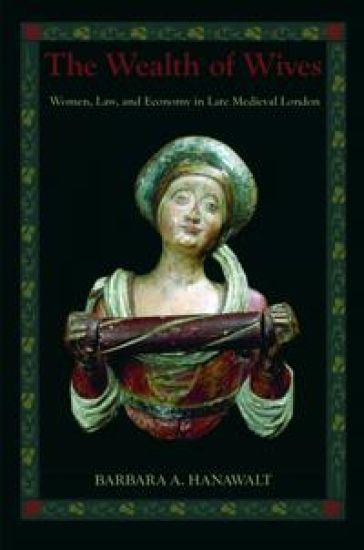
The Wealth of Wives

The Wealth of Wives

Barbara A. Hanawalt

Oxford University Press Inc
2007
sidottu
London became an international center for import and export trade in the late Middle Ages. The export of wool, the development of luxury crafts and the redistribution of goods from the continent made London one of the leading commercial cities of Europe. While capital for these ventures came from a variety of sources, the recirculation of wealth through London women was important in providing both material and social capital for the growth of London's economy. A shrewd Venetian visiting England around 1500 commented about the concentration of wealth and property in women's hands. He reported that London law divided a testator's property three ways allowing a third to the wife for her life use, a third for immediate inheritance of the heirs, and a third for burial and the benefit of the testator's soul. Women inherited equally with men and widows had custody of the wealth of minor children. In a society in which marriage was assumed to be a natural state for women, London women married and remarried. Their wealth followed them in their marriages and was it was administered by subsequent husbands. This study, based on extensive use of primary source materials, shows that London's economic growth was in part due to the substantial wealth that women transmitted through marriage. The Italian visitor observed that London men, unlike Venetians, did not seek to establish long patrilineages discouraging women to remarry, but instead preferred to recirculate wealth through women. London's social structure, therefore, was horizontal, spreading wealth among guilds rather than lineages. The liquidity of wealth was important to a growing commercial society and women brought not only wealth but social prestige and trade skills as well into their marriages. But marriage was not the only economic activity of women. London law permitted women to trade in their own right as femmes soles and a number of women, many of them immigrants from the countryside, served as wage laborers. But London's archives confirm women's chief economic impact was felt in the capital and skill they brought with them to marriages, rather than their profits as independent traders or wage labourers.
The Wealth of Wives

The Wealth of Wives

Barbara A. Hanawalt

Oxford University Press Inc
2007
nidottu
London became an international center for import and export trade in the late Middle Ages. The export of wool, the development of luxury crafts and the redistribution of goods from the continent made London one of the leading commercial cities of Europe. While capital for these ventures came from a variety of sources, the recirculation of wealth through London women was important in providing both material and social capital for the growth of London's economy. A shrewd Venetian visiting England around 1500 commented about the concentration of wealth and property in women's hands. He reported that London law divided a testator's property three ways allowing a third to the wife for her life use, a third for immediate inheritance of the heirs, and a third for burial and the benefit of the testator's soul. Women inherited equally with men and widows had custody of the wealth of minor children. In a society in which marriage was assumed to be a natural state for women, London women married and remarried. Their wealth followed them in their marriages and was it was administered by subsequent husbands. This study, based on extensive use of primary source materials, shows that London's economic growth was in part due to the substantial wealth that women transmitted through marriage. The Italian visitor observed that London men, unlike Venetians, did not seek to establish long patrilineages discouraging women to remarry, but instead preferred to recirculate wealth through women. London's social structure, therefore, was horizontal, spreading wealth among guilds rather than lineages. The liquidity of wealth was important to a growing commercial society and women brought not only wealth but social prestige and trade skills as well into their marriages. But marriage was not the only economic activity of women. London law permitted women to trade in their own right as femmes soles and a number of women, many of them immigrants from the countryside, served as wage laborers. But London's archives confirm women's chief economic impact was felt in the capital and skill they brought with them to marriages, rather than their profits as independent traders or wage labourers.
Edward M. Kennedy

Edward M. Kennedy

Barbara A. Perry

OXFORD UNIVERSITY PRESS INC
2022
nidottu
For Kennedy devotees, as well as readers unfamiliar with the "lion of the Senate", this book presents the compelling story of Edward Kennedy's unexpected rise to become one of the most consequential legislators in American history and a passionate defender of progressive values, achieving legislative compromises across the partisan divide. What distinguishes Edward Kennedy: An Oral History is the nuanced detail that emerges from the senator's never-before published, complete descriptions of his life and work, placed alongside the observations of his friends, family, and associates. The senator's twenty released interviews reveal, in his own voice, the stories of Kennedy triumph and tragedy--from the Oval Office to the waters of Chappaquiddick. Spanning the presidencies of JFK to Barack Obama, Edward Kennedy was an iconic player in American political life, the youngest sibling of America's most powerful dynasty; he candidly addresses this role: his legislative accomplishments and failures, his unsuccessful run for the White House, his impact on the Supreme Court, his observations on Washington gridlock, and his personal faults. The interviews and introductions to them create an unsurpassed and illuminating volume. Gathered as part of the massive Edward Kennedy Oral History Project, conducted by the University of Virginia's Miller Center, the senator's interviews allow readers to see how oral history can evolve over a three-year period, drawing out additional details as the interviewee becomes increasingly comfortable with the process and the interviewer. Yet, given the Kennedys' well-known penchant for image creation, what the senator doesn't say or how he says what he chooses to include, is often more revealing than a simple declarative statement.
Who Sees When The Heart Cries

Who Sees When The Heart Cries

Barbara a Hayes

Tellwell Talent
2020
pokkari
Join me on this miraculous journey of a courageous God-fearing woman and her children. See how God has turned a painful situation around and brought her from the pit to the pulpit.Barbara accepted Jesus as her Lord and Savior at the age of 9, at the Bethel Baptist Tabernacle in Trinidad. In this book she talks about how she survived an abusive marriage, her journey of being a single parent and her deliverance from depression. God has anointed her to help bring other women out of their prisons, so that they too can live a meaningful and fulfilling Life.
William Maxwell

William Maxwell

Barbara A. Burkhardt

University of Illinois Press
2005
sidottu
Known as a beloved, longtime fiction editor at The New Yorker, William Maxwell worked closely with such legendary writers as Vladimir Nabokov, John Updike, Mary McCarthy, and John Cheever. His own novels include They Came Like Swallows and the American Book Award-winning So Long, See You Tomorrow, and many consider him to be one of the twentieth century's most important writers. Barbara Burkhardt's William Maxwell: A Literary Life represents the first major critical study of this Illinois writer's life and work.Writing with an economy and elegance befitting her subject, Burkhardt addresses Maxwell's highly autobiographical fiction by skillfully interweaving his biography with her own critical interpretations. She contextualizes his fiction in terms of events including his mother's early death from influenza, his marriage, and the role of his psychoanalysis under the guidance of Theodor Reik. Drawing on a wide range of previously unavailable material, Burkhardt includes letters Maxwell received from authors such as Eudora Welty and Louise Bogan, excerpts from his unpublished manuscripts and correspondence, and her own interviews with Maxwell and key figures from his life, including John Updike, Roger Angell, New Yorker fiction editor Robert Henderson, and Maxwell's family and friends.
William Maxwell

William Maxwell

Barbara A. Burkhardt

University of Illinois Press
2008
nidottu
Known as a beloved, longtime fiction editor at The New Yorker, William Maxwell worked closely with such legendary writers as Vladimir Nabokov, John Updike, Mary McCarthy, and John Cheever. His own novels include They Came Like Swallows and the American Book Award-winning So Long, See You Tomorrow, and many consider him to be one of the twentieth century's most important writers. Barbara Burkhardt's William Maxwell: A Literary Life represents the first major critical study of this Illinois writer's life and work.Writing with an economy and elegance befitting her subject, Burkhardt addresses Maxwell's highly autobiographical fiction by skillfully interweaving his biography with her own critical interpretations. She contextualizes his fiction in terms of events including his mother's early death from influenza, his marriage, and the role of his psychoanalysis under the guidance of Theodor Reik. Drawing on a wide range of previously unavailable material, Burkhardt includes letters Maxwell received from authors such as Eudora Welty and Louise Bogan, excerpts from his unpublished manuscripts and correspondence, and her own interviews with Maxwell and key figures from his life, including John Updike, Roger Angell, New Yorker fiction editor Robert Henderson, and Maxwell's family and friends.
Quick Hits for Adjunct Faculty and Lecturers

Quick Hits for Adjunct Faculty and Lecturers

Barbara A. Bichelmeyer

Indiana University Press
2015
pokkari
Non-tenure-track lecturers and adjunct instructors face particular challenges at US colleges, including heavy teaching loads, lack of office space, little control over the selection of course topics or textbooks, and long commutes between jobs at two or more schools. Quick Hits for Adjunct Faculty and Lecturers contains short, practice-oriented articles by experienced instructors that offer valuable teaching and career tips for balancing competing demands, addressing student issues, managing classrooms, and enhancing professional development.
Reinventing World War II

Reinventing World War II

Barbara A. Biesecker

Pennsylvania State University Press
2024
sidottu
By the 1970s, World War II had all but disappeared from US popular culture. But beginning in the mid-eighties it reemerged with a vengeance, and for nearly fifteen years World War II was ubiquitous across US popular and political culture. In this book, Barbara A. Biesecker explores the prestige and rhetorical power of the “Good War,” revealing how it was retooled to restore a new kind of social equilibrium to the United States.Biesecker analyzes prominent cases of World War II remembrance, including the canceled exhibit of the Enola Gay at the National Air and Space Museum in 1995 and its replacement, Steven Spielberg’s Saving Private Ryan, Tom Brokaw’s The Greatest Generation, and the United States Holocaust Memorial Museum. Situating these popular memory texts within the culture and history wars of the day and the broader framework of US political and economic life, Biesecker argues that, with the notable exception of the Holocaust Memorial Museum, these reinventions of the Good War worked rhetorically to restore a strong sense of national identity and belonging fitted to the neoliberal nationalist agenda.By tracing the links between the popular retooling of World War II and the national state fantasy, and by putting the lessons of Foucault, Derrida, Lacan, and their successors to work for a rhetorical-political analysis of the present, Biesecker not only explains the emergence and strength of the MAGA movement but also calls attention to the power of public memory to shape and contest ethnonational identity today. This book will interest rhetoricians and historians as well as students and scholars in the fields of US politics and communication studies.
America's Shame

America's Shame

Barbara A. Arrighi

Praeger Publishers Inc
1997
sidottu
Rejecting those who urge a bootstrap approach to people living in extreme poverty on the edge of society, sociologist Barbara Arrighi makes an eloquent, compassionate plea for empathy and collective responsibility toward those for whom either the boots or the straps are missing. This book further offers solutions in consciousness raising, community collaboration, and informed, responsible public policy. The book is a critique of a system that purports to serve yet sometimes impedes the welfare of those who are in need of the basic elements for survival, including affordable shelter. It analyzes the structural factors of poverty and the social psychological costs of being poor and lacking a home. Utilizing interview findings from families who have lived in a shelter in northern Kentucky and from staff members, the book examines the degrading effects of shelter life on women's self-respect and children's development. Rather than an examination of individual pathologies leading to lack of shelter, it centers on women and children living in shelters and offers a sociological study of poverty and the family.
Americans Remember Their Civil War

Americans Remember Their Civil War

Barbara A. Gannon

Praeger Publishers Inc
2017
sidottu
This book provides readers with an overview of how Americans have commemorated and remembered the Civil War.Most Americans are aware of statues or other outdoor art dedicated to the memory of the Civil War. Indeed, the erection of Civil War monuments permanently changed the landscape of U.S. public parks and cemeteries by the turn of the century. But monuments are only one way that the Civil War is memorialized.This book describes the different ways in which Americans have publicly remembered their Civil War, from the immediate postwar era to the early 21st century. Each chapter covers a specific historical period. Within each chapter, the author highlights important individuals, groups, and social factors, helping readers to understand the process of memory. The author further notes the conflicting tensions between disparate groups as they sought to commemorate "their" war. A final chapter examines the present-day memory of the war and current debates and controversies.
In the Land of Orpheus

In the Land of Orpheus

Barbara A. Cellarius

University of Wisconsin Press
2004
sidottu
Barbara Cellarius provides an ethnographic description of village life and conservation efforts in an ecologically important region of one of the most biologically diverse countries in Europe. She describes the ways in which the lives of residents of a rural community are affected by outside forces, particularly the economic and political uncertainties that have plagued Bulgaria since the collapse of communism. She examines larger forces, including environmental non-governmental organizations, interested in linking global conservation priorities with local communities.
The Beecher Sisters

The Beecher Sisters

Barbara A. White

Yale University Press
2014
pokkari
A joint biography of three extraordinary sisters and the tumultuous century that they helped to shape The Beecher sisters—Catharine, Harriet, and Isabella—were three of the most prominent women in nineteenth-century America. Daughters of the famous evangelist Lyman Beecher, they could not follow their father and seven brothers into the ministry. Nonetheless, they carved out pathbreaking careers for themselves. Catharine Beecher founded the Hartford Female Seminary and devoted her life to improving women’s education. Harriet Beecher Stowe became world famous as the author of Uncle Tom’s Cabin. Isabella Beecher Hooker was an outspoken advocate for women’s rights. This engrossing book is a joint biography of the sisters, whose lives spanned the full course of the nineteenth century. The life of Isabella Beecher—who has never been the subject of a biography—is examined in particular detail here. Drawing on little used sources, Barbara White explores Isabella’s political development and her interactions with her sisters and with prominent people of the time—from Susan B. Anthony and Elizabeth Cady Stanton to Mark Twain.
Growing Up Female

Growing Up Female

Barbara A. White

Praeger Publishers Inc
1985
sidottu
Barbara White has written a thoroughly researched, detailed description of patterns of women's experience in fiction for adolescents. This well-written study should be required reading for graduate students and library school educators. It belongs in academic libraries, public libraries, and school libraries' professional collections and should be valuable reading for all adults who work with and/or live with adolescents. Choice
Growing Up Female

Growing Up Female

Barbara A. White

Praeger Publishers Inc
1985
nidottu
Barbara White has written a thoroughly researched, detailed description of patterns of women's experience in fiction for adolescents. This well-written study should be required reading for graduate students and library school educators. It belongs in academic libraries, public libraries, and school libraries' professional collections and should be valuable reading for all adults who work with and/or live with adolescents. Choice
The Critical Response to John Steinbeck's The Grapes of Wrath
When it was initially published in 1939, John Steinbeck's The Grapes of Wrath instantly became a bestseller. Like many phenomenally popular works, it has elicited a wide range of critical responses. Some earlier reviewers faulted Steinbeck for his apparent sentimentality, while others were disturbed by his portrait of heartless, greedy Americans. Others, too, criticized his aesthetics. His novel became an important part of the American curriculum, many readers praised his epic vision, and modern critics have tended to respond favorably to his works. But despite the publication of four new editions of the book from 1989 to 1997, its place in the American literary canon is precarious.Through reprints of early reviews and scholarly articles, along with original essays and reviews of the four most recent major editions, this volume traces the critical reception of Steinbeck's novel. The first part of the book looks back at the first 50 years of the novel's reception, from 1939 to 1989, while the second examines the response to Steinbeck during the 1990s. Some of these later essays reflect on the lasting significance of the novel, while others note that some scholars and educators have questioned its relevance. The volume includes a chronology and bibliography, and an extensive introductory essay overviews the major trends in Steinbeck scholarship.