IT has long been one of my pleasantest anticipations to look forward to the time when I might offer to you, my old and dear friend, some such acknowledgment of the value I place on your affection for me, and of my grateful sense of the many acts of kindness by which that affection has been proved, as I now gladly offer in this place. In dedicating the present work to you, I fulfil therefore a purpose which, for some time past, I have sincerely desired to achieve; and, more than that, I gain for myself the satisfaction of knowing that there is one page, at least, of my book, on which I shall always look with unalloyed pleasure-the page that bears your name. I have founded the main event out of which this story springs, on a fact within my own knowledge. In afterwards shaping the course of the narrative thus suggested, I have guided it, as often as I could, where I knew by my own experience, or by experience related to me by others, that it would touch on something real and true in its progress. My idea was, that the more of the Actual I could garner up as a text to speak from, the more certain I might feel of the genuineness and value of the Ideal which was sure to spring out of it.
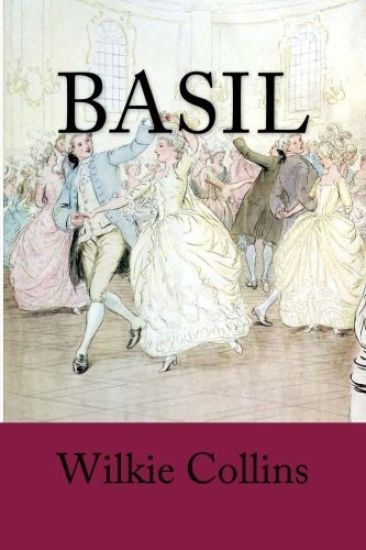
Basil was published in 1852 and dedicated to Charles Ward. It was Collins's second full-length work of fiction and first contemporary novel. In the introduction, he warns the reader that he has 'not hesitated to violate the conventionalities of sentimental fiction.' Basil is sometimes regarded as an early example of, if not the first, sensation novel. The author also declares his interest in drama, 'Believing that the Novel and the Play are twin-sisters in the family of Fiction.' Collins claimed that the main event of the story was founded on a fact within his own knowledge. This could be the secret marriage, based on that of Edward and Henrietta Ward. In Basil's secret and unconsummated marriage to the linen-draper's sexually precocious daughter, and the shocking betrayal, insanity, and death that follow, Wilkie Collins reveals the bustling, commercial London of the 19th century wreaking its vengeance on a still powerful aristocratic world.
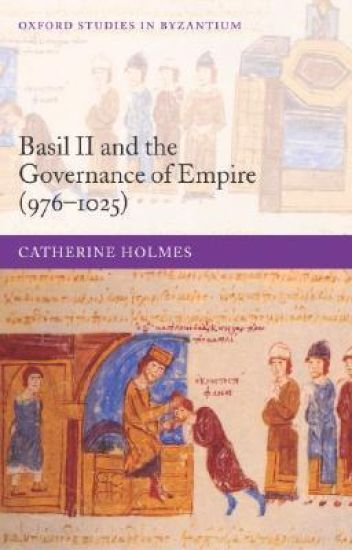
This is the first book-length study in English of the Byzantine emperor Basil II. Basil II, later known as 'Bulgar-slayer', is famous for his military conquests and his brutal intimidation of domestic foes. Catherine Holmes considers the problems Basil faced in governing a large, multi-ethnic empire, which stretched from southern Italy to Mesopotamia. Her close focus on the surviving historical narratives, above all the Synopsis Historion of John Skylitzes, reveals a Byzantium governed as much by persuasion as coercion. This book will appeal to those interested in Byzantium before the Crusades, the governance of pre-modern empires, and the methodology of writing early medieval political history.
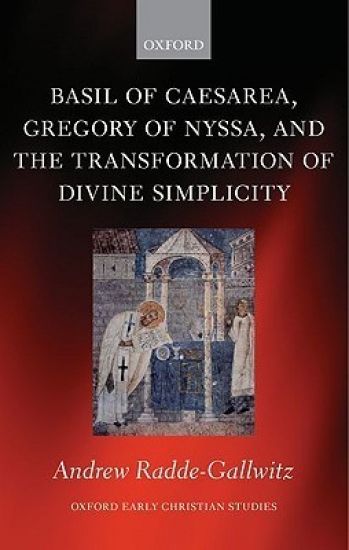
Divine simplicity is the idea that, as the ultimate principle of the universe, God must be a non-composite unity not made up of parts or diverse attributes. The idea was appropriated by early Christian theologians from non-Christian philosophy and played a pivotal role in the development of Christian thought. Andrew Radde-Gallwitz charts the progress of the idea of divine simplicity from the second through the fourth centuries, with particular attention to Basil of Caesarea and Gregory of Nyssa, two of the most subtle writers on this topic, both instrumental in the construction of the Trinitarian doctrine proclaimed as orthodox at the Council of Constantinople in 381. He demonstrates that divine simplicity was not a philosophical appendage awkwardly attached to the early Christian doctrine of God, but a notion that enabled Christians to articulate the consistency of God as portrayed in their scriptures. Basil and Gregory offered a unique construal of simplicity in responding to their principal doctrinal opponent, Eunomius of Cyzicus. Challenging accepted interpretations of the Cappadocian brothers and the standard account of divine simplicity in recent philosophical literature, Radde-Gallwitz argues that Basil and Gregory's achievement in transforming ideas inherited from the non-Christian philosophy of their time has an ongoing relevance for Christian theological epistemology today.
Basil's Unkie Herb microwaves socks, plans fabulous birthday surprises and has a friend with a donkey, a monkey and a garbage truck. This book chronicles the special relationship between Unkie Herb and Basil, and grandma's worries about "lonely" Unkie Herb. It ends with Unkie Herb finding love, and Basil learning, contrary to what the girls in school say, "where we live, you can marry whomever you love."
Basil's Unkie Herb microwaves socks, plans fabulous birthday surprises and has a friend with a donkey, a monkey and a garbage truck. This book chronicles the special relationship between Unkie Herb and Basil, and grandma's worries about "lonely" Unkie Herb. It ends with Unkie Herb finding love, and Basil learning, contrary to what the girls in school say, "where we live, you can marry whomever you love."