Kirjojen hintavertailu. Mukana 11 342 296 kirjaa ja 12 kauppaa.

Kirjahaku

Etsi kirjoja tekijän nimen, kirjan nimen tai ISBN:n perusteella.

548 tulosta hakusanalla Beef Baker

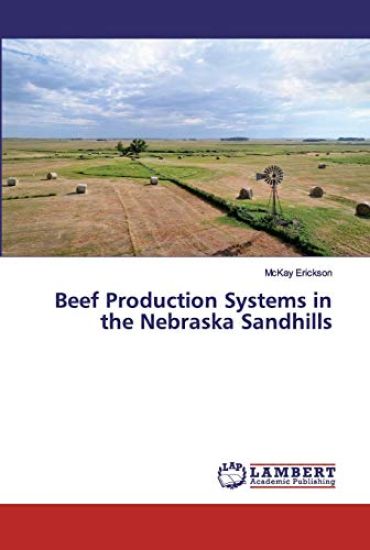
Beef Production Systems in the Nebraska Sandhills

Beef Production Systems in the Nebraska Sandhills

McKay Erickson

LAP Lambert Academic Publishing
2019
pokkari
Four studies were conducted to determine the effectiveness of improving production systems of beef cattle in the Sandhills region of Nebraska. These studies were to determine impacts of modified estrus synchronization protocols, genomic testing heifer calves for longevity, and evaluation of two differing calving systems (March or May) for improving biological outcome and improved overall beef production.
Beef Production from Different Dairy Breeds and Dairy Beef Crosses

Beef Production from Different Dairy Breeds and Dairy Beef Crosses

G.J. More O'Ferrall

Kluwer Academic Publishers
1982
sidottu
This publication contains the proceedings of a Seminar "Beef production from different dairy breeds and dairy beef crosses", held in Ireland on April 13-15, 1981, under the auspices of the Commission of the European Communities (CEC) as part of the European Communities (EC) programme for beef production research. The CEC wishes to thank those representatives of Ireland who took responsibility for the organisation and conduct of this Seminar, notably Professor E.P. Cunningham, Dr. G.J. More O'Ferrall (local organiser), Dr. Patricia McGlaughlin and In particular, thanks are due to Dr. McGlaughlin Mr. R. Barlow. and Mr. Barlow for their recording of the discussions. Professor Ian Gordon of the Faculty of Agriculture, kindly made available the facilities of Lyons House, University College, for the Seminar. Thanks are also accorded to the Chairmen of the Sessions Professor D. Smidt, Dr. R.B. Thiessen, Professor A. Neimann­ Sorensen, Professor E.P. Cunningham, and to all the participants who presented papers and took part in the discussions. X OBJECTIVES The aims of the Seminar were to review recent comparisons of Holstein and Friesian strains with other dairy breeds for beef and veal production; to look at the use of beef breeds for crossing on dairy herds in various EEC countries, and to examine the economic and genetic balance between milk and beef traits in dual purpose bull testing and selection.
Beef Production from Different Dairy Breeds and Dairy Beef Crosses
This publication contains the proceedings of a Seminar "Beef production from different dairy breeds and dairy beef crosses", held in Ireland on April 13-15, 1981, under the auspices of the Commission of the European Communities (CEC) as part of the European Communities (EC) programme for beef production research. The CEC wishes to thank those representatives of Ireland who took responsibility for the organisation and conduct of this Seminar, notably Professor E.P. Cunningham, Dr. G.J. More O'Ferrall (local organiser), Dr. Patricia McGlaughlin and In particular, thanks are due to Dr. McGlaughlin Mr. R. Barlow. and Mr. Barlow for their recording of the discussions. Professor Ian Gordon of the Faculty of Agriculture, kindly made available the facilities of Lyons House, University College, for the Seminar. Thanks are also accorded to the Chairmen of the Sessions Professor D. Smidt, Dr. R.B. Thiessen, Professor A. Neimann­ Sorensen, Professor E.P. Cunningham, and to all the participants who presented papers and took part in the discussions. X OBJECTIVES The aims of the Seminar were to review recent comparisons of Holstein and Friesian strains with other dairy breeds for beef and veal production; to look at the use of beef breeds for crossing on dairy herds in various EEC countries, and to examine the economic and genetic balance between milk and beef traits in dual purpose bull testing and selection.
Beef Wellington à la Mustafa: The Babuba Family in Stockholm
Beef tenderloin is luxury food. Beef Wellington is made by rolling a beef tenderloin in puff pastry and bake it in an oven. When Mustafa bakes his Beef Wellington, it looks appetizing and promising on the surface, but in reality there is only cheap filling inside, chickpeas, potato and tomato pur e. And above all, not a MILLIGRAMME of beef tenderloin. He folds it into a nice-looking loaf. Beef Wellington la Mustafa is a trick, to serve people something different than they think they are served. Mustafa, the comedian who can neither read nor write, uses Beef Wellington to solve any problem that may confront him. Recently such Mustafa-special dishes have become fashionable everywhere. He can use celebrities like George Bush, David Letterman, Mel Gibson, Karl Lagerfeld, and many more ... to convince and manipulate with the aid of humour, religion, history, and politics. Welcome to Mustafa's two so-different worlds From a jasmine seller on a beach in Tunisia to Stureplan, Stockholm's most sophisticated neighbourhood. He drives around Stockholm on his delivery bike, in the hope of meeting "the walking cash machine, Mademoiselle Nordea" (Nordea is a bank in Sweden), who could produce his comedy. Beef Wellington la Mustafa is humour, but humour is more than just jokes and laughter. It can be used for other purposes as well. It is good for your health, for the body and soul, but also for learning a new language and culture. Beef Wellington la Mustafa has been translated into Swedish, French, Spanish, Italian and Arabic. Humour is the best way to learn a new language.
Beef Wellington a la Mustafa (Arabic)
Beef tenderloin is luxury food. Beef Wellington is made by rolling a beef tenderloin in puff pastry and bake it in an oven. When Mustafa bakes his Beef Wellington, it looks appetizing and promising on the surface, but in reality there is only cheap filling inside, chickpeas, potato and tomato pur e. And above all, not a MILLIGRAMME of beef tenderloin. He folds it into a nice-looking loaf. Beef Wellington la Mustafa is a trick, to serve people something different than they think they are served. Mustafa, the comedian who can neither read nor write, uses Beef Wellington to solve any problem that may confront him. Recently such Mustafa-special dishes have become fashionable everywhere. He can use celebrities like George Bush, David Letterman, Mel Gibson, Karl Lagerfeld, and many more ... to convince and manipulate with the aid of humour, religion, history, and politics. Welcome to Mustafa's two so-different worlds From a jasmine seller on a beach in Tunisia to Stureplan, Stockholm's most sophisticated neighbourhood. He drives around Stockholm on his delivery bike, in the hope of meeting "the walking cash machine, Mademoiselle Nordea" (Nordea is a bank in Sweden), who could produce his comedy. Beef Wellington la Mustafa is humour, but humour is more than just jokes and laughter. It can be used for other purposes as well. It is good for your health, for the body and soul, but also for learning a new language and culture. Beef Wellington la Mustafa has been translated into Swedish, French, Spanish, Italian and Arabic. Humour is the best way to learn a new language.
Beef Slaughtering, Cutting, Preserving, and Cooking on the Farm

Beef Slaughtering, Cutting, Preserving, and Cooking on the Farm

H Russell Cross; E Curtis Green

ALPHA EDITION
2021
pokkari
The book, Beef Slaughtering, Cutting, Preserving, and Cooking on the Farm, has been considered important throughout the human history, and so that this work is never forgotten we have made efforts in its preservation by republishing this book in a modern format for present and future generations. This whole book has been reformatted, retyped and designed. These books are not made of scanned copies of their original work and hence the text is clear and readable.
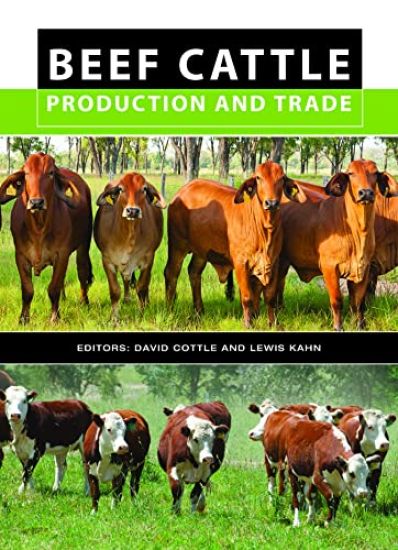
Beef Cattle Production and Trade
Beef Cattle Production and Trade covers all aspects of the beef industry from paddock to plate. It is an international text with an emphasis on Australian beef production, written by experts in the field. The book begins with an overview of the historical evolution of world beef consumption and introductory chapters on carcass and meat quality, market preparation and world beef production. North America, Brazil, China, South-East Asia and Japan are discussed in separate chapters, followed by Australian beef production, including feed lotting and live export. The remaining chapters summarise R&D, emphasising the Australian experience, and look at different production systems and aspects of animal husbandry such as health, reproduction, grazing, feeding and finishing, genetics and breeding, production efficiency, environmental management and business management. The final chapter examines various case studies in northern and southern Australia, covering feed demand and supply, supplements, pasture management, heifer and weaner management, and management of internal and external parasites.
Beef Wellington

Beef Wellington

Torbjörn Karlgren

Lava Förlag
2025
nidottu
Rubriken drog blicken till sig direkt. Det var ett nyhetsbrev från The Sydney Morning Herald. Jag såg det i min mejlbox där inkorgen som vanligt svällt när jag vänt ryggen till. ”Homicide detectives arrest mushroom cook Patzy Anderson over fatal lunch.” Aha. Poliser, mord och giftsvamp. Man brukar prata om att rubriker ska locka till läsning. Klick, nu för tiden. Det gjorde den här. En bra journalist känner igen en bra story när han eller hon ser en. Jag klickade på rubriken och läste. Det var så det började. Det slutade två kontinenter, sex eller tolv lik och kanske en kärlek senare.
Glorious Beef: The Lafrieda Family and the Evolution of the American Meat Industry
An insightful and engaging insider's look at the history and business of the meat industry, from master butcher Pat LaFrieda "A full-throated celebration of red meat from one of the nation's major purveyors. . . . The true meat of his book is a study of how beef is brought from farm to table as well as an account of commercial success that deserves a place on any business school syllabus." -- Kirkus ReviewsIt all began when Pat LaFrieda's great-grandfather Anthony LaFrieda decided to pack up and move his family from Italy to New York in search of a better life, setting up the family's first retail butcher shop in 1922 in Flatbush, Brooklyn. Almost one hundred years later, Pat LaFrieda, a fourth-generation butcher and third-generation meat purveyor, is at the helm of a family-run business that has been providing meat to customers for decades, through wars, the Great Depression, the tumultuous years when New York City was dubbed "Fear City," the fall of the Twin Towers, unprecedented hurricanes, and even a pandemic.Most people don't know the amount of time, commitment, and extenuating work that goes into bringing them the piece of meat on their plate. What are the real implications of grass-fed beef on climate change? What is involved in humanely processing animals at harvesting facilities? Why is grading, labeling, and traceability essential for the consumer? And what's the beef with eating meat?There are two sides to every story; however, in the beef industry's case, only one side seems to get most of the airtime. In Glorious Beef, LaFrieda shares his family's legacy and pulls back the curtain to reveal a behind-the-scenes view of each stage of the process involved in bringing beef from pasture to plate and the truths behind the industry's story of survival and constant evolution.
Roast Beef, Medium

Roast Beef, Medium

Edna Ferber

University of Illinois Press
2001
nidottu
Edna Ferber, Pulitzer Prize-winning author of Show Boat and Giant, achieved her first great success with a series of stories she published in American Magazine between 1911 and 1913. The stories featured Emma McChesney: smart, savvy, stylish, divorced mother, and Midwest traveling sales representative for T. A. Buck's Featherloom skirts and petticoats. With one hand on her sample case and the other fending off advances from salesmen, hotel clerks, and other predators, Emma holds on tightly to her reputation: honest, hardworking, and able to outsell the slickest salesman. Like her compact bag of traveling necessities, Emma has her life boiled down to essentials: her work and her seventeen-year-old son, Jock. Her experience has taught her that it's best to stick to roast beef, medium--avoiding both physical and moral indigestion--rather than experiment with fancy sauces and exotic dishes. Yet she never shies away from a challenge, and her sharp instincts and common sense serve her well in dealing with the likes of Ed Meyer, a smooth-talking, piano-playing salesman; Blanche LeHay, prima donna of the Sam Levin Crackerjack Belles; and T. A. Buck Jr., the wet-behind-the-ears son of the founder of Featherloom. Roast Beef, Medium is the first of three volumes chronicling the travels and trials of Emma McChesney. The illustrations by James Montgomery Flagg, one of the most highly regarded book illustrators of the period, enhance both the humor and the vivid characterization in this wise and high-spirited tale.