In the run-up to the invasion of Normandy in June 1944, General Dwight D. Eisenhower faced a series of seemingly insurmountable dilemmas. Outnumbered and desperate for any advantage to make their way past the well-defended beaches and into France, the Allies had reached out to French guerillas and partisans to help secure their aims--but transforming the highly independent resistance groups into a governable body and fighting force was a formidable task. To make matters more difficult, President Roosevelt refused to give full Allied support to Charles de Gaulle and his Free French government, and would not supply the timing, location, and other key details of Operation Overlord. It was into this storm of political mistrust and military confusion that Eisenhower sent the Jedburghs. Eisenhower's Guerillas tells the story of the reconnaissance and intelligence teams of young Special Forces, called Jedburghs, who worked behind enemy lines to strengthen the Allies' position in Northern France. Their task of organizing and training the French operatives, already monumental, was made more difficult by the fact that France's war aims were profoundly different from those of America and Britain, who regarded France as merely a military objective on the way to defeating Germany. Ben Jones describes how Eisenhower learned how to exploit this political turmoil to his advantage, and explores how the Allied Jedburgh teams still managed to coordinate French guerrilla operations within the overall plans for the country's liberation. Underscoring the critical and often overlooked part that irregular warfare played in Allied operations on the Continent, Jones delivers a riveting story of the battle for France and the political complexities that threatened to undermine the operation from within.
African Americans have suffered intensely at the hands of America's dominant group, but the roles played by urban planning, land use policy, and the free market are not well known. Presenting a new conceptual approach, this book considers their locking effect on African Americans, showing, for instance, that one-acre zoning and similar policies in upscale neighborhoods lock African Americans out while market mechanisms in decaying neighborhoods lock them in. Arguing that the locking effect leads to the disenfranchisement of African Americans, Bobo shows how wealth is channeled to the dominant group and African Americans' life choices are denuded, creating a volatile situation.Although classical economic theory holds that a free market allocates scarce resources in the best interest of society, in reality market mechanisms do not work to the advantage of African Americans. Nor does public regulation of land use operate in their interest, although public policy is presumed to produce equitable and favorable outcomes for all members of society. This book explores how a combination of government regulation of land use and free market forces have created the locking effect, which has cultivated and sustained a process of disenfranchisement of African Americans.
In this series of essays that span over 20 years of research, Benjamin Bobo builds the case for multinational corporations to take an active role in combating poverty around the world. Citing sobering statistics (for example, three-fourths of the world's nations are classified as Third World and four-fifths of the world's people live in these nations), Bobo argues that huge corporate entities not only have the wherewithal but an obligation to alleviate the suffering that results from a lack of economic resources and opportunity. Through these provocative and forward-looking essays, he presents a theoretical and practical framework for multinationals to stimulate economic development in the Third World—providing access to capital, entrepreneurial expertise, and emerging technologies.In a bold challenge to conventional thinking about wealth creation and strategic decision-making, Bobo applies such concepts as profit satisficing and stakeholder givebacks, and proposes an agenda for change that begins in business schools (the intellectual training ground for multinational managers), with increased emphasis on sustainability and human development. The net result, he argues, will be a world in which both producers and consumers benefit.
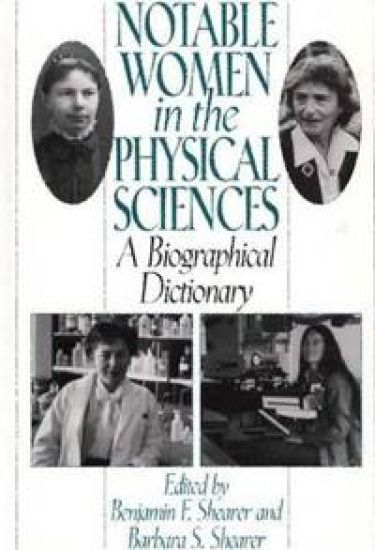
This volume features substantive biographical essays on 97 world and American women scientists who have made significant contributions to the life sciences from antiquity to the present, with the emphasis on 20th century women. The essays go beyond the basic facts found in standard biographical dictionaries, however. Developmental influences, obstacles faced and overcome, and the efforts of these women to contribute to their chosen professions in spite of sometimes overwhelming disapproval of the establishment come alive in these portraits. Many of the living scientists profiled contributed interviews and autobiographical statements, which adds a vital and unique element to their profiles. Entries, written by 63 practicing scientists and researchers, explain the scientific work clearly in terms familiar to general readers and high school students.Each entry provides a fact box outlining major life events, including educational and career milestones, and concludes with sources for further reading. Twenty-nine photographs complement the text. Disciplines covered include anatomy, bacteriology, biology, botany, embryology, entomology, genetics, horticulture, medicine, ornithology, pathology, pharmacology, physiology, and zoology. Subjects were selected on the basis of historical importance and recognition awards such as Blackwell, Lasker and Watermann prizes, Nobel prizes, MacArthur Foundation Genius awards, and the National Medal of Science. Seen across time and disciplines, the lives of these dedicated scientists can serve as role models for young women pursuing careers in science.
A study aid for senior and graduate level students needing a review of undergraduate physics. Covers a broad range of topics, with carefully worked examples illustrating important problem-solving methods. A collection of self-test problems helps students prepare for the College Entrance Advanced Physics Examination and the Qualifying Written Examination for the PhD.
At a time when so-called fundamentalism has become the privileged analytical frame for understanding Muslim societies past and present, this study offers another way of looking at Islam. In an innovative combination of anthropology, history, and social theory, Benjamin Soares explores Islam and Muslim practice in an important Islamic religious centre in West Africa from the late nineteenth century to the present.Drawing on extensive ethnography, archival research, and written sources, he provides a richly detailed discussion of Muslim religious practiceSufism, Islamic reform, and other contemporary ways of being Muslim in western Mali and more broadly in the country.This book provides a major contribution to the study of Islam in Africa and will be welcomed by scholars and students in history, religion, and the social sciences, particularly those interested in anthropology, Islam, colonialism and the public sphere.Benjamin F. Soares is an anthropologist and senior researcher at the African Studies Center in Leiden, The Netherlands. He is the co-editor of "Islam, Transnationalism, and the Public Sphere in Western Europe" and the editor of "Muslim/Christian Encounters in Africa.""
Much remains uncertain about the life of Edgar Allan Poe, the mysterious author of one of the best-known American poems, 'The Raven', the Gothic romance The Fall of the House of Usher, and the first detective fiction, The Murders in the Rue Morgue. This book provides a balanced overview of Poe's career and writings, resisting the tendency of many scholars to sensationalise the more enigmatic aspects of his life. Benjamin F. Fisher outlines Poe's experiments with a wide range of literary forms and genres, and shows how his fiction evolved from Gothic fantasy to plausible, sophisticated psychological fiction. Fisher makes fruitful connections within this diverse body of work, and offers analyses of the major works. The critical afterlife of Poe's work is charted, and the book includes a guide to further reading, making this a handy starting-point for students and readers new to Poe.
Much remains uncertain about the life of Edgar Allan Poe, the mysterious author of one of the best-known American poems, 'The Raven', the Gothic romance The Fall of the House of Usher, and the first detective fiction, The Murders in the Rue Morgue. This book provides a balanced overview of Poe's career and writings, resisting the tendency of many scholars to sensationalise the more enigmatic aspects of his life. Benjamin F. Fisher outlines Poe's experiments with a wide range of literary forms and genres, and shows how his fiction evolved from Gothic fantasy to plausible, sophisticated psychological fiction. Fisher makes fruitful connections within this diverse body of work, and offers analyses of the major works. The critical afterlife of Poe's work is charted, and the book includes a guide to further reading, making this a handy starting-point for students and readers new to Poe.


![Pictures of Life in Camp and Field [Microform]. by Benj. F. Taylor.](/covers/9781425525125.jpg)