Kirjojen hintavertailu. Mukana 11 342 296 kirjaa ja 12 kauppaa.

Kirjahaku

Etsi kirjoja tekijän nimen, kirjan nimen tai ISBN:n perusteella.

1000 tulosta hakusanalla Bertrand

Bertrand Barere: A Reluctant Terrorist

Bertrand Barere: A Reluctant Terrorist

Leo Gershoy

Literary Licensing, LLC
2011
sidottu
""Bertrand Barere: A Reluctant Terrorist"" is a biography written by Leo Gershoy that explores the life of Bertrand Barere, a French politician who played a significant role in the French Revolution. The book delves into Barere's upbringing, education, and political career, highlighting his involvement in the Jacobin Club and his role in the Reign of Terror. Gershoy examines Barere's motivations for supporting the Revolution and the violent tactics employed during the Terror. The author also explores Barere's eventual fall from grace and his subsequent attempts to distance himself from his past actions. Through meticulous research and analysis, Gershoy provides a comprehensive portrait of a complex historical figure and sheds light on the turbulent period of the French Revolution.This scarce antiquarian book is a facsimile reprint of the old original and may contain some imperfections such as library marks and notations. Because we believe this work is culturally important, we have made it available as part of our commitment for protecting, preserving, and promoting the world's literature in affordable, high quality, modern editions, that are true to their original work.
Bertrand Russell on Education: Studies in Educational Theory of the John Dewey Society, No. 1
Bertrand Russell On Education: Studies In Educational Theory Of The John Dewey Society, No. 1 is a book that explores the educational theory of the renowned philosopher, Bertrand Russell. The book is edited by Joe Park and is the first in a series of publications by the John Dewey Society that focus on educational theory. The book is a collection of essays and lectures given by Russell on the topic of education. It covers a wide range of topics, including the purpose of education, the role of the teacher, and the importance of critical thinking. Russell's ideas are presented in a clear and concise manner, making them accessible to both educators and students alike. The book also includes an introduction by Joe Park, which provides context for Russell's ideas and explains their relevance to modern education. Additionally, there are several appendices that provide further information on Russell's life and work, as well as a bibliography for those interested in further reading. Overall, Bertrand Russell On Education: Studies In Educational Theory Of The John Dewey Society, No. 1 is a valuable resource for anyone interested in education and the philosophy behind it. It offers insights into the mind of one of the most influential thinkers of the 20th century and provides a framework for understanding the purpose and goals of education.This scarce antiquarian book is a facsimile reprint of the old original and may contain some imperfections such as library marks and notations. Because we believe this work is culturally important, we have made it available as part of our commitment for protecting, preserving, and promoting the world's literature in affordable, high quality, modern editions, that are true to their original work.
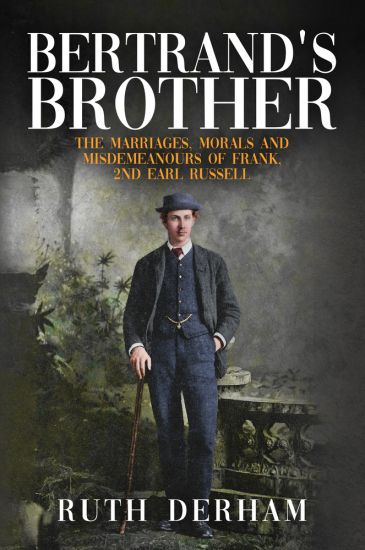
Bertrand's Brother

Bertrand's Brother

Ruth Derham

Amberley Publishing
2021
sidottu
Frank Russell was the grandson of Prime Minister Lord John Russell and elder brother of philosopher and political activist Bertrand Russell. He was, in his own right, a radical political reformer and outspoken self-determined moralist. He was also the black sheep of his illustrious family: a serial adulterer, tried for bigamy in the House of Lords, who, as a young man, had been sent down from Oxford for supposed homosexual practices. His accuser was his first wife, Mabel Edith, the naïve daughter of socialite and ‘adventuress’ Lady Selina Scott, who forced him repeatedly to publicly defend his good name and honour at a time when male same-sex relationships were reviled and sodomy punishable by up to ten years’ penal servitude. Their decade-long cause célèbre rivalled and was reported alongside the famous misdemeanours of Oscar Wilde. In this first biography of Frank Russell, his story is told through extensive use of private papers and contemporary public accounts. The cultural tensions and moral prejudices of the late Victorian and Edwardian eras are exposed, and Frank’s innate rebelliousness and deeply embedded sense of injustice are explored, producing a portrait of a man vulnerable yet hubristic, well-meaning yet often offensive; a free-thinker, an aristocrat. A ‘common man enlarged’.
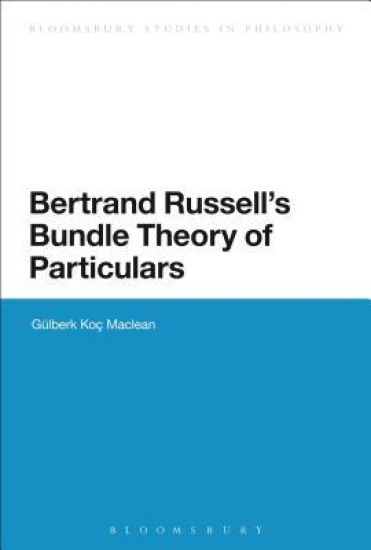
Bertrand Russell's Bundle Theory of Particulars

Bertrand Russell's Bundle Theory of Particulars

Gülberk Koç Maclean

Bloomsbury Academic
2014
sidottu
Winner of the 2015 Bertrand Russell Society Book AwardBertrand Russell's Bundle Theory of Particulars presents and evaluates Russell's arguments for two competing theories on the nature of particulars at different stages in his career: the substratum theory of particulars (1903-1913) and the bundle theory of particulars (1940-1948). Through its original focus on Russell's little known metaphysics in the later part of his career, this study explains why Russell's theory of particulars is relevant today. It argues that a Russellian realist bundle theory is indeed the best explanation of similarities and differences that we observe around us thanks to the ontological economy such a theory provides and its strength and completeness as a theory of the nature of reality. Tackling the major criticisms levelled against the realist bundle theory - the problem of individuation, the problem of necessity, and the problem of analyticity - this study presents and defends a tenable Russellian bundle theory which can answer the objections. Bertrand Russell's Bundle Theory of Particulars is a novel and significant contribution to Russell scholarship.
Bertrand Russell's Bundle Theory of Particulars

Bertrand Russell's Bundle Theory of Particulars

Gülberk Koç Maclean

Bloomsbury Academic
2015
nidottu
Winner of the 2015 Bertrand Russell Society Book AwardBertrand Russell's Bundle Theory of Particulars presents and evaluates Russell's arguments for two competing theories on the nature of particulars at different stages in his career: the substratum theory of particulars (1903-1913) and the bundle theory of particulars (1940-1948). Through its original focus on Russell's little known metaphysics in the later part of his career, this study explains why Russell's theory of particulars is relevant today. It argues that a Russellian realist bundle theory is indeed the best explanation of similarities and differences that we observe around us thanks to the ontological economy such a theory provides and its strength and completeness as a theory of the nature of reality. Tackling the major criticisms levelled against the realist bundle theory - the problem of individuation, the problem of necessity, and the problem of analyticity - this study presents and defends a tenable Russellian bundle theory which can answer the objections. Bertrand Russell's Bundle Theory of Particulars is a novel and significant contribution to Russell scholarship.
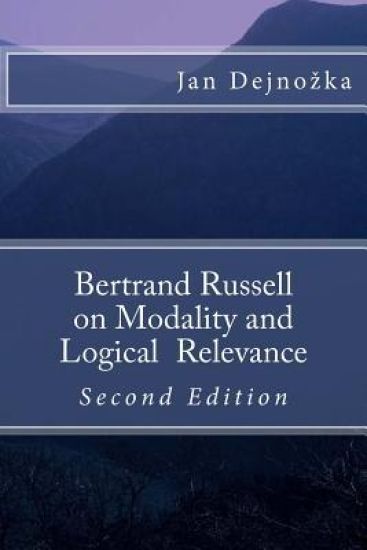
Bertrand Russell on Modality and Logical Relevance

Bertrand Russell on Modality and Logical Relevance

Jan Dejnozka

Createspace Independent Publishing Platform
2015
pokkari
"Certainly I have no objection to necessity and possibility when interpreted in Russell's way." -W. V. O. Quine, note to the author dated October 23, 1990, quoted in the book, page 27. SECOND EDITION: "Looks like a seminal work." -Paul C. Nascimbene. "Impressive." - Panayot Butchvarov. "It shows originality and great care." -J. Michael Dunn. PUBLISHED REVIEW OF THE SECOND EDITION: "In the scope of more than six hundred pages, Dejnozka brought to light many aspects of Russell's philosophy which, implicitly or explicitly, record Russell's interest in modal matters. Dejnozka's strategy is quite straightforward: to gather together relevant quotations including modal notions and, consequently, interpret them in a systematic and 'Russell friendly' way. S]uch a comprehensive overview is unique and of interest to] a wider group of philosophers.... Bertrand Russell on Modality and Logical Relevance is literally a full-length study of Russell's views on modality. It does both, highlight the 'modality bearing' passages in which Russell implicitly or explicitly comments on the problems of modality, and interprets them in a spirit of the overall unity, systematicity and Russell's ingenuity. I]t is always a hard and risky enterprise to find... important, although to...date ignored, features in the life works of the most influential philosophers of the] 20th century. But Dejnozka's book does present one such enterprise and as such is a stimulative and worthy contribution to (the history) of philosophy." Martin Vacek, Organon F. PUBLISHED REVIEW OF THE FIRST EDITION: "Dejnozka's book is the first full-length study of modality in Russell. It is useful for its very full survey of passages in which Russell makes use of or alludes to modal notions. Dejnozka's command of Russell's huge output is indeed impressive and his utilization of it thorough...." - Nicholas Griffin, Studia Logica. PUBLISHED REVIEW OF THE FIRST EDITION: "Dejnozka's book raises a very important point in the history of formal logic. Until now the major studies on this topic have drawn heavily on the development of classical logic as standardized by Gottlob Frege and Bertrand Russell. Dejnozka challenges the reader to open his mind for a new interpretation of Russell's work, in particular that modal and relevance notions have a greater place in his philosophy of logic than has been stressed before.... Dejnozka rightly observes that many of Russell's insights on modality are a result of his discussions with Hugh MacColl, who was indeed the first to seriously attempt to develop formal modal logic. This particularly applies to Russell's conception of a modal logic without modal operators.... That is, classical logic can be used to simulate modal expressions. Thus, the notions of (logical) necessity and possibility are not 'fundamental notions'.... On this basis, Dejnozka develops a higher level of modality, where the quantification scope extends to the predicates yielding what Russell calls 'fully general propositions'.... The best studied translation method is known as the standard translation, and it is quite compatible with Dejnozka's suggestions.... Dejnozka's book is full of material which stimulates one] to rethink Russell's philosophy of logic and...it is greatly to the author's credit that he brings to light such a wealth of crucial issues in the history and philosophy of logic." - Shahid Rahman, History and Philosophy of Logic.
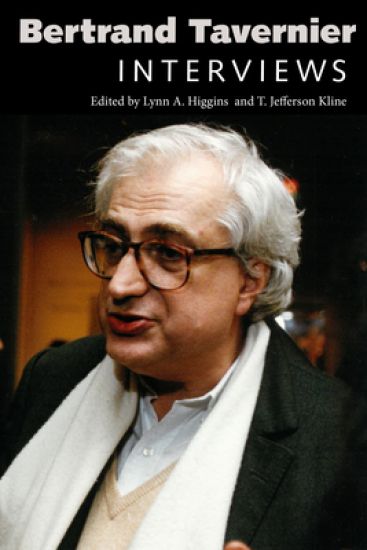
Bertrand Tavernier

Bertrand Tavernier

University Press of Mississippi
2016
sidottu
Bertrand Tavernier (b. 1941) is widely considered to be the leading light in a generation of French filmmakers who launched their careers in the 1970s, in the wake of the New Wave. In just over forty years, he has directed twenty-two feature films in an eclectic range of genres, from intimate family portrait to historical drama and neo-Western. Beginning with his debut feature--L'Horloger de Saint-Paul (1974), which won the prestigious Louis Delluc prize--Tavernier has shown himself to be a public intellectual. Like his films, he is deeply engaged with the pressing issues facing France and the world: the consequences of war, colonialism and its continuing aftermath, the price of heroism, and the power of art. A voracious cinephile, he is immensely knowledgeable about world cinema and American film in particular. Tavernier's roots are in Lyon, the birthplace of the cinema. He founded and presides over the Institut Lumière, which hosts retrospectives and an annual film festival in the factory where the Lumière brothers made the first films.In this collection, containing numerous interviews translated from French and available in English for the first time, he discusses the arc of his career following in the lineage of the Lumière brothers, in that his goal, like theirs, is to ""show the world to the world.""It is no surprise, then, that an interview with Tavernier is a treat. Beginning with discussions of his own films, the interviews in this volume cover a vast range of topics. At the core are his thoughts about the ways cinema can inspire the imagination and contribute to the broadest possible public conversation.
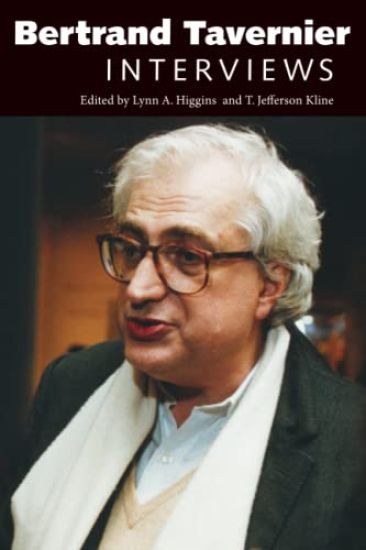
Bertrand Tavernier

Bertrand Tavernier

UNIVERSITY PRESS OF MISSISSIPPI
2022
pokkari
Bertrand Tavernier (b. 1941–2021) was widely considered to be the leading light in a generation of French filmmakers who launched their careers in the 1970s in the wake of the New Wave. In just over forty years, he directed twenty-two feature films in an eclectic range of genres from intimate family portrait to historical drama and neo-Western. Beginning with his debut feature—L’Horloger de Saint-Paul (1974), which won the prestigious Louis Delluc prize—Tavernier showed himself to be a public intellectual. Like his films, he was deeply engaged with the pressing issues facing France and the world: the consequences of war, colonialism and its continuing aftermath, the price of heroism, and the power of art. A voracious cinephile, he was immensely knowledgeable about world cinema and American film in particular. Tavernier’s roots were in Lyon, the birthplace of the cinema. He founded and presided over the Institut Lumière, which hosts retrospectives and an annual film festival in the factory where the Lumière brothers made the first films. In this collection, containing numerous interviews translated from French and available in English for the first time, he discusses the arc of his career following in the lineage of the Lumière brothers, in that his goal, like theirs, is to "show the world to the world." It is no surprise, then, that an interview with Tavernier is a treat. Beginning with discussions of his own films, the interviews in this volume cover a vast range of topics. At the core are his thoughts about the ways cinema can inspire the imagination and contribute to the broadest possible public conversation.
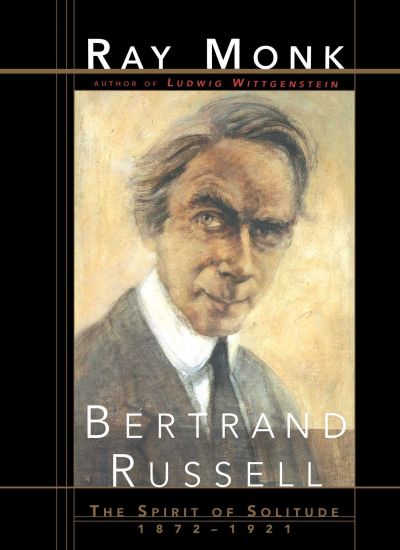
Bertrand Russell: The Spirit of Solitude 1872-1921
From the author of Ludwig Wittegenstein: The Duty of Genius comes a compelling biography of Bertrand Russell, the acclaimed philosopher of the twentieth century and the ingenious author of Principia Mathematica. Over the course of his life, Bertrand Russell grew from a major philosopher into a political activist and popular writer whose name was known around the world. A man who believed in a modern, rational approach to life and was able to guide popular opinion throughout the twentieth century, ended up living a life of tragedy in which he lost everything. Now, based on thousands of documents from the Russell archives in Canada, Ray Monk takes readers through the lifetime of this iconic figure, from the turbulence of his public activities to his often outrageous and sometimes paradoxical pronouncements. Bertrand Russell: The Spirit of Solitude takes readers into the mind of a crazed philosopher, featuring analysis of his public figure that enabled Monk to reveal the inner drama of Russell's personal life that led to his tragic ending.
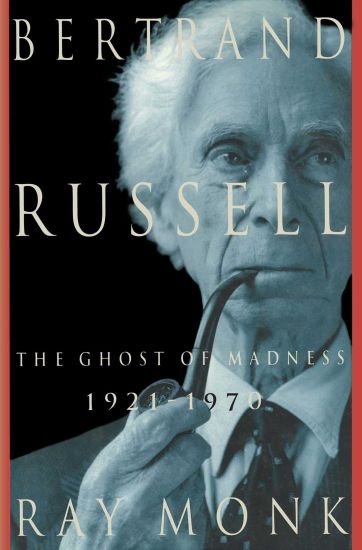
Bertrand Russell: 1921-1970, the Ghost of Madness
In the second half of his life, Bertrand Russell transformed himself from a major philosopher, whose work was intelligible to a small elite, into a political activist and popular writer, known to millions throughout the world. Yet his life is the tragic story of a man who believed in a modern, rational approach to life and who, though his ideas guided popular opinion throughout the twentieth century, lost everything. Russell's views on marriage, religion, education, and politics attracted legions of devoted followers and, at the same time, provoked harsh attacks from every direction. On the one hand, he was stripped of his post at New York's City College because he was thought to be a bad influence on his students, and on the other, he was awarded the Order of Merit, the Nobel Prize in literature, and a lifetime Fellowship of Trinity College, Cambridge. He lived to be ninety-seven, and as he became older he became increasingly controversial. Monk quotes Russell's telegrams to Kennedy and Khrushchev during the Cuban missile crisis, an influence that Russell and his followers believed tipped the balance toward peace. Russell devoted his last years to a campaign organized by his secretary to lend support to Che Guevara's call for a globally coordinated revolutionary struggle against "U.S. imperialism." Until now, this last campaign has been misunderstood as a -- perhaps misguided, but nevertheless innocent -- plea for world peace. Monk reveals it was no such thing. Drawing on thousands of documents collected at the Russell archives in Canada, Monk steers through the turbulence of Russell's public activities, scrutinizing his sometimes paradoxical and often outrageous pronouncements. Monk's focus, however, is on the tragedy of Russell's personal life, and in revealing this inner drama Monk has relied heavily on the cooperation of Russell's surviving relatives and access to previously unexamined legal and private correspondence. A central player in Russell's life was his first son, John. Russell applied the methods of the new science of child psychology in his parenting, believing that a new generation of children could be reared to be "independent, fearless, and free." But instead of being a model of this new generation, John became anxious, withdrawn, and eventually schizophrenic. Nor was John's daughter Lucy (who was Russell's favorite grandchild) to be a model of the new generation; gradually she grew so emotionally disturbed that, at the age of twenty-six, she took her own life. The Ghost of Madness completes the most searching examination yet published of Bertrand Russell's unique life and work. Together with Ray Monk's highly praised first volume of the biography, The Spirit of Solitude, this is the classic account of an extraordinary man who championed the great ideas of the twentieth century and was all but destroyed by them. It is a portrait of the mind of a century.