Kirjojen hintavertailu. Mukana 12 390 323 kirjaa ja 12 kauppaa.

Kirjahaku

Etsi kirjoja tekijän nimen, kirjan nimen tai ISBN:n perusteella.

1000 tulosta hakusanalla Bertrand Russell

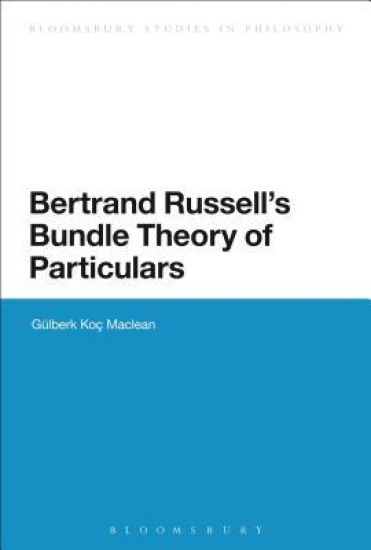
Bertrand Russell's Bundle Theory of Particulars

Bertrand Russell's Bundle Theory of Particulars

Gülberk Koç Maclean

Bloomsbury Academic
2014
sidottu
Winner of the 2015 Bertrand Russell Society Book AwardBertrand Russell's Bundle Theory of Particulars presents and evaluates Russell's arguments for two competing theories on the nature of particulars at different stages in his career: the substratum theory of particulars (1903-1913) and the bundle theory of particulars (1940-1948). Through its original focus on Russell's little known metaphysics in the later part of his career, this study explains why Russell's theory of particulars is relevant today. It argues that a Russellian realist bundle theory is indeed the best explanation of similarities and differences that we observe around us thanks to the ontological economy such a theory provides and its strength and completeness as a theory of the nature of reality. Tackling the major criticisms levelled against the realist bundle theory - the problem of individuation, the problem of necessity, and the problem of analyticity - this study presents and defends a tenable Russellian bundle theory which can answer the objections. Bertrand Russell's Bundle Theory of Particulars is a novel and significant contribution to Russell scholarship.
Bertrand Russell's Bundle Theory of Particulars

Bertrand Russell's Bundle Theory of Particulars

Gülberk Koç Maclean

Bloomsbury Academic
2015
nidottu
Winner of the 2015 Bertrand Russell Society Book AwardBertrand Russell's Bundle Theory of Particulars presents and evaluates Russell's arguments for two competing theories on the nature of particulars at different stages in his career: the substratum theory of particulars (1903-1913) and the bundle theory of particulars (1940-1948). Through its original focus on Russell's little known metaphysics in the later part of his career, this study explains why Russell's theory of particulars is relevant today. It argues that a Russellian realist bundle theory is indeed the best explanation of similarities and differences that we observe around us thanks to the ontological economy such a theory provides and its strength and completeness as a theory of the nature of reality. Tackling the major criticisms levelled against the realist bundle theory - the problem of individuation, the problem of necessity, and the problem of analyticity - this study presents and defends a tenable Russellian bundle theory which can answer the objections. Bertrand Russell's Bundle Theory of Particulars is a novel and significant contribution to Russell scholarship.
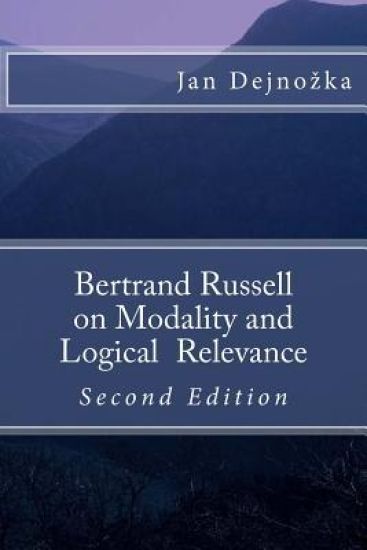
Bertrand Russell on Modality and Logical Relevance

Bertrand Russell on Modality and Logical Relevance

Jan Dejnozka

Createspace Independent Publishing Platform
2015
pokkari
"Certainly I have no objection to necessity and possibility when interpreted in Russell's way." -W. V. O. Quine, note to the author dated October 23, 1990, quoted in the book, page 27. SECOND EDITION: "Looks like a seminal work." -Paul C. Nascimbene. "Impressive." - Panayot Butchvarov. "It shows originality and great care." -J. Michael Dunn. PUBLISHED REVIEW OF THE SECOND EDITION: "In the scope of more than six hundred pages, Dejnozka brought to light many aspects of Russell's philosophy which, implicitly or explicitly, record Russell's interest in modal matters. Dejnozka's strategy is quite straightforward: to gather together relevant quotations including modal notions and, consequently, interpret them in a systematic and 'Russell friendly' way. S]uch a comprehensive overview is unique and of interest to] a wider group of philosophers.... Bertrand Russell on Modality and Logical Relevance is literally a full-length study of Russell's views on modality. It does both, highlight the 'modality bearing' passages in which Russell implicitly or explicitly comments on the problems of modality, and interprets them in a spirit of the overall unity, systematicity and Russell's ingenuity. I]t is always a hard and risky enterprise to find... important, although to...date ignored, features in the life works of the most influential philosophers of the] 20th century. But Dejnozka's book does present one such enterprise and as such is a stimulative and worthy contribution to (the history) of philosophy." Martin Vacek, Organon F. PUBLISHED REVIEW OF THE FIRST EDITION: "Dejnozka's book is the first full-length study of modality in Russell. It is useful for its very full survey of passages in which Russell makes use of or alludes to modal notions. Dejnozka's command of Russell's huge output is indeed impressive and his utilization of it thorough...." - Nicholas Griffin, Studia Logica. PUBLISHED REVIEW OF THE FIRST EDITION: "Dejnozka's book raises a very important point in the history of formal logic. Until now the major studies on this topic have drawn heavily on the development of classical logic as standardized by Gottlob Frege and Bertrand Russell. Dejnozka challenges the reader to open his mind for a new interpretation of Russell's work, in particular that modal and relevance notions have a greater place in his philosophy of logic than has been stressed before.... Dejnozka rightly observes that many of Russell's insights on modality are a result of his discussions with Hugh MacColl, who was indeed the first to seriously attempt to develop formal modal logic. This particularly applies to Russell's conception of a modal logic without modal operators.... That is, classical logic can be used to simulate modal expressions. Thus, the notions of (logical) necessity and possibility are not 'fundamental notions'.... On this basis, Dejnozka develops a higher level of modality, where the quantification scope extends to the predicates yielding what Russell calls 'fully general propositions'.... The best studied translation method is known as the standard translation, and it is quite compatible with Dejnozka's suggestions.... Dejnozka's book is full of material which stimulates one] to rethink Russell's philosophy of logic and...it is greatly to the author's credit that he brings to light such a wealth of crucial issues in the history and philosophy of logic." - Shahid Rahman, History and Philosophy of Logic.
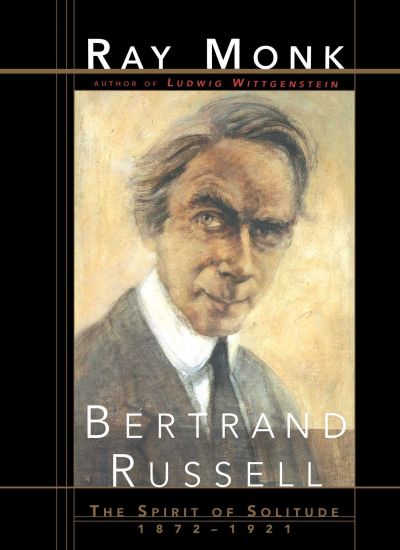
Bertrand Russell: The Spirit of Solitude 1872-1921
From the author of Ludwig Wittegenstein: The Duty of Genius comes a compelling biography of Bertrand Russell, the acclaimed philosopher of the twentieth century and the ingenious author of Principia Mathematica. Over the course of his life, Bertrand Russell grew from a major philosopher into a political activist and popular writer whose name was known around the world. A man who believed in a modern, rational approach to life and was able to guide popular opinion throughout the twentieth century, ended up living a life of tragedy in which he lost everything. Now, based on thousands of documents from the Russell archives in Canada, Ray Monk takes readers through the lifetime of this iconic figure, from the turbulence of his public activities to his often outrageous and sometimes paradoxical pronouncements. Bertrand Russell: The Spirit of Solitude takes readers into the mind of a crazed philosopher, featuring analysis of his public figure that enabled Monk to reveal the inner drama of Russell's personal life that led to his tragic ending.
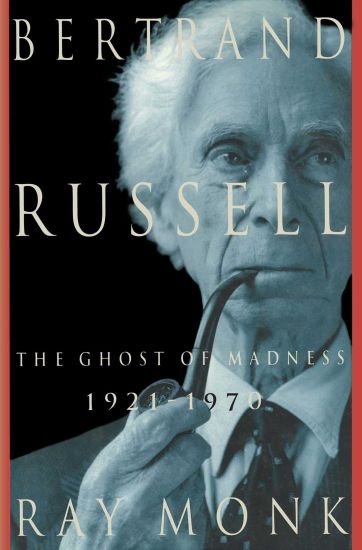
Bertrand Russell: 1921-1970, the Ghost of Madness
In the second half of his life, Bertrand Russell transformed himself from a major philosopher, whose work was intelligible to a small elite, into a political activist and popular writer, known to millions throughout the world. Yet his life is the tragic story of a man who believed in a modern, rational approach to life and who, though his ideas guided popular opinion throughout the twentieth century, lost everything. Russell's views on marriage, religion, education, and politics attracted legions of devoted followers and, at the same time, provoked harsh attacks from every direction. On the one hand, he was stripped of his post at New York's City College because he was thought to be a bad influence on his students, and on the other, he was awarded the Order of Merit, the Nobel Prize in literature, and a lifetime Fellowship of Trinity College, Cambridge. He lived to be ninety-seven, and as he became older he became increasingly controversial. Monk quotes Russell's telegrams to Kennedy and Khrushchev during the Cuban missile crisis, an influence that Russell and his followers believed tipped the balance toward peace. Russell devoted his last years to a campaign organized by his secretary to lend support to Che Guevara's call for a globally coordinated revolutionary struggle against "U.S. imperialism." Until now, this last campaign has been misunderstood as a -- perhaps misguided, but nevertheless innocent -- plea for world peace. Monk reveals it was no such thing. Drawing on thousands of documents collected at the Russell archives in Canada, Monk steers through the turbulence of Russell's public activities, scrutinizing his sometimes paradoxical and often outrageous pronouncements. Monk's focus, however, is on the tragedy of Russell's personal life, and in revealing this inner drama Monk has relied heavily on the cooperation of Russell's surviving relatives and access to previously unexamined legal and private correspondence. A central player in Russell's life was his first son, John. Russell applied the methods of the new science of child psychology in his parenting, believing that a new generation of children could be reared to be "independent, fearless, and free." But instead of being a model of this new generation, John became anxious, withdrawn, and eventually schizophrenic. Nor was John's daughter Lucy (who was Russell's favorite grandchild) to be a model of the new generation; gradually she grew so emotionally disturbed that, at the age of twenty-six, she took her own life. The Ghost of Madness completes the most searching examination yet published of Bertrand Russell's unique life and work. Together with Ray Monk's highly praised first volume of the biography, The Spirit of Solitude, this is the classic account of an extraordinary man who championed the great ideas of the twentieth century and was all but destroyed by them. It is a portrait of the mind of a century.
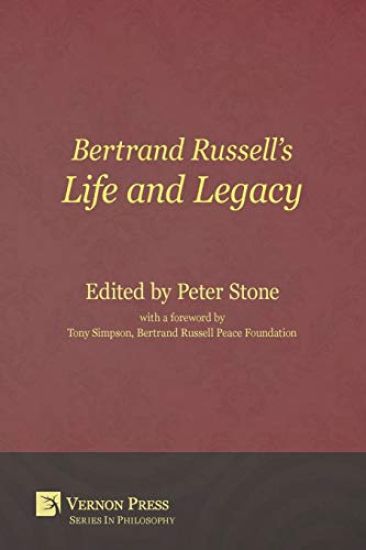
Bertrand Russell’s Life and Legacy
Almost five decades after his death, there is still ample reason to pay attention to the life and legacy of Bertrand Russell. This is true not only because of his role as one of the founders of analytic philosophy, but also because of his important place in twentieth-century history as an educator, public intellectual, critic of organized religion, humanist, and peace activist. The papers in this anthology explore Russell's life and legacy from a wide variety of perspectives. This is altogether fitting, given the many-sided nature of Russell, his life, and his work.The first section of the book considers Russell the man, and draws lessons from Russell's complicated personal life. The second examines Russell the philosopher, and the philosophical world within which his work was embedded. The third scrutinizes Russell the atheist and critic of organized religion, inquiring which parts of his critical stance are worth emulating today. The final section revisits Russell the political activist; it directs an eye both at Russell's own long career of peace activism, but also at his place in a highly political family tradition of which he was justifiably proud.This book thus constitutes an invitation, if one were needed, to the world of Bertrand Russell. Those new to Russell, but with an interest in biography, philosophy, religion, or politics, will hopefully find something to learn here. This may spark an interest in learning more about Russell. But this book is not just intended for the Russell neophyte. The book sheds fresh light on a number of topics central to Russell studies--his connections to other philosophers, for example. Scholars well-versed in Russell studies will enjoy grappling with the treatment given to these topics here.
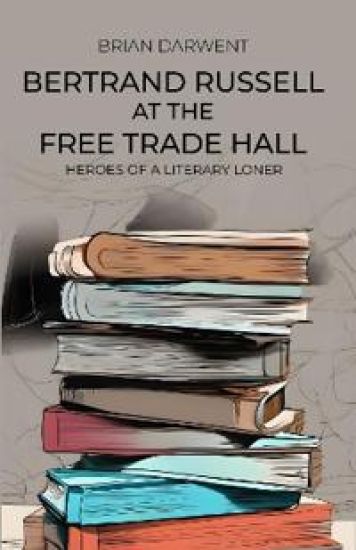
Bertrand Russell at the Free Trade Hall: Heroes of a Literary Loner
An ageing, self-taught literary loner - and a book-lover still, in a world increasingly dominated by electronic gadgetry - Brian Darwent here reflects on the literary figures of times now past who have loomed largest in his thoughts through many years of untutored reading (and writing), and sometimes penetrated his real life more deeply. In addition to the philosopher Bertrand Russell, whom he heard speak in Manchester in 1964 at the age of ninety-one, they include Kurt Vonnegut, Somerset Maugham, Malcolm Muggeridge, James Thurber, William Saroyan and the economist JK Galbraith - all in their day famous names, but too often missing now from bookshop and library shelves.As the author himself explains: "At my advanced age I hate to see writers who have meant a lot to me being elbowed from the shelves by new names. Of course you can't really complain. It's the sort of thing that must happen to most people, I expect, if they live long enough. You're left with the feeling that you've been caught out, somehow. Left up a blind alley. Protesting in vain."Blending personal recollections, biography and non-academic literary comment, the book is not a calculated product of cold research. Derived from knowledge freely absorbed over many years, its aim is to show that books - real books - and their authors can have a deep and lasting meaning in our lives.
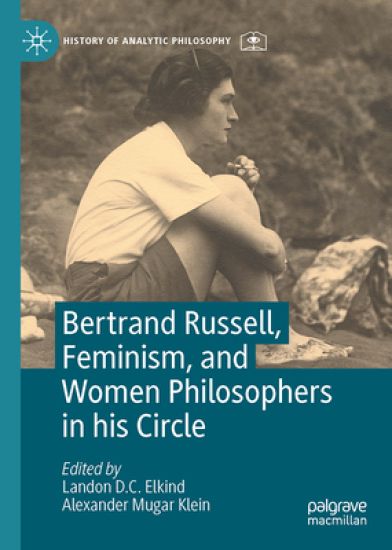
Bertrand Russell, Feminism, and Women Philosophers in his Circle
This book examines Bertrand Russell’s complicated relationships to the women around him, and to feminism more generally. The essays in this volume offer scholarly reassessments of these relationships and their import for the history of feminism and of analytic philosophy.Russell is a founder of analytic philosophy. He has also been called a feminist due to his public, decades-long advocacy for women’s rights and equality of the sexes. But his private behavior towards wives and sexual partners, and his apparently dismissive (occasionally public) responses to some women philosophers, raises the question of what sort of feminist (or chauvinist) Russell actually was.Focusing on women in Russell’s circle of acquaintance, including feminist activists and his philosophical interlocutors, this book casts new light on a timeless thinker’s feminism and the women who played critical roles in the making of analytic philosophy.
Bertrand Russell, Feminism, and Women Philosophers in his Circle
This book examines Bertrand Russell’s complicated relationships to the women around him, and to feminism more generally. The essays in this volume offer scholarly reassessments of these relationships and their import for the history of feminism and of analytic philosophy.Russell is a founder of analytic philosophy. He has also been called a feminist due to his public, decades-long advocacy for women’s rights and equality of the sexes. But his private behavior towards wives and sexual partners, and his apparently dismissive (occasionally public) responses to some women philosophers, raises the question of what sort of feminist (or chauvinist) Russell actually was.Focusing on women in Russell’s circle of acquaintance, including feminist activists and his philosophical interlocutors, this book casts new light on a timeless thinker’s feminism and the women who played critical roles in the making of analytic philosophy.
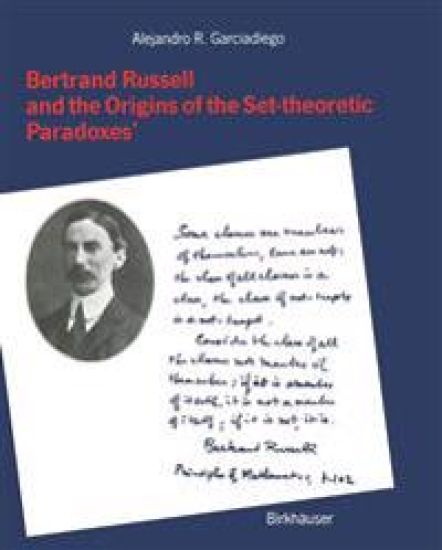
Bertrand Russell and the Origins of the Set-theoretic ‘Paradoxes’
Xll Russell's published works include more than sixty books, several unpublished manuscripts, many hundreds of articles, dozens of radio and TV interviews and films, covering a wide spectrum of knowledge. His writings embrace discussions and analysis of such diverse topics as social sciences, foundations of mathematics, philosophy of physics, philosophy in general, religion, moral sciences, education, pacifism, natural sciences (including biology and physics), linguistics, statistics, probability, eco­ nomic theory, history, politics, international affairs and other topics. He corresponded with a large and diverse group of colleagues including both prominent and obscure figures in politics, the arts, humanities and scienc­ es. Russell's communication with his colleagues began in the late nine­ teenth century and was especially active through much of the twentieth century. In spite of being one of the most controversial public personali­ ties of his day (let us not forget that he went to prison twice, was dis­ missed from Cambridge University and was prevented from teaching at the College of the City of New York), his merits have been recognized and appreciated. He was awarded many medals, diplomas and honors, including the Nobel Prize for Literature in 1950.
Bertrand Russell's Idealist Heritage
Bertrand Russell's research on logic is believed, alongside Wittgenstein's andMoore's works, to have fuelled the linguistic turn that characterized much of twentieth-century philosophy. This process originated in the refutation of British idealismand monism, providing a new interpretation of empiricism. But while his debtto traditional British empiricism has been the subject of study (including by Russellhimself) and extensively investigated, the assumption that the British neo-idealistlegacy was merely a polemical target of Russell and Moore's realist pluralism hashindered a proper assessment of its influence - which, on the contrary, proves tobe of theoretical significance. This essay attempts a documentary reconstruction- in part relying on the Bertrand Russell Archives - to better understand Russell'srelationship with the thought of F. H. Bradley and, indirectly but consequently, withthe English idealist tradition.
Bertrand Russell's Philosophy of Language

Bertrand Russell's Philosophy of Language

R. Clack

Kluwer Academic Publishers
1972
nidottu
RUSSELL AND THE LINGUISTIC PHILOSOPHY It is generally acknowledged that Bertrand Russell played a vital role in the so-called "revolution" that has taken place in twentieth century Anglo-American philosophy, the revolution that has led many philo­ sophers virtually to equate philosophy with some variety - or varieties - of linguistic analysis. His contributions to this revolution were two­ fold: (I) together with G. E. Moore he led the successful revolt against the neo-Hegelianism of Idealists such as Bradley and McTaggert; (2) again with Moore he provided much of the impetus for a somewhat revolutionary way of doing philosophy. (I) and (2) are, of course, close­ ly related, since the new way of philosophizing could be said to consti­ tute, in large part, the revolt against Idealism. Be this as it may, how­ ever, the important fact for present consideration is that Russell was a major influence in turning Anglo-American philosophy in the direction it has subsequently taken - toward what may be termed, quite general­ ly, the "linguistic philosophy. " Unfortunately, though his importance as a precursor of the linguistic philosophy is well-known, the precise sense in which Russell himself can be considered a "philosopher of language" has not, to the present time, been sufficiently clarified. Useful beginnings have been made toward an investigation of this question, but they have been, withal, only begin­ nings, and nothing like an adequate picture of Russell's overall philoso­ phy of language is presently available.
Bertrand Russell’s Philosophy of Language
RUSSELL AND THE LINGUISTIC PHILOSOPHY I t is generally acknowledged that Bertrand Russell played a vital role in the so-called "revolution" that has taken place in twentieth century Anglo-American philosophy, the revolution that has led many philo­ sophers virtually to equate philosophy with some variety - or varieties - of linguistic analysis. His contributions to this revolution were two­ fold: (I) together with G. E. Moore he led the successful revolt against the neo-Hegelianism of Idealists such as Bradley and McTaggert; (2) again with Moore he provided much of the impetus for a somewhat revolutionary way of doing philosophy. (I) and (2) are, of course, close­ ly related, since the new way of philosophizing could be said to consti­ tute, in large part, the revolt against Idealism. Be this as it may, how­ ever, the important fact for present consideration is that Russell was a major influence in turning Anglo-American philosophy in the direction it has subsequently taken - toward what may be termed, quite general­ ly, the "linguistic philosophy. " Unfortunately, though his importance as a precursor of the linguistic philosophy is well-known, the precise sense in which Russell himself can be considered a "philosopher of language" has not, to the present time, been sufficiently clarified. Useful beginnings have been made toward an investigation of this question, but they have been, withal, only begin­ nings, and nothing like an adequate picture of Russell's overall philoso­ phy of language is presently available.
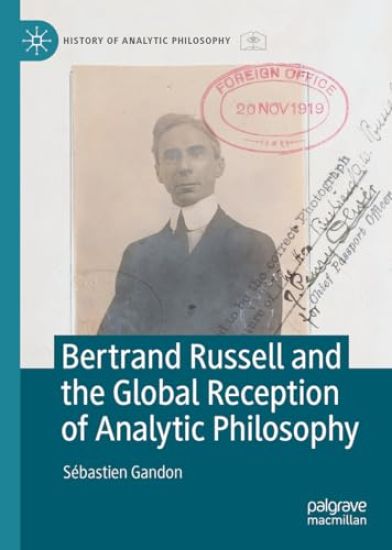
Bertrand Russell and the Global Reception of Analytic Philosophy

Bertrand Russell and the Global Reception of Analytic Philosophy

Sébastien Gandon

Springer Nature Switzerland AG
2026
sidottu
This book provides the first exploration of a new field of study, that of the global reception of analytic philosophy. Its aim is to understand how Russell's program of logical analysis of philosophy was received, interpreted and transformed during the interwar period in different geographical and cultural areas. Russell's idea was that the new mathematical logic could provide definitive solutions to traditional philosophical problems. But which problems and from which traditions? Based on three case studies (the works of Norbert Wiener, Jean Nicod and Feng Youlan), this book shows how Russellian logical analysis becomes transformed through contact with three philosophical configurations (pragmatism in the US, Bergsonism in France and new Confucianism in China). The book describes in detail the changes introduced into Russellian logical analysis by authors who applied it to philosophical problems and traditions that Russell was unfamiliar with. The logical method is seen to adjust to the culturally determined material it encounters. That there is this adjustment raises the delicate and intriguing question of whether logical analysis (and/or logic) depends on variable cultural traits. This issue is addressed in the book's general conclusion. Bertrand Russell and the Global Reception of Analytic Philosophy is essential reading for all scholars, researchers and advanced students of the history of analytic philosophy and especially the reception of analytic philosophy in different countries and cultures.
Bertrand Russell and Albert Einstein - Builders of Peace
Bertrand Russell and Albert Einstein had very different cultural backgrounds and personalities. At the same time, they were united in their tenacious battle for peace; it began with the Great War and culminated in their famous 1955 Manifesto. Through various kinds of pacifism they sought to encapsulate the dilemmas and problems that derived from the changed political conditions of his time: the beginning of the Great War, the creation and failure of the League of Nations, the affirmation of totalitarian regimes, the outbreak of the Second World War, the origin of the atomic age and the escalation of the Cold War, the establishment of the UN with its political and institutional weakness, and the need for a world government in the form of a world federation. Their reflections on the subject of peace led them into dialogue with some of the greatest figures of their time: R. Rolland, Th. Woodrow Wilson, V. I. Lenin, F. D. Roosevelt, J. F. Kennedy, N. Khrushchev, F. Castro, S. Freud, L. Szil rd and E. Reves. Claudio Giulio Anta earned a doctorate in History of Political Thought and Political Institutions from the University of Turin.