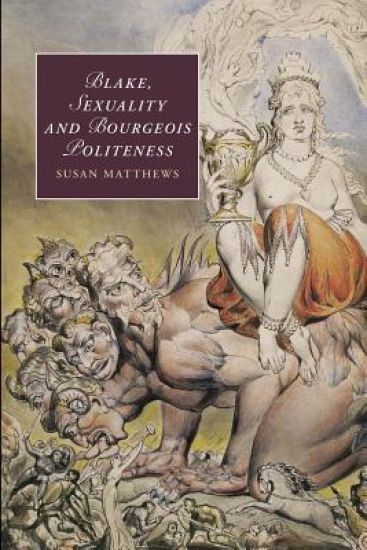
Recent criticism has often overlooked William Blake's relationship to the bourgeois culture of sentimentalism, focusing instead on his association with the radical London underworld of revolutionaries, artisans and plebeian dissenters. By removing Blake from their company and reading him instead through the polite world he knew well, Susan Matthews sets out to give us a new Blake, as well as a new angle onto the conflicted development of a bourgeois culture in the late eighteenth century which was in the process of redefining the role and meaning of sexuality. With imaginative use of personalities, texts and images taken from an original range of archival material, Matthews returns to the Age of Sensibility and finds within its changing landscape answers to some of the crucial questions that remain about an artist and writer whose work continues to challenge scholars and critics today.
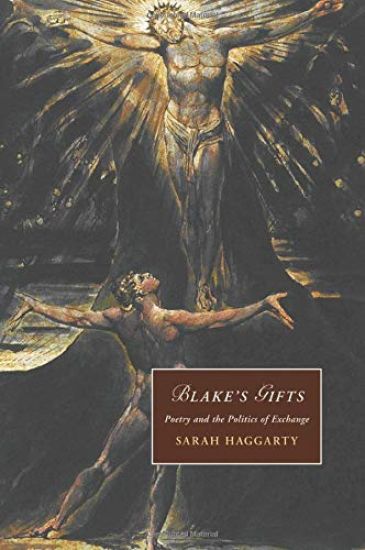
The idea of the gift, in contrast to concepts of commercial exchange or the exercise of self-interest at the expense of social ties, is integral to the ways in which William Blake thought about his art, and the production and dissemination of his work. Sarah Haggarty offers a sophisticated and thorough account of the idea of the gift in Blake's writing and designs, examining both the theoretical implications of the term, and the way it plays out in specific textual and visual contexts within Blake's works. Elegantly written, thoughtful and closely argued, this book explores particular passages with great dexterity and in a style that enables the reader to participate in the experience of discovering the significance of 'the gift' for understanding Blake's work.
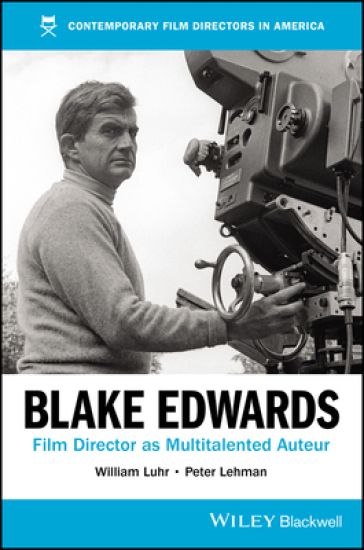
BLAKE EDWARDS Blake Edwards: Film Director as Multitalented Auteur is the first critical analysis to focus on the dramatic works of Blake Edwards. Best known for successful comedies such as The Pink Panther series with Peter Sellers, Blake Edwards wrote, produced, and directed serious works in radio, television, film, and theater for seven decades. Although hit films such as Breakfast at Tiffany’s and ‘10’ remain popular, many of Edwards’s dramas have been forgotten or marginalized. In this unique book, William Luhr and Peter Lehman draw on original research from numerous set visits and personal interviews with Edwards and many of his creative and business collaborators to explore his dramas, radio and television work, theatrical productions, one-man art shows, and unproduced screenplays. In-depth chapters analyze non-comedic films including Experiment in Terror, Days of Wine and Roses, and The Tamarind Seed, the theatrical feature film Gunn and the made-for-television film Peter Gunn, the musical adaptation of Victor/Victoria, and lesser-known films written but not directed by Edwards, such as Drive a Crooked Road. Throughout the book, the authors apply contemporary film theory to auteur criticism of different works while sharing original insights into how Edwards worked creatively in disparate genres and media using composition, editing, sound, and visual motifs to shape his films and radio and television series. A one-of-a-kind examination of one of the most influential film directors of his generation, Blake Edwards: Film Director as Multitalented Auteur is an excellent supplementary text for university courses in American cinema, genres, auteurs, and film criticism, and a must-read for critics, scholars, and general readers interested in the works of Blake Edwards.
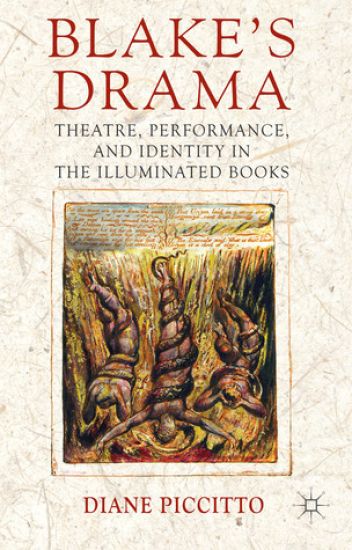
Blake's Drama challenges conventional views of William Blake's multimedia work by reinterpreting it as theatrical performance. Viewed in its dramatic contexts, this art form is shown to provoke an active spectatorship and to depict identity as paradoxically essential and constructed, revealing Blake's investments in drama, action, and the body.
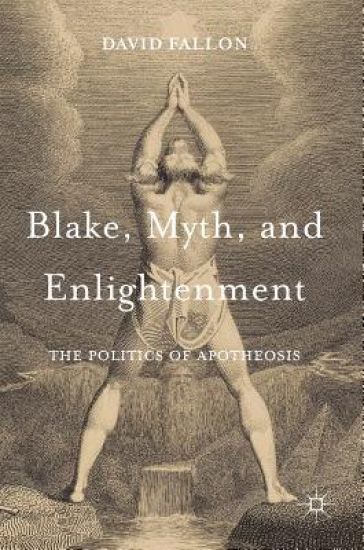
This book provides compelling new readings of William Blake’s poetry and art, including the first sustained account of his visionary paintings of Pitt and Nelson. It focuses on the recurrent motif of apotheosis, both as a figure of political authority to be demystified but also as an image of utopian possibility. It reevaluates Blake’s relationship to Enlightenment thought, myth, religion, and politics, from The French Revolution to Jerusalem and The Laocoön. The book combines careful attention to cultural and historical contexts with close readings of the texts and designs, providing an innovative account of Blake’s creative transformations of Enlightenment, classical, and Christian thought.
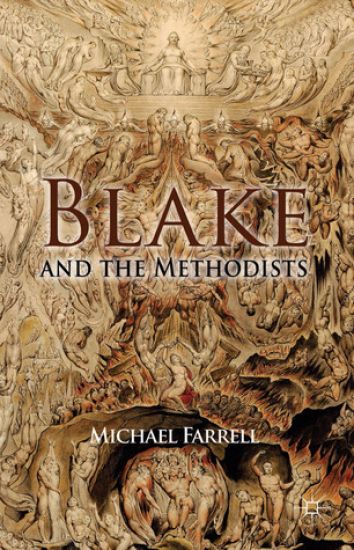
Exploring the work of William Blake within the context of Methodism – the largest 'dissenting' religious group during his lifetime – this book contributes to ongoing critical debates surrounding Blake's religious affinities by suggesting that, contrary to previous thinking, Blake held sympathies with certain aspects of Methodism.
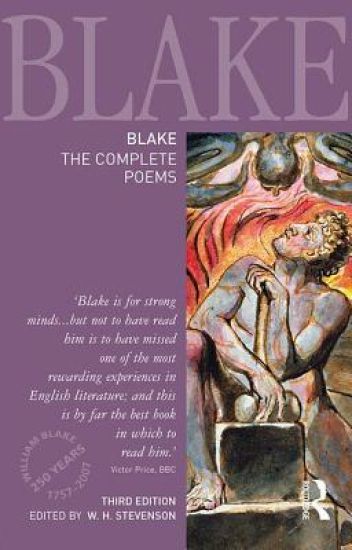
William Blake (1757 - 1827) is one of the great figures in literature, by turns poet, artist and visonary. Profoundly libertarian in outlook, Blake's engagement with the issues of his day is well known and this - along with his own idiosynratic concerns - flows through his poetry and art. Like Milton before him, the prodigality of his allusions and references is little short of astonishing. Consquently, his longer viosnary poems can challege the modern reader, who will find in this avowedly open edition all they might need to interpret the poetry.W. H. Stevenson's Blake is a masterpiece of scrupulous scholarship. It is, as the editor makes clear in his introduction, 'designed to be widely, and fluently, read' and this Third Edition incorporates many changes to further that aim. Many of the headnotes have been rewritten and the footnotes updated. The full texts of the early prose tracts, All Religions are One and There is no Natural Religion, are included for the first time. In many instances, Blake's capitalisation has been restored, better to convey the expressive individuality of his writing. In addition, a full colour plate section contains a representation of Blake's most significant paintings and designs. As the 250th anniversary of his birth approaches, Blake has perhaps more readers than ever before; Blake: The Complete Poems will stand those readers, new and old, in good stead for many years to come.
Blake's combination of verse and design invites interdisciplinary study. The essays in this collection approach his work from a variety of perspectives including masculinity, performance, plant biology, empire, politics and sexuality.
First published in 1988, this book is a study of all Blake’s work in illuminated printing. It traces in particular, the development of his ideas on politics, religion, sexuality, and the imagination. There are substantial sections on some of Blake’s best-known works, including the Marriage of Heaven and Hell, and the Songs of Innocence and Experience, and full critical essays on the Four Zoas and Jerusalem. The book describes the historical contexts of Blake’s work, and sets it in relation to the political controversies of his age as these are reflected in the writings of Burke, Paine and Mary Wollstonecraft. It discusses the relationships of text and design in Blake, the characteristic verbal textures and rhythms of his longer poems, some influences on his thought, and developing structure of his personal myth and its relationship to other mythologies. The opening chapter discusses areas of fundamental disagreement with some of the main approaches to Blake whilst the final chapter discusses literary theory and the practice of criticism, arguing for an open and explicit involvement of personal experience and values and a more creative use of form in critical writing.
First published in 1998, this book formed part of an ongoing effort to restore politics and history to the centre of Blake studies. It adopts a three pronged approach when presenting its essays, seeking to promote a return to the political Blake; to deepen the understanding of some of the conversations articulated in Blake’s art by introducing new, historical material or new interpretations of texts; and to highlight differing perspectives on Blake’s politics among historically focused critics. The collection contains essays with varying methodological assumptions and differing positions on questions central to historicist Blake scholarship.
First published in 1998, this book formed part of an ongoing effort to restore politics and history to the centre of Blake studies. It adopts a three pronged approach when presenting its essays, seeking to promote a return to the political Blake; to deepen the understanding of some of the conversations articulated in Blake’s art by introducing new, historical material or new interpretations of texts; and to highlight differing perspectives on Blake’s politics among historically focused critics. The collection contains essays with varying methodological assumptions and differing positions on questions central to historicist Blake scholarship.
First published in 1988, this book is a study of all Blake’s work in illuminated printing. It traces in particular, the development of his ideas on politics, religion, sexuality, and the imagination. There are substantial sections on some of Blake’s best-known works, including the Marriage of Heaven and Hell, and the Songs of Innocence and Experience, and full critical essays on the Four Zoas and Jerusalem. The book describes the historical contexts of Blake’s work, and sets it in relation to the political controversies of his age as these are reflected in the writings of Burke, Paine and Mary Wollstonecraft. It discusses the relationships of text and design in Blake, the characteristic verbal textures and rhythms of his longer poems, some influences on his thought, and developing structure of his personal myth and its relationship to other mythologies. The opening chapter discusses areas of fundamental disagreement with some of the main approaches to Blake whilst the final chapter discusses literary theory and the practice of criticism, arguing for an open and explicit involvement of personal experience and values and a more creative use of form in critical writing.
Blake is a young boy who is blind and has other special needs. He enjoys having friends just like all the other kids. "Blake's Buddies" is a team made up of his many friends. They support and encourage Blake's achievements. All the kids on his team discover they also benefit in many ways just like Blake!
William Blake is acknowledged as a poet of opposition and contradiction: a writer who, from Songs of Innocence and Experience to his last epic Jerusalem, ceaselessly explored the conflicts between limitation and possibility, reason and energy, torment and joy. But the contradictions within Blake's own 'visionary' poetics are less often considered. Throughout his work, Blake powerfully dramatises the energies and agonies of his own poetic labour.
This book explores the ways in which Blake reacted to the subcultures of his day, as well as how he has inspired popular, modernist and postmodernist figures until the present day. Blake's influence on later generations of writers and artists is more important than ever, extending into film, psychology, children's literature and graphic novels.