Kirjojen hintavertailu. Mukana 12 472 963 kirjaa ja 12 kauppaa.

Kirjahaku

Etsi kirjoja tekijän nimen, kirjan nimen tai ISBN:n perusteella.

1000 tulosta hakusanalla Brian Adams

Adam

Adam

Brian Basset

Andrews McMeel Publishing, LLC
1989
nidottu
In this Adam collection, cartoonist Brian Basset features his endearingly funny characters who epitomize-in their own unique ways-the joys and challenges of contemporary family life. From baby-food-stained evening wear to fear of finances, from long family walks to computer-generated friendships, Adam portrays the humorous realities of raising a family while juggling commitments, careers, and community. Through it all, Adam and Laura keep a sense of perspective and a giant dose of family-oriented fun.
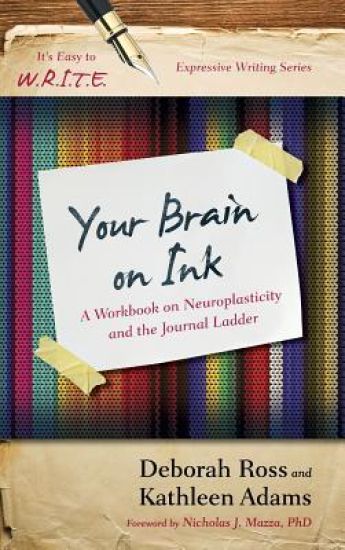
Your Brain on Ink

Your Brain on Ink

Kathleen Adams; Deborah Ross

Rowman Littlefield
2016
sidottu
A growing body of neuroscience research has established the principle of neuroplasticity; a powerfully hopeful message that we can use our minds to change our brains in the direction of greater health and well-being. The key to shaping this change rests in how we direct and focus and our attention. In an easy-to-use workbook format this publication offers a strengths based, preventative, positive approach, grounded in neuroscience research, for creating a stronger sense of overall well-being. It contains more than 65 unique writing prompts and a facilitator’s guide with complete facilitation plans for 1-hour, 90 minutes and 2-hour groups.
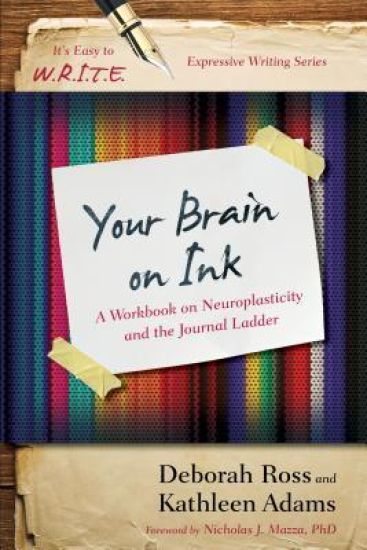
Your Brain on Ink

Your Brain on Ink

Kathleen Adams; Deborah Ross

Rowman Littlefield
2016
nidottu
The science of neuroplasticity demonstrates that our brains can and do change. We each not only have the power but use the power to create new neural pathways — for better or for worse. This science has demonstrated that we can create pathways that lead to resilience, vitality, greater peace of mind, and improved well-being. Self-directed neuroplasticity is a method of accelerating neurological change through expressive writing. It’s what happens when you harness the power of your pen or keyboard in service of intention, attention, and action for your greater good. This workbook of expressive writing for brain change can lead to increased well-being. As you learn and apply the principles of neuroplasticity to your own life, staged and sequenced through masterful application of writing techniques designed to promote positive brain change, improved satisfaction will not be far behind.
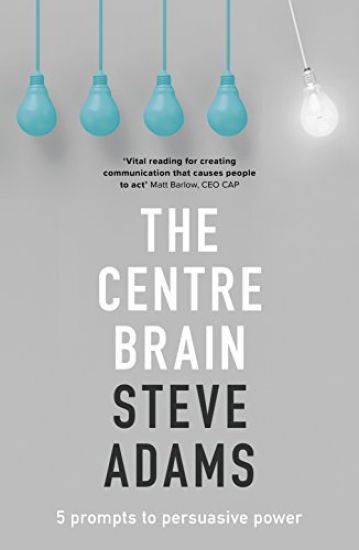
The Centre Brain

The Centre Brain

Steve Adams

SPCK Publishing
2017
pokkari
"Vital reading for anyone who wants to create communications that cause people to act." Matt Barlow, CEO, CAP When you face a red light, what can you say to turn it green? On stage needing to hook the audience? Convincing a friend over coffee? Sweating it in a job interview? The results of what you say aren't coincidence. Whether you persuade, or not, is down to whether you use the right prompts. The Centre Brain - the body's action centre - responds to what it hears. And, if the right prompts are used, the brain can be persuaded to act. Effective communication isn't a lottery. The Centre Brain explains why your communication works, or doesn't. Why you prompt action, or don't. The result of a 20-year quest to discover what prompts action, The Centre Brain offers readers a glimpse into the story behind their stories. Combining psychological insight, real-life experience and inspiring application, this book will show how you can make your message unmissable using the Centre Brain 5 prompts to action.
Henry Adams and the Southern Question

Henry Adams and the Southern Question

Michael O'Brien

University of Georgia Press
2007
pokkari
“Strictly, the Southerner had no mind; he had temperament. He was not a scholar; he had no intellectual training; he could not analyze an idea, and he could not even conceive of admitting two.” This judgment, rendered in The Education of Henry Adams, may be the most quoted of Adams’s writings on the South. However, it is far from the only one of his beliefs that helped to shape a national outlook on the region from the late antebellum period to the present.Thinking about the South, says Michael O’Brien, was “part of being an Adams.” In this book O’Brien shows how Adams (grandson of President John Quincy Adams and great-grandson of President John Adams) looked at the region during various phases of his life. O’Brien explores the cultural and familial impulses behind those views and locates them in American intellectual history. He begins with the young Henry Adams, who served as his father’s secretary in the House of Representatives during the secession crises of 1860-1861 and in the American embassy in London during and after the Civil War, until 1868.O’Brien then covers a number of topics relevant to Adams’s outlook on the South, including his residency in that deceptively “southern” city, Washington, D.C.; his journalism on the Reconstruction-era South; his biographical or historical works on the Virginians John Randolph, Thomas Jefferson, and James Madison; and his two novels, especially Democracy. Finally, O’Brien ponders the vein of southern self-criticism—exemplified by Wilbur J. Cash’s Mind of the South—that embraces the notorious slur so often quoted from The Education of Henry Adams.
Cocoa for Santa: Adam

Cocoa for Santa: Adam

Brian W. Schachtner

Independently Published
2019
nidottu
With a week before Christmas, everything seems to be falling apart for Santa. Will Santa be able to deliver presents this year? Is it possible that Adam has the solution to all of Santa's big problems?
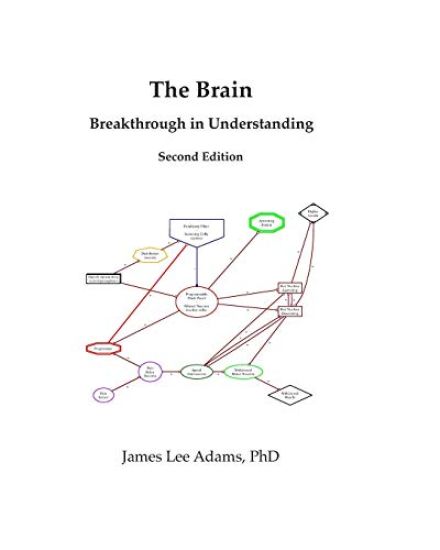
The Brain: Breakthrough in Understanding: Second Edition

The Brain: Breakthrough in Understanding: Second Edition

James Lee Adams

Independently Published
2019
nidottu
This book advances our understanding of the human brain, building on insights from engineering, computer science, and neuroscience. It shows how the brain progresses from basic reflexes all the way to conscious behavior. This second edition adds to the first by advancing the descriptions of visual processing and the exercise of judgment, adding a more complete theory of consciousness, and adding brief chapters on behavior and mental illness.
The Third Duke of Buccleuch and Adam Smith

The Third Duke of Buccleuch and Adam Smith

Brian Bonnyman

Edinburgh University Press
2014
sidottu
This book examines the career of Henry Scott, third Duke of Buccleuch (1746-1812), with particular focus on his relationship with his tutor and friend, the philosopher Adam Smith. Henry Scott, the third Duke of Buccleuch (1746-1812), presided over the management of one of the largest landed estates in Britain during a time of dramatic agrarian, social and political change. Tutored and advised by the philosopher Adam Smith, the Duke was also an important patron of the Scottish Enlightenment, lauded by the Edinburgh literati as an exemplar of patriotic nobility and civic virtue, while his alliance with Henry Dundas dominated Scottish politics for almost 40 years. Combining the approaches of intellectual, economic and landscape history, this book examines the life and career of the third Duke, focusing in particular on his relationship with Adam Smith and the improvement of his extensive Scottish estates. By examining the influence of one of the 18th-century's foremost philosophers of improvement upon the career of one Scotland's largest landowners, this book explores the various influences - intellectual, economic, moral and political - which helped shape Scotland's distinctive agricultural revolution.
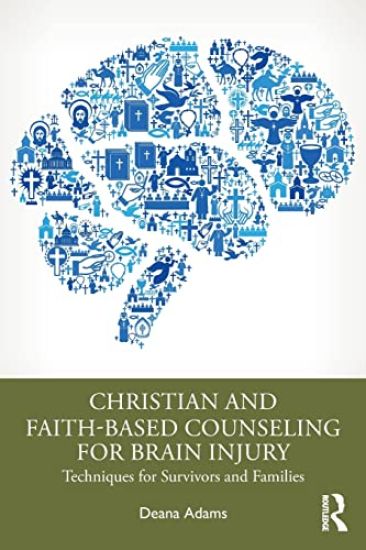
Christian and Faith-based Counseling for Brain Injury
Christian and Faith-based Counseling for Brain Injury is the first book of its kind to offer faith-based therapy to address the emotional, cognitive, and mental health needs of individuals who have suffered a traumatic brain injury (TBI). A highly researched piece of work, the book puts forth an innovative and effective method for not only addressing the challenges of a life-changing injury but also for creating a sense of purpose.Through the nuances of faith-based counselling, this book focuses on the spiritual and existential aspects of understanding the diagnosis and creating a purpose post-injury. It examines how brain injury can affect an individual by exploring the deficits of brain injury, the impact of brain injury, and the challenges specific to damage to certain brain lobes. It also describes the mental health issues, such as depression, anxiety, grief, anger, and posttraumatic stress, that can affect both the survivor and their family members. Offering targeted counseling techniques and adaptive strategies, it shows how faith-based counselors can effectively treat brain injury.This book is valuable reading for all individuals invested in providing support to the TBI community. It is aimed at counselors, lay counselors, healthcare professionals, social workers, psychotherapists, seminary students, and upper-level graduate students. It will further be of use to for clinicians working in the outpatient level of care and private practice settings.
Christian and Faith-based Counseling for Brain Injury
Christian and Faith-based Counseling for Brain Injury is the first book of its kind to offer faith-based therapy to address the emotional, cognitive, and mental health needs of individuals who have suffered a traumatic brain injury (TBI). A highly researched piece of work, the book puts forth an innovative and effective method for not only addressing the challenges of a life-changing injury but also for creating a sense of purpose.Through the nuances of faith-based counselling, this book focuses on the spiritual and existential aspects of understanding the diagnosis and creating a purpose post-injury. It examines how brain injury can affect an individual by exploring the deficits of brain injury, the impact of brain injury, and the challenges specific to damage to certain brain lobes. It also describes the mental health issues, such as depression, anxiety, grief, anger, and posttraumatic stress, that can affect both the survivor and their family members. Offering targeted counseling techniques and adaptive strategies, it shows how faith-based counselors can effectively treat brain injury.This book is valuable reading for all individuals invested in providing support to the TBI community. It is aimed at counselors, lay counselors, healthcare professionals, social workers, psychotherapists, seminary students, and upper-level graduate students. It will further be of use to for clinicians working in the outpatient level of care and private practice settings.

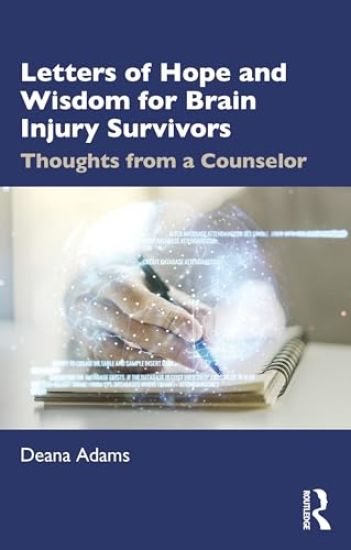
Letters of Hope and Wisdom for Brain Injury Survivors
Letters of Hope and Wisdom for Brain Injury Survivors: Thoughts from a Counselor offers a personal, informal and spiritual perspective on how to manage the multiple issues related to brain injury. Written by a counsellor who draws on first hand experiential testimonies and insights, each chapter offers a personal letter to the survivor addressing the various issues stemming from a brain injury, along with practical applications suggested for recovery.The book offers a general overview of brain injury and how each part of the brain may be affected. Mental health issues such as depression, anxiety, anger, fear, post-traumatic stress, and grief are described from the perspectives of both the survivor and the family members, and the book also includes strategies on improving self-esteem and gaining new purpose after a brain injury. Additionally, practical coping skills are explained such as how to deal with sensory overload, adjusting the pace of life, and managing family events. Each chapter also offers a homework section that gives the reader additional exercises to complete.It is valuable reading for brain injured survivors seeking holistic wellbeing, and their family members to help them navigate what lies before them. It also serves as an additional source of therapy for clinicians, counselors and upper-level graduate students.
Letters of Hope and Wisdom for Brain Injury Survivors
Letters of Hope and Wisdom for Brain Injury Survivors: Thoughts from a Counselor offers a personal, informal and spiritual perspective on how to manage the multiple issues related to brain injury. Written by a counsellor who draws on first hand experiential testimonies and insights, each chapter offers a personal letter to the survivor addressing the various issues stemming from a brain injury, along with practical applications suggested for recovery.The book offers a general overview of brain injury and how each part of the brain may be affected. Mental health issues such as depression, anxiety, anger, fear, post-traumatic stress, and grief are described from the perspectives of both the survivor and the family members, and the book also includes strategies on improving self-esteem and gaining new purpose after a brain injury. Additionally, practical coping skills are explained such as how to deal with sensory overload, adjusting the pace of life, and managing family events. Each chapter also offers a homework section that gives the reader additional exercises to complete.It is valuable reading for brain injured survivors seeking holistic wellbeing, and their family members to help them navigate what lies before them. It also serves as an additional source of therapy for clinicians, counselors and upper-level graduate students.
Tennessee Hero Confederate Brigadier General John Adams

Tennessee Hero Confederate Brigadier General John Adams

Bryan W. Lane; Ceo

History Press Library Editions
2017
sidottu
Confederate brigadier general John Adams refused to leave his men despite his own critical injuries and died at the Battle of Franklin. Until recently, his service was rarely acknowledged. During his remarkable military career, he traversed the country from Tennessee to New York, Mexico to Maryland and then to California. Adams trained and rode alongside some of the most celebrated commanders of the Confederate army, but his greatest feat remains his unwavering devotion to his men and the Confederate cause in his home state of Tennessee. Bryan W. Lane follows Adams's rise in the military ranks until his inevitable fall at one of the most important battles of the Civil War.
The Third Duke of Buccleuch and Adam Smith

The Third Duke of Buccleuch and Adam Smith

Brian Bonnyman

EDINBURGH UNIVERSITY PRESS
2026
nidottu
Henry Scott, the third Duke of Buccleuch (1746-1812), presided over the management of one of the largest landed estates in Britain during a time of dramatic agrarian, social and political change. Tutored and advised by the philosopher Adam Smith, the Duke was also an important patron of the Scottish Enlightenment, lauded by the Edinburgh literati the as an exemplar of patriotic nobility and civic virtue, while his alliance with Henry Dundas dominated Scottish politics for almost forty years. Combining the approaches of intellectual, economic and landscape history, this book examines the life and career of the third Duke, focusing in particular on his relationship with Adam Smith and the improvement of his extensive Scottish estates. By examining the influence of one of the eighteenth century’s foremost philosophers of improvement upon the career of one Scotland’s largest landowners, this book explores the various influences - intellectual, economic, moral and political - which helped shape Scotland’s distinctive agricultural revolution. In its exploration of the cultural as well as the economic roots of improvement and in its assessment of previously unappreciated aspect of Adam Smith’s career, this book will appeal to both specialist scholars and general readers interested in the Scottish Enlightenment, estate management and the culture of improvement in eighteenth-century Scotland.
Memory Improvement, Accelerated Learning and Brain Training: Learn How to Optimize and Improve Your Memory and Learning Capabilities for Top Results i
Is it hard for you to remember passwords and numbers containing more than 8 digits at once?Does it feel like you have to re-read certain Emails over and over again to get the message?Do you have trouble to store and remember the information from the reports or the books you are reading?Then keep reading.You do not have to be smart to develop a memory like the hard disk in your computer.Even if you are a below average student, manager or employee, the techniques and methods used by the Memory Champions of the world will help you to memorize and understand information easier, faster and even longer than ever before.Using the (ancient) methods applied by these Memory Champions to remember Pi to 10,000 digits in only 14 minutes will also help you in your day-to-day life as a manager, a knowledge worker and a student.Copy and learn their techniques and secrets to learn and remember faster, easier and better. It will change your life and work for the better.In Memory Improvement, Accelerated Learning and Brain Training you will discover: The ideal brain states and frequencies to learn and how you can trigger these frequencies yourself in 3 steps (page 42-47)Learn the 7 steps, defined by 8 times memory world champion Dominic O Brien, to memorize a presentation so you don t need MS Powerpoint anymore (page 49)How to use emotions to improve your memory when preparing for the exam at university or the product pitch at work. (page 52)A technique to remember words from a foreign language way easier and faster(still wonder why they don t teach this is school) (page 57)How to leverage your long term memory to improve your short term memory to remember a large list of unrelated items (used by the ancient Greeks and Romans) (page 58)Two different systems used by the great memory champions to remember a large amount of numbers only seeing or hearing them once (page 64 and 68)16 Types of food, available in your local supermarket, which will help to create new brain cells and learn faster (page 73)How to change your sugar consumption so you can concentrate longer and better (page 82)The golden combination of physical and mental exercise to improve your memory and brain functions (page 90)The 4 types of workouts that offer brain health (page 91)The long and short term effects of caffeine on your brain and memory (page 74 and page 100)10 tips to study smart instead of hard (page 105)The 4 myths regarding the effects of sleep on your memory (page 101)17 tips to become a top performer at work while working less (page 112)The controversial truth about perfectionism (page 123)And much, much more.You might wonder if those techniques can only be learned by the smartest people with the best memory. The methods are described with practical examples so you can apply them on a daily basis at your work or studying for an exam. So you do not have to be a natural-born Einstein to have success.Are you ready to impress your partner, friends, colleagues and parents?Then scroll up and click Add to Cart .
Memory Improvement, Accelerated Learning and Brain Training

Memory Improvement, Accelerated Learning and Brain Training

John Adams

Self Improvement by John Adams
2020
sidottu
Is it hard for you to remember passwords and numbers containing more than 8 digits at once? Does it feel like you have to re-read certain Emails over and over again to get the message? Do you have trouble to store and remember the information from the reports or the books you are reading?Then keep reading.You do not have to be smart to develop a memory like the hard disk in your computer.Even if you are a below-average student, manager or employee, the techniques and methods used by the Memory Champions of the world will help you to memorize and understand information easier, faster and even longer than ever before.Using the (ancient) methods applied by these Memory Champions to remember Pi to 10,000 digits in only 14 minutes will also help you in your day-to-day life as a manager, a knowledge worker and a student.Copy and learn their techniques and secrets to learn and remember faster, easier and better. It will change your life and work for the better.In Memory Improvement, Accelerated Learning and Brain Training you will discover: The ideal brain states and frequencies to learn and how you can trigger these frequencies yourself in 3 steps (page 42-47) Learn the 7 steps, defined by 8 times memory world champion Dominic O Brien, to memorize a presentation so you don t need Powerpoint anymore (page 49) How to use emotions to improve your memory when preparing for the exam at university or the product pitch at work. (page 52) A technique to remember words from a foreign language way easier and faster (still wonder why they don t teach this in school) (page 57) How to leverage your long term memory to improve your short term memory to remember a large list of unrelated items (used by the ancient Greeks and Romans) (page 58) Two different systems used by the great memory champions to remember a large amount of numbers only seeing or hearing them once (page 64 and 68) 16 Types of food, available in your local supermarket, which will help to create new brain cells and learn faster (page 73) How to change your sugar consumption so you can concentrate longer and better (page 82) The golden combination of physical and mental exercise to improve your memory and brain functions (page 90) The 4 types of workouts that offer brain health (page 91) The long and short term effects of caffeine on your brain and memory (page 74 and page 100) 10 tips to study smart instead of hard (page 105) The 4 myths regarding the effects of sleep on your memory (page 101) 17 tips to become a top performer at work while working less (page 112) The controversial truth about perfectionism (page 123) And much, much more. You might wonder if those techniques can only be learned by the smartest people with the best memory. The methods are described with practical examples so you can apply them on a daily basis at your work or studying for an exam. So you do not have to be a natural-born Einstein to have success. Are you ready to impress your partner, friends, colleagues and parents? Then scroll up and click Add to Cart .