Kirjahaku
Etsi kirjoja tekijän nimen, kirjan nimen tai ISBN:n perusteella.
1000 tulosta hakusanalla Brian P. Simpson
The Distributor's Three-Dimensional Pallet-Packing Problem
Brian P Ballew
Hutson Street Press
2025
pokkari
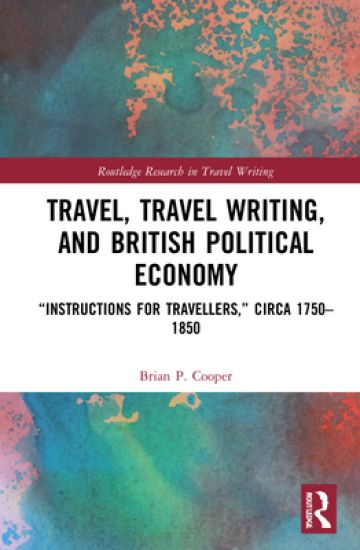
Travel, Travel Writing, and British Political Economy
Brian P. Cooper
TAYLOR FRANCIS LTD
2023
nidottu
The book draws on the history of economics, literary theory, and the history of science to explore how European travelers like Alexander von Humboldt and their readers, circa 1750–1850, adapted the work of British political economists, such as Adam Smith, to help organize their observations, and, in turn, how political economists used travelers’ observations in their own analyses. Cooper examines journals, letters, books, art, and critical reviews to cast in sharp relief questions raised about political economy by contemporaries over the status of facts and evidence, whether its principles admitted of universal application, and the determination of wealth, value, and happiness in different societies. Travelers citing T.R. Malthus’s population principle blurred the gendered boundaries between domestic economy and British political economy, as embodied in the idealized subjects: domestic woman and economic man. The book opens new realms in the histories of science in its analyses of debates about gender in social scientific observation: Maria Edgeworth, Maria Graham, and Harriet Martineau observe a role associated with women and methodically interpret what they observe, an act reserved, in theory, by men.
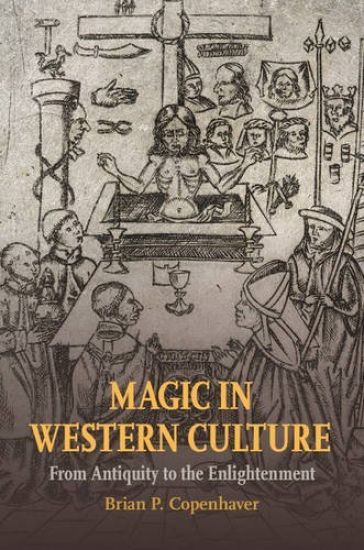
The story of the beliefs and practices called 'magic' starts in ancient Iran, Greece, and Rome, before entering its crucial Christian phase in the Middle Ages. Centering on the Renaissance and Marsilio Ficino - whose work on magic was the most influential account written in premodern times - this groundbreaking book treats magic as a classical tradition with foundations that were distinctly philosophical. Besides Ficino, the premodern story of magic also features Plotinus, Iamblichus, Proclus, Aquinas, Agrippa, Pomponazzi, Porta, Bruno, Campanella, Descartes, Boyle, Leibniz, and Newton, to name only a few of the prominent thinkers discussed in this book. Because pictures play a key role in the story of magic, this book is richly illustrated.
The guide to shortening your execution cycle down from one year to twelve weeks Most organizations and individuals work in the context of annual goals and plans; a twelve-month execution cycle. Instead, The 12 Week Year avoids the pitfalls and low productivity of annualized thinking. This book redefines your "year" to be 12 weeks long. In 12 weeks, there just isn't enough time to get complacent, and urgency increases and intensifies. The 12 Week Year creates focus and clarity on what matters most and a sense of urgency to do it now. In the end more of the important stuff gets done and the impact on results is profound. Explains how to leverage the power of a 12 week year to drive improved results in any area of your lifeOffers a how-to book for both individuals and organizations seeking to improve their execution effectivenessAuthors are leading experts on execution and implementation Turn your organization's idea of a year on its head, and speed your journey to success.
A fascinating comparative account of sacred languages and their role in and beyond religion —written for a broad, interdisciplinary audience Sacred languages have been used for foundational texts, liturgy, and ritual for millennia, and many have remained virtually unchanged through the centuries. While the vital relationship between language and religion has been long acknowledged, new research and thinking across an array of disciplines including religious studies, sociolinguistics, sociology, linguistics, and even neurolinguistics has resulted in a renewed interest in the area. This fascinating and informative book draws on Christian, Islamic, Hindu, Judaic, and Buddhist traditions to provide a concise and accessible introduction to the phenomenon of sacred languages. The book takes a strongly comparative, wide-ranging approach to exploring ways in which ancient religious languages, such as Latin, Pali, Church Slavonic, and Hebrew continue to shape the beliefs and practices of religious communities around the world. Informed by both comparative religion and sociolinguistics, it traces the histories of sacred languages, the myths and doctrines that explain their origin and value, the various ways they are used, the sectarian debates that shadow them, and the technological innovations that propel them forward in the twenty-first century. A comprehensive but succinct account of the role and importance of language within religionTakes an interdisciplinary approach which will appeal to students and scholars across an array of disciplines, including religious studies, sociology of religion, sociolinguistics, and linguisticsProvides a strongly comparative exploration, drawing on Christian, Islamic, Hindu, Judaic, and Buddhist traditionsUses numerous examples and ties historic debates with contemporary situationsSatisfies the rapidly growing demand for books on the subject among both academics and general readers Sacred Languages of the World is a must-read for students of religion and language, scripture, religious literacy, education and language, the sociology of religion, sociolinguistics. It will also have strong appeal among general readers with an interest comparative religion, history, cultural criticism, communication studies, and more.

Update your thinking and avoid complacency with the 12 week year Are you ready to change your life? This hands-on template for implementing advice from the game-changing book The 12 Week Year is a study guide that makes it easy for anyone to apply the 12 week year to their own lives. Instead of getting bogged down in annualized thinking that produces pitfalls and saps productivity, follow along with this guide to redefine your “year” to be just 12 weeks long. By doing so, you’ll avoid complacency, begin to focus on what matters most, create better clarity, and develop a sense of urgency so that “now” is always the right time to act. Applicable to business growth, career goals, and life in general, the 12 week plan will help you improve in any—or every—area. By closing the “knowing-doing gap,” you’ll discover how to execute on what you already know and greatly expand the boundaries of your capabilities. Learn to: Create your personal and business visions with step-by-step tipsDevelop your own 12 week plan by applying what you know to what you doPut over 10 years of field-tested content, exercises, and templates to work for youBuild a 12 week commitment and apply the system to your own life and business Take back your life, improve your thinking, and advance your business or career by implementing real-world, hands-on methods in The 12 Week Year Study Guide.
Own your choices and discover the true meaning of accountability The implementation of true, organization-wide accountability has the potential to transform your firm’s—and your personal—performance. Unfortunately, the word “accountability” often has negative connotations, including blame, fear, and conflict. In Uncommon Accountability, best-selling authors and leadership strategists Brian Moran and Michael Lennington compellingly argue for a positive and affirming conception of accountability—one that stands for personal ownership of one’s goals, actions, and progress. The authors show you how to harness the power of accountability, with all of its built-in potential to enable growth and learning, improve well-being, reduce stress, and drive results. You’ll also learn to: Manage negative consequences by “holding others capable” and stop playing the blame game Shift your thinking to take real advantage of simple behavior changes that improve results and engagement Emphasize the power and importance of personal choice in every interaction Containing real-world case studies that show you how to apply the principles contained within to your own circumstances, Uncommon Accountability is the perfect tool to unlock the potential of your team members.
The book draws on the history of economics, literary theory, and the history of science to explore how European travelers like Alexander von Humboldt and their readers, circa 1750–1850, adapted the work of British political economists, such as Adam Smith, to help organize their observations, and, in turn, how political economists used travelers’ observations in their own analyses. Cooper examines journals, letters, books, art, and critical reviews to cast in sharp relief questions raised about political economy by contemporaries over the status of facts and evidence, whether its principles admitted of universal application, and the determination of wealth, value, and happiness in different societies. Travelers citing T.R. Malthus’s population principle blurred the gendered boundaries between domestic economy and British political economy, as embodied in the idealized subjects: domestic woman and economic man. The book opens new realms in the histories of science in its analyses of debates about gender in social scientific observation: Maria Edgeworth, Maria Graham, and Harriet Martineau observe a role associated with women and methodically interpret what they observe, an act reserved, in theory, by men.
Church Slavonic, one of the world's historic sacred languages, has experienced a revival in post-Soviet Russia. Blending religious studies and sociolinguistics, this is the first book devoted to Church Slavonic in the contemporary period. It is not a narrow study in linguistics, but uses Slavonic as a passkey into various wider topics, including the renewal and factionalism of the Orthodox Church; the transformation of the Russian language; and the debates about protecting the nation from Western cults and culture. It considers both official and popular forms of Orthodox Christianity, as well as Russia's esoteric and neo-pagan traditions. Ranging over such diverse areas as liturgy, pedagogy, typography, mythology, and conspiracy theory, the book illuminates the complex interrelationship between language and faith in post-communist society, and shows how Slavonic has performed important symbolic work during a momentous chapter in Russian history. It is of great interest to scholars of sociolinguistics and of religion, as well as to Russian studies specialists.
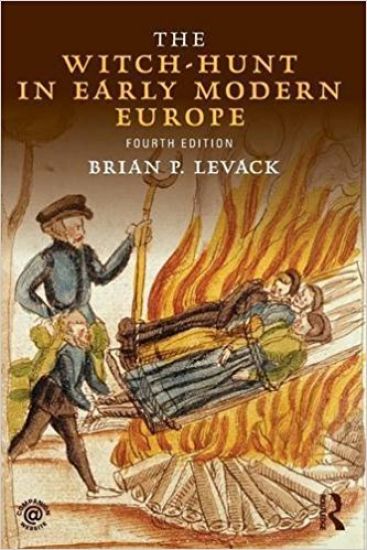
The Witch-Hunt in Early Modern Europe, now in its fourth edition, is the perfect resource for both students and scholars of the witch-hunts written by one of the leading names in the field. For those starting out in their studies of witch-beliefs and witchcraft trials, Brian Levack provides a concise survey of this complex and fascinating topic, while for more seasoned scholars the scholarship is brought right up to date. This new edition includes the most recent research on children, gender, male witches and demonic possession as well as broadening the exploration of the geographical distribution of witch prosecutions to include recent work on regions, cities and kingdoms enabling students to identify comparisons between countries. Now fully integrated with Brian Levack’s The Witchcraft Sourcebook, there are links to the sourcebook throughout the text, pointing students towards key primary sources to aid them in their studies. The two books are drawn together on a new companion website with supplementary materials for those wishing to advance their studies, including an extensive guide to further reading, a chronology of the history of witchcraft and an interactive map to show the geographical spread of witch-hunts and witch trials across Europe and North America. A long-standing favourite with students and lecturers alike, this new edition of The Witch-Hunt in Early Modern Europe will be essential reading for those embarking on or looking to advance their studies of the history of witchcraft
This book investigates the issues raised by the vast array of accounting standards and technical rules which have marked the recent history of accounting. It is argued that the accounting profession is beset by an inferior and incomplete notion of quality in its work which emphasises compliance with processing rules, rather than the correspondence with commercial phenomena necessary to make financial statements reliable guides for human activity.
The Distributor's Three-Dimensional Pallet-Packing Problem
Brian P Ballew
Biblioscholar
2012
pokkari