This book has been considered by academicians and scholars of great significance and value to literature. This forms a part of the knowledge base for future generations. So that the book is never forgotten we have represented this book in a print format as the same form as it was originally first published. Hence any marks or annotations seen are left intentionally to preserve its true nature.
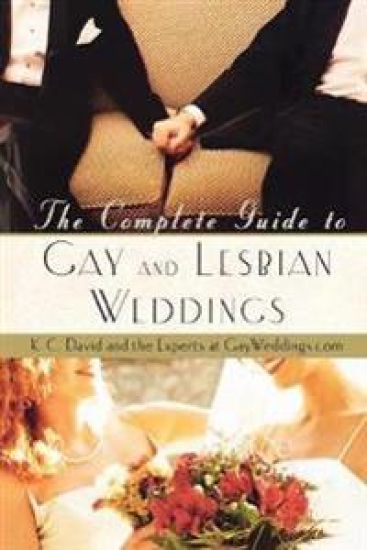
"Get out your gay/lesbian rice and celebrate Taking you from the wedding announcement to the thank you notes, this is the ultimate guide to same-sex ceremonies."-Michael Musto, "Village Voice"Your wedding team is here Let GayWeddings.com help you and your partner plan a ceremony that suits your taste and budget without losing your mind in the process. The absolute authority for same-sex unions on the web, K.C. David and his devoted staff of experts are at your side from the proposal to the honeymoon.- Marriage, civil union, or domestic partnership: protecting your rights and assets together- Finding gay-friendly venues, caterers, and yes, even clergy- Tips for notifying friends and family, and which newspapers run same-sex announcements- Ideas from folks who have already tied the knotPLUS: A wedding timeline checklist, vow writing exercise, sample menus, budget worksheet and more.
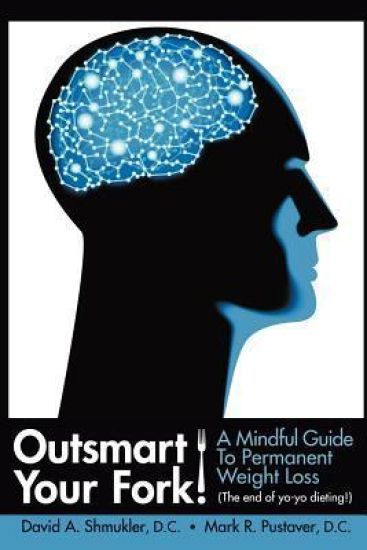
Are you a stress eater? Are you tired of dieting? If so, this book is a concise, practical guide to permanent weight loss. You will learn how to change your unhealthy eating behaviors by harnessing the power of your brain. The author, a Doctor of Chiropractic, suffered a severe stroke and subsequent depression. He was able to "rewire" his brain to make a full physical, emotional, and mental recovery. Dr. Dave and colleague Dr. Mark share powerful strategies to help you to retrain your brain to end yo-yo dieting forever. A simple 10-week plan guides you step-by-step to change your eating behaviors. No special foods, shakes, or potions to buy. Follow this program and you will discover that mindful eating and feeling healthy becomes more important to you than mindless (in the moment) eating. Learning these new techniques and habits is easier than you think; give this book an hour and it will change your life!
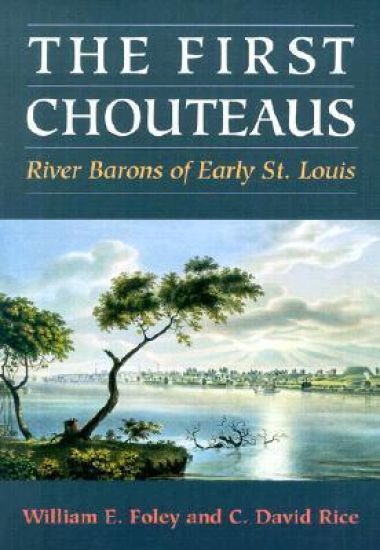
For more than half a century, Auguste and Pierre Chouteau dominated trade and enterprise in the Mississippi Valley. In their various roles as merchants, Indian traders, bankers, land speculators, governmental advisors, public officials, and community leaders, the Chouteau brothers exerted a tremendous influence on westward expansion. This is the first full account of their lives and illustrious careers.
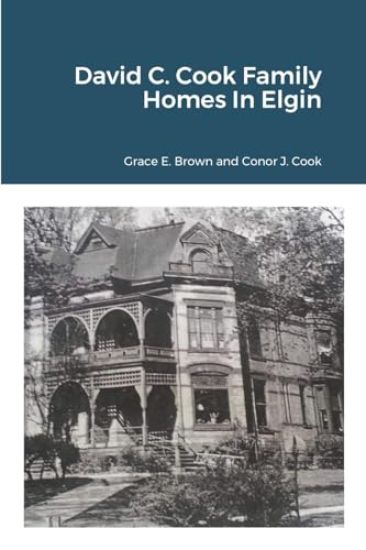
In July 2021 I met with the authors of this unique volume - Conor Cook and Grace Brown. This was an unusual interview with a pair of authors. We met in the home of my son, Bruce Cook and reminisced over extracts from historical collections about homes of the David C. Cook family - my father David C. Cook III, my Grandfather David C. Cook II, and my Great Grandfather - David C. Cook I -often called "The Friend of the Sunday School." Now, to be honest, Conor and Grace are my grandchildren, and I love their talent for writing. And, while we got together to share historical vignettes, I should mention that we also enjoyed my son's barbeque cooking and a plate of cookies just prepared by his wife and my daughter, Helen Brown. And, thanks to my wife, Mary Homeier Cook, for suggesting this book.
Observera att förlaget som ger ut denna produkt baserar innehållet i sina produkter på fria källor som Wikipedia. Boken är med stor sannolikhet endast ett utdrag ur dessa informationskällor, alltså inte en vanlig bok i den bemärkelsen.
A critical analysis of David C. Kang’s China Rising, which is a fine example of an author making use of creative thinking skills to reach a conclusion that flies in the face of traditional thinking.The conventional view that the book opposed, known in international relations as ‘realism,’ was that the rise of any new global power results in global or regional instability. As such, China’s development as a world economic powerhouse worried mainstream western geopolitical scholars, whose concerns were based on the realist assumption that individual countries will inevitably compete for dominance. Evaluating these arguments, and finding both their relevance and adequacy wanting, Kang instead turned traditional thinking on its head by looking at Asian history without preconceptions, and with analytical open-mindedness.Producing several novel explanations for existing evidence, Kang concludes that China’s neighbors do not want to compete with it in the way that realist interpretations predict. Rather than creating instability by jockeying for position, he argues, surrounding countries are happy for China to be acknowledged as a leader, believing that its dominant position will stabilize Asia, and give the whole region more of a hand in international relations. Though critics have taken issue with Kang’s conclusions, his paradigm-shifting approach is nevertheless an excellent example of developing fresh new conclusions through creative thinking.
In early 1970's Bruce L. Cook, eldest son of David C. III, was given 16 typewritten pages by Earl Heindel. It was explained that he had acted as informal historian for the company and wanted his history to be given to a family member so it would not be lost. Now that Earl is gone and the main offices of the company have moved away from Elgin, Bruce wanted to make this history (and a few images) available to the many former employees and their families who retired and/or remained in Elgin. The text is supplemented with an index (including many employee names) and photos. Many current and former employees will enjoy Earl's treasure trove of memories.
More than any other man, United States Senator David Broderick was the man responsible for keeping California from seceding at the outbreak of the Civil War. Broderick was a political enigma, a contradiction. In New York in the 1840s, he was, in turn, an apprentice stonemason, a volunteer fireman, and the keeper of a saloon that was a meeting place for political radicals. Following the gold rush to San Francisco in 1849, Broderick became the first leader of the California state senate. He stood up for the rights of the common people, the city's Irish and German immigrants. With their support, he built a political machine powerful enough to topple William McKendree Gwin, the leader of the Chivalry, the aristocratic transplanted Southern gentlemen who dominated California politics in the years before the Civil War. As a politician, Broderick was thoroughly corrupt. He sold political offices, demanded kickbacks from aspiring candidates, and employed a gang of toughs to battle his opponents, enforce party discipline, and stuff ballot boxes. San Francisco's Committee of Vigilance of 1856 exiled his goons. However, in 1857, the resilient Broderick still had enough clout to convince the state legislature to elect him to the Senate of the United States. But David Broderick was much more than just another corrupt politician. He was also a man of courage and principle. Broderick was on the right side of the defining social issue of his day, human slavery, which he saw as an immoral, cruel anachronism. Things came to a head over the admission of Kansas in the late 1850s, when the President, James Buchanan, and his powerful supporters, tried to use the Lecompton constitution to force slavery down the throats of the unwilling settlers of Kansas Territory. Broderick was so outspoken in his opposition that by 1859, he found himself in the cross hairs of fire eaters, men like California's Chief Justice, David S. Terry, who were willing to gun down anybody who spoke out against the extension of slavery. These men came to believe that David Broderick had to be silenced if California were to follow their dream and secede from the Union.