Kirjahaku
Etsi kirjoja tekijän nimen, kirjan nimen tai ISBN:n perusteella.
1000 tulosta hakusanalla C G Addison
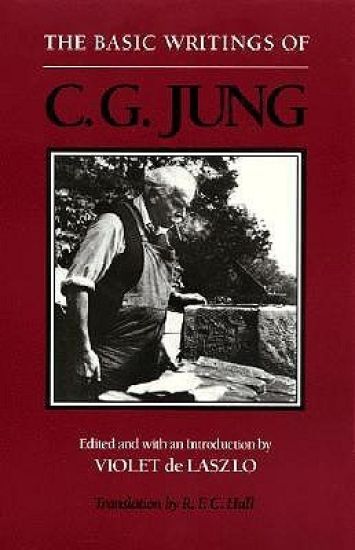
In exploring the manifestations of human spiritual experience both in the imaginative activities of the individual and in the formation of mythologies and of religious symbolism in various cultures, C. G. Jung laid the groundwork for a psychology of the spirit. The excerpts here illuminate the concept of the unconscious, the central pillar of his work, and display ample evidence of the spontaneous spiritual and religious activities of the human mind. This compact volume will serve as an ideal introduction to Jung's basic concepts. Part I of this book, "On the Nature and Functioning of the Psyche," contains material from four works: "Symbols of Transformation," "On the Nature of the Psyche," "The Relations between the Ego and the Unconscious," and "Psychological Types." Also included in Part I are "Archetypes of the Collective Unconscious" and "Psychological Aspects of the Mother Archetype." Part II, "On Pathology and Therapy," includes "On the Nature of Dreams," "On the Pathogenesis of Schizophrenia," and selections from "Psychology of the Transference." In Part III appear "Introduction to the Religious and Psychological Problems of Alchemy" and two sections of "Psychology and Religion." Part IV, called "On Human Development," consists of the essay "Marriage as a Psychological Relationship."
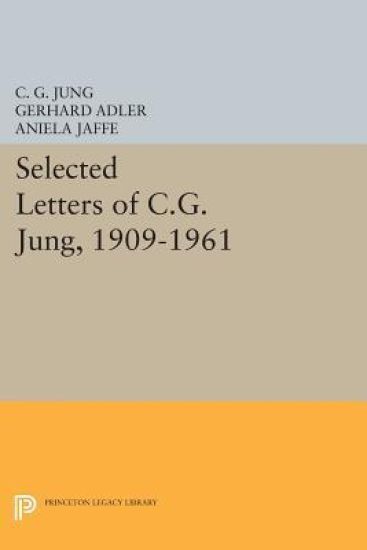
This one-volume edition allows the general reader to appreciate Jung's ideas and personality, as they reveal themselves in his comments to his colleagues and to those who approached him with genuine problems of their own, as well as in his communication with personal friends. The correspondence supplies a variety of insights into the genesis of Jung's theories and a running commentary on their development. Originally published in 1984. The Princeton Legacy Library uses the latest print-on-demand technology to again make available previously out-of-print books from the distinguished backlist of Princeton University Press. These editions preserve the original texts of these important books while presenting them in durable paperback and hardcover editions. The goal of the Princeton Legacy Library is to vastly increase access to the rich scholarly heritage found in the thousands of books published by Princeton University Press since its founding in 1905.
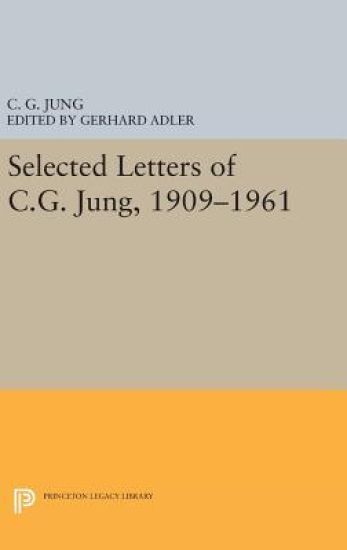
This one-volume edition allows the general reader to appreciate Jung's ideas and personality, as they reveal themselves in his comments to his colleagues and to those who approached him with genuine problems of their own, as well as in his communication with personal friends. The correspondence supplies a variety of insights into the genesis of Jung's theories and a running commentary on their development. Originally published in 1984. The Princeton Legacy Library uses the latest print-on-demand technology to again make available previously out-of-print books from the distinguished backlist of Princeton University Press. These editions preserve the original texts of these important books while presenting them in durable paperback and hardcover editions. The goal of the Princeton Legacy Library is to vastly increase access to the rich scholarly heritage found in the thousands of books published by Princeton University Press since its founding in 1905.
La C.G.T. Et l'Impôt Sur Les Salaires. Fonctionnement de la Loi. Méthodes Des Calculs de l'Impôt
Collectif
Hachette Livre - BNF
2018
pokkari
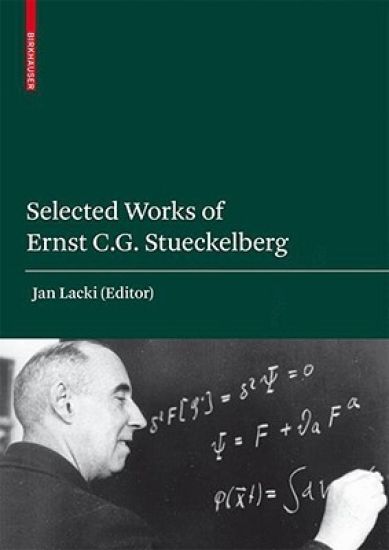
E.C.G. Stueckelberg, An Unconventional Figure of Twentieth Century Physics
Birkhauser Verlag AG
2008
sidottu
Born in 1905, Ernst C. G. Stueckelberg was professor of theoretical physics at the Universities of Geneva and Lausanne in the years 1930-1970. He was one of the most eminent Swiss physicists of the 20th century. His breakthroughs, from his causal S-matrix to the renormalization group, have influenced the development of contemporary theoretical physics. The book presents a selection of his most important scientific papers. They are preceded with a series of introductory essays, contributed by scientists and historians, specialists of Stueckelberg’s achievements and time. These essays deal with the scientific context and the issues of the various topics that Stueckelberg tackled in his scientific career and serve as an enlightening complement to the reprinted papers. The volume also contains Stueckelberg’s concise biography and an exhaustive list of his publications. It ambitions to provide an authoritative source gathering in a single place all the material needed to assessthe scientific achievements of one of the most important, albeit somehow overlooked, scientists of 20th century.
C G Jung, the father of analytical psychology, explored the realms of thought and intuition. He devoted many years to an in-depth study of alchemy and closely observed the range of the occult; he was interested in anthropology and in nuclear physics. He liked to consider himself a scientist.
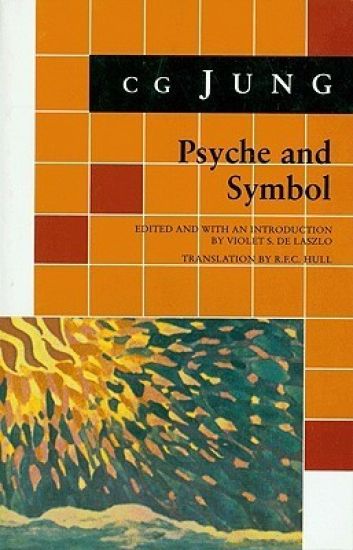
Psyche and Symbol: A Selection from the Writings of C.G. Jung
C. G. Jung
PRINCETON UNIVERSITY PRESS
1991
nidottu
The archetypes of human experience which derive from the deepest unconscious mind and reveal themselves in the universal symbols of art and religion as well as in the individual symbolic creations of particular people are, for C. G. Jung, the key to the cure of souls, the cornerstone of his therapeutic work. This volume explains the function and origin of these symbols. Here the reader will find not only a general orientation to Jung's point of view but extensive studies of the symbolic process and its integrating function in human psychology as it is reflected in the characteristic spiritual productions of Europe and Asia. Violet de Laszlo has selected for inclusion in Psyche and Symbol five selections from Aion: The Ego, The Shadow, The Syzygy: Anima and Animus, The Self, and Christ, A Symbol of the Self. The book continues with The Phenomenology of the Spirit in Fairy Tales, The Psychology of the Child Archetype, and Transformation Symbolism in the Mass. Also included are the foreword to the Cary Banes translation of the I Ching, two chapters from Synchronicity: An Acausal Connecting Principle, Psychological Commentary on The Tibetan Book of the Dead, and Commentary on The Secret of the Golden Flower.
The Zofingia Lectures, the Collected Works of C.G. Jung
C. G. Jung
Princeton University Press
1983
sidottu
During his undergraduate years (1896-1899) at Basel University, Jung delivered lectures to his student fraternity, the Zofingia. Dwelling on theology, psychology, spiritism, and philosophy, the Zofingia Lectures illuminate Jung's later thought.
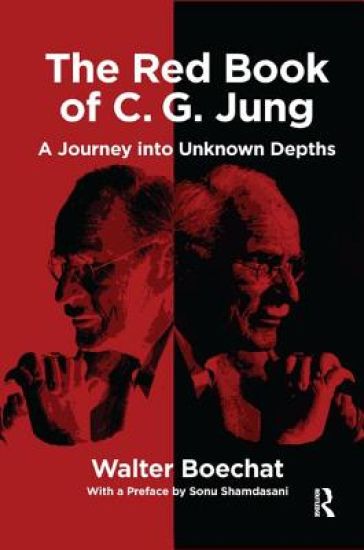
This book focuses on some of the main aspects and importance of The Red Book for the understanding of the work of C.G. Jung. It sheds light on the great mysteries of human nature and the new dimension uncovered by Jung and Freud: the universe of the unconscious and the possible ways to approach it.
This is Volume III of twelve in the Analytical Psychology Series. Originally published in 1942 the present work has grown out of a lecture given before a group of psychologists, physicians, and educators and this is the fifth edition giving a presentation of the elements of Jung’s psychology that is intended to give a concise picture, complete in itself, of the central content of the whole system, and above all to facilitate access to Jung's own extraordinarily voluminous works.
The One Mind: C. G. Jung and the Future of Literary Criticism explores the implications of C. G. Jung's unus mundus by applying his writings on the metaphysical, the paranormal, and the quantum to literature. As Jung knew, everything is connected because of its participation in universal consciousness, which encompasses all that is, including the collective unconscious. Matthew A. Fike argues that this principle of unity enables an approach in which psychic functioning is both a subject and a means of discovery—psi phenomena evoke the connections among the physical world, the psyche, and the spiritual realm.Applying the tools of Jungian literary criticism in new ways by expanding their scope and methodology, Fike discusses the works of Hawthorne, Milton, Shakespeare, Wordsworth, and lesser-known writers in terms of issues from psychology, parapsychology, and physics. Topics include the case for monism over materialism, altered states of consciousness, types of psychic functioning, UFOs, synchronicity, and space-time relativity. The One Mind examines Goodman Brown's dream, Adam's vision in Paradise Lost, the dream sequence in "The Wanderer," the role of metaphor in Robert A. Monroe's metaphysical trilogy, Orfeo Angelucci's work on UFOs, and the stolen boat episode in Wordsworth's The Prelude. The book concludes with case studies on Robert Jordan and William Blake. Considered together, these readings bring us a significant step closer to a unity of psychology, science, and spirituality. The One Mind illustrates how Jung's writings contain the seeds of the future of literary criticism. Reaching beyond archetypal criticism and postmodern theoretical approaches to Jung, Fike proposes a new school of Jungian literary criticism based on the unitary world that underpins the collective unconscious. This book will appeal to scholars of C. G. Jung as well as students and readers with an interest in psychoanalysis, literature, literary theory, and the history of ideas.
The One Mind: C. G. Jung and the Future of Literary Criticism explores the implications of C. G. Jung's unus mundus by applying his writings on the metaphysical, the paranormal, and the quantum to literature. As Jung knew, everything is connected because of its participation in universal consciousness, which encompasses all that is, including the collective unconscious. Matthew A. Fike argues that this principle of unity enables an approach in which psychic functioning is both a subject and a means of discovery—psi phenomena evoke the connections among the physical world, the psyche, and the spiritual realm.Applying the tools of Jungian literary criticism in new ways by expanding their scope and methodology, Fike discusses the works of Hawthorne, Milton, Shakespeare, Wordsworth, and lesser-known writers in terms of issues from psychology, parapsychology, and physics. Topics include the case for monism over materialism, altered states of consciousness, types of psychic functioning, UFOs, synchronicity, and space-time relativity. The One Mind examines Goodman Brown's dream, Adam's vision in Paradise Lost, the dream sequence in "The Wanderer," the role of metaphor in Robert A. Monroe's metaphysical trilogy, Orfeo Angelucci's work on UFOs, and the stolen boat episode in Wordsworth's The Prelude. The book concludes with case studies on Robert Jordan and William Blake. Considered together, these readings bring us a significant step closer to a unity of psychology, science, and spirituality. The One Mind illustrates how Jung's writings contain the seeds of the future of literary criticism. Reaching beyond archetypal criticism and postmodern theoretical approaches to Jung, Fike proposes a new school of Jungian literary criticism based on the unitary world that underpins the collective unconscious. This book will appeal to scholars of C. G. Jung as well as students and readers with an interest in psychoanalysis, literature, literary theory, and the history of ideas.
This is Volume III of twelve in the Analytical Psychology Series. Originally published in 1942 the present work has grown out of a lecture given before a group of psychologists, physicians, and educators and this is the fifth edition giving a presentation of the elements of Jung’s psychology that is intended to give a concise picture, complete in itself, of the central content of the whole system, and above all to facilitate access to Jung's own extraordinarily voluminous works.

At the tender age of ten years old, Lamonte "Pretty Black" Gibbson thinks he has life all figured out. Looking up to his father "Black Jack", the leader of one of Chicago's most notorious gangs The Gangsta Disciples, he quickly learns that Anybody Can Get It when tragedy strikes - not only claiming his father's life, but also Lamonte's innocence. After the death of Black Jack, Lamonte's mother Dominique tries her best to raise him the right way, but the streets have already corrupted his young soul. With the help of his closest friend Tae-Tae, the two set out to prove that the A-B-C-G rule was indeed in effect. But when things go terribly wrong after the robbery of some Latin Kings, Lamonte is forced to skip town and relocate to East Oakland with his uncle Buck. Buck immediately takes the youngster under his wing and sets a hustle in motion like Oakland has never seen. But with moremoney comes more problems and it doesn't take long before Lamonte soon finds out that the same rule he had enforced on others, also applies to himself.
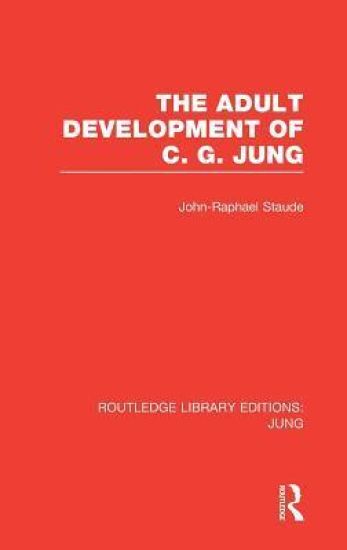
Originally published in 1981, this study presents Jung’s theory of adult personality development, and analyses and interprets in its biographical and historical context the genesis and development of Jung’s theory of the individuation process. Dr Staude argues that an in-depth study of Jung’s life offers insights into the patterns and processes of adult development, and he focuses particularly on Jung’s writings during and immediately after his mid-life transition. He shows how Jung articulated his hard-won insights into adult development in his books and essays and into his analytic practice, and considers how Jung’s developmental theory relates to the changes he experienced in his own life and in his socio-historical environment. Dr Staude concludes that Jung’s emphasis on impersonal universals of human psychic development complements and supplements the personal emphasis of ego development theory and provides the foundations for a more holistic understanding of adult developmental psychology.
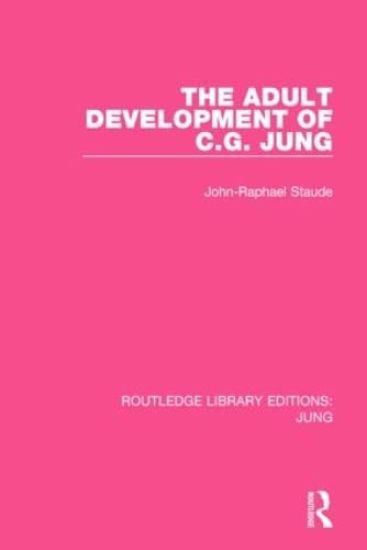
Originally published in 1981, this study presents Jung’s theory of adult personality development, and analyses and interprets in its biographical and historical context the genesis and development of Jung’s theory of the individuation process. Dr Staude argues that an in-depth study of Jung’s life offers insights into the patterns and processes of adult development, and he focuses particularly on Jung’s writings during and immediately after his mid-life transition. He shows how Jung articulated his hard-won insights into adult development in his books and essays and into his analytic practice, and considers how Jung’s developmental theory relates to the changes he experienced in his own life and in his socio-historical environment. Dr Staude concludes that Jung’s emphasis on impersonal universals of human psychic development complements and supplements the personal emphasis of ego development theory and provides the foundations for a more holistic understanding of adult developmental psychology.
U.S.C.G. and the Seven Seas
E. L. Cochrane; Raymond J. Mauerman
Literary Licensing, LLC
2013
nidottu