Kirjojen hintavertailu. Mukana 12 016 292 kirjaa ja 12 kauppaa.

Kirjahaku

Etsi kirjoja tekijän nimen, kirjan nimen tai ISBN:n perusteella.

1000 tulosta hakusanalla C Jenkin

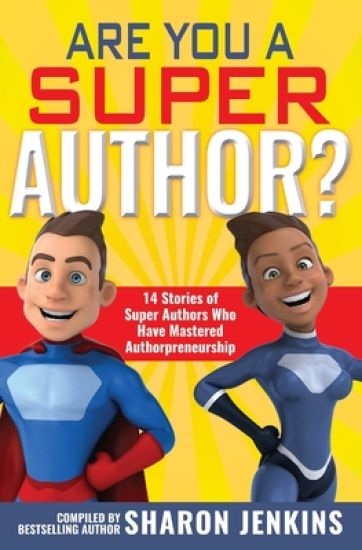
Are You a Super Author?: 14 Stories of Super Authors Who Have Mastered Authorpreneurship

Are You a Super Author?: 14 Stories of Super Authors Who Have Mastered Authorpreneurship

Sharon C. Jenkins

Createspace Independent Publishing Platform
2017
nidottu
SUPER AUTHOR = R.E.A.L. Authorpreneur(Relevant . Entrepreneurial . Action-Oriented . Literary-Focused)Each chapter of this sensational, reality-based literary series depicts a behind-the-scene episode of the remarkable authors who have mastered the perils of publishing.If you are an author or aspiring author this "tell-all" book will more than adequately equip you for SUPER AUTHOR status.
Couture Your Life: Quote Book: Quotes That Awaken The Spirit, The Mind, & The Way You Motivate Yourself Towards Success.
Shayvonne C. Jenkins shares her own inspiring quotes and encouraging words that has not only pulled her through, but also her social media followers as well. The motivation that is given through these selected quotes will keep you going towards your success, encourage you in knowing why winners don't quit and quitters don't win, and that if you have the faith the size of a mustard seed you can do all the amazing things you once believed were impossible to accomplish. So, Let's Get Ready To Couture Your Life, Awaken Your Spirit, The Mind & The Way You Motivate Yourself Towards Success.
The Compost Toilet Handbook

The Compost Toilet Handbook

Joseph C. Jenkins

Jenkins Publishing,U.S.
2021
sidottu
From the author of The Humanure Handbook, an expert guide to compost toilets you can build yourself The Compost Toilet Handbook is an illustrated instructional manual explaining how to make, use, and manage compost toilets, which are waste-free toilets that rely on the biological process of composting to recycle toilet material. It is based on the author’s 40+ years of first-hand experience with “composting as a sanitation alternative.” The 254-page indexed book has 161 pages of color photos including 203 photos or illustrations from 13 countries where compost toilet systems are in use. The 2nd half of the book includes case study reviews of compost toilet projects in African prisons and schools; Haitian schools, orphanages, and villages; schools in Mozambique; neighborhoods in Mongolia; a school and village in Nicaragua; and an ecovillage in the US. Along with the nuts and bolts of compost toilet construction, use, and management, the book covers emergency preparedness, cold weather composting, pharmaceuticals, heavy metals, health, and safety.
Direct Democracy: And the Curse of the Boiled Frogs

Direct Democracy: And the Curse of the Boiled Frogs

Joseph C. Jenkins

Jenkins Publications
2024
nidottu
Our nation faces bankruptcy. Our people are divided. Our elections are riddled with corruption, confusion and mismanagement. Our Bill of Rights is under assault. The Forever Wars are never ending. Our shadow government is a criminal enterprise milking the working class of their hard-earned taxes. Just as technology, science, and medicine have advanced, so too must our government evolve to meet the needs and demands of our time. The "Constitutional Republic" envisioned by our founding fathers 250 years ago is now outdated. It was designed for a fledgling nation with the population of modern-day Toledo, Ohio. Our Constitution remains the bedrock foundation of our nation, but its application needs to be reformed to reflect the realities of today's United States. This book presents a bold vision for Direct Democracy, offering a clear path to reclaim our nation's future. Together, we can create a government that truly serves its people. We can fix it, we the people, and the time is now. "In 1776, the population of the entire United States was less than the population of Toledo, Ohio today. In 1776, without cars, electricity, internet, or advanced technology, and with such a small population, a "Constitutional Republic" made sense. It was a revolutionary leap away from the rule of Kings. It was a successful model that suited the times and it worked. But it has become obsolete. By clinging to an outdated, anachronistic mode of governing, we are creating a monster. And that monster will devour us if we don't get it under control."--Joseph Jenkins
Swing Swoosh Swing

Swing Swoosh Swing

Alexis C. Jenkins

Independently Published
2019
nidottu
Swing swoosh swing Jamie uses her arms and legs to push and pull back and forth on the swing. Alexis Jenkins writes a fun and imaginative tale of a little girl unlimited by the places she can reach outdoors on a swing. Children can relate to the simplicity of the activity swinging while learning about concepts on onomatopoeias, opposites, and sharing that are introduced.
Witney Through Time

Witney Through Time

Stanley C. Jenkins

Amberley Publishing
2012
nidottu
Witney grew up as the result of deliberate planning on the part of successive Bishops of Winchester, a spacious, wedge-shaped market area being laid out parallel to the river Windrush. The whole area was surrounded by a drainage ditch known as Emma's Dyke. By the end of the Middle Ages it had grown into a populous market town with a developing blanket industry, and 1800 there were five textile mills in and around the town. In 1951 Smiths Industries established a large factory on Witney Aerodrome, so the local economy was no longer dependent upon the woollen industry. But the town remained famous as a centre of the blanket manufacturing industry until the closure of the last mill in 2002. This fully illustrated narrative brings the fascinating history of Witney to life and will be enjoyed by all those keen to know this Cotswold town a little better.
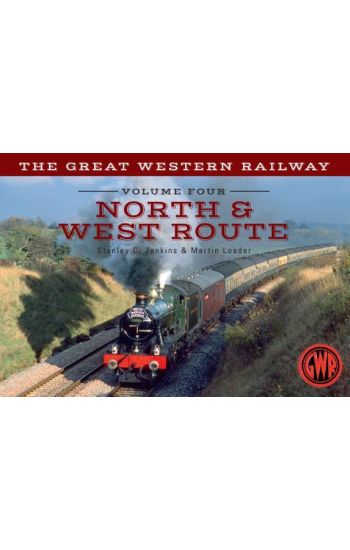
The Great Western Railway Volume Four North & West Route

The Great Western Railway Volume Four North & West Route

Stanley C. Jenkins; Martin Loader

Amberley Publishing
2015
nidottu
The ‘North & West Route’, which, in recent years, has become known as the ‘Welsh Marches Line’, extends from Newport to Chester. Historically, this 137-mile route is an amalgam of three distinct railways: the Shrewsbury & Chester Railway, the Shrewsbury & Hereford Railway and the Newport, Abergavenny & Hereford Railway. All three lines came under Great Western control at a relatively early date, although the Shrewsbury & Hereford section became a joint undertaking, which was owned by the GWR and the London & North Western Railway companies. The line runs through attractive and sometimes spectacular scenery via Abergavenny, Pontrilas, Hereford, Leominster, Ludlow, Craven Arms, Shrewsbury and Ruabon, thereby providing a useful transport link between North and South Wales, while some services run north-eastwards from Shrewsbury to Crewe over a former London & North Western line that forms part of a direct link between South Wales and the Manchester conurbation.
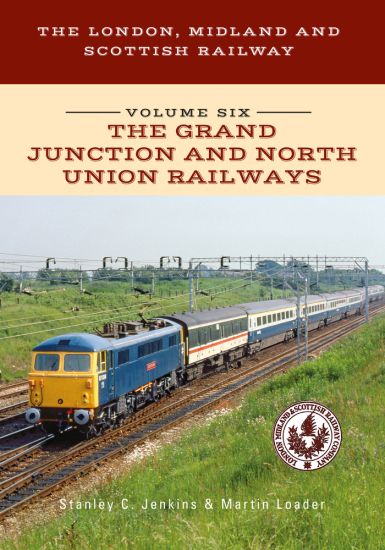
The London, Midland and Scottish Railway Volume Six The Grand Junction and North Union Railways
Approved in May 1833 at the same time as the London & Birmingham Railway, the Grand Junction Railway was intended to act as a link between the London & Birmingham and the Liverpool & Manchester Railway. Built under the guidance of Joseph Locke, the Grand Junction was opened along its complete length on 4 July 1837. From 19 August 1839, through coaches were able to run for 218 miles from London through Birmingham to Preston. Preston had been connected to the railway network through the North Union Railway, which had been laid out by Irish engineer Charles Blacker Vignoles and opened to the public on 31 October 1838. Brought into existence to facilitate the ambitious aspiration of long-distance railway communications between London and Scotland, these lines would be among those that amalgamated in 1846 to form the London & North Western Railway, the forerunner of today’s West Coast Main Line. This book, the last in a six-part series, will examine these lines along with the Trent Valley Railway, all vital links in the network of railways that became the West Coast Main Line, one of the busiest railways in Britain, if not the world.
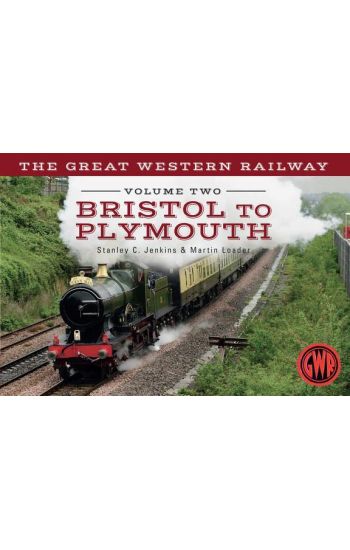
The Great Western Railway Volume Two Bristol to Plymouth

The Great Western Railway Volume Two Bristol to Plymouth

Stanley C. Jenkins; Martin Loader

Amberley Publishing
2014
nidottu
As authorised in 1835, the Great Western Railway extended from London to Bristol, but from the very earliest days, ambitious promoters were planning a whole series of extensions to destinations such as Birmingham, Wolverhampton, Cornwall and South Wales. These extensions were, in most cases, built by allied or subsidiary companies such as the Bristol & Exeter Railway, which, as its name suggested, ran from Bristol to Exeter, and the South Devon Railway, which continued the West of England main line from Exeter to Plymouth. Both of these companies were subsequently absorbed into the parent GWR company, becoming, as far as ordinary travellers were concerned, an integral part of the Great Western system. Although the B&ER is an unspectacular line, the South Devon Railway runs beside estuaries and along the seashore for several miles, the waterside section between Exeter and Teignmouth being one of the most iconic parts of the British railway system.
The Great Western Railway Volume Three Plymouth To Penzance

The Great Western Railway Volume Three Plymouth To Penzance

Stanley C. Jenkins; Martin Loader

Amberley Publishing
2014
nidottu
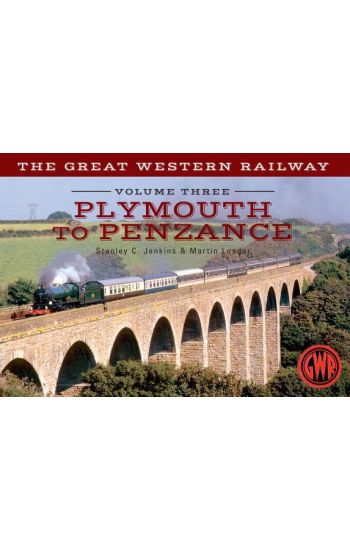
The Cornwall Railway was authorised on 3 August 1846 with the aim of constructing a broad gauge rail link between Plymouth, Truro and Falmouth. After many vicissitudes, the railway was ceremonially opened between Plymouth and Truro on 2 May 1859. Meanwhile, further to the west, an entirely separate undertaking known as the West Cornwall Railway had been sanctioned with powers for the construction of a standard gauge railway between Truro and Penzance, which would incorporate parts of the earlier Hayle Railway. The WCR was completed in 1852, although there was no connection with the Cornwall Railway until 1859. Despite the ‘break-of-gauge’ at Truro, these two railways formed part of a through route between Paddington and Penzance and, as such, they were subsequently absorbed into the GWR system as part of the present-day West of England main line.
The London, Midland and Scottish Railway Volume One Chester to Holyhead

The London, Midland and Scottish Railway Volume One Chester to Holyhead

Stanley C. Jenkins; Martin Loader

Amberley Publishing
2015
nidottu
The Chester & Holyhead Railway was incorporated by an Act of Parliament in 1844, and the promoters were thereby empowered to build an 85-mile line along the North Wales coast, the engineer for the line being Robert Stephenson. The C&HR was, from its inception, intended to form part of a rail link between London and Dublin – the assumption being that such a line would improve the economic position of Ireland, while at the same time binding it ever more closely to the rest of the United Kingdom. In engineering terms, the C&HR presented huge challenges. The first 45 miles would follow an easy route alongside the Dee Estuary, but at Conwy the railway would have to cross a tidal river. The line would then be carried past the great towering headland at Penmaenmawr, while to the west of Bangor, the Menai Straits would have to be spanned by a bridge large enough to clear the masts of the largest vessels. The railway was completed by 1850 and, since that time, it has fulfilled its primary role as an artery of communication between England, Wales and Ireland.
The London, Midland and Scottish Railway Volume Five The London and Birmingham Railway
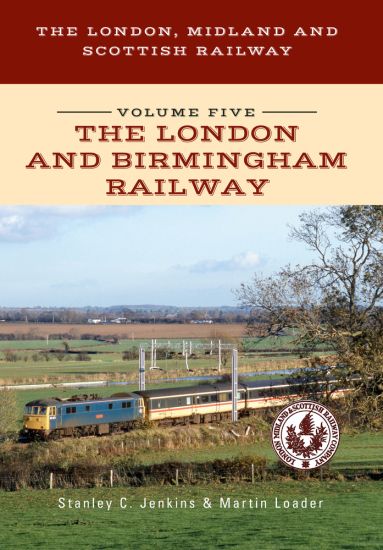
Authorised on 8 May 1833, the London & Birmingham Railway was one of Britain’s first great trunk lines. Engineered by Robert Stephenson (1803-1859), the L&BR line was regarded at the time of its construction as ‘the Eighth Wonder of the World’. The route was opened in stages; the first section from Euston to Boxmoor was brought into use on 20 June 1837. The route was extended to Tring on 16 October 1837, and on 9 April 1838 further sections were opened from Tring to Denbigh Hall and between Rugby, Coventry and Birmingham. Finally, on 17 September 1838, the L&BR route was completed throughout its 112-mile length. In its original form, the L&BR functioned as a transport link between London and Birmingham, but the establishment of long-distance railway communication between London and Scotland was regarded as a matter of national importance, and further companies such as the Grand Junction Railway and the Lancaster & Carlisle line were brought into existence to facilitate this ambitious aspiration. Although the L&BR was, at first, suspicious of these new companies, the London & Birmingham directors eventually decided to co-operate, and by 1846 the major west coast companies had amalgamated to form the ‘London & North Western Railway’ with the West Coast Main Line from Euston to Glasgow being one of the busiest railways in Britain, if not the world.