Kirjojen hintavertailu. Mukana 12 425 788 kirjaa ja 12 kauppaa.

Kirjahaku

Etsi kirjoja tekijän nimen, kirjan nimen tai ISBN:n perusteella.

1000 tulosta hakusanalla C. P. Clarke

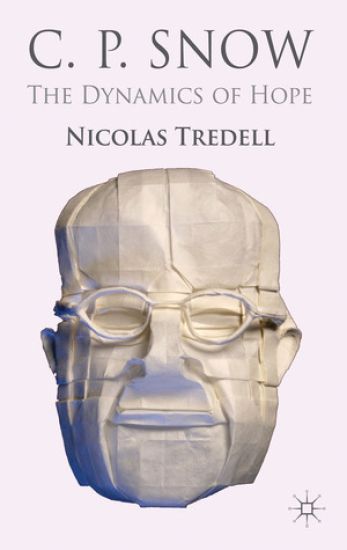
C.P. Snow

C.P. Snow

N. Tredell

Palgrave Macmillan
2012
sidottu
Novelist and cultural commentator C.P. Snow was a large and controversial presence in his lifetime but his work has been largely neglected since his death in 1980. This is the first 21st-century book to offer a clear, informed and sympathetic survey of all his novels and major non-fiction books and to affirm their importance for the world today.
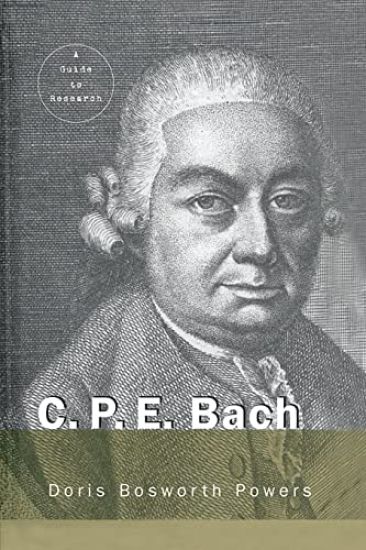
C.P.E. Bach

C.P.E. Bach

Doris Powers

Routledge
2016
nidottu
Although he is the son of J. S. Bach, C. P. E. Bach is an important composer in his own right, this long-awaited annotated bibliography presents a complete listing of the works of C. P. E. Bach. This volume in the RoutledgeMusic Bibliographies series includes many different aspects of his work: the editing of his father's masterpieces, his concertos and sonatas and theoretical essays. Doris Powers also collects writings that consider C. P. E. Bach's influence, the reception of his works and the cultural milieu in which Bach composed.
A Defence of the Bishop of Chichester's Sermon Upon K. Charles's Martyrdom. in Answer to Mr. P. C.'s Letter.
The 18th century was a wealth of knowledge, exploration and rapidly growing technology and expanding record-keeping made possible by advances in the printing press. In its determination to preserve the century of revolution, Gale initiated a revolution of its own: digitization of epic proportions to preserve these invaluable works in the largest archive of its kind. Now for the first time these high-quality digital copies of original 18th century manuscripts are available in print, making them highly accessible to libraries, undergraduate students, and independent scholars.The Age of Enlightenment profoundly enriched religious and philosophical understanding and continues to influence present-day thinking. Works collected here include masterpieces by David Hume, Immanuel Kant, and Jean-Jacques Rousseau, as well as religious sermons and moral debates on the issues of the day, such as the slave trade. The Age of Reason saw conflict between Protestantism and Catholicism transformed into one between faith and logic -- a debate that continues in the twenty-first century.++++The below data was compiled from various identification fields in the bibliographic record of this title. This data is provided as an additional tool in helping to insure edition identification: ++++British LibraryT091510Signed at the end: C. P.London: printed for J. Roberts, 1732. 38p.; 8
C.P. Snow

C.P. Snow

N. Tredell

Palgrave Macmillan
2012
nidottu
Novelist and cultural commentator C.P. Snow was a large and controversial presence in his lifetime but his work has been largely neglected since his death in 1980. This is the first 21st-century book to offer a clear, informed and sympathetic survey of all his novels and major non-fiction books and to affirm their importance for the world today.
A Defence of the Bishop of Chichester's Sermon Upon K. Charles's Martyrdom. In Answer to Mr. P. C.'s Letter
The 18th century was a wealth of knowledge, exploration and rapidly growing technology and expanding record-keeping made possible by advances in the printing press. In its determination to preserve the century of revolution, Gale initiated a revolution of its own: digitization of epic proportions to preserve these invaluable works in the largest archive of its kind. Now for the first time these high-quality digital copies of original 18th century manuscripts are available in print, making them highly accessible to libraries, undergraduate students, and independent scholars.The Age of Enlightenment profoundly enriched religious and philosophical understanding and continues to influence present-day thinking. Works collected here include masterpieces by David Hume, Immanuel Kant, and Jean-Jacques Rousseau, as well as religious sermons and moral debates on the issues of the day, such as the slave trade. The Age of Reason saw conflict between Protestantism and Catholicism transformed into one between faith and logic -- a debate that continues in the twenty-first century.++++The below data was compiled from various identification fields in the bibliographic record of this title. This data is provided as an additional tool in helping to insure edition identification: ++++British LibraryT091510Signed at the end: C. P.London: printed for J. Roberts, 1732. 38p.; 8
C 'n' P

C 'n' P

Michael Burdick

Authorhouse
2006
nidottu
Introduction By Mike Burdick It's hard to think stuff like this could happen to someone or even to believe that people live for this kind of thing. Surprisingly, most of you will be able to relate to the entire story or at least bits and pieces of it. What is love? I thought this story was about love, but some of the responses I got back were of disaster and hell. It's more like the two characters loved drama and were perfect for each other based on the fact that they created harmless drama. If the relationship lasted any longer, it would have ended in disaster. Wouldn't you think an STD would be enough? At the beginning I was really weak. I had just come out of a long two-year relationship with someone I dearly loved. I was in a depression and looking for a quick way out. I chose the first door that opened, not knowing that it was the door to hell. We first met at a restaurant where we both worked. The store was located in Pittsburgh. She told me she hated me at first, but showed a lot of interested flirtation. In work she was always bouncing around as cute as can possibly be. Outside of work, she was a pill-popping, weed smoking, rap music listening, and sleeping with anything tramp. She had nothing going for her. She had a one-year-old kid with a piece of white trash father who had just gotten out of jail. She lived with her mom and had no car nor did she have any intentions to go to school. She wasn't the best, to say the least. I used to tell her that I would screw her brains out and that she couldn't handle me. She always had the same reply, "Ditto." So, just to really prove my point, I started to work my magic. I wasn't thinking wife or jail or an STD. I eventually persuaded her to come out with me and of course get drunk. First outing didn't work but of course the second one did. From that point on I had a crazy fiend on my hands. And eventually I turned int
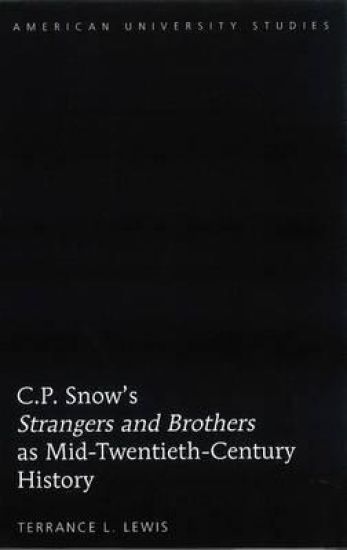
C.P. Snow’s «Strangers and Brothers» as Mid-Twentieth-Century History
This book studies C.P. Snow’s eleven-volume series of novels (Strangers and Brothers) as documents detailing the social and political life of mid-twentieth-century Britain, and points out the uses for the novels in the academic study of that time period. Both Snow and his central character, Lewis S. Eliot, started from unremarkable origins in terms of their mutual background in the lower reaches of the middle class, their dreams of success in their teen years, and their early professional education in a new, struggling academic institution in the mid-1920s. Neither could really be considered typical for men of their class. Eliot’s working life would include being a very minor town clerk, a barrister, an advisor to a powerful industrialist, a Cambridge don, a moderately powerful civil servant, and finally, in early retirement, a writer. Eliot would befriend members of both the traditional and Jewish upper classes, scholars and brilliant scientists, powerful behind-the-scenes civil servants, second-tier British and Nazi politicians, financiers and industrialists, Communists, and writers and artists, providing a fairly broad overview of parts of the middle class and ruling elites of the periods. Snow’s sequence of novels is therefore useful to the historian of twentieth-century Britain, both in understanding the period as it recedes away from common experience and in presenting the period in the classroom. Snow was a classic twentieth-century writer who presented a more balanced account of the British «governing classes» of the middle third of the twentieth century than did the upper-class (and would-be upper-class) or working-class writers of the same period. His novels provide an insight that every student of twentieth-century Britain must have on hand.