Kirjojen hintavertailu. Mukana 11 451 123 kirjaa ja 12 kauppaa.

Kirjahaku

Etsi kirjoja tekijän nimen, kirjan nimen tai ISBN:n perusteella.

1000 tulosta hakusanalla Calvin Dirickson

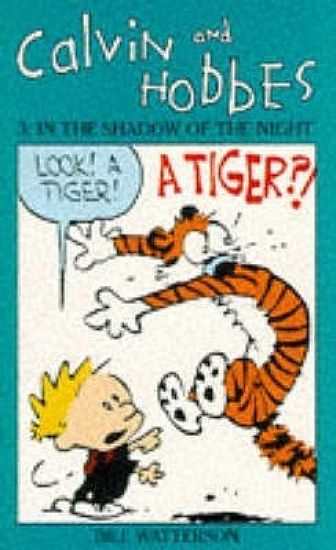
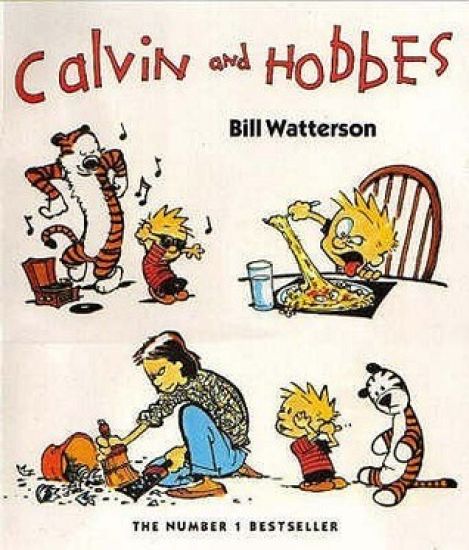
Calvin And Hobbes

Calvin And Hobbes

Bill Watterson

Sphere
1988
nidottu
Calvin, cheeky, hyperactive and mischievous, and Hobbes, his cuddly toy tiger who, as far as Calvin is concerned is very much alive and kicking, are two of the most loveable and hilarious characters to grace the comic strip in years.
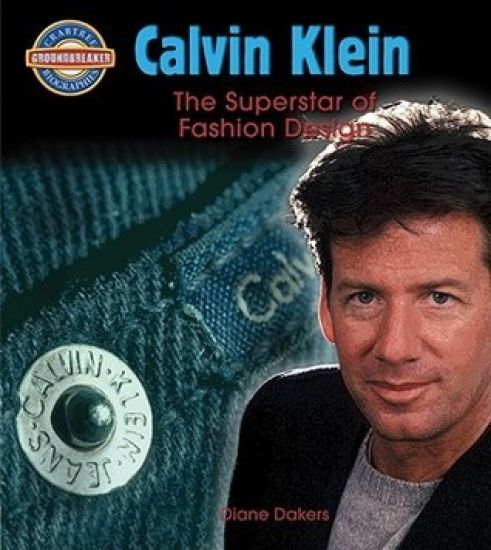
Calvin Klein

Calvin Klein

Diane Dakers

Crabtree Publishing Co,Canada
2010
nidottu
Calvin Klein, a boy from the Bronx, took his first clothing line of three dresses and six coats to an appointment at Bonwit Teller, New York's department store for the wealthy. Before long, he had designed a line of jeans that sold 200,000 in a week, and he was called the "King of Clothes" by People magazine. Today his clothes are recognized as classics, and his style represents the best in American design.
Calvin`s Theology of the Psalms

Calvin`s Theology of the Psalms

Herman J. Selderhuis

Baker Academic, Div of Baker Publishing Group
2007
nidottu
In this intriguing book, Herman Selderhuis argues that John Calvin's biblical interpretation of the Psalms is fundamentally shaped by his doctrine of God. Selderhuis minimizes references to other Calvin studies and other works by Calvin, thus allowing Calvin's theology on the Psalms to speak for itself. The book is organized thematically according to divine attributes. Reformation and Calvin scholars as well as interested Reformed readers will value this resource.
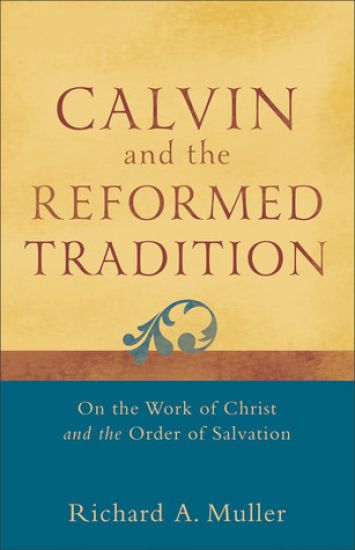
Calvin and the Reformed Tradition – On the Work of Christ and the Order of Salvation

Calvin and the Reformed Tradition – On the Work of Christ and the Order of Salvation

Richard A. Muller

Baker Academic, Div of Baker Publishing Group
2012
nidottu
Richard Muller, a world-class scholar of the Reformation era, examines the relationship of Calvin's theology to the Reformed tradition, indicating Calvin's place in the tradition as one of several significant second-generation formulators. Muller argues that the Reformed tradition is a diverse and variegated movement not suitably described either as founded solely on the thought of John Calvin or as a reaction to or deviation from Calvin, thereby setting aside the old "Calvin and the Calvinists" approach in favor of a more integral and representative perspective. Muller offers historical corrective and nuance on topics of current interest in Reformed theology, such as limited atonement/universalism, union with Christ, and the order of salvation.
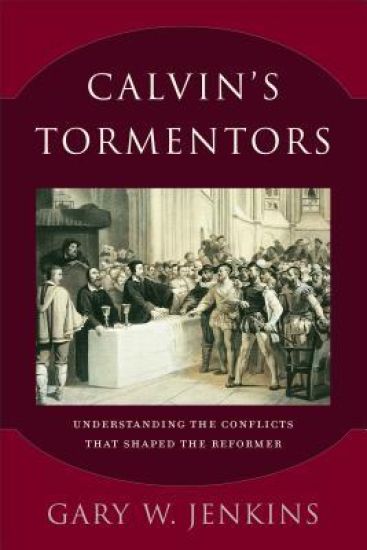
Calvin`s Tormentors – Understanding the Conflicts That Shaped the Reformer

Calvin`s Tormentors – Understanding the Conflicts That Shaped the Reformer

Gary W. Jenkins

Baker Academic, Div of Baker Publishing Group
2018
nidottu
This book offers a unique approach to Calvin by introducing the individuals and groups who, through their opposition to Calvin's theology and politics, helped shape the reformer, his theology, and his historical and religious legacy. Respected church historian Gary Jenkins shows how Calvin had to defend or rethink his theology in light of his tormentors' challenges, giving readers a more nuanced view of Calvin's life and thought. The book highlights the central theological ideas of the Swiss Reformation and introduces figures and movements often excluded from standard texts.
Calvin's Ladder

Calvin's Ladder

Julie Canlis

William B Eerdmans Publishing Co
2010
nidottu
Are Christians truly invited to share in God or just in his gifts? The language of -participation- has been hotly debated for centuries, many Protestants protesting that aspiring to share in God is akin to attempting to ascend to his level. John Calvin's theology is often brought in to support this contention. Here Julie Canlis argues that to do so reflects a complete misunderstanding of Calvin. In fact, she says, it is precisely Calvin's inclusion of participation that makes his theology so robust and spiritually enduring. / Calvin's Ladder traces the theme of participation in early Christian spirituality, then reveals how Calvin reworks it into the heart of his Protestant manifesto on theology. This groundbreaking book suggests an entirely distinctive way of conceiving the relation between God and humanity, challenging not only old caricatures of Calvin but also our own self-portraits.
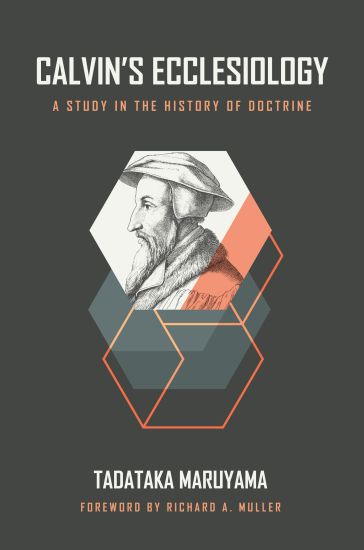
Calvin's Ecclesiology

Calvin's Ecclesiology

Tadataka Maruyama; Richard A Muller

WILLIAM B EERDMANS PUBLISHING CO
2022
sidottu
In this fresh and original monograph on the ecclesiology of John Calvin, Tadataka Maruyama sifts exhaustively through the corpus of Calvin's writings--in both Latin and French--to crystalize the French reformer's conception of the Christian church. After elucidating Calvin's influence from other reformers such as Jacques Lef vre, Guillaume Farel, and Martin Bucer, Maruyama shows how Calvin's ecclesiology evolved throughout his life while remaining firmly rooted in key principles and interests. Maruyama discerns three phases in Calvin's ecclesiology: Catholic ecclesiology--in which Calvin saw the church as a unified and ideal institution situated both above and within historyReformed ecclesiology--in which Calvin described the concrete, historical form of the Christian church over against the Catholic ChurchReformation ecclesiology--in which Calvin came to understand the Christian church as an eschatological reality situated in a broader European context, which Calvin portrayed as the "theater of God's providence"This trajectory mirrors the way the Protestant Reformation was focused on reforming particular churches while also reimagining the Christian world as a whole. Indeed, as Maruyama thoroughly illustrates, Calvin never lost sight of his original vision of reforming the church of his French homeland even as his work grew into a much larger movement.
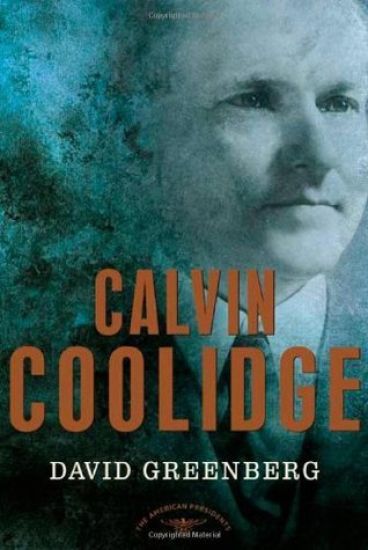
Calvin Coolidge: The American Presidents Series: The 30th President, 1923-1929
The austere president who presided over the Roaring Twenties and whose conservatism masked an innovative approach to national leadership He was known as "Silent Cal." Buttoned up and tight-lipped, Calvin Coolidge seemed out of place as the leader of a nation plunging headlong into the modern era. His six years in office were a time of flappers, speakeasies, and a stock market boom, but his focus was on cutting taxes, balancing the federal budget, and promoting corporate productivity. "The chief business of the American people is business," he famously said. But there is more to Coolidge than the stern capitalist scold. He was the progenitor of a conservatism that would flourish later in the century and a true innovator in the use of public relations and media. Coolidge worked with the top PR men of his day and seized on the rising technologies of newsreels and radio to bring the presidency into the lives of ordinary Americans--a path that led directly to FDR's "fireside chats" and the expert use of television by Kennedy and Reagan. At a time of great upheaval, Coolidge embodied the ambivalence that many of his countrymen felt. America kept "cool with Coolidge," and he returned the favor.
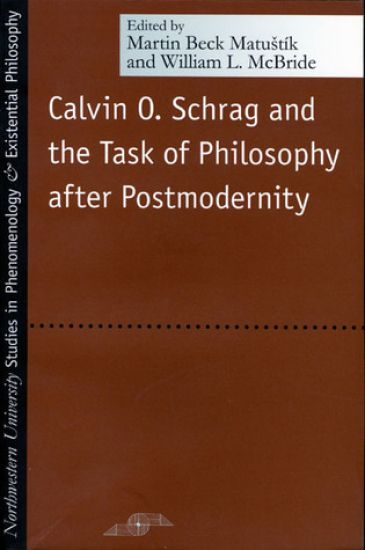
Calvin O. Schrag and the Task of Philosophy After Postmodernity
Devoted to the most important American Continental philosopher of his generation and one of the discipline's founding fathers, and featuring some of the field's most distinguished luminaries, this anthology constitutes a critical document in Continental philosophy, reflecting its recent history, its present state, and its debt to Calvin O. Schrag. Taking up themes central to Schrag's own philosophical concerns, these essays refer throughout to his salient ""interventions"" in the dialogue of late twentieth-century thought characterized as ""postmodernity."" In doing so, all contributors address, implicitly or directly, the question of philosophy's role and responsibility, or ""task."" The volume begins with an overview of this task and of Schrag's contributions to it, written from the perspective of a resolute defender of the phenomenological tradition that Schrag's work has extended and reconfigured. The following essays are organized around the four conceptual figures that are widely considered Schrag's most significant and original philosophical achievements: transversal rationality, the self after modernity, the fourth cultural value sphere, and communicative praxis. Following and expanding on the implications of these themes, the authors focus on topics ranging from Cartesian rationality to Foucauldian rational relativism; from transcendence in relation to the self to the Schragean self's connections with discourse, action, and community; from religion's disruptive presence in contemporary philosophy to recent developments in the philosophy of language. Taken together, these essays go beyond an appreciation of Calvin Schrag's contribution to Continental philosophy to substantially elaborate upon and extend that contribution.
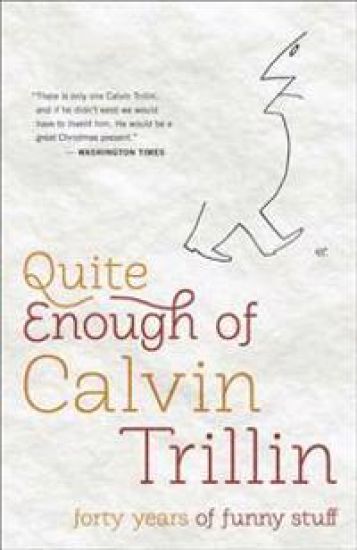
Quite Enough of Calvin Trillin: Forty Years of Funny Stuff
"Brilliant . . . The dean of American comic writers showcases his varied talents mocking the public and private lives of politicians, average citizens and himself."--The Star-Ledger Calvin Trillin has committed blatant acts of funniness all over the place--in The New Yorker, in one-man off-Broadway shows, in his "deadline poetry" for The Nation, in comic novels, and in what USA Today called "simply the funniest regular column in journalism." Now Trillin selects the best of his funny stuff and organizes it into topics like high finance ("My long-term investment strategy has been criticized as being entirely too dependent on Publishers Clearing House sweepstakes") and the literary life ("The average shelf life of a book is somewhere between milk and yogurt"). He addresses the horrors of witnessing a voodoo economics ceremony and the mystery of how his mother managed for thirty years to feed her family nothing but leftovers ("We have a team of anthropologists in there now looking for the original meal"). He even skewers deserving political figures in poetry. In this, the definitive collection of his humor, Calvin Trillin is prescient, insightful, and invariably hilarious. "A literary treasure . . . There is only one Calvin Trillin, and if he didn't exist we would have to invent him."--The Washington Times "Funny is to Trillin what drinking is to Uncle Jed in Annie Get Your Gun--it's what he does 'natur'lly.' He's also a lot more than funny. Quite Enough of Calvin Trillin is the twenty-eighth book he's published over not far short of a half-century, and their range of subjects is remarkable."--Jonathan Yardley, The Washington Post "Trillin made his reputation over four decades as the author of 'U.S. Journal' in the New Yorker but he] is incapable of resisting the temptation of comedy. The jokes kept on welling up and Mr. Trillin made a parallel reputation as a writer of funny stuff."--The Economist "Wry, whip-smart, understated, and entertaining."--The Miami Herald