Kirjojen hintavertailu. Mukana 11 627 488 kirjaa ja 12 kauppaa.

Kirjahaku

Etsi kirjoja tekijän nimen, kirjan nimen tai ISBN:n perusteella.

1000 tulosta hakusanalla Camus-J-P

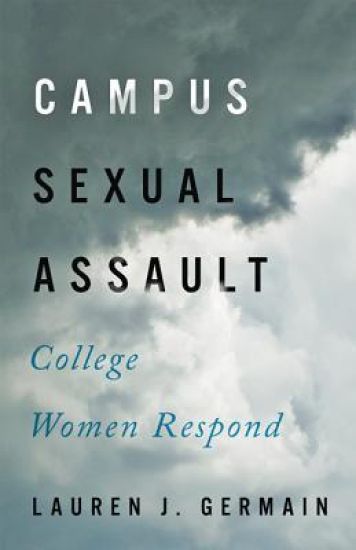
Campus Sexual Assault

Campus Sexual Assault

Lauren J. Germain

Johns Hopkins University Press
2016
sidottu
A 2014 report issued by the White House Council on Women and Girls included the alarming statistic that one in five female college students in the United States experience some form of campus sexual assault. Despite more than fifty years of anti-rape activism and over two decades of federal legislation regarding campus sexual violence, sexual assault on American college and university campuses remains prevalent, under-reported, and poorly understood. A principle reason for this lack of understanding is that the voices of women who have experienced campus sexual assault have been largely absent from academic discourse about the issue. In Campus Sexual Assault, Lauren J. Germain focuses attention on the post-sexual assault experiences of twenty-six college women. She reframes conversations about sexual violence and student agency on American college campuses by drawing insight directly from the stories of how survivors responded individually to attacks, as well as how and why peers, family members, and school, medical, and civil authorities were (or were not) engaged in addressing the crimes. Germain weaves together women's narratives to show the women not as victims per se, but as individuals with the power to overcome these traumatic experiences. Aimed at students, parents, faculty members, university leaders, service providers, and lawmakers, Campus Sexual Assault seeks to put an end to the silence around sexual trauma by giving voice to those closest to it and providing tools for others to hear with-and to act on.
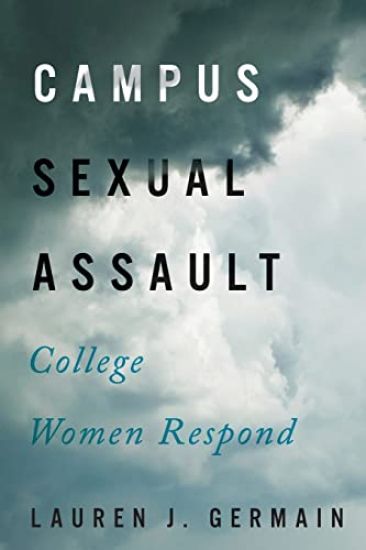
Campus Sexual Assault

Campus Sexual Assault

Lauren J. Germain

Johns Hopkins University Press
2019
pokkari
Survivors of campus sexual assault share the stories of how they confronted and overcame the trauma of being attacked.A 2014 report issued by the White House Council on Women and Girls included the alarming statistic that one in five female college students in the United States experiences some form of campus sexual assault. Despite more than fifty years of anti-rape activism and over two decades of federal legislation regarding campus sexual violence, sexual assault on American college and university campuses remains prevalent, underreported, and poorly understood. A principal reason for this lack of understanding is that the voices of women who have experienced campus sexual assault have been largely absent from academic discourse about the issue.In Campus Sexual Assault, Lauren J. Germain focuses attention on the post–sexual assault experiences of twenty-six college women. She reframes conversations about sexual violence and student agency on American college campuses by drawing insight directly from the stories of how survivors responded individually to attacks, as well as how and why peers, family members, and school, medical, and civil authorities were (or were not) engaged in addressing the crimes.Germain weaves together women's narratives to show the women not as victims per se but as individuals with the power to overcome these traumatic experiences.
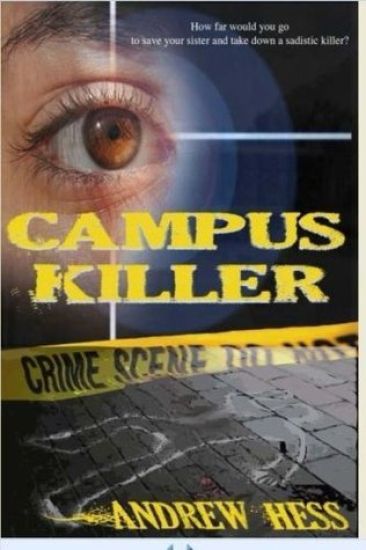
Campus Killer

Campus Killer

Andrew J Hess

Createspace Independent Publishing Platform
2015
pokkari
A big party to close out summer and welcome the fall semester has turned tragic. A girl is found dead in her dorms on the New Paltz campus. Police consider it an open and shut case, but Detective Ryan has her suspicions. The death toll begins to rise with each crime scene looking like a suicide. With the attacks becoming more personal; how far is Ali willing to go to protect her sister and take down the man known as the Campus Killer?
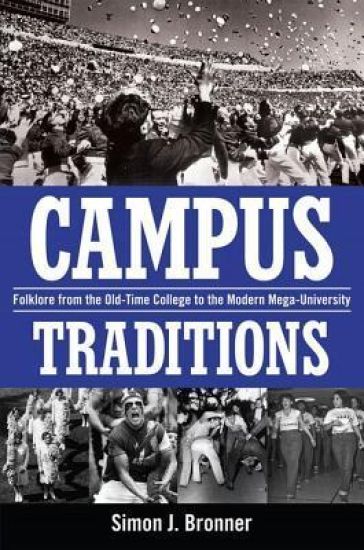
Campus Traditions

Campus Traditions

Simon J. Bronner

University Press of Mississippi
2012
nidottu
From their beginnings, campuses emerged as hotbeds of traditions and folklore. American college students inhabit a culture with its own slang, stories, humor, beliefs, rituals, and pranks. Simon J. Bronner takes a long, engaging look at American campus life and how it is shaped by students and at the same time shapes the values of all who pass through it. The archetypes of absent-minded profs, fumbling jocks, and curve-setting dweebs are the stuff of legend and humor, along with the all-nighters, tailgating parties, and initiations that mark campus tradition--and student identities. Undergraduates in their hallowed halls embrace distinctive traditions because the experience of higher education precariously spans childhood and adulthood, parental and societal authority, home and corporation, play and work.Bronner traces historical changes in these traditions. The predominant context has shifted from what he calls the ""old-time college,"" small in size and strong in its sense of community, to mass society's ""mega-university,"" a behemoth that extends beyond any campus to multiple branches and offshoots throughout a state, region, and sometimes the globe. One might assume that the mega-university has dissolved collegiate traditions and displaced the old-time college, but Bronner finds the opposite. Student needs for social belonging in large universities and a fear of losing personal control have given rise to distinctive forms of lore and a striving for retaining the pastoral ""campus feel"" of the old-time college. The folkloric material students spout, and sprout, in response to these needs is varied but it is tied together by its invocation of tradition and social purpose. Beneath the veil of play, students work through tough issues of their age and environment. They use their lore to suggest ramifications, if not resolution, of these issues for themselves and for their institutions. In the process, campus traditions are keys to the development of American culture.
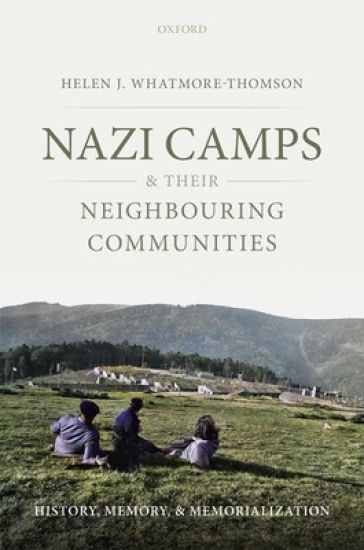
Nazi Camps and their Neighbouring Communities

Nazi Camps and their Neighbouring Communities

Helen J. Whatmore-Thomson

Oxford University Press
2020
sidottu
Nazi concentration camps (KZs) were established in the vicinity of local communities across Europe. Arguably, the individuals in these communities were not perpetrators, nor were they victims, like those imprisoned in the camps. Yet they did not simply stand by on the sidelines, passive, uninvolved, or untouched by the presence of the camps. Local citizenries engaged in ambiguous and highly interactive relations with their local camps, willingly and unwillingly working for the perpetrators--but also aiding inmates. After the war, Nazi camps were often repurposed, initially as post-war internment camps and subsequently as penal institutions, military compounds, or housing encampments. Over time, many were transformed into sites of memory to commemorate Nazi persecution. Governments and groups of survivors have often determined the re-use and commemoration of KZs, but these processes take place on local territory and have direct implications for nearby communities. Therefore, locals have continued to interact with camp legacies. Nazi Camps and their Neighbouring Communities examines how local populations evolved to live with the Nazi camps both before and after the war. Helen J. Whatmore-Thomson evaluates the different sorts of locality-camp relationships that developed in wartime France, Germany, and the Netherlands, and how these played out in post-war scenarios of re-use and memorialization. Using three case studies of major camps in western Europe, Natzweiler-Struthof, Neuengamme, and Vught, the book traces the contested developments of these camp sites in the changing political climates of the post-war years, and explores the interrelated dynamics and trajectories of local and national memory.
Campus Wars

Campus Wars

Heineman Kenneth J.

New York University Press
1994
pokkari
"At the same time that the dangerous war was being fought in the jungles of Vietnam, Campus Wars were being fought in the United States by antiwar protesters. Kenneth J. Heineman found that the campus peace campaign was first spurred at state universities rather than at the big-name colleges. His useful book examines the outside forces, like military contracts and local communities, that led to antiwar protests on campus." ?Herbert Mitgang, The New York Times "Shedding light on the drastic change in the social and cultural roles of campus life, Campus Wars looks at the way in which the campus peace campaign took hold and became a national movement." ?History Today "Heineman's prodigious research in a variety of sources allows him to deal with matters of class, gender, and religion, as well as ideology. He convincingly demonstrates that, just as state universities represented the heartland of America, so their student protest movements illustrated the real depth of the anguish over US involvement in Vietnam. Highly recommended." ?Choice "Represents an enormous amount of labor and fills many gaps in our knowledge of the anti-war movement and the student left." ?Irwin Unger, author of These United States The 1960s left us with some striking images of American universities: Berkeley activists orating about free speech atop a surrounded police car; Harvard SDSers waylaying then-Secretary of Defense Robert McNamara; Columbia student radicals occupying campus buildings; and black militant Cornell students brandishing rifles, to name just a few. Tellingly, the most powerful and notorious image of campus protest is that of a teenage runaway, arms outstretched in anguish, kneeling beside the bloodied corpse of Jeff Miller at Kent State University. While much attention has been paid to the role of elite schools in fomenting student radicalism, it was actually at state institutions, such as Kent State, Michigan State, SUNY, and Penn State, where anti-Vietnam war protest blossomed. Kenneth Heineman has pored over dozens of student newspapers, government documents, and personal archives, interviewed scores of activists, and attended activist reunions in an effort to recreate the origins of this historic movement. In Campus Wars, he presents his findings, examining the involvement of state universities in military research ? and the attitudes of students, faculty, clergy, and administrators thereto ? and the manner in which the campus peace campaign took hold and spread to become a national movement. Recreating watershed moments in dramatic narrative fashion, this engaging book is both a revisionist history and an important addition to the chronicle of the Vietnam War era.
Braxton Campus Mysteries Collection - Books 1-4
The first four books in James J. Cudney's Braxton Campus Mysteries, now available in one volume. Set in a cozy, secluded Pennsylvania village full of quirky, sarcastic and nosy residents, this series will be a delight to anyone who loves a good mystery Academic Curveball: When Kellan Ayrwick returns home for his father's retirement, he finds a dead body in Diamond Hall's stairwell. Unfortunately, Kellan has a connection to the victim, and so do several members of his family. But could one of them be guilty of murder?Broken Heart Attack: When one of Nana D's buddies dies of an apparent heart attack during the dress rehearsal of King Lear, Nana D's suspicions rise and she asks Kellan to investigate the death. But can Kellan find the killer, or will he get caught up his own stage fright?Flower Power Trip: At a masquerade ball to raise money for renovations to Memorial Library, Kellan finds a dead body dressed in a Dr. Evil costume. Between the murder, a special flower exhibit and strange postcards arriving each week, Kellan can't decide which mystery in his life should take priority. Did one of Maggie's sisters kill the guest, who'd been staying at the Roarke and Daughters Inn, or does the victim have a closer connection to someone else at Braxton College?Mistaken Identity Crisis: A clever thief with a sinister calling card has invaded Braxton campus. When a missing ruby, and a body, are discovered at the campus, Kellan must investigate the killer's motive to protect his brother. And as the summer heat begins to settle in Wharton County, a couple more surprises are also in store.
Braxton Campus Mysteries Collection - Books 1-4
The first four books in James J. Cudney's Braxton Campus Mysteries, now available in one volume. Set in a cozy, secluded Pennsylvania village full of quirky, sarcastic and nosy residents, this series will be a delight to anyone who loves a good mystery Academic Curveball: When Kellan Ayrwick returns home for his father's retirement, he finds a dead body in Diamond Hall's stairwell. Unfortunately, Kellan has a connection to the victim, and so do several members of his family. But could one of them be guilty of murder?Broken Heart Attack: When one of Nana D's buddies dies of an apparent heart attack during the dress rehearsal of King Lear, Nana D's suspicions rise and she asks Kellan to investigate the death. But can Kellan find the killer, or will he get caught up his own stage fright?Flower Power Trip: At a masquerade ball to raise money for renovations to Memorial Library, Kellan finds a dead body dressed in a Dr. Evil costume. Between the murder, a special flower exhibit and strange postcards arriving each week, Kellan can't decide which mystery in his life should take priority. Did one of Maggie's sisters kill the guest, who'd been staying at the Roarke and Daughters Inn, or does the victim have a closer connection to someone else at Braxton College?Mistaken Identity Crisis: A clever thief with a sinister calling card has invaded Braxton campus. When a missing ruby, and a body, are discovered at the campus, Kellan must investigate the killer's motive to protect his brother. And as the summer heat begins to settle in Wharton County, a couple more surprises are also in store.
The Vietnam War on Campus

The Vietnam War on Campus

Marc J. Gilbert

Praeger Publishers Inc
2000
sidottu
Previous analyses of the student antiwar movement during the Vietnam War have focussed almost exclusively on a few radical student leaders and upon events that occurred at a few elite East Coast universities. This volume breaks new ground in the treatment it affords critiques of the war offered by conservative students, in its assessment of antiwar sentiment among Midwestern and Southern college students, and in its invesitgation of antiwar protests in American high schools. It also provides fresh insight through a discussion of the ways in which American films depicted the student movements and an examination of the role of women and religion in the campus wars of the Sixties and Seventies. The campus dimensions of the antiwar movement were more broad-based and more diverse in membership, roots, and strategy than is often assumed. Each essay in this collection strives not only to present a fair-minded picture of the impact of the Vietnam War on campus, but also to offer balanced reflections on its significance for today's body politic. Contributing authors conclude leading scholars on the war's impact on American society and two artists closely associated with that conflict, Vietnam veteran, writer, and poet W.D. Ehrhart and Country Joe McDonald, author of the antiwar era anthem, I Feel Like I'm Fixing to Die Rag.
Creating a Culturally Inclusive Campus

Creating a Culturally Inclusive Campus

Barbara J. Hoekje; Scott G. Stevens

Routledge
2017
sidottu
Colleges and universities increasingly recruit international students yet may lack the systems to foster these students' academic success and identity as valued members of the campus community. Sharing case studies of students and examples of innovative initiatives, this book explores strategies and key recommendations for universities to re-conceptualize their programs to better welcome and support international students. Emphasizing the relational aspect of academic and campus life, the authors provide a framework that supports students from initial contact through graduation. Carefully researched and addressing issues of language, engagement, and culture, Creating a Culturally Inclusive Campus offers universities innovative strategies for helping all students fulfull their academic goals while also contributing meaningfully to their school’s global mission.