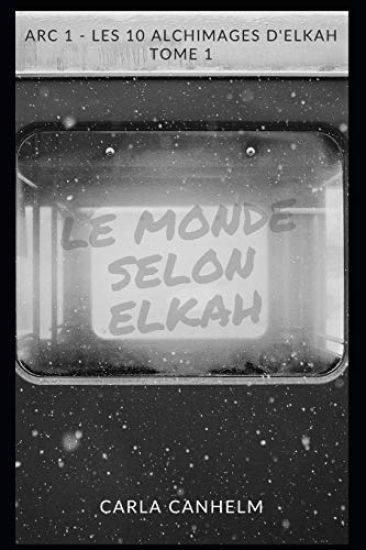
Le monde selon Elkah est une pop e fantastique. D couvrez les secrets de L'Alchimagie. Quel impact aura l'introduction de cette nouvelle science dans notre soci t ? Une nouvelle r volution industrielle ? Une in vitable guerre ?Suivez les premiers pas d'Elkah la Nouvelle-Orl ans, en Russie et jusqu'aux confins de l'univers. Soyez t moins des r actions des gouvernements et des populations l'apparition du 7i me Alchimage la plus puissante de l'univers. Observez le recrutement d'Elkah parmis nos cong n res et savourez des combats entre Alchimages aux pouvoirs tonnant. Animaux mythiques, d mons, civilisations inconnues, le bestiaire du monde selon Elkah est vaste et fourmille tant de nouveaux alli s que de surprenantes menaces. Rejoignez les 10 Alchimages d'Elkah dans le premier volume, aube d'une nouvelle saga fantastique...
Liban. Mémoires fragmentées d’une guerre obsédante examine les œuvres d’artistes, d’écrivains et de cinéastes francophones qui tentent d’initier un travail d’anamnèse de la guerre « civile » qui a ravagé le Liban entre 1975 et 1990. Calargé postule que la production culturelle des années 2000-2015 tente de combler le vide généré par l’absence d’un récit national qui raconte l’histoire contemporaine du pays. L’ouvrage explore des questionnements en rapport avec la nécessité de l’anamnèse mais aussi de ses limites dans une situation marquée à la fois par des traumatismes collectifs, par une compétition de mémoires partisanes en conflit et par une volonté officielle d’étouffer le passé récent et d’en gommer les traces. In Liban. Mémoires fragmentées d’une guerre obsédante, Calargé focuses attention on the ways in which Francophone artists, writers, and filmmakers have revived the collective memory of the (un)civil war that ravaged Lebanon between 1975 and 1990. Their works both defy and critique the politics of forgetting that was actively pursued by the post-war leadership and attempt to fill a gaping void in the country’s national historical narrative. Nonetheless, such efforts are necessarily limited. They are limited by both the persistent feeling that the war is not (yet) over and by the limits of personal narratives in the absence of a national project that ensures and facilitates a collective memorialization of the war.
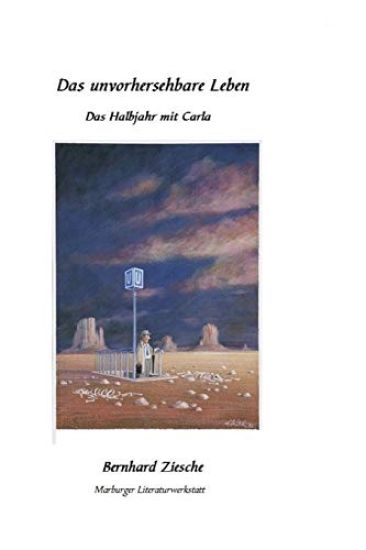
Dieses "hypothetische Tagebuch" aus dem allt glichen Leben eines Unscheinbaren erz hlt vom Unvorhersehbaren im Leben, also von dem, was immer und berall ganz unauff llig geschieht, wenn wir glauben, die Verh ltnisse im Griff zu haben. Es geht um Liebe und Leid, um Angst und Wagnis, um Leidenschaft und Freundschaft, um Verdacht und Verrat - es geht um das, was Gewicht hat im Leben und doch stets zum Ungleichgewicht neigt, weil das blinde M dchen Fortuna den Titanen Zufall zum W gemeister bestellt hat. Eine Erz hlung vom Einbruch des Zufalls ist immer eine ber Schicksal, F gung, Verh ngnis, ber Gl ck und Leid, also ber das Bedeutsame, Gewichtige im Leben. Wenn alle Verh ltnisse im Gleichgewicht sind, hat keines ein wirkliches Gewicht. Vieles und viele spielen dabei eine Rolle, die ihren Text nicht selbst geschrieben haben: - Ein Biochemiker, der in Berlin vom Unvorhersehbaren berrascht wird. - Ein seltsames Institut als Hochsicherheitstrakt - Ein Doktor Mephisto genannter Kollege - Ein am santer "Salon der verqueren Inkonsequenz" mit einer faszinierenden Gastgeberin. - Eine Einladung zu Tee ... und mehr. - Eine leidenschaftliche Liebesaff re zwischen zwei Verhexten. - Ein Dreiecksverh ltnis mit problematischem Pakt. - Ein Schriftsteller, der sich in doppelter Anonymit t versteckt. - Geheimnisvolle Gesch ftsf hrer und noch geheimere Leute vom "Dienst." - Peter & Paul in ihrem Restaurant. - Familiengeburtstage und gro v terliche Betrachtungen. - Ein tr nenreicher und liebevoller Abschied ... und noch manches andere in 48 Kapiteln. Vor allem aber ist es die uralte Geschichte, die in jedem Leben neu erz hlt wird, die einzige Geschichte, die nie endet: Wie zwei sich suchen und finden, wie zwei lieben und leiden, wie zwei einander festhalten wollen und sich trennen m ssen. Wie keiner kl ger wird, als die Klugheit der Art ihm erlaubt, wie das Spiel von vorn beginnt und wieder hinterr cks endet. Die Geschichte, ber die alles bekannt und gesagt ist, und die doch immer unvorhersehbar ist f r den, der sie erf hrt. English Version: This "hypothetical diary" from the everyday life of an inconspicuous person tells of the unpredictable in life, that is, of what always and everywhere happens inconspicuously, when we think we have conditions under control. It's about love and suffering, about fear and daring, about passion and friendship, about suspicion and betrayal - it's about what weight has in life and yet always tends to imbalance, because the blind girl Fortuna has appointed the titan Fortuity as a weighing master. A tale of the break-in of fortuity is always one about fate, destiny, doom, one about bliss and sorrow, i.e. about what is significant and important in life. When all conditions are in equilibrium, none of them has a real weight. Much and many play a role, whose text they have not written themselves: - A biochemist who in Berlin is surprised by the unforeseen. - A strange institute as a high-security wing. - A colleague called Doctor Mephisto. - An amusing "Salon of Awry Inconsistency" with a fascinating hostess. - An invitation to tea ... and more. - A passionate love affair between two bewitchers. - A triangular relationship with a problematic pact. - A writer hiding in double anonymity. - Mysterious managers and even more secret people from the "Service." - Peter & Paul in their restaurant. - Family birthdays and grandfatherly reflections. - A tearful and loving farewell - and many others in 48 chapters. Above all, however, it is the ancient story that is told anew in every life, the only story that never ends: How two seek and find each other, how two love and suffer, how two want to hold each other and have to separate. How no one becomes smarter than the wisdom of the species allows him, how the game starts from the beginning and ends again in the back. The story about which everything is known and said, but which is always unpredictable for the one who experiences it.
As a supplement to the Essentials for Achieving Rigor series, this guide gives teachers a big-picture view of the Essentials model and its research-based strategies. Its valuable tips and guidance empower educators and leaders to increase classroom rigor and transform their schools into thriving, sustainable communities of practice.
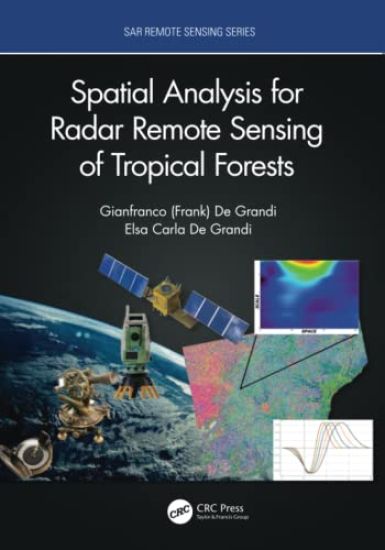
This book is based on the authors’ extensive involvement in Synthetic Aperture Radar (SAR) mapping projects, targeting the health of an earth ecosystem with great relevance for climate change studies: the tropical forests. The subject is developed from a vantage point provided by analysis in a combined space, scale (frequency), time, wavelength, polarization domain. The combination of space and scale offers the capability to zoom in and out like a virtual microscope to the resolution in tune with the underlying ecological phenomenon. It also enables statistical measures (correlations) related to the forest spatial distribution in case of backscatter, or to the canopy height variations in case of interferometric observations. The time dimension brings into play measures of the ecosystem dynamics, such as the flooding extent in the swamp forests, deforestation or degradation events. The book’s spotlight is on radar spatial random fields, these being populated by either backscatter observations or elevation data from interferometric SAR. The basic tenet here is that the spatial statistic of the fields measured by the wavelet variance (in stationary or non-stationary situations) carries fingerprints of the forest structure.Features:Uniquely focused on specific techniques that provide multi-resolution spatial and temporal analysis of forest structure characteristics and changesExamines several large and important international remote sensing projects aimed at documenting entire tropical ecosystemsProvides novel wavelet methods for tropical forest structural measuresIncludes Python code for a suite of wavelet based time-series and single set InSAR coherence and backscatter speckle filters, available to downloadAs the first book on this topic, this composite approach appeals to both students learning through important case studies and to researchers finding new ideas for future studies.
This book is based on the authors’ extensive involvement in Synthetic Aperture Radar (SAR) mapping projects, targeting the health of an earth ecosystem with great relevance for climate change studies: the tropical forests. The subject is developed from a vantage point provided by analysis in a combined space, scale (frequency), time, wavelength, polarization domain. The combination of space and scale offers the capability to zoom in and out like a virtual microscope to the resolution in tune with the underlying ecological phenomenon. It also enables statistical measures (correlations) related to the forest spatial distribution in case of backscatter, or to the canopy height variations in case of interferometric observations. The time dimension brings into play measures of the ecosystem dynamics, such as the flooding extent in the swamp forests, deforestation or degradation events. The book’s spotlight is on radar spatial random fields, these being populated by either backscatter observations or elevation data from interferometric SAR. The basic tenet here is that the spatial statistic of the fields measured by the wavelet variance (in stationary or non-stationary situations) carries fingerprints of the forest structure.Features:Uniquely focused on specific techniques that provide multi-resolution spatial and temporal analysis of forest structure characteristics and changesExamines several large and important international remote sensing projects aimed at documenting entire tropical ecosystemsProvides novel wavelet methods for tropical forest structural measuresIncludes Python code for a suite of wavelet based time-series and single set InSAR coherence and backscatter speckle filters, available to downloadAs the first book on this topic, this composite approach appeals to both students learning through important case studies and to researchers finding new ideas for future studies.
When Columbus was born in the mid-fifteenth century, Europe was largely isolated from the rest of the Old World - Africa and Asia - and ignorant of the existence of the world of the Western Hemisphere. The voyages of Christopher Columbus opened a period of European exploration and empire building that breached the boundaries of those isolated worlds and changed the course of human history. This book describes the life and times of Christopher Columbus on the 500th aniversary of his first voyage across the Atlantic Ocean in 1492. Since ancient times, Europeans had dreamed of discovering new routes to the untold riches of Asia and the Far East, what set Columbus apart from these explorers was his single-minded dedication to finding official support to make that dream a reality. More than a simple description of the man, this new book places Columbus in a very broad context of European and world history. Columbus’s story is not just the story of one man’s rise and fall. Seen in its broader context, his life becomes a prism reflecting the broad range of human experience for the past five hundred years. Respected historians of medieval Spain and early America, the authors examine Columbus’s quest for funds, first in Portugal and then in Spain, where he finally won royal backing for his scheme. Through his successful voyage in 1492 and three subsequent journeys to the new world Columbus reached the pinnacle of fame and wealth, and yet he eventually lost royal support through his own failings. William and Carla Rahn Phillips discuss the reasons for this fall and describe the empire created by the Spaniards in the lands across the ocean, even though neither they, nor anyone else in Europe, know precisely where or what those lands were. In examining the birth of a new world, this book reveals much about the times that produced these intrepid explorers.
This book provides descriptions of current laboratory accreditation schemes and explains why these schemes fall short of assuring data purchasers that the data produced from accredited laboratories are always quality products. The book then presents a system for laboratory accreditation in conjunction with data certification that assures data purchasers their data are useful for the purposes for which they are intended. Simple quality assurance and quality control techniques, in addition to concepts of total quality management, are described and then applied to the environmental laboratory industry. This "System For Success" was developed from real problems and real solutions within the industry and represents an integration of proven techniques that offer a better way to ensure quality laboratory data is obtained. Laboratory Accreditation: A Workable Solution is a must for government officials, environmental professionals, independent environmental laboratories, hazardous waste disposal industries, chemical manufacturers, QA professionals, and testing laboratories.
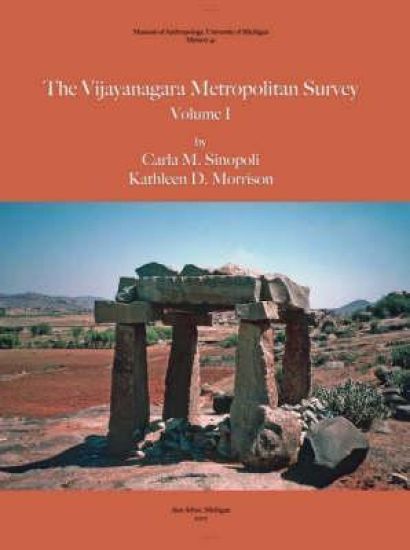
Vijayanagara, the “City of Victory,” was the capital of South India’s largest and most successful pre-colonial empire from c. AD 1330-1565. This richly illustrated volume reports on the results of a ten-year systematic regional archaeological survey in the hinterland or “metropolitan region” of this vast and well-preserved urban site.