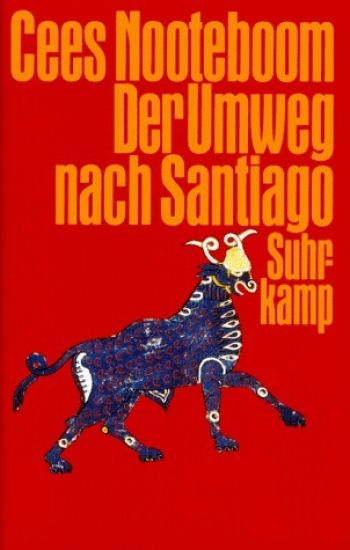
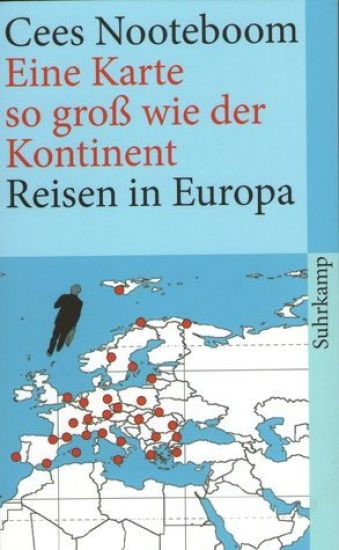
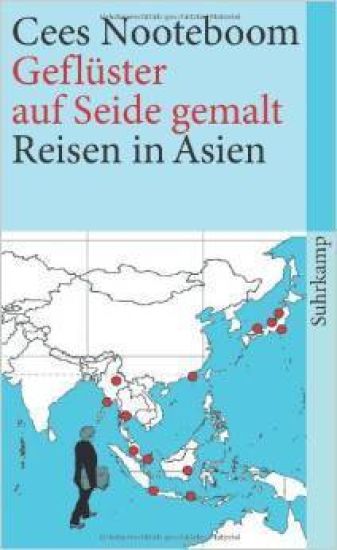
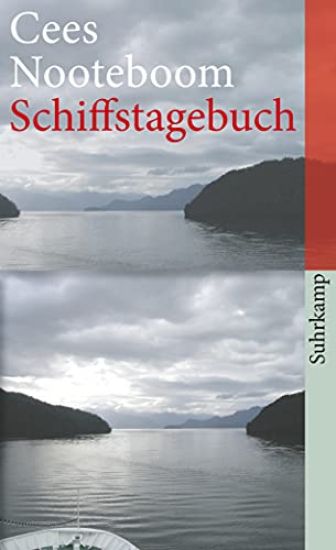
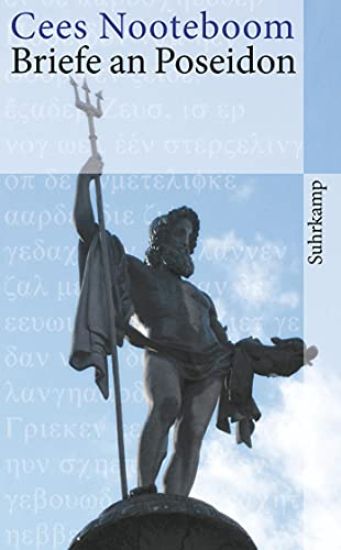
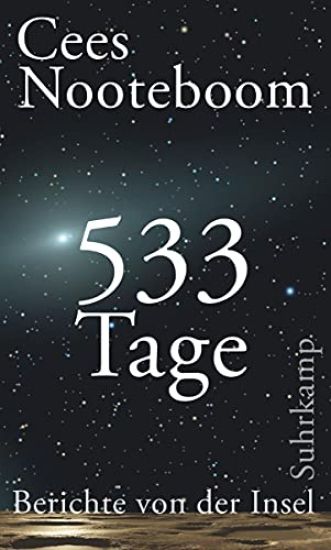
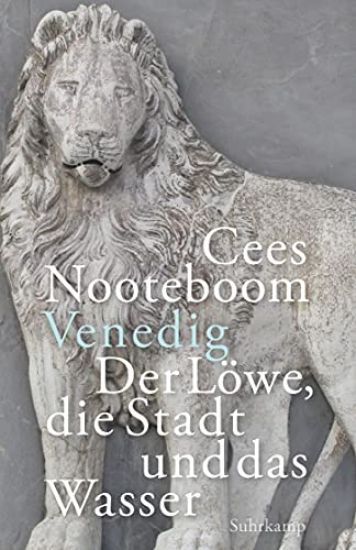
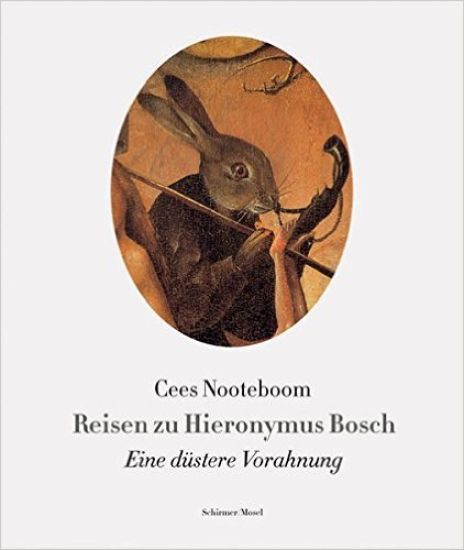
Als Cees Nootebooms Reisebericht erstmals erscheint, ist man sich einig: Mit Der Umweg nach Santiago liegt das Spanienbuch schlechthin vor. Nooteboom bricht von Barcelona nach Santiago de Compostela auf, ohne jede Eile, denn der Weg ist das Ziel. Der große niederländische Erzähler ergänzt sein erfolgreiches Reisebuch nun durch weitere Texte über das Land seiner Leidenschaft.
This study is concerned with the economic theory of exhaustible resources. My interest in exhaustible resources dates back several years when prof. dr. J. Cramer and prof. dr. C. von Weizsacker stimu lated me to direct my research, at the Faculty of Actuarial Science and Econometrics of the University of Amsterdam, to the exploitation of Dutch natural gas. This issue raised many theoretical problems, in which I got gradually more and more involved. I was lucky to find in prof. dr. H. Weddepohl a person prepared to listen patiently and to read and critisize my numerous attempts to solve these problems. The actual work on the present monograph started in 1982 at the Faculty of Philosophy and Social Sciences of the Eindhoven University of Technology, in the context of the program "Equilibrium and Dis equilibrium" of the "voorwaardelijke financiering" (universitary financing system). I wish to thank here my supervisors prof. dr. P. Ruys and prof. dr. H. Weddepohl for their comments on earlier drafts of this monograph. When looking back, I realize that their remarks and our dis cussions have led to notable improvements. Also the Internation~l Institute for Applied Systems Analysis (Laxenburg, Austria) has made a valuable contribution by offering me the opportunity to spend three months in its serene academic environment in the summer of 1983. Thanks also to the energy group of I. I. A. S. A. and the I. I. A. S. A. foundation Netherlands.
Although there are numerous publications on the geology of high-grade gneiss terrains, few descriptions exist of how to map and carry out structural analysis in these terrains. Textbooks on structural geology concentrate on technIques appli cable to low-grade terrains. Geologists who have no experience of mapping high-grade gneisses are often at a loss as to how to apply techniques to high grade rocks that were developed for low to medium grade metamorphic terrains. Any study of deep crustal processes and their development through time should begin with examination of the primary data source - outcrops of high grade metamorphic terrains. We feel that the urge to apply advanced techniques of fabric analysis, petrology, geochemistry, isotope geochemistry and age deter mination to these rocks often results in brief sampling trips in which there is little, if any analysis of the structural and metamorphic history revealed by outcrop patterns. Many studies of the metamorphic petrology and geochemistry of high-grade gneiss terrains make ineffective use of available field data, often because the authors are unaware of structural complexities and of the ways to recognise and use them. This is unfortunate, because much data can be collected in the field at minimal cost that cannot easily, if at all, be obtained from material in the laboratory. The primary igneous or sedimentary nature of a rock, the relative age of intrusive veins, and the sequence of deformation that they under went, can usually best be determined by straightforward observation in the field.
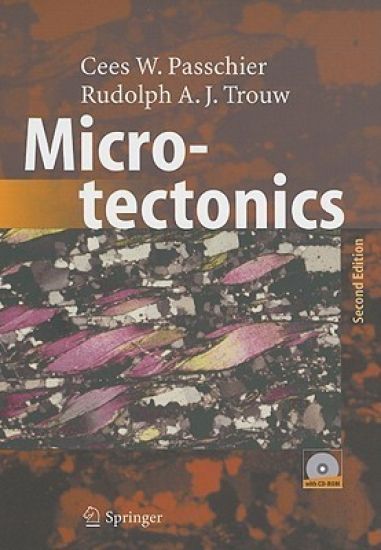
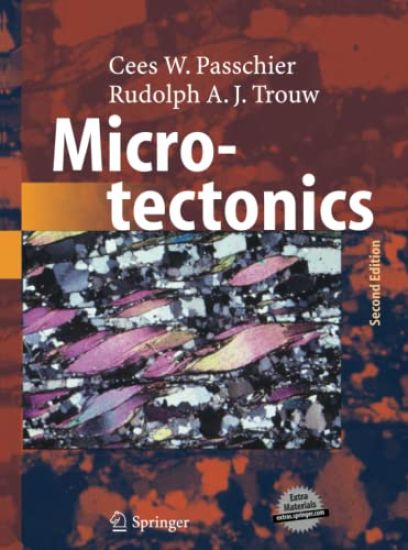
Microtectonics deals with the interpretation of microstructures, small-scale deformation structures in rocks that yield abundant information on the history and type of deformation and metamorphism. The results are used by geologists to obtain data for large-scale geological interpretations. This advanced textbook treats common microstructures such as foliations, porphyroblasts, veins, fringes and shear sense indicators. The book mainly focusses on optical microscopy as a tool to study microstructures, but also describes other techniques such as EBSD and tomography. Many photographs and explanatory drawings clarify the text. The new edition, substantially revised throughout and extended, features two new chapters (primary structures and experimental microstructures), 68 new figures, more than 800 new references. Microtectonics has proven useful for self study of microstructures and as a manual for short- and one-semester courses.
Microtectonics deals with the interpretation of microstructures, small-scale deformation structures in rocks that yield abundant information on the history and type of deformation and metamorphism. The results are used by geologists to obtain data for large-scale geological interpretations. This advanced textbook treats common microstructures such as foliations, porphyroblasts, veins, fringes and shear sense indicators. The book mainly focusses on optical microscopy as a tool to study microstructures, but also describes other techniques such as EBSD and tomography. Many photographs and explanatory drawings clarify the text. The new edition, substantially revised throughout and extended, features two new chapters (primary structures and experimental microstructures), 68 new figures, more than 800 new references. Microtectonics has proven useful for self study of microstructures and as a manual for short- and one-semester courses.
Cees Nooteboom, som er en vår tids største nederlandske forfattere, har også skrevet en rekke reiseskildringer. I "Omvei til Santiago" tar han leseren med på en personlig og følelsesladet kulturhistorisk reise gjennom et Spania, som vil være ukjent for de fleste. Boken bygger på forfatterens uttallige reiser til dette landet gjennom 40 år og er en uforbeholden kjærlighetserklæring til dette uutgrunnelige og gåtefulle landet. Her fortelles det om alt fra landskapet Don Quijote og Sancho Panza vandret gjennom, til Pradomuseet og den spanske borgerkrig. Nysgjerrigheten bringer Nooteboom inn på stadig nye avveier, før han til slutt når Santiago de Compostela, byen som har vært målet for pilegrimer helt siden middelalderen. "Omvei til Santiago" er en reise i tid og rom gjennom 1000 års spansk historie og kultur.
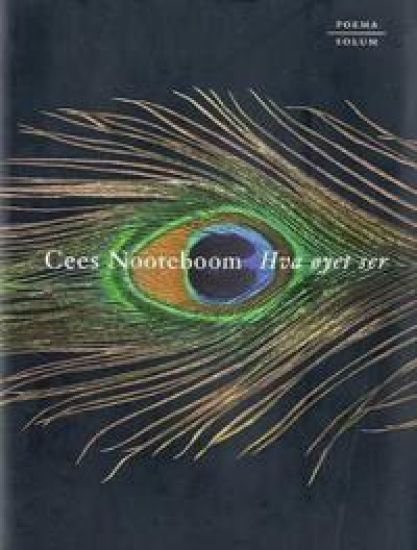
I forfatterens poesi opptrer persepsjonen som den viktigste referansen. I denne boken domineres komposisjonen fullstendig av figuren øyet. Forfatteren lar også inntrykk fra andre kulturer nedfelles i sin poesi. Som poet er han utpreget elektiker.
This first volume of Microlepidoptera of Europe deals with the Pterophoridae of Europe (excluding the former Soviet Union) and the Canary Islands and Madeira. All species occurring in this area are included and most of them illustrated in full colour. All species are briefly redescribed mentioning the main characteristic features of the imagines, and the genital structures. A description of the life cycle is given, and also a note on the distribution. A distribution catalogue has been constructed. It is based on own collection data and verified references. The male and female genitalia are illustrated with line drawings. A checklist of hostplants is given.
This book looks at the foundations of school self-evaluation from a scientific as from a practical perspective. Planning concepts, restructuring of education systems, organizational theory on schools, evaluation methodology and models of school effectiveness and school improvement are discussed as contributing to the overall conceptualization of school self-evaluation. A broad range of approaches is presented and methodological requirements are discussed. School self-evaluation contains controversial issues that reflect tension between the need for objectivity in a context that is permeated by values and potential conflicts of interests. Similar tensions may be seen to exist with respect to the static and "reductionist" aspects of available data collection procedures in a complex and dynamic situation and the appeal for external accountability on the one hand and improvement oriented self-refection on the other. The mission of the book is to clarify these tensions and offer ways to deal with them in practical applications. The school effectiveness knowledge base is offered as a substantive educational frame of references that serves an important function in selecting relevant factors for data collection and the use of the evaluation results.
More than four centuries ago, the small Republic of the United Netherlands embarked on an economic boom. Contacts were established with the four corners of the world. Many of these centuries-old relationships have left traces in museums and archives, in the open fields or in the city, in stories and in pictures. 'Footsteps and Fingerprints', the Legacy of a Shared History presents an image of the legacy the contacts between Brazil, Ghana, India, Indonesia, the Netherlands, Russia, Sri Lanka, Surinam and South Africa have produced over the last 400 years. Various 'top pieces' and other remarkable items designated Mutual Cultural Heritage are described: from Vingboons' View of Table Bay, Henkes Schnapps in Ghana to the Dutch Church in St Pertersburg.