Kirjojen hintavertailu. Mukana 11 699 587 kirjaa ja 12 kauppaa.

Kirjahaku

Etsi kirjoja tekijän nimen, kirjan nimen tai ISBN:n perusteella.

1000 tulosta hakusanalla Chang

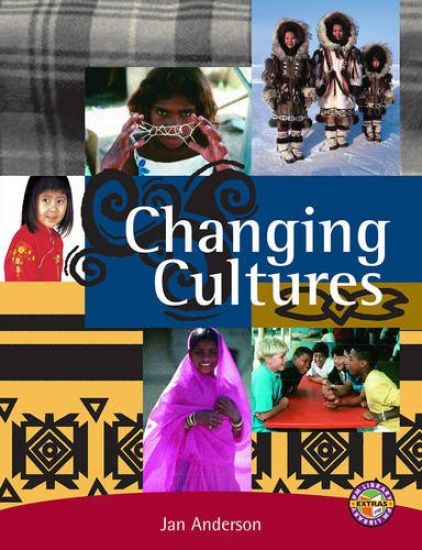
Changing Cultures

Changing Cultures

Jan Anderson

Cengage Learning Australia
2004
nidottu
Societies today have a diversity of cultures. This factual text explores these cultres and varied traditions, including Australian bush foods, Japanese tea ceremonies, Scottish and Chinese New Year celebrations, Italian and German Christmas celebrations, and Thanksgiving in the United States. The importance of national dress, languages, games, symbols and dance to different cultures are also included.
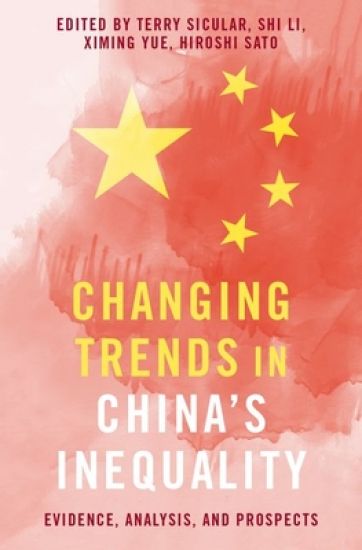
Changing Trends in China's Inequality

Changing Trends in China's Inequality

Oxford University Press Inc
2020
sidottu
Over the past quarter-century China has seen a dramatic increase in income inequality, prompting a shift in China's development strategy and the adoption of an array of new policies to redistribute income, promote shared growth, and establish a social safety net. Drawing on of household-level data from the China Household Income Project, Changing Trends in China's Inequality provides an independent, comprehensive, and empirically grounded study of the evolution of incomes and inequality in China over time. Edited by leading experts on the Chinese economy, the volume analyzes this evolution in China as a whole as well as in the urban and rural sectors, with close attention to measurement issues and to shifts in the economy, institutions, and public policy. Specific essays provides analyses of China's wealth inequality, the emergence of a new middle class, the income gap between the Han majority and the ethnic minorities, the gender wage gap, and the impacts of government policies such as social welfare programs and the minimum wage.
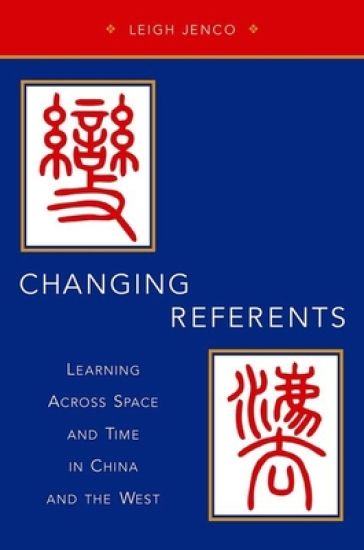
Changing Referents

Changing Referents

Leigh Jenco

Oxford University Press Inc
2015
sidottu
Globalization has brought together otherwise disparate communities with distinctive and often conflicting ways of viewing the world. Yet even as these phenomena have exposed the culturally specific character of the academic theories used to understand them, most responses to this ethnocentricity fall back on the same parochial vocabulary they critique. Against those who insist our thinking must return always to the dominant terms of Euro-American modernity, Leigh Jenco argues - and more importantly, demonstrates - that methods for understanding cultural others can take theoretical guidance from those very bodies of thought typically excluded by political and social theory. Jenco examines a decades-long Chinese conversation over "Western Learning," starting in the mid-nineteenth century, which subjected methods of learning from difference to unprecedented scrutiny and development. Just as Chinese elites argued for the possibility of their producing knowledge along "Western" lines rather than "Chinese" ones, so too, Jenco argues, might we come to see foreign knowledge as a theoretical resource - that is, as a body of knowledge which formulates methods of argument, goals of inquiry, and criteria of evidence that may be generalizable to other places and times. The call of reformers such as Liang Qichao and Yan Fu to bianfa - literally "change the institutions" of Chinese society and politics in order to produce new kinds of Western knowledge-was simultaneously a call to "change the referents" those institutions sought to emulate, and from which participants might draw their self-understanding. Their arguments show that the institutional and cultural contexts which support the production of knowledge are not prefigured givens that constrain cross-cultural understanding, but dynamic platforms for learning that are tractable to concerted efforts over time to transform them. In doing so, these thinkers point us beyond the mere acknowledgement of cultural difference toward reform of the social, institutional and disciplinary spaces in which the production of knowledge takes place.
Changing Referents

Changing Referents

Leigh Jenco

Oxford University Press Inc
2015
nidottu
Globalization has brought together otherwise disparate communities with distinctive and often conflicting ways of viewing the world. Yet even as these phenomena have exposed the culturally specific character of the academic theories used to understand them, most responses to this ethnocentricity fall back on the same parochial vocabulary they critique. Against those who insist our thinking must return always to the dominant terms of Euro-American modernity, Leigh Jenco argues - and more importantly, demonstrates - that methods for understanding cultural others can take theoretical guidance from those very bodies of thought typically excluded by political and social theory. Jenco examines a decades-long Chinese conversation over "Western Learning," starting in the mid-nineteenth century, which subjected methods of learning from difference to unprecedented scrutiny and development. Just as Chinese elites argued for the possibility of their producing knowledge along "Western" lines rather than "Chinese" ones, so too, Jenco argues, might we come to see foreign knowledge as a theoretical resource - that is, as a body of knowledge which formulates methods of argument, goals of inquiry, and criteria of evidence that may be generalizable to other places and times. The call of reformers such as Liang Qichao and Yan Fu to bianfa - literally "change the institutions" of Chinese society and politics in order to produce new kinds of Western knowledge-was simultaneously a call to "change the referents" those institutions sought to emulate, and from which participants might draw their self-understanding. Their arguments show that the institutional and cultural contexts which support the production of knowledge are not prefigured givens that constrain cross-cultural understanding, but dynamic platforms for learning that are tractable to concerted efforts over time to transform them. In doing so, these thinkers point us beyond the mere acknowledgement of cultural difference toward reform of the social, institutional and disciplinary spaces in which the production of knowledge takes place.
Change

Change

Jeffrey A. Kottler

Oxford University Press Inc
2018
nidottu
Think of a time in your life when you overcame a significant, chronic, intractable problem that had challenged you for years, until somehow you managed to completely turn things around in such a way that the change has persisted to this day. How did this happen, and what was it that made the greatest difference? Jeffrey Kottler has often explored this question-interviewing hundreds of people about their change experiences and synthesizing all the research around the globe-and he poses it in the opening pages of Change: What Really Leads to Lasting Personal Transformation. This fundamental query-how do we (or don't we) make conscious and lasting changes in our lives-has been at the center of his career as a therapist, social justice advocate, professor, scholar, and writer, and it offers a starting point for this book. Change is a mystery. There is no panacea, no one answer to how and why some people can alter their behavior, while others cannot, and even amongst the world's experts there is little consensus for what really makes the difference in successful transformations. From professional athletes to clients, colleagues, and his own personal life, Kottler interweaves powerful stories of transformation with contemporary scholarship and change theory in his examination of the varieties of human transformation. The book approaches the change process through a number of lenses, considering a variety of types of change, including those triggered by a traumatic event, hitting bottom in an addiction, inspirational travel, facing fears, and the power of altruism. Each chapter is anchored by stories of remarkable, unexpected, and lasting transformation, meant to inspire as well as illustrate the sheer range of possible change experiences. The book should leave readers with a healthy dose of skepticism for any program that promises to change your life, while also giving them a deeper appreciation for the complexity of the human psyche.
Changing the story

Changing the story

Oxford University Press
2004
muu
for solo alto and guitar Settings of nine poems by Irene Noel-Baker which take and transform elements of Greek myths. The piece shifts from the mythological past to the present, just as the medium of voice and guitar suggest both 'early music' (with lute) and the folk or pop of today. Powers alludes to each kind of music and, in a way, re-invents lute-songs.
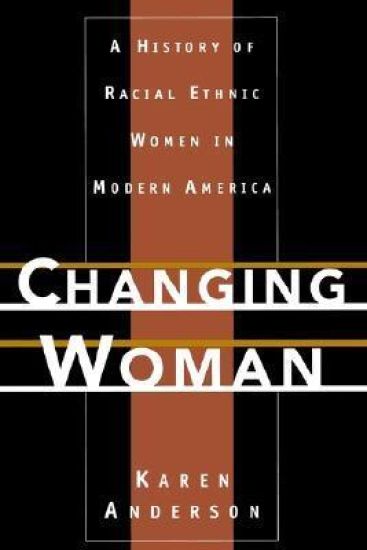
Changing Woman

Changing Woman

Karen Anderson

Oxford University Press Inc
1996
sidottu
Changing Woman examines the role of Indian, Mexican-American, and African-American women during the 20th century, focusing on the changes these years have brought about in their lives and comparing each group
Changing Channels

Changing Channels

Ellen Mickiewicz

Oxford University Press Inc
1997
sidottu
At 7:20 pm on October 3, 1993, a nervous and shaky anchor broke into coverage of a soccer match to tell Russian viewers that their state television was shutting down. In the opening salvos of the parliamentary revolt against Boris Yeltsin's government, a mob had besieged the station's headquarters. A man had just been killed in front of the news director. Moments later, screens all across Russia went blank, leaving audiences in the dark. But in less than an hour, Russia's second state channel went on the air. Millions watched as Sergei Torchinsky anchored thirteen straight hours of coverage, often with the sound of shooting clearly audible in the background. Streams of politicians, trade union leaders, writers, television personalities, and other well-known figures braved gunfire to reach Channel Two's makeshift studios and speak directly to the nation. In one stunning moment, a famous actress extemporaneously pleaded with viewers not to return to the horrors of Stalinism. Boris Yeltsin, who had been glued to his television set like everyone else, later recalled, "For the rest of my life I will remember the anxious but resolute and courageous expression of Liya Akhedzhakova. . . her hoarse, cracking voice remains in my memory." In that time of crisis, television bound the nation together, a continuing emblem of legitimate authority which lent an image of stability and credibility to Yeltsin's besieged government. "Television saved Russia," the Russian president said. Changing Channels vividly recreates this exciting time, as television both helped and hindered the Russian nation's struggle to create a new democracy. From the moribund, state-controlled television broadcasts at the end of the Soviet Union, through Mikhail Gorbachev's glasnost, up to Yeltsin's victory in the most recent Russian presidential elections of 1996, Mickiewicz charts the omnipresent role of television, drawing on interviews, public opinion surveys, research, and the television programming itself. Analyzing the rise of political advertising (sometimes with controversial US participation), the birth of journalists as opinionated television personalities, and the changing news coverage of coups, elections, and wars, she shows both how the gradual development of private, independent stations has begun to make real pluralism possible and how the authoritarian legacy of the Soviet state structure continues to affect Russian television even today. With television in 97% of all Russian households, and the nightly news watched by a viewership matching that for the Super Bowl in the US, the struggle for control over television became the struggle for control over the nation. Mickiewicz illuminates the efforts of those both in and out of power to control the media. Behind the momentous political changes are the stories of the men and women who chose to resist, test, or submit to the system. Mickiewicz offers brilliant sketches of these individuals: Yegor Ligachev, Gorbachev's second in command, a man of strongly held opinions who, in retirement, still orated loudly, even over tea; Boris Yeltsin, having not even put on his shirt yet, watching the early morning coverage of the attempted coup against Gorbachev; or the new breed of Russian journalists covering the war in Chechnya with footage of bombed out streets and charred corpses for privately owned NTV, despite continuing government intimidation. In vivid interviews, all the key players, including Gorbachev himself, offered Mickiewicz their unique insights and frank personal commentary. Drawing on these interviews and on her extensive research on the interactions of politics, economics, and society, Mickiewicz presents a rich and authoritative analysis of television in Russia. In many ways, Mickiewicz writes, no other country in the world offers television a greater opportunity and a greater role. Changing Channels tells the fascinating story of a truly modern phenomenon: the struggle to create genuine political pluralism, helped and hindered by the barrage of information, advertisements, and media-created personalities that make up modern television.
Change at Work

Change at Work

Peter Cappelli; Laurie Bassi; Harry Katz; David Knoke; Paul Osterman; Michael Useem

Oxford University Press Inc
1997
sidottu
This book illuminates what is really happening in the American workplace. The contributors explain how the widespread restructuring of American firms--usually resulting in a reduction of the workforce to cut costs--has had a profound impact on the lives of workers. The book explains how the new relationship requires high skill levels, but does not provide training for them. Workers themselves now must take charge of their personal development instead of relying on their employers. Their alienation from their firms is compounded by the large disparity between the pay of top managers and that of workers. The future is uncertain, but the authors argue that the traditional relationship between employer and employees will continue to erode.
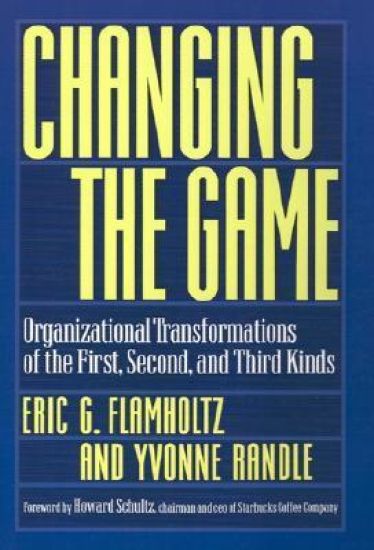
Changing the Game

Changing the Game

Eric G. Flamholtz; Yvonne Randle

Oxford University Press Inc
1998
sidottu
The authors of this book argue that firms succeed or fail in their industries according to the degree that they are able to change what they do to meet changing market decisions. The authors present a framework for managing the process of organizational transformation, and the tools that are necessary to manage that change. This book is intended for managers and academics.
Changing Woman

Changing Woman

Karen Anderson

Oxford University Press Inc
1997
nidottu
While great strides have been made in documenting discrimination against women in America, our awareness of discrimination is due in large part to the efforts of a feminist movement dominated by middle-class white women, and is skewed to their experiences. Yet discrimination against racial ethnic women is in fact dramatically different--more complex and more widespread--and without a window into the lives of racial ethnic women our understanding of the full extent of discrimination against all women in America will be woefully inadequate. Now, in this illuminating volume, Karen Anderson offers the first book to examine the lives of women in the three main ethnic groups in the United States--Native American, Mexican American, and African American women--revealing the many ways in which these groups have suffered oppression, and the profound effects it has had on their lives. Here is a thought-provoking examination of the history of racial ethnic women, one which provides not only insight into their lives, but also a broader perception of the history, politics, and culture of the United States. For instance, Anderson examines the clash between Native American tribes and the U.S. government (particularly in the plains and in the West) and shows how the forced acculturation of Indian women caused the abandonment of traditional cultural values and roles (in many tribes, women held positions of power which they had to relinquish), subordination to and economic dependence on their husbands, and the loss of meaningful authority over their children. Ultimately, Indian women were forced into the labor market, the extended family was destroyed, and tribes were dispersed from the reservation and into the mainstream--all of which dramatically altered the woman's place in white society and within their own tribes. The book examines Mexican-American women, revealing that since U.S. job recruiters in Mexico have historically focused mostly on low-wage male workers, Mexicans have constituted a disproportionate number of the illegals entering the states, placing them in a highly vulnerable position. And even though Mexican-American women have in many instances achieved a measure of economic success, in their families they are still subject to constraints on their social and political autonomy at the hands of their husbands. And finally, Anderson cites a wealth of evidence to demonstrate that, in the years since World War II, African-American women have experienced dramatic changes in their social positions and political roles, and that the migration to large urban areas in the North simply heightened the conflict between homemaker and breadwinner already thrust upon them. Changing Woman provides the first history of women within each racial ethnic group, tracing the meager progress they have made right up to the present. Indeed, Anderson concludes that while white middle-class women have made strides toward liberation from male domination, women of color have not yet found, in feminism, any political remedy to their problems.
Changing the Guard

Changing the Guard

David H. Bayley

Oxford University Press Inc
2005
sidottu
Every day the American government, the United Nations, and other international institutions send people into non-English speaking, war-torn, and often minimally democratic countries struggling to cope with rising crime and disorder under a new regime. These assistance missions attempt to promote democratic law enforcement in devastated countries. But do these missions really facilitate the creation of effective policing? Renowned criminologist David H. Bayley here examines the prospects for the reform of police forces overseas as a means of encouraging the development of democratic governments. In doing so, he assesses obstacles for promoting democratic policing in a state-of-the-art review of all efforts to promote democratic reform since 1991. Changing the Guard offers an inside look at the achievements and limits of current American foreign assistance, outlining the nature and scope of the police assistance program and the agencies that provide it. Bayley concludes with recommendations for how police assistance could be improved in volatile countries across the world. This book is required reading as an instruction manual for building democratic policing overseas.
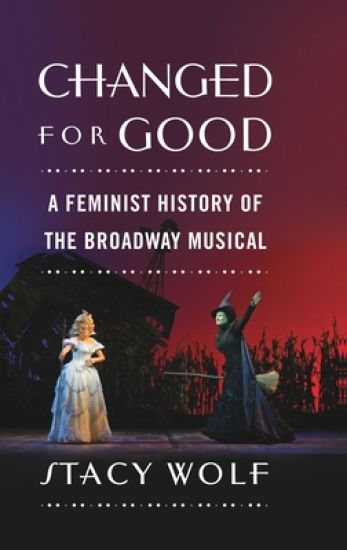
Changed for Good

Changed for Good

Wolf Stacy

Oxford University Press Inc
2011
sidottu
From Adelaide in "Guys and Dolls" to Nina in "In the Heights" and Elphaba in "Wicked," female characters in Broadway musicals have belted and crooned their way into the American psyche. In this lively book, Stacy Wolf illuminates the women of American musical theatre - performers, creators, and characters — from the start of the cold war to the present day, creating a new, feminist history of the genre. Moving from decade to decade, Wolf first highlights the assumptions that circulated about gender and sexuality at the time. She then looks at the leading musicals to stress the key aspects of the plays as they relate to women, and often finds overlooked moments of empowerment for female audience members. The musicals discussed here are among the most beloved in the canon—"West Side Story," "Cabaret," "A Chorus Line," "Phantom of the Opera," and many others—with special emphasis on the blockbuster "Wicked." Along the way, Wolf demonstrates how the musical since the mid-1940s has actually been dominated by women—women onstage, women in the wings, and women offstage as spectators and fans.
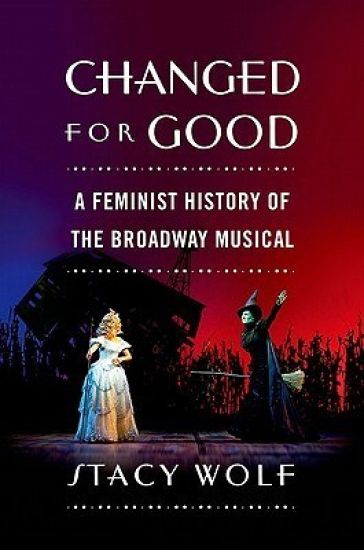
Changed for Good

Changed for Good

Wolf Stacy

Oxford University Press Inc
2011
nidottu
From Adelaide in "Guys and Dolls" to Nina in "In the Heights" and Elphaba in "Wicked," female characters in Broadway musicals have belted and crooned their way into the American psyche. In this lively book, Stacy Wolf illuminates the women of American musical theatre - performers, creators, and characters — from the start of the cold war to the present day, creating a new, feminist history of the genre. Moving from decade to decade, Wolf first highlights the assumptions that circulated about gender and sexuality at the time. She then looks at the leading musicals to stress the key aspects of the plays as they relate to women, and often finds overlooked moments of empowerment for female audience members. The musicals discussed here are among the most beloved in the canon—"West Side Story," "Cabaret," "A Chorus Line," "Phantom of the Opera," and many others—with special emphasis on the blockbuster "Wicked." Along the way, Wolf demonstrates how the musical since the mid-1940s has actually been dominated by women—women onstage, women in the wings, and women offstage as spectators and fans.
Changing Worlds

Changing Worlds

David W.P. Elliott

Oxford University Press Inc
2012
sidottu
For the most of the twentieth century, the country of Vietnam has served as a symbol of the bipolar system of rival ideological blocs that characterized the Cold War. As the conflict over communism waned in the 1980s, Vietnam faced the tough task of remaking itself as nation in the eyes of its people and of the world. In Changing Worlds, David W.P. Elliot, a participant in the Aspen Institute's U.S.-Vietnam Dialogue who has spent the past forty years working closely with the people and government of Vietnam, chronicles the evolution of the Vietnamese state as we know it today. With the collapse of communist regimes in Europe, Vietnam witnessed the dissolution of the cornerstone of its policies toward the outside world. Fearing that a full commitment to deep integration in a globalizing world would lead to the collapse of their own current political system, the Vietnamese political elite made slow, cautious steps to involvement with the larger international community. By the year 2000, however, Vietnam had "taken the plunge" and opted for greater participation in the global economic system, leading to its membership in the World Trade Organization in 2006. Elliott illustrates that the politicians who took a limited approach to international involvement ultimately had condemned Vietnam to a permanent state of underdevelopment. It is only at the turn of the 21st century when the Vietnamese state began to relax its policies toward the international community that the nation began to experience a period of revitalization. Remarkably, these changes have happened without Vietnam losing its unique political identity as many had expected. It remains an authoritarian state, but offers far more breathing space to its citizens than in pre-reform era. Far from leading the nation to be absorbed into a Western-inspired development model, globalization has led to a complex domestic diversification and localization that has reinforced Vietnam's distinctive identity rather than obliterating it. The culmination of decades of research and cultural exchange, Changing Worlds documents the unique story of the birth of a nation amidst the challenges of the post-Cold War era.
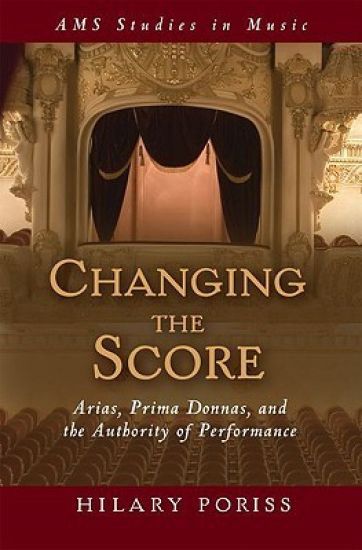
Changing the Score

Changing the Score

Poriss Hilary

Oxford University Press Inc
2009
sidottu
This study seeks to explore the role and significance of aria insertion, the practice that allowed singers to introduce music of their own choice into productions of Italian operas. Each chapter investigates the art of aria insertion during the nineteenth century from varying perspectives, beginning with an overview of the changing fortunes of the practice, followed by explorations of individual prima donnas and their relationship with particular insertion arias: Carolina Ungher's difficulties in finding a "perfect" aria to introduce into Donizetti's Marino Faliero; Guiditta Pasta's performance of an aria from Pacini's Niobe in a variety of operas, and the subsequent fortunes of that particular aria; Maria Malibran's interpolation of Vaccai's final scene from Giulietta e Romeo in place of Bellini's original setting in his I Capuleti e I Montecchi; and Adelina Patti's "mini-concerts" in the lesson scene of Il barbiere di Siviglia. The final chapter provides a treatment of a short story, "Memoir of a Song," narrated by none other than an insertion aria itself, and the volume concludes with an appendix containing the first modern addition of this short story, a narrative that has lain utterly forgotten since its publication in 1849. This book covers a wide variety of material that will be of interest to opera scholars and opera lovers alike, touching on the fluidity of the operatic work, on the reception of the singers, and on the shifting and hardening aesthetics of music criticism through the period.
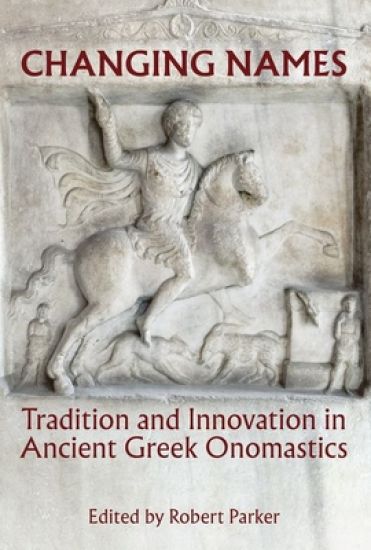
Changing Names

Changing Names

Oxford University Press
2019
sidottu
Changing Names investigates, in relation to the ancient Greek world, the ways in which preferences in personal name-giving change: through shifts in population, cultural contact and imperialism, the popularity of new gods, celebrity status of individuals, increased openness to external influence, and shifts in local fashion. Several major kinds of change due to cultural contact occurred: Greek names spread in regions outside Greece that were subject to Greek cultural influence (and later conquest), while conversely the Roman conquest of the Greek world led to various degrees of adoption of the Roman naming system; late in antiquity, Christianisation led to a profound but rather gradual transformation of the name stock. Individuals in culturally mixed societies sometimes bore two names, one for public or official use, one more domestic; but women of non-Greek origin were more likely to stick with indigenous names. 'Structural' changes (such as the emergence of the English surname) did not occur, though in late antiquity an indication of profession tended to replace the father's name as a secondary identifier; in some regions 'second' names became popular, perhaps in imitation of the longer Roman naming formulae. The volume is arranged partly thematically, partly through regional case studies (from within and beyond old Greece). Individuals who change their names (typically slaves after manumission) are also considered, as is the possibility that a name might change its 'meaning'.
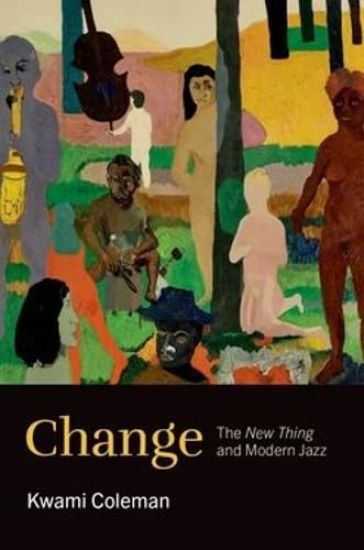
Change

Change

Kwami Coleman

OXFORD UNIVERSITY PRESS INC
2025
sidottu
By 1960, musicians, critics, record buyers, and club patrons in New York City agreed that a "new thing" in jazz had arrived. That new thing was what we in the twenty-first century call free jazz, and it represented a significant change within and, for some, a dramatic departure from what was commonly understood as modern jazz. The arresting, abstract sound of the new music pioneered by ensembles led by Ornette Coleman, Cecil Taylor, and other experimentalist improvising musicians became the focal point of an ongoing controversy in the 1960s that called into question their musicianship, legitimacy, and sanity. Flourishing in an age of anti-establishment protest and radical politics--what writer Amiri Baraka characterized as the inevitable expression of Black American culture--and explained by musicians as the product of newfound consciousness, the new thing was, by 1966, almost unanimously dismissed by the music press as the discordant sound of black anger. Author Kwami Coleman integrates musical analyses of key recordings, musician interviews, periodicals, and rare archival sources to tell the story of jazz's emergent avant-garde, providing readers with ways to listen to and understand this innovative and disruptive music. By shining a comprehensive light on an important and still-misunderstood revolutionary moment in experimental music history, he illustrates the fundamental elements of this new music and what made it so experimental within the context of modern jazz. Coleman proposes heterophony--a multi-voice texture where cohesion is achieved by means other than tonal center and meter--as a theoretical lens by which to interpret the affectual force of the new thing's abstract harmonic textures and rhythms. In doing so, he draws connections to the social and political world that enveloped and motivated the musicians, writers, and listeners at the heart of the new thing's practice, recordings, and publicity. In his chronological account of the music's development in the early 1960s, Coleman offers readers a new framework to better understand the aesthetics and converging cultural currents of experimental free improvisation in the 1960s.
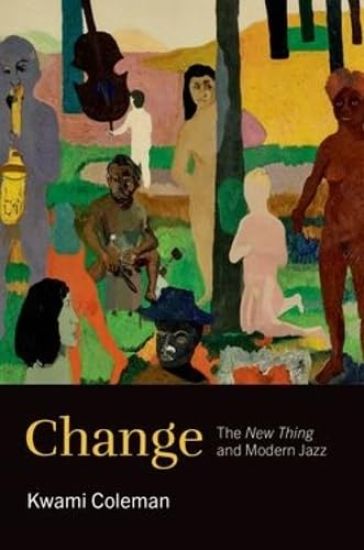
Change

Change

Kwami Coleman

OXFORD UNIVERSITY PRESS INC
2025
nidottu
By 1960, musicians, critics, record buyers, and club patrons in New York City agreed that a "new thing" in jazz had arrived. That new thing was what we in the twenty-first century call free jazz, and it represented a significant change within and, for some, a dramatic departure from what was commonly understood as modern jazz. The arresting, abstract sound of the new music pioneered by ensembles led by Ornette Coleman, Cecil Taylor, and other experimentalist improvising musicians became the focal point of an ongoing controversy in the 1960s that called into question their musicianship, legitimacy, and sanity. Flourishing in an age of anti-establishment protest and radical politics--what writer Amiri Baraka characterized as the inevitable expression of Black American culture--and explained by musicians as the product of newfound consciousness, the new thing was, by 1966, almost unanimously dismissed by the music press as the discordant sound of black anger. Author Kwami Coleman integrates musical analyses of key recordings, musician interviews, periodicals, and rare archival sources to tell the story of jazz's emergent avant-garde, providing readers with ways to listen to and understand this innovative and disruptive music. By shining a comprehensive light on an important and still-misunderstood revolutionary moment in experimental music history, he illustrates the fundamental elements of this new music and what made it so experimental within the context of modern jazz. Coleman proposes heterophony--a multi-voice texture where cohesion is achieved by means other than tonal center and meter--as a theoretical lens by which to interpret the affectual force of the new thing's abstract harmonic textures and rhythms. In doing so, he draws connections to the social and political world that enveloped and motivated the musicians, writers, and listeners at the heart of the new thing's practice, recordings, and publicity. In his chronological account of the music's development in the early 1960s, Coleman offers readers a new framework to better understand the aesthetics and converging cultural currents of experimental free improvisation in the 1960s.