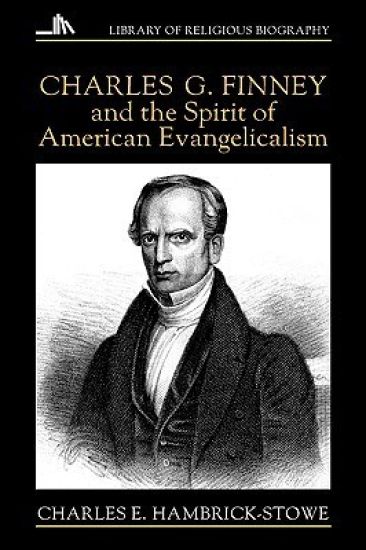
Charles Grandison Finney was the foremost evangelist in the pre-Civil War United States. His revivals in the cities along the Erie Canal; his well-organized campaigns in Philadelphia, New York City, Boston, and the British Isles; his prominent pastorate at New York's Broadway Tabernacle; and his teaching career at Oberlin College exemplify the evangelical spirit that swept the country following the Second Great Awakening. This lively biography by historian Charles E. Hambrick-Stowe tells the story of Finney's remarkable life and offers fresh insights into the nature of evangelicalism and the nineteenth-century American experience. By using the life of the great revivalist and educator as a window into the soul of American evangelicalism, Hambrick-Stowe shows in striking ways how Finney displayed the characteristics of that broader movement, many of which continue to flourish in twentieth-century religious life. Based on a thorough reading of the Finney Papers, Finney's writings, contemporary sources, and modern historiography, this biography exhibits scholarly depth in a popular narrative that is meant to be read and enjoyed as well as studied.A map of Finney's evangelistic travels, portraits, and other illustrations enhance the text.
This book has been considered by academicians and scholars of great significance and value to literature. This forms a part of the knowledge base for future generations. So that the book is never forgotten we have represented this book in a print format as the same form as it was originally first published. Hence any marks or annotations seen are left intentionally to preserve its true nature.
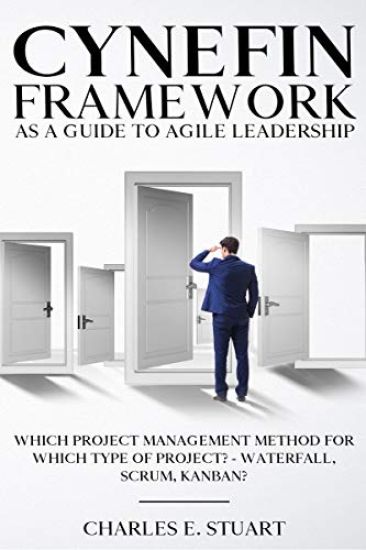
The Cynefin framework is used to provide a compass for decision makers and business experts to better assess a situation or problem and derive appropriate actions from this assessment. An important aspect is the choice of the right method or framework. The author, a successful project manager for several decades, relates the findings of the Cynefin framework to the introduction and implementation of agile methods such as Scrum and Kanban. He points out that not every method fits every task to the same extent and that it makes sense to choose the right approaches - instead of using a general standard that always fits halfway. As a basis for a suitable decision, he offers an introduction to agility and the importance of agile working for companies and organizations. It enables managers to use effective approaches and thus to implement successful and low-risk projects.
This book has been considered important throughout the human history, and so that this work is never forgotten we have made efforts in its preservation by republishing this book in a modern format for present and future generations. This whole book has been reformatted, retyped and designed. These books are not made of scanned copies of their original work and hence the text is clear and readable.
He's as mad as a hatter Whether it's like a bump on a log or a bat out of hell, these expressions have been around forever, but we've never really known why ... until now Finally Dr. Funk explains more than 400 droll, colorful, and sometimes pungent expressions of everyday speech. Derived from classical sources, historic events, famous literature, frontier humor, and the frailties of humankind, each of these sayings has an interesting story behind its origin.If you've ever wondered why when you're in a hurry you are told to hold your horses, wonder no more
Call centers have revolutionized the way business gets done. This book dissects this explosively growing phenomenon, revealing new efficiency-boosting techniques, gainful technologies and applications, and profit-increasing management stratagemsCall Center Operations Profiting from Teleservices Charles E. Day, CMC In this expert guide, one of the leading computer-telecom integration (CTI) consultants in the United States shows you call center deployment and operation from the inside out. Exposing new uses, cost-cutting technologies, efficiency-boosting strategies, and assessment methods with superior accuracy, famed authority Charles E. Day makes it clear why call center operations increased by more than 700% between 1983 and 1997, and continue to grow The heartbeats of many of today's businesses--serving functions as diverse as telemarketing, customer ordering and service, help desks, inside sales, reservations, and financial services by phone--call centers offer one of the best paradigms for coaxing every bit of efficiency-boosting power from new communications and computing technologies In these pages, Charles E. Day, an expert who has helped hundreds of well-known businesses deploy and improve call centers, demonstrates how to maximize call center efficiency, yields, and cost savings in your business. Inside, you'll find page after page of ways to: Analyze the gains possible from call centers Fill a variety of business needs with integrated telephone and computing technologies Integrate telephone services and computing with efficient, effective technologies Link databases, call handling, workstations, GUIs, legacy systems, software packages, and networks for a better bottom line Explore practical, profitable applications of CTI in depth Test-run a call center with out-of-house resources Get new ideas for call center uses from examples throughout the book Expand your customer base and improve relationships with existing customers Boost employee performance Design a state-of-the-art call center that optimizes use of available resources and potential return Packed with detailed strategies that translate technology into business solutions, this guide is clear enough for a novice to use. Charles E. Day's Call Center Operations is a resource likely to pay for itself by several orders of magnitude
Substance Use Disorders: Assessment and Treatment is a summary of everything a therapist should know about substance abuse in one easy-to-read comprehensive book. The book begins with a discussion of the pharmacology of specific drug classes (opioids, hallucinogens, etc.) and the epidemiology of abuse. It then presents psychological theories of substance abuse, the initiation and progression of substance abuse disorders, issues of prevention and early intervention, and screening and assessment for substance abuse (including specific tests for assessment) and discusses in detail the various treatment methodologies available. Two final chapters explore issues relevant to special populations and legal and ethical considerations, regarding issues such as confidentiality and coerced treatment.