Kirjojen hintavertailu. Mukana 11 377 824 kirjaa ja 12 kauppaa.

Kirjahaku

Etsi kirjoja tekijän nimen, kirjan nimen tai ISBN:n perusteella.

1000 tulosta hakusanalla Charles Hibbert Tupper

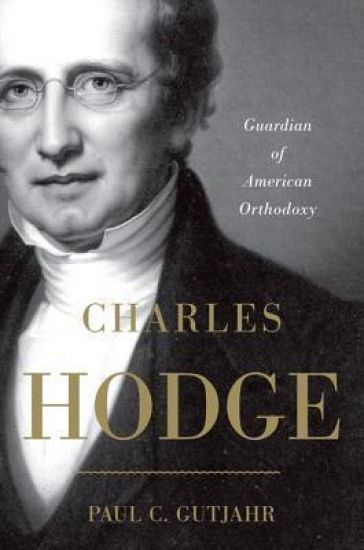
Charles Hodge

Charles Hodge

Paul C. Gutjahr

Oxford University Press Inc
2012
nidottu
Charles Hodge (1797-1878) was one of nineteenth-century America's leading theologians, owing in part to a lengthy teaching career, voluminous writings, and a faculty post at one of the nation's most influential schools, Princeton Theological Seminary. Surprisingly, the only biography of this towering figure was written by his son, just two years after his death. Paul Gutjahr's book, therefore, is the first modern critical biography of a man some have called the "Pope of Presbyterianism. " Hodge's legacy is especially important to American Presbyterians. His brand of theological conservatism became vital in the 1920s, as Princeton Seminary saw itself, and its denomination, split. The conservative wing held unswervingly to the Old School tradition championed by Hodge, and ultimately founded the breakaway Orthodox Presbyterian Church. The views that Hodge developed, refined, and propagated helped shape many of the central traditions of twentieth- and twenty-first-century American evangelicalism. Hodge helped establish a profound reliance on the Bible among evangelicals, and he became one of the nation's most vocal proponents of biblical inerrancy. Gutjahr's study reveals the exceptional depth, breadth, and longevity of Hodge's theological influence and illuminates the varied and complex nature of conservative American Protestantism.
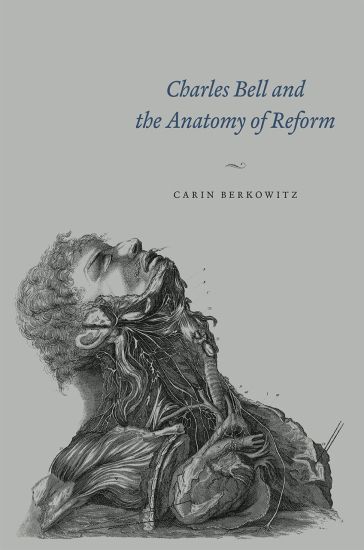
Charles Bell and the Anatomy of Reform

Charles Bell and the Anatomy of Reform

Carin Berkowitz

University of Chicago Press
2015
sidottu
Sir Charles Bell (1774-1842) was a medical reformer in a great age of reform-an occasional and reluctant vivisectionist, a theistic popularizer of natural science, a Fellow of the Royal Society, a surgeon, an artist, and a teacher. He was among the last of a generation of medical men who strove to fashion a particularly British science of medicine; who formed their careers, their research, and their publications through the private classrooms of nineteenth-century London; and whose politics were shaped by the exigencies of developing a living through patronage in a time when careers in medical science simply did not exist. A decade after Bell's death, that world was gone, replaced by professionalism, standardized education, and regular career paths. In Charles Bell and the Anatomy of Reform, Carin Berkowitz takes readers into Bell's world, helping us understand the life of medicine before the modern separation of classroom, laboratory, and clinic. Through Bell's story, we witness the age when modern medical science, with its practical universities, set curricula, and medical professionals, was born.
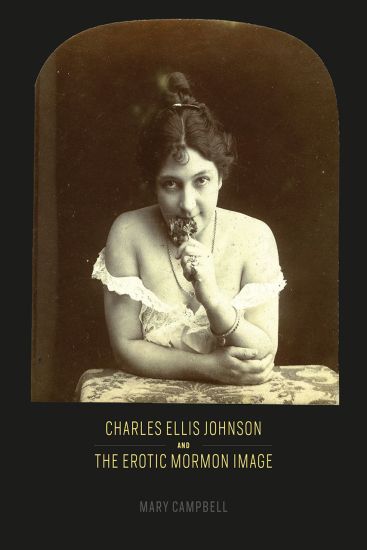
Charles Ellis Johnson and the Erotic Mormon Image

Charles Ellis Johnson and the Erotic Mormon Image

Mary Campbell

University of Chicago Press
2016
sidottu
On September 25, 1890, the fourth Mormon prophet, Wilford Woodruff, publicly instructed his followers to abandon polygamy. In doing so, he initiated a process that would fundamentally alter the Latter-day Saints and their faith. Trading the most integral elements of their belief system for national acceptance, the Mormons recreated themselves as model Americans. Mary Campbell tells the story of this remarkable religious transformation in Charles Ellis Johnson and the Erotic Mormon Image. One of the church's favorite photographers, Johnson (1857 1926) spent the 1890s and early 1900s taking pictures of Mormonism's most revered figures and sacred sites. At the same time, he did a brisk business in mail-order erotica, shooting and selling stereoviews that he referred to as his "spicy pictures of girls." Situating these images and more within the religious, artistic, and legal culture of turn-of-the-century America, Campbell reveals the unexpected ways in which they worked in concert to bring the Saints back into the nation's mainstream after the scandal of polygamy. ?Engaging, interdisciplinary, and deeply researched, Charles Ellis Johnson and the Erotic Mormon Image demonstrates the profound role that pictures played in the creation of both the modern Church of Jesus Christ of Latter-day Saints and the modern American nation.
The Daily Charles Dickens

The Daily Charles Dickens

Charles Dickens; James R. Kincaid

University of Chicago Press
2018
pokkari
A charming memento of the Victorian era's literary colossus, The Daily Charles Dickens is a literary almanac for the ages. Tenderly and irreverently anthologized by Dickens scholar James R. Kincaid, this collection mines the British author's beloved novels and Christmas stories as well as his lesser-known sketches and letters for "an around-the-calendar set of jolts, soothings, blandishments, and soarings." A bedside companion to dip into year round, this book introduces each month with a longer seasonal quote, while concise bits of wisdom and whimsy mark each day. Hopping gleefully from Esther Summerson's abandonment by her mother in Bleak House to a meditation on the difficult posture of letter-writing in The Pickwick Papers, this anthology displays the wide range of Dickens's stylistic virtuosity-his humor and his deep tragic sense, his ear for repetition, and his genius at all sorts of voices. Even the devotee will find between these pages a mix of old friends and strangers-from Oliver Twist and Ebenezer Scrooge to the likes of Lord Coodle, Sir Thomas Doodle, Mrs. Todgers, and Edwin Drood-as well as a delightful assortment of the some of the novelist's most famous, peculiar, witty, and incisive passages, tailored to fit the season. To give one particularly apt example: David Copperfield blunders, in a letter of apology to Agnes Wickfield, "I began one note, in a six-syllable line, `Oh, do not remember'-but that associated itself with the fifth of November, and became an absurdity." Never Pecksniffian or Gradgrindish, this daily dose of Dickens crystallizes the novelist's agile humor and his reformist zeal alike. This is a book to accompany you through the best of times and the worst of times.
Charles Darwin

Charles Darwin

Lance Workman

Red Globe Press
2013
nidottu
This book examines the history of thought surrounding the relationship between Darwinism and the behavioural sciences. Accessible and thought-provoking, it demonstrates how and why Darwinism remains both illuminating and controversial today.
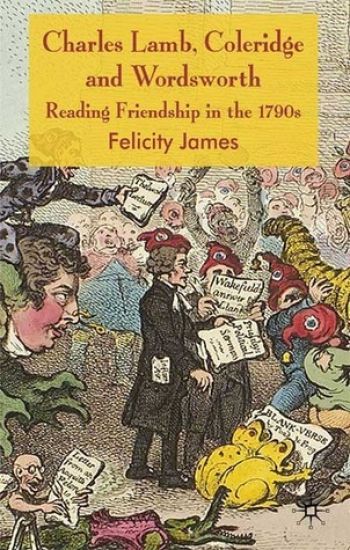
Charles Lamb, Coleridge and Wordsworth

Charles Lamb, Coleridge and Wordsworth

Felicity James

Palgrave Macmillan
2008
sidottu
This book makes the case for a re-placing of Lamb as reader, writer and friend in the midst of the lively political and literary scene of the 1790s. Reading his little-known early works alongside others by the likes of Coleridge and Wordsworth, it allows a revealing insight into the creative dynamics of early Romanticism.
Charles Dickens: Great Expectations

Charles Dickens: Great Expectations

Columbia University Press
1999
pokkari
Surveying the key debates about a novel which has provoked an immensely rich critical response, the extracts and essays included here examine Great Expectations in structural, symbolic, social, political, psychological, and sexual terms, relating the novel to its own time and to a range of twentieth-century theoretical perspectives. Exploring secondary sources, from initial reviews in the 1860s to the most up-to-date critiques of the 1990s, the Guide is an essential resource for the study of one of Dickens's most complex works.
Charles Dickens

Charles Dickens

Lucinda Dickens Hawksley

Andre Deutsch Ltd
2019
sidottu
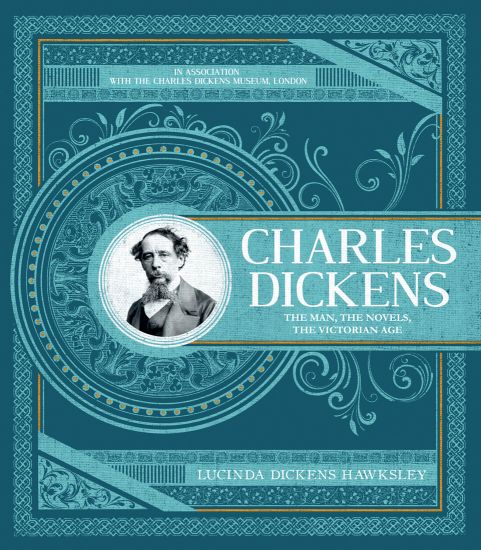
Charles Dickens is the definitive illustrated guide to the man and his works with images of documents from Dickens's personal archive written by one of descendants. It follows Dickens from early childhood, including his time spent as a child labourer, and looks at how he became the greatest celebrity of his age – and how he still remains recognized as one of England's greatest names, even in the 21st century. It takes an intimate look at what he was like as a husband, a father, a friend and an employer; his longing to be an actor; his travels across North America; his year spent living in Italy; and his great love of France. Alongside Dickens himself, readers will meet his fascinating family and his astonishing circle of friends – and will discover when and how life and real-life personalities were imitated in Dickens's art. The cast of characters in Charles Dickens embraces an incredible array of famous, and occasionally infamous, Victorians.
Charles Darwin

Charles Darwin

John van Wyhe

Welbeck Publishing Group
2020
pokkari
The Compact Guide: Charles Darwin reveals the famous scientist's life in compelling detail. From his expedition aboard the Beagle and his legendary research in the Galapagos Islands, to his marriage and illness and the publication of his groundbreaking works, this book sheds fascinating light on the most remarkable aspects of Darwin's life - the extraordinary adventure of discovery that led Darwin to some of his greatest breakthroughs; the controversy with Alfred Russel Wallace on who first originated the idea of evolution by natural selection; and the Darwin family's prosperous but often tragic home life, and how Charles became one of the first Victorians to reject religion and God.
The Christian Teachings of Charles Kingsley
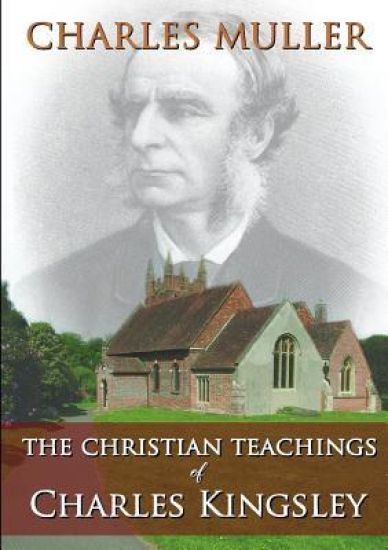
The moral purpose of Charles Kingsley's novels is pronounced because he was a preacher, and more specifically, a teacher. He was above all a preacher of stirring didactic sermons. It is the didactic content of his writings-in his sermons, his novels, and his essays on natural theology-which is the study of this work. One forgets that Kingsley was not, in the first instance, a social and political reformer. As a preacher, and as a writer, he was pre-eminently a teacher. He was not an evangelical preacher, yet the Christian gospel was at the heart of his teachings and his moral exhortations. This work attempts to look at the Christian message that was the inspiration behind his socio-religious gospel. Writing at the time of Charles Darwin, Kingsley saw no reason to lose his sound Christian faith with the emergence of Darwin's theory of evolution. Instead, he could accept it as a means to a divine end, another example of how Providence might bring about the Kingdom of God on earth.
Charles Johnson's Fiction

Charles Johnson's Fiction

William R. Nash

University of Illinois Press
2002
sidottu
A fearless experimenter and one of the most important contemporary American writers, Charles Johnson challenges separatist politics and tries to get beyond race as a literary category. In Charles Johnson's Fiction, William R. Nash emphasizes and explores the tensions in Johnson's work between his ideal of race as illusion and his methods of articulating racial grievance. Nash examines Johnson's short stories, novels–-Faith and the Good Thing, Oxherding Tale, Middle Passage, and Dreamer–-and the nonfiction work Being and Race. Tracing the themes of Johnson's political and artistic concerns as they evolved in his work, Nash locates his fascination with the aesthetics of the Black Arts Movement and his dismissal of separatist black politics and racialist thought. He also considers Johnson's adoption of Western and Eastern philosophies and belief that race is a blinding, limiting category that impedes the exploration of individual and collective identity. In formulating a mode of expression that balances the conflicting demands of race and aesthetics, Johnson crafts a new vision of history and African American identity that signifies on a range of black and white literary predecessors, including Zora Neale Hurston, Theodore Dreiser, Ralph Waldo Emerson, Ralph Ellison, James Baldwin, and Herman Melville. Nash argues that Johnson's hybrid philosophy of Buddhism and phenomenology defies the basic premises of identity formation and leads to the perception of a different self. Juxtaposed with jarring storylines of racial injustice, Johnson's notion that race is an illusion informs his aesthetic, promotes his strategies for battling oppression, and reminds readers what African Americans have already overcome in the quest to cultivate new visions of identity. Charles Johnson's Fiction also includes eight of Johnson's cartoons published in Black Humor and Half-Past Nation Time in the early 1970s.
Charles Ives in the Mirror

Charles Ives in the Mirror

David C Paul

University of Illinois Press
2013
sidottu
American composer Charles Ives (1874–1954) has gone from being a virtual unknown to become one of the most respected and lauded composers in American music. In this sweeping survey of intellectual and musical history, David C. Paul tells the new story of how Ives's music was shaped by shifting conceptions of American identity within and outside of musical culture, charting the changes in the reception of Ives across the twentieth century and into the twenty-first century. Paul focuses on the critics, composers, performers, and scholars whose contributions were most influential in shaping the critical discourse on Ives, many of them marquee names of American musical culture themselves, including Henry Cowell, Aaron Copland, Elliott Carter, and Leonard Bernstein. Paul explores both how Ives positioned his music amid changing philosophical and aesthetic currents and how others interpreted his contributions to American music. Although Ives's initial efforts to find a public in the early twenties attracted a few devotees, the resurgence of interest in the American literary past during the thirties made a concert staple of his "Concord" Sonata, a work dedicated to nineteenth-century transcendentalist writers. Paul shows how Ives was subsequently deployed as an icon of American freedom during the early Cold War period and how he came to be instigated at the head of a line of "American maverick" composers. Paul also examines why a recent cadre of scholars has beset the composer with Gilded Age social anxieties. By embedding Ives' reception within the changing developments of a wide range of fields including intellectual history, American studies, literature, musicology, and American politics and society in general, Charles Ives in the Mirror: American Histories of an Iconic Composer greatly advances our understanding of Ives and his influence on nearly a century of American culture.
Charles Ives's Concord

Charles Ives's Concord

Kyle Gann

University of Illinois Press
2017
sidottu
In 1921, insurance executive Charles Ives sent out copies of a piano sonata to two hundred strangers. Laden with dissonant chords, complex rhythm, and a seemingly chaotic structure, the so-called Concord Sonata confounded the recipients, as did the accompanying book, Essays before a Sonata. Kyle Gann merges exhaustive research with his own experience as a composer to reveal the Concord Sonata and the essays in full. Diffracting the twinned works into their essential aspects, Gann lays out the historical context that produced Ives's masterpiece and illuminates the arguments Ives himself explored in the Essays. Gann also provides a movement-by-movement analysis of the work's harmonic structure and compositional technique; connects the sonata to Ives works that share parts of its material; and compares the 1921 version of the Concord with its 1947 revision to reveal important aspects of Ives's creative process.A tour de force of critical, theoretical, and historical thought, Charles Ives's Concord provides nothing less than the first comprehensive consideration of a work at the heart of twentieth century American music.