Kirjojen hintavertailu. Mukana 12 418 488 kirjaa ja 12 kauppaa.

Kirjahaku

Etsi kirjoja tekijän nimen, kirjan nimen tai ISBN:n perusteella.

1000 tulosta hakusanalla Charles W. Goodlander

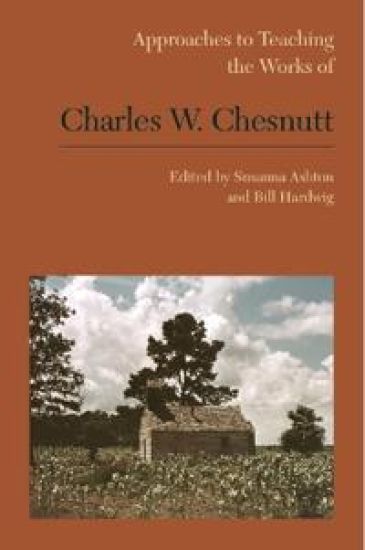
Approaches to Teaching the Works of Charles W. Chesnutt

Approaches to Teaching the Works of Charles W. Chesnutt

Modern Language Association of America
2017
sidottu
Growing up in Cleveland after the Civil War and during the brutal rollback of Reconstruction and the onset of Jim Crow, Charles W. Chesnutt could have passed as white but chose to identify himself as black. An intellectual and activist involved with the NAACP who engaged in debate with Booker T. Washington and W. E. B. Du Bois, he wrote fiction and essays that addressed issue as various as segregation, class among both blacks and white, Southern nostalgia, and the Wilmington coup d’etat of 1898. The portrayals of race, racial violence, and stereotyping in Chesnutt’s works challenge teachers and students to contend with literature as both a social and an ethical practice. In part 1 of this volume, ‘Materials,’ the editors survey the critical reception of Chesnutt’s works in his lifetime and after, along with the biographical, critical, and archival texts available to teachers and students. The essays in part 2, ‘Approaches,’ address such topics in teaching Chesnutt as his use of dialect, the role of intertextuality and genre in his writing, irony, and his treatment of race, economics and social justice.
Approaches to Teaching the Works of Charles W. Chesnutt

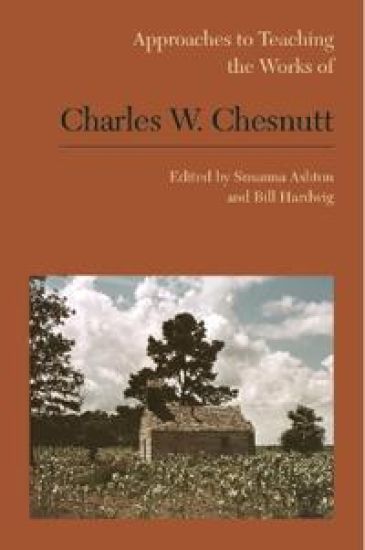
Approaches to Teaching the Works of Charles W. Chesnutt

Modern Language Association of America
2017
nidottu
Growing up in Cleveland after the Civil War and during the brutal rollback of Reconstruction and the onset of Jim Crow, Charles W. Chesnutt could have passed as white but chose to identify himself as black. An intellectual and activist involved with the NAACP who engaged in debate with Booker T. Washington and W. E. B. Du Bois, he wrote fiction and essays that addressed issue as various as segregation, class among both blacks and white, Southern nostalgia, and the Wilmington coup d’etat of 1898. The portrayals of race, racial violence, and stereotyping in Chesnutt’s works challenge teachers and students to contend with literature as both a social and an ethical practice. In part 1 of this volume, ‘Materials,’ the editors survey the critical reception of Chesnutt’s works in his lifetime and after, along with the biographical, critical, and archival texts available to teachers and students. The essays in part 2, ‘Approaches,’ address such topics in teaching Chesnutt as his use of dialect, the role of intertextuality and genre in his writing, irony, and his treatment of race, economics and social justice.
Whiteness in the Novels of Charles W. Chesnutt

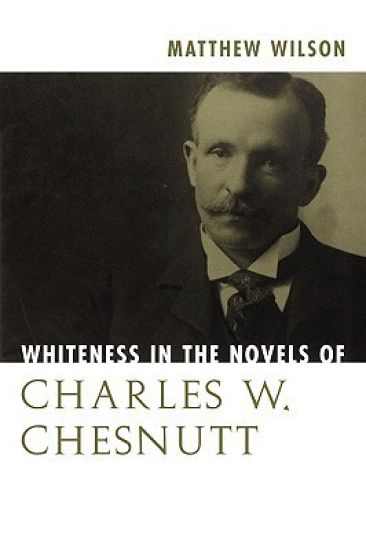
Whiteness in the Novels of Charles W. Chesnutt

Matthew Wilson

University Press of Mississippi
2009
nidottu
Charles W. Chesnutt (1858-1932), critically acclaimed for his novels, short stories, and essays, was one of the most ambitious and influential African American writers of the late nineteenth and early twentieth centuries. Today recognized as a major innovator of American fiction, Chesnutt is an important contributor to de-romanticizing trends in post-Civil War Southern literature, and a singular voice among turn-of-the-century realists who wrote about race in American life. Whiteness in the Novels of Charles W. Chesnutt is the first study to focus exclusively on Chesnutt's novels. Examining the three published in Chesnutt's lifetime-The House Behind the Cedars, The Marrow of Tradition, and The Colonel's Dream-as well as his posthumously published novels, this study explores the dilemma of a black writer who wrote primarily for a white audience. Throughout, Matthew Wilson analyzes the ways in which Chesnutt crafted narratives for his white readership and focuses on how he attempted to infiltrate and manipulate the feelings and convictions of that audience. Wilson pays close attention to the genres in which Chesnutt was working and also to the social and historical context of the novels. In articulating the development of Chesnutt's career, Wilson shows how Chesnutt's views on race evolved. By the end of his career, he felt that racial differences were not genetically inherent, but social constructions based on our background and upbringing. Finally, the book closely examines Chesnutt's unpublished manuscripts that did not deal with race. Even in these works, in which African Americans are only minor characters, Wilson finds Chesnutt engaged with the conundrum of race and reveals him as one of America's most significant writers on the subject. Matthew Wilson is a professor of humanities and writing at Penn State University, Harrisburg. He is the editor of Charles W. Chesnutt's Paul Marchand, F.M.C. (University Press of Mississippi).
Passing in the Works of Charles W. Chesnutt

Passing in the Works of Charles W. Chesnutt

University Press of Mississippi
2010
sidottu
Passing in the Works of Charles W. Chesnutt is a collection that reevaluates Chesnutt's deft manipulation of the ""passing"" theme to expand understanding of the author's fiction and nonfiction. Nine contributors apply a variety of theories---including intertextual, signifying/discourse analysis, narratological, formal, psychoanalytical, new historical, reader response, and performative frameworks---to add richness to readings of Chesnutt's works. Together the essays provide convincing evidence that ""passing"" is an intricate, essential part of Chesnutt's writing, and that it appears in all the genres he wielded: journal entries, speeches, essays, and short and long fiction.The essays engage with each other to display the continuum in Chesnutt's thinking as he began his writing career and established his sense of social activism, as evidenced in his early journal entries. Collectively, the essays follow Chesnutt's works as he proceeded through the Jim Crow era, honing his ability to manipulate his mostly white audience through the astute, though apparently self-effacing, narrator, Uncle Julius, of his popular conjure tales. Chesnutt's ability to subvert audience expectations is equally noticeable in the subtle irony of his short stories. Several of the collection's essays address Chesnutt's novels, including Paul Marchand, F.M.C., Mandy Oxendine, The House Behind the Cedars, and Evelyn's Husband. The volume opens up new paths of inquiry into a major African American writer's oeuvre.
Passing in the Works of Charles W. Chesnutt

Passing in the Works of Charles W. Chesnutt

University Press of Mississippi
2012
nidottu
Passing in the Works of Charles W. Chesnutt is a collection that reevaluates Chesnutt's deft manipulation of the ""passing"" theme to expand understanding of the author's fiction and nonfiction. Nine contributors apply a variety of theories--including intertextual, signifying/discourse analysis, narratological, formal, psychoanalytical, new historical, reader response, and performative frameworks--to add richness to readings of Chesnutt's works. Together the essays provide convincing evidence that ""passing"" is an intricate, essential part of Chesnutt's writing, and that it appears in all the genres he wielded: journal entries, speeches, essays, and short and long fiction.The essays engage with each other to display the continuum in Chesnutt's thinking as he began his writing career and established his sense of social activism, as evidenced in his early journal entries. Collectively, the essays follow Chesnutt's works as he proceeded through the Jim Crow era, honing his ability to manipulate his mostly white audience through the astute, though apparently self-effacing, narrator, Uncle Julius, of his popular conjure tales. Chesnutt's ability to subvert audience expectations is equally noticeable in the subtle irony of his short stories. Several of the collection's essays address Chesnutt's novels, including Paul Marchand, F.M.C., Mandy Oxendine, The House Behind the Cedars, and Evelyn's Husband. The volume opens up new paths of inquiry into a major African American writer's oeuvre.
Orte für das Selbst: Die Architektur von Charles W. Moore
Contrary to the view that postmodern architects regarded themselves as self-referential artists, this book draws on the buildings, projects and writings of Charles Willard Moore (1925–1993) to reveal the architect’s socio-political aspirations.Moore, one of the founders of postmodernism, wanted to create places that would inform people about where and who they are. His designed spaces were intended to counteract the alienation created by a technocratic mass society. Moore’s architecture was intended to create the conditions for political action in a public sphere that promotes a diversity of citizens’ voices.Reese presents a reassessment of the work of Charles W. Moore, who dedicated himself to opposing a conformist mass society. On Charles W. Moore’s interpretation of postmodern architecture Presentation of the various postmodern architectural approaches of Moore’s era Scholarly reassessment of this architectural movement
Introduction to a Course of Lectures on Natural History. Delivered in the University of Pennsylvania, Nov. 16, 1799. By Charles W. Peale. [Three Lines From Petrie]
The 18th century was a wealth of knowledge, exploration and rapidly growing technology and expanding record-keeping made possible by advances in the printing press. In its determination to preserve the century of revolution, Gale initiated a revolution of its own: digitization of epic proportions to preserve these invaluable works in the largest archive of its kind. Now for the first time these high-quality digital copies of original 18th century manuscripts are available in print, making them highly accessible to libraries, undergraduate students, and independent scholars.Medical theory and practice of the 1700s developed rapidly, as is evidenced by the extensive collection, which includes descriptions of diseases, their conditions, and treatments. Books on science and technology, agriculture, military technology, natural philosophy, even cookbooks, are all contained here.++++The below data was compiled from various identification fields in the bibliographic record of this title. This data is provided as an additional tool in helping to insure edition identification: ++++British LibraryW006413Running title: Lectures on natural history.Philadelphia: Printed by Francis and Robert Bailey, no. 116, High-Street, 1800. iv, 1],6-28p.; 8