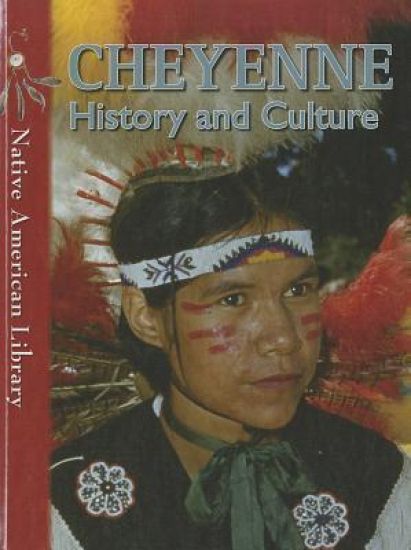
The Cheyenne Nation has overcome many challenges since their time as a powerful Great Plains tribe in the nineteenth century. They have endured through relocation, battles for land, and economic struggles. Readers discover the strength and pride of the Cheyennes through important historical facts and stories of modern reservation life. They also explore the artistic and religious life of the Cheyennes. Detailed artwork and captivating photographs help readers get a well-rounded idea of the Cheyennes and their way of life.
Observera att förlaget som ger ut denna produkt baserar innehållet i sina produkter på fria källor som Wikipedia. Boken är med stor sannolikhet endast ett utdrag ur dessa informationskällor, alltså inte en vanlig bok i den bemärkelsen.
Observera att förlaget som ger ut denna produkt baserar innehållet i sina produkter på fria källor som Wikipedia. Boken är med stor sannolikhet endast ett utdrag ur dessa informationskällor, alltså inte en vanlig bok i den bemärkelsen.
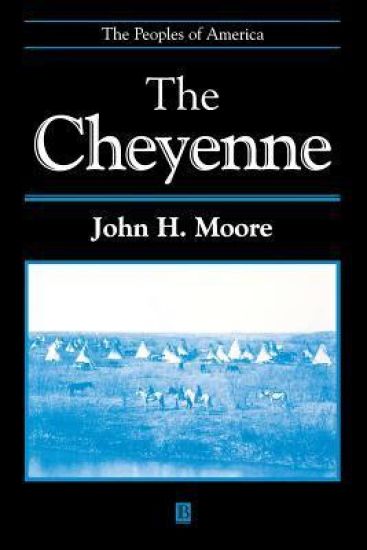
This book provides a history and ethnography of the Cheyenne people from their prehistoric origins north of the Great Lakes to their present life in the reservations in Oklahoma. It is based on archaeological material, historical and linguistic evidence and draws vividly on the oral traditions of the Cheyenne themselves.
Here are the folk tales of the Cheyenne--stories of their heroes, their wars, their relationships with supernatural powers--as told to George Bird Grinnell during the winter months in Cheyenne tipis. "Of all the books written about Indians," say Margaret Mead and Ruth L. Benzel in The Golden Age of American Anthropology, "none comes closer to their everyday life than Grinnell's classic monograph on the Cheyenne. Reading it, one can smell the buffalo grass and the wood fires, feel the heavy morning dew on the prairie."
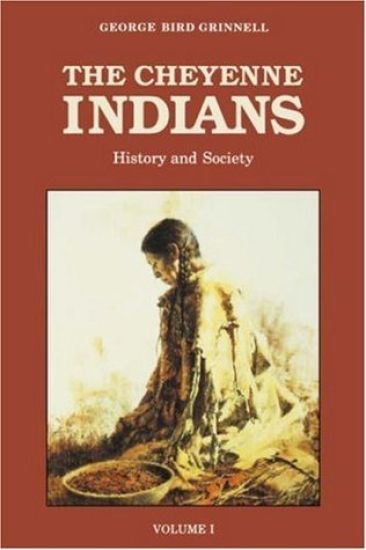
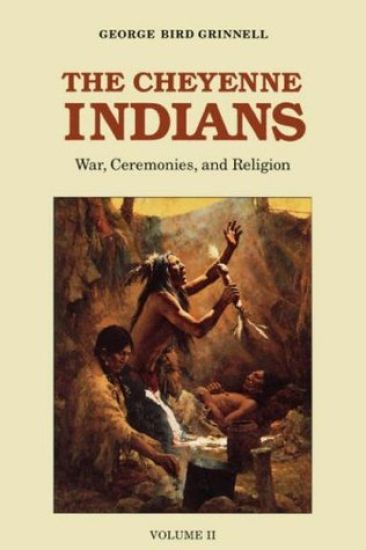
The Cheyenne Indians: Their History and Their Ways of Life is a classic ethnography, originally published in 1928, that grew out of George Bird Grinnell's long acquaintance with the Cheyennes. Volume I looks at the tribe's early history and migrations, customs, domestic life, social organization, hunting, amusements, and government. In a second volume, Grinnell would consider its warmaking and warrior societies, healing practices and responses to European diseases, religious beliefs and rituals, and legends and prophecies surrounding the culture hero Sweet Medicine.
The Cheyenne Indians: Their History and Their Ways of Life is a classic ethnography, originally published in 1928, that grew out of George Bird Grinnell's long acquaintance with the Cheyennes. In Volume I he wrote about the tribe's early history and migrations, customs, domestic life, social organization, hunting, amusements, and government. Volume II looks at its warmaking and warrior societies, healing practices and responses to European diseases, religious beliefs and rituals, and legends and prophecies surrounding the culture hero Sweet Medicine. Included are appendixes on early Cheyenne village sites, the formation of the Quilling Society, and notes on Cheyenne songs.
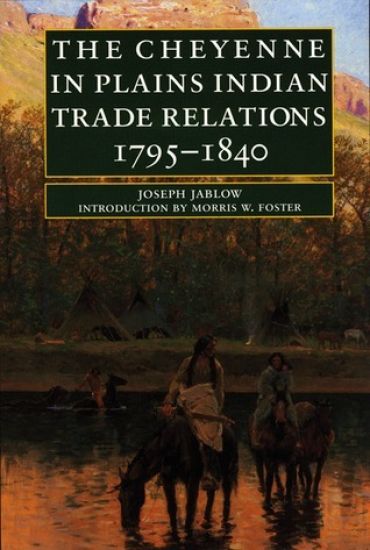
In this illuminating book, the Plains Indians come to life as shrewd traders. The Cheyennes played a vital role in an intricate and expanding barter system that connected tribes with each other and with whites. Joseph Jablow follows the Cheyennes, who by the beginning of the nineteenth century had migrated westward from their villages in present-day Minnesota into the heart of the Great Plains. Formerly horticulturists, they became nomadic hunters on horseback and, gradually, middlemen for the exchange of commodities between whites and Indian tribes. Jablow shows the effect that trading had on the lives of the Indians and outlines the tribal antagonisms that arose from the trading. He explains why the Cheyennes and the Kiowas, Comanches, and Prairie Apaches made peace among themselves in 1840. The Cheyenne in Plains Indian Trade Relations is a classic study of "the manner in which an individual tribe reacted, in terms of the trade situation, to the changing forces of history."
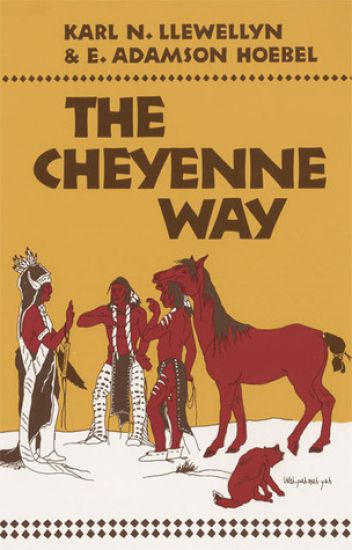
The Cheyenne Indians, in sharp contrast to other Plains tribes, are renowned for the clear sense of form and structure in their institutions. This cultural trait, together with the colorful background of the Cheyennes, attracted the unique collaboration of a legal theorist and an anthropologist, who, in this volume, provide a definitive picture of the law-ways of a primitive, nonliterate people.This foundational study of primitive law presents the folkways in law of the Cheyennes through the technique of the American case lawyer, adjusted to the requirements of the anthropologist with his scientific understanding of human behavior and realistic sociology. Particularly appealing to the general reader are the law cases themselves. Based on individual episodes that reflect the legal procedure of the Cheyennes over a period of more than sixty years, the cases are heroic narratives in the finest tradition.
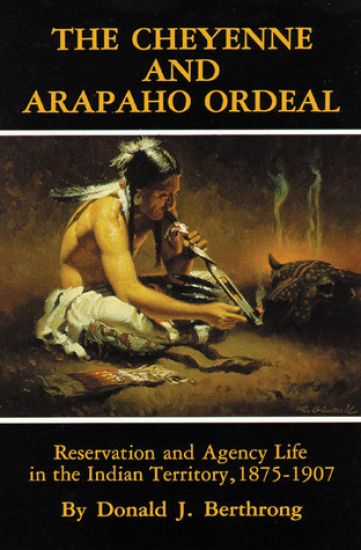
This book recounts the reservation period of the Cheyennes and the Arapahoes in western Oklahoma and the following fifteen years. It is an investigation-and an indictment-of the assimilation and reservation policies thrust upon them in the latter half of the nineteenth century, policies that succeeded only in doing enormous damage to sturdy, vital people.Confined to a reservation in the Indian Territory in 1875, the Southern Cheyennes and their neighbors, the Arapahoes, traditionally hunting and mobile societies, were forced into the federal government's image of ""educated, Christian farmer-citizens."" Lacking the support of adequate appropriations or protective legislation, the Cheyennes' lives were dominated by hunger, disease, and despair. Continuing niggardliness on the part of Congress in providing adequate agricultural equipment and instruction and an environment hostile to cultivation made agricultural self-sufficiency all but impossible.The continued reduction of their land base through allotments under the 1887 Dawes Act and later leasing and sale of land to whites further eroded the Indians' meager sources of income and security. An educational policy that left Cheyenne children without hope of jobs, the banning of traditional religious ceremonies, the prejudice of white citizens and institutions, and the undermining of the roles of head men and medicine men led to further despair.But, as the author demonstrates, despite these crushing burdens and in the face of the slow and inevitable changes in the society, the Southern Cheyennes retained their identity, a testimony to their courage and character.This well-documented, compassionate account of the ordeal of the two tribes serves as a classic example of what happened to America's Indians at the hands of the whites.
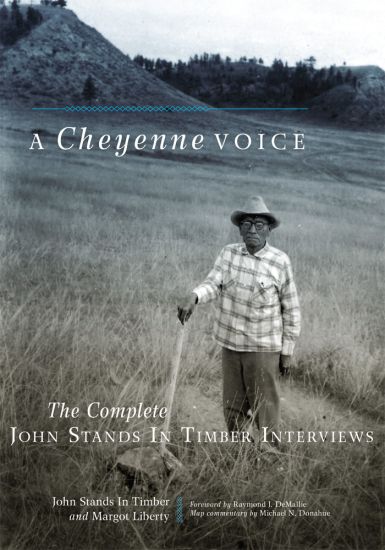
Rarely does a primary source become available that provides new and significant information about the history and culture of a famous American Indian tribe. With A Cheyenne Voice, readers now have access to a vast ethnographic and historical trove about the Cheyenne people - much of it previously unavailable.A Cheyenne Voice contains the complete transcribed interviews conducted by anthropologist Margot Liberty with Northern Cheyenne elder John Stands In Timber (1882-1967). Recorded by Liberty in 1956-1959 when she was a schoolteacher on the Northern Cheyenne Indian Reservation in southeastern Montana, the interviews were the basis of the well-known 1967 book Cheyenne Memories. While that volume is a noteworthy edited version of the interviews, this volume presents them word for word, in their entirety, for the first time. Along with memorable candid photographs, it also features a unique set of maps depicting movements by soldiers and warriors at the Battle of the Little Bighorn. Drawn by Stands In Timber himself, they are reproduced here in full color. The diverse topics that Stands In Timber addresses range from traditional stories to historical events, including the battles of Sand Creek, Rosebud, and Wounded Knee. Replete with absorbing, and sometimes even humorous, details about Cheyenne tradition, warfare, ceremony, interpersonal relations, and everyday life, the interviews enliven and enrich our understanding of the Cheyenne people and their distinct history.
The Cheyenne And The Black Hills Stage And Express Routes is a book written by Agnes Wright Spring. It is a historical account of the stagecoach and express routes that were used by the Cheyenne and other Native American tribes in the Black Hills region during the late 19th century.The book covers the period from the mid-1800s to the early 1900s and describes the various routes that were used by stagecoaches and express companies to transport goods and people across the region. It also provides a detailed account of the interactions between the Native American tribes and the stagecoach and express companies, including the conflicts and negotiations that took place.The author draws on a wide range of historical sources, including government documents, newspaper articles, and personal accounts, to provide a comprehensive and engaging narrative of this important period in American history. The book also includes a number of maps and illustrations to help readers visualize the routes and landscapes described in the text.Overall, The Cheyenne And The Black Hills Stage And Express Routes is a fascinating and informative book that will appeal to anyone interested in the history of the American West, Native American history, or the development of transportation systems in the United States.This scarce antiquarian book is a facsimile reprint of the old original and may contain some imperfections such as library marks and notations. Because we believe this work is culturally important, we have made it available as part of our commitment for protecting, preserving, and promoting the world's literature in affordable, high quality, modern editions, that are true to their original work.
The Cheyenne in Plains Indian Trade Relations, 1795-1840 is a historical book written by Joseph Jablow. It provides a detailed account of the trade relations between the Cheyenne tribe and other Plains Indian tribes during the period from 1795 to 1840. The book sheds light on the complex and dynamic nature of trade relationships among the Plains Indians, as well as the role of the Cheyenne in this trade network.Jablow's book is based on extensive research, including primary sources such as letters, diaries, and journals of traders and travelers who interacted with the Cheyenne during this time period. The author explores the economic, social, and cultural aspects of trade relations, highlighting the importance of trade in the lives of the Cheyenne and other Plains Indians.The book also examines the impact of trade on the Cheyenne's political and military relationships with other tribes, as well as with European and American traders. Jablow discusses the conflicts and alliances that arose as a result of trade, and how these interactions shaped the Cheyenne's identity and worldview.Overall, The Cheyenne in Plains Indian Trade Relations, 1795-1840 is a valuable resource for anyone interested in the history of the Plains Indians, trade relations, and the cultural and economic dynamics of Native American societies.Monographs Of The American Ethnological Society, V19.This scarce antiquarian book is a facsimile reprint of the old original and may contain some imperfections such as library marks and notations. Because we believe this work is culturally important, we have made it available as part of our commitment for protecting, preserving, and promoting the world's literature in affordable, high quality, modern editions, that are true to their original work.