Kirjojen hintavertailu. Mukana 12 390 323 kirjaa ja 12 kauppaa.

Kirjahaku

Etsi kirjoja tekijän nimen, kirjan nimen tai ISBN:n perusteella.

1000 tulosta hakusanalla Christa Wolf

Die Retrospektive Widerspiegelung Der Identitaetsentwicklung Jugendlicher Anhand Autobiographischer Romane Von Bernward Vesper, Christa Wolf Und Thomas Bernhard
Seine Subjekt- bzw. Identitatsbildung hat jeder Heranwachsende selbst zu gestalten, um als verantwortliche Persoenlichkeit im Leben zu stehen. Schriftsteller versuchen mit ihren autobiographischen Romanen, eine Hilfe zu geben. Der Verfasser konzentriert sich auf die autobiographischen Romane von Bernward Vesper, Christa Wolf und Thomas Bernhard. Aus der Retrospektive stellen sie ihre Identitatsentwicklung durch ihre Sozialisation dar, in der ihre jeweilige Wertfindung liegt und die ein universelles Stufenmodell erkennen lasst, das mit jenem des amerikanischen Padagogen Lawrence Kohlberg ubereinstimmt. Die Autobiographien verarbeiten literarisch die Wechselbeziehung zwischen Padagogik, Psychologie und Selbsterziehung. Dies geschieht durch die Schilderung von Dilemmatasituationen.
Aging and Old-Age Style in Günter Grass, Ruth Klüger, Christa Wolf, and Martin Walser
Explores the performance of aging in the "late style" of Günter Grass, Ruth Klüger, Christa Wolf, and Martin Walser. Demographers say that by the year 2060, every seventh person in Germany will be aged eighty or older, and every third person over sixty-five. The prediction for other Western countries is scarcely different. Indeed, the aging society is seen by some as a graver threat than even global warming, with potentially unmanageable tensions relating to intergenerational relationships, work and benefits, and flows of people. This book explores the representation and performance of aging in recent "late-style" German-language fiction. It situates the authors chosen as case studies -- Günter Grass, Ruth Klüger, Christa Wolf, and Martin Walser -- in their biographical and social contexts and explores the significance of their aesthetic figuring of aging for debates raging both in Germany and internationally. In particular, the book looks at gender, generations, and trauma and their impact on how writers "narrativize" aging. Finally, it examines the "timeliness" of these different representations and late-style performances of aging in the context of the shift of social, political, and economic power away from the declining societies of theWest to the ascendant societies of the East. Stuart Taberner is Professor of Contemporary German Literature, Culture, and Society at the University of Leeds.
The Quest for Christa T.

The Quest for Christa T.

Christa Wolf

Farrar, Straus and Giroux
1979
pokkari
When "The Quest for Christa T. was first published in East Germany ten years ago, there was an immediate storm: bookshops in East Berlin were given instructions to sell it only to well-known customers professionally involved in literary matters; at the annual meeting of East German Writers Conference, Mrs Wolf's new book was condemmed. Yet the novel has nothing eplicity to do with politics.
Nachdenken über Christa T

Nachdenken über Christa T

Christa Wolf

SUHRKAMP VERLAG
2007
pokkari
Nachdenken über Christa T. begründete den Weltruhm Christa Wolfs und gehört zu den wichtigsten Werken der deutschsprachigen Nachkriegsliteratur. Mit nur 36 Jahren stirbt Christa T. an Leukämie. Ihre ehemalige Schulkameradin und Studienfreundin erinnert sich an sie: an eine Frau, die der Forderung nach Anpassung ihre Phantasie, ihr Gewissen und vor allem ihre Sehnsucht nach Selbstverwirklichung entgegensetzt.
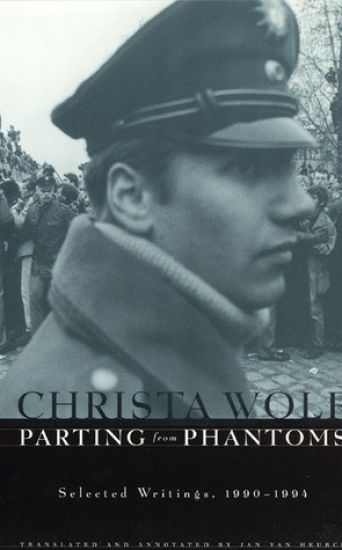
Parting from Phantoms

Parting from Phantoms

Christa Wolf

University of Chicago Press
1998
nidottu
Documenting four painful years in the life of German writer Christa Wolf, this collection of essays, letters and diary entries portrays the cultural and political situation in the former German Democratic Republic. An admired writer, Wolf was reviled after the publication of her novel "What Remains", which was attacked by the press as a belated attempt to establish herself as a victim of the Stasi (the GDR's secret police). The criticism discredited Wolf as a cultural hero in the eyes of many Germans, and plunged her into a deep personal crisis. This volume shows Wolf coming to terms with her ambiguous past and an unforgiving present. Among the writings gathered in this book are discourses with Jurgen Habermas and Gunter Grass, a series of diary entries, and a critical account of Berlin one year after unification, entitled "Whatever Happened to your Smile: Wasteland Berlin 1990". In addition, Wolf defends herself from the media campaign waged against her in Germany. The truth about the GDR, she argues, will be found in its literature, not in the security files used to discredit the GDR's culture.