Kirjojen hintavertailu. Mukana 12 390 323 kirjaa ja 12 kauppaa.

Kirjahaku

Etsi kirjoja tekijän nimen, kirjan nimen tai ISBN:n perusteella.

1000 tulosta hakusanalla Christian Monggaard

Christian Philosophy of Religion

Christian Philosophy of Religion

University of Notre Dame Press
2015
sidottu
Christian Philosophy of Religion celebrates the work and influence of Stephen T. Davis over the past four decades in philosophy of religion, philosophical theology, and biblical studies. Davis's work is characterized by the application of formal tools of philosophy for the understanding and articulation of Christian doctrine. His emphasis on argumentative clarity and logical rigor is reflected in the contributions by the sixteen internationally recognized scholars of Christian philosophical theology whose work is gathered here. The volume addresses four areas of Christian thought. Contributors to the first section—Doctrine and Christian Belief—examine the Christian doctrines of the Redemption, the Incarnation, and the Resurrection. Those in the second section—The Nature of God and Christian Belief—probe the Christian belief that God is a trinity of persons, simple, immutable, self-sufficient, and independent of all things. In the third section—Reason and Christian Belief—contributors examine, in different ways, the role that reason, evidence, and argument plays in the formation of Christian belief. Essays in the fourth and final section—Scripture, Theology, and Christian Belief—address the relation between scripture and the problem of divine hiddenness, the problem of scriptural authority, and the relation between philosophical theology and fundamental theology. This diverse and wide-ranging collection will be of serious interest to anyone studying or working in the philosophy of religion, theology, scripture studies, or religious studies. Contributors: Kelly James Clark, William Lane Craig, C. Stephen Evans, William Hasker, John Hick, Brian Leftow, Anselm K. Min, Gerald O'Collins, SJ, Alan G. Padgett, Alvin Plantinga, C. P. Ruloff, Marguerite Shuster, Eleonore Stump, Richard Swinburne, Charles Taliaferro, Dale Tuggy, Linda Zagzebski.
Christian Polemic Against the Jews in the Middle Ages, the

Christian Polemic Against the Jews in the Middle Ages, the

Gilbert Dahan

University of Notre Dame Press
1998
sidottu
Gilbert Dahan offers a compact overview of Jewish conditions in medieval Western Christendom, then moves to a discussion of the changing patterns of Christian-Jewish polemical confrontation. Dahan lays particular emphasis on the shift during the twelfth and thirteenth centuries from a fairly open exchange of views to a concerted Christian effort to convert the Jews. After establishing this context, Dahan analyzes the most common literary genres (including disputatio) in which these arguments were couched, their underlying structures and the most important recurring themes. This volume is particularly useful for its clear delineation of the historical phases of Christian polemicizing, its cogent analysis of key aspects of Christian polemical literature, and its rich citation of illustrative texts. Whether it be shared examination of the sacred texts or impassioned discussion over the theses belonging to each of the two religions, the Judeo-Christian "dispute" continued throughout the Middle Ages, and seems to be carried on in some way even in the Judeo-Christian dialogue of today.
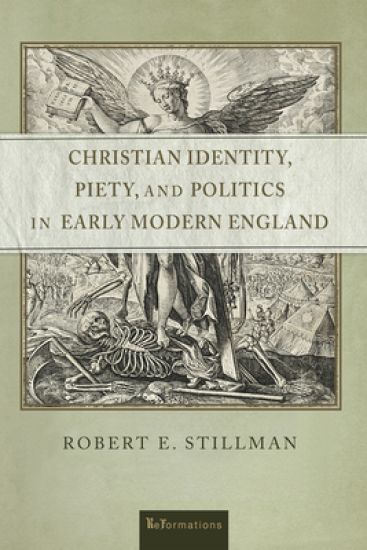
Christian Identity, Piety, and Politics in Early Modern England

Christian Identity, Piety, and Politics in Early Modern England

Robert E. Stillman

University of Notre Dame Press
2021
sidottu
This book challenges the adequacy of identifying religious identity with confessional identity. The Reformation complicated the issue of religious identity, especially among Christians for whom confessional violence at home and religious wars on the continent had made the darkness of confessionalization visible. Robert E. Stillman explores the identity of "Christians without names," as well as their agency as cultural actors in order to recover their consequence for early modern religious, political, and poetic history. Stillman argues that questions of religious identity have dominated historical and literary studies of the early modern period for over a decade. But his aim is not to resolve the controversies about early modern religious identity by negotiating new definitions of English Protestants, Catholics, or "moderate" and "radical" Puritans. Instead, he provides an understanding of the culture that produced such a heterogeneous range of believers by attending to particular figures, such as Antonio del Corro, John Harington, Henry Constable, and Aemilia Lanyer, who defined their pious identity by refusing to assume a partisan label for themselves. All of the figures in this study attempted as Christians to situate themselves beyond, between, or against particular confessions for reasons that both foreground pious motivations and inspire critical scrutiny. The desire to move beyond confessions enabled the birth of new political rhetorics promising inclusivity for the full range of England's Christians and gained special prominence in the pursuit of a still-imaginary Great Britain. Christian Identity, Piety, and Politics in Early Modern England is a book that early modern literary scholars need to read. It will also interest students and scholars of history and religion.
Christian Apologetics and Philosophy

Christian Apologetics and Philosophy

Paul Herrick

UNIVERSITY OF NOTRE DAME PRESS
2024
sidottu
A highly readable introduction to Christian apologetics that joins contemporary analytic philosophy with modern biblical scholarship. In this book, Paul Herrick presents the basics of classical Christian apologetics in the form of an inference to the best explanation argument that builds from the book's first chapter to its last. Drawing on contemporary philosophy, logic, and biblical scholarship, Herrick incorporates thoughts from Socrates, Plato, Thomas Aquinas, and C. S. Lewis, as well as scholars such as William Lane Craig, J. P. Moreland, Richard Swinburne, and Craig Blomberg, to present a multifaceted argument for the Christian faith. With sections on the Socratic method, the Christian examination of conscience, the Big Bang, miracles, the historical reliability of the New Testament, the resurrection of Christ, and more, this book promises to be useful intellectually and spiritually for seekers, doubters, and those already in the faith.
Christian Apologetics and Philosophy

Christian Apologetics and Philosophy

Paul Herrick

UNIVERSITY OF NOTRE DAME PRESS
2024
nidottu
A highly readable introduction to Christian apologetics that joins contemporary analytic philosophy with modern biblical scholarship. In this book, Paul Herrick presents the basics of classical Christian apologetics in the form of an inference to the best explanation argument that builds from the book's first chapter to its last. Drawing on contemporary philosophy, logic, and biblical scholarship, Herrick incorporates thoughts from Socrates, Plato, Thomas Aquinas, and C. S. Lewis, as well as scholars such as William Lane Craig, J. P. Moreland, Richard Swinburne, and Craig Blomberg, to present a multifaceted argument for the Christian faith. With sections on the Socratic method, the Christian examination of conscience, the Big Bang, miracles, the historical reliability of the New Testament, the resurrection of Christ, and more, this book promises to be useful intellectually and spiritually for seekers, doubters, and those already in the faith.
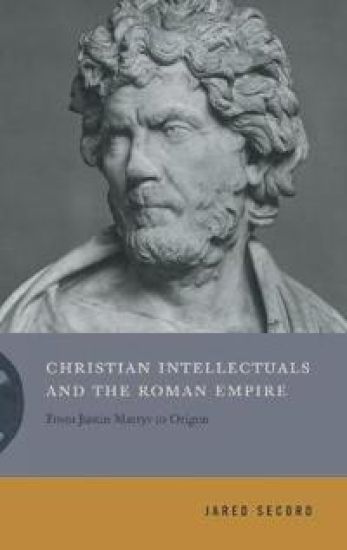
Christian Intellectuals and the Roman Empire

Christian Intellectuals and the Roman Empire

Jared Secord

Pennsylvania State University Press
2020
sidottu
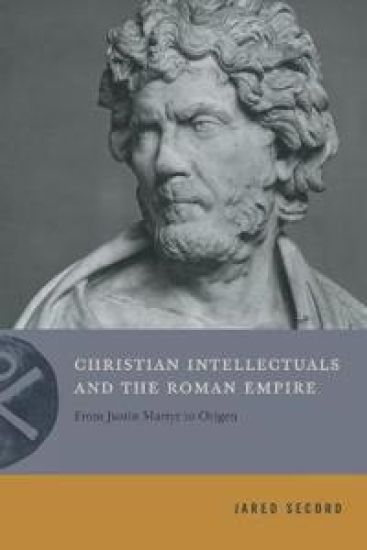
Early in the third century, a small group of Greek Christians began to gain prominence and legitimacy as intellectuals in the Roman Empire. Examining the relationship that these thinkers had with the broader Roman intelligentsia, Jared Secord contends that the success of Christian intellectualism during this period had very little to do with Christianity itself.With the recognition that Christian authors were deeply engaged with the norms and realities of Roman intellectual culture, Secord examines the thought of a succession of Christian literati that includes Justin Martyr, Tatian, Julius Africanus, and Origen, comparing each to a diverse selection of his non-Christian contemporaries. Reassessing Justin’s apologetic works, Secord reveals Christian views on martyrdom to be less distinctive than previously believed. He shows that Tatian’s views on Greek culture informed his reception by Christians as a heretic. Finally, he suggests that the successes experienced by Africanus and Origen in the third century emerged as consequences not of any change in attitude toward Christianity by imperial authorities but of a larger shift in intellectual culture and imperial policies under the Severan dynasty. Original and erudite, this volume demonstrates how distorting the myopic focus on Christianity as a religion has been in previous attempts to explain the growth and success of the Christian movement. It will stimulate new research in the study of early Christianity, classical studies, and Roman history.
Christian Intellectuals and the Roman Empire

Christian Intellectuals and the Roman Empire

Jared Secord

Pennsylvania State University Press
2022
pokkari
Early in the third century, a small group of Greek Christians began to gain prominence and legitimacy as intellectuals in the Roman Empire. Examining the relationship that these thinkers had with the broader Roman intelligentsia, Jared Secord contends that the success of Christian intellectualism during this period had very little to do with Christianity itself.With the recognition that Christian authors were deeply engaged with the norms and realities of Roman intellectual culture, Secord examines the thought of a succession of Christian literati that includes Justin Martyr, Tatian, Julius Africanus, and Origen, comparing each to a diverse selection of his non-Christian contemporaries. Reassessing Justin’s apologetic works, Secord reveals Christian views on martyrdom to be less distinctive than previously believed. He shows that Tatian’s views on Greek culture informed his reception by Christians as a heretic. Finally, he suggests that the successes experienced by Africanus and Origen in the third century emerged as consequences not of any change in attitude toward Christianity by imperial authorities but of a larger shift in intellectual culture and imperial policies under the Severan dynasty. Original and erudite, this volume demonstrates how distorting the myopic focus on Christianity as a religion has been in previous attempts to explain the growth and success of the Christian movement. It will stimulate new research in the study of early Christianity, classical studies, and Roman history.
Christian Interculture

Christian Interculture

Pennsylvania State University Press
2021
sidottu
Despite the remarkable growth of Christianity in Africa, Asia, and Latin America in the twentieth century, there is a dearth of primary material produced by these Christians. This volume explores the problem of writing the history of indigenous Christian communities in the Global South.Many such indigenous Christian groups pass along knowledge orally, and colonial forces have often not deemed their ideas and activities worth preserving. In some instances, documentation from these communities has been destroyed by people or nature. Highlighting the creative solutions that historians have found to this problem, the essays in this volume detail the strategies employed in discerning the perspectives, ideas, activities, motives, and agency of indigenous Christians. The contributors approach the problem on a case-by-case basis, acknowledging the impact of diverse geographical, cultural, political, and ecclesiastical factors.This volume will inspire historians of World Christianity to critically interrogate—and imaginatively use—existing Western and indigenous documentary material in writing the history of Christianity in Asia, Africa, the Americas, and Oceania.In addition to the editor, the contributors to this volume include J. J. Carney, Adrian Hermann, Paul Kollman, Kenneth Mills, Esther Mombo, Mrinalini Sebastian, Christopher Vecsey, Haruko Nawata Ward, and Yanna Yannakakis.
Christian Interculture

Christian Interculture

Pennsylvania State University Press
2023
pokkari
Despite the remarkable growth of Christianity in Africa, Asia, and Latin America in the twentieth century, there is a dearth of primary material produced by these Christians. This volume explores the problem of writing the history of indigenous Christian communities in the Global South.Many such indigenous Christian groups pass along knowledge orally, and colonial forces have often not deemed their ideas and activities worth preserving. In some instances, documentation from these communities has been destroyed by people or nature. Highlighting the creative solutions that historians have found to this problem, the essays in this volume detail the strategies employed in discerning the perspectives, ideas, activities, motives, and agency of indigenous Christians. The contributors approach the problem on a case-by-case basis, acknowledging the impact of diverse geographical, cultural, political, and ecclesiastical factors.This volume will inspire historians of World Christianity to critically interrogate—and imaginatively use—existing Western and indigenous documentary material in writing the history of Christianity in Asia, Africa, the Americas, and Oceania.In addition to the editor, the contributors to this volume include J. J. Carney, Adrian Hermann, Paul Kollman, Kenneth Mills, Esther Mombo, Mrinalini Sebastian, Christopher Vecsey, Haruko Nawata Ward, and Yanna Yannakakis.
Christian Missionaries, Ethnicity, and State Control in Globalized Yunnan

Christian Missionaries, Ethnicity, and State Control in Globalized Yunnan

Gideon Elazar

Pennsylvania State University Press
2023
sidottu
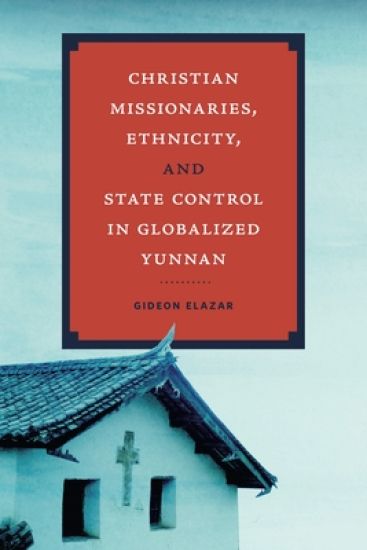
Following the Communist Revolution of 1949, missionaries were kicked out of China and proselytizing was outlawed. However, since the beginning of the reform era, China has witnessed a massive return of missionary workers. Today there are more Christians in church on a given Sunday in China than anywhere else on the globe.This book investigates the interaction of Western missionaries, ethnic minorities, and Han Chinese converts with the Chinese state in an increasingly globalized China. Based on extensive ethnographic fieldwork conducted in Yunnan, it tries to make sense of the disparity between official state rhetoric and everyday reality. Examining morality in the context of the free-market system, spatial practices, linguistic activity, and Christian welfare organizations, Gideon Elazar reveals the ways in which the previously conflicting Communist Party and Christian “civilizing projects” have reached a measure of convergence, enabling local authorities to treat missionaries with a degree of tolerance. Elazar shows how this unofficial arrangement relates to the social realities and challenges of the reform era, including ethnic culture and identity, Yunnan’s many social problems, and the integration of ethnic minorities into the state system.By exploring the continuously shifting social and religious borders negotiated by converts, missionaries, and state authorities in Southwest China, this book sheds light on the larger issue of contemporary religion in China’s global era. It will be of interest to researchers of religion, Christianity, and minority groups in the People’s Republic of China.
Christian Missionaries, Ethnicity, and State Control in Globalized Yunnan

Christian Missionaries, Ethnicity, and State Control in Globalized Yunnan

Gideon Elazar

Pennsylvania State University Press
2025
pokkari
Following the Communist Revolution of 1949, missionaries were kicked out of China and proselytizing was outlawed. However, since the beginning of the reform era, China has witnessed a massive return of missionary workers. Today there are more Christians in church on a given Sunday in China than anywhere else on the globe.This book investigates the interaction of Western missionaries, ethnic minorities, and Han Chinese converts with the Chinese state in an increasingly globalized China. Based on extensive ethnographic fieldwork conducted in Yunnan, it tries to make sense of the disparity between official state rhetoric and everyday reality. Examining morality in the context of the free-market system, spatial practices, linguistic activity, and Christian welfare organizations, Gideon Elazar reveals the ways in which the previously conflicting Communist Party and Christian “civilizing projects” have reached a measure of convergence, enabling local authorities to treat missionaries with a degree of tolerance. Elazar shows how this unofficial arrangement relates to the social realities and challenges of the reform era, including ethnic culture and identity, Yunnan’s many social problems, and the integration of ethnic minorities into the state system.By exploring the continuously shifting social and religious borders negotiated by converts, missionaries, and state authorities in Southwest China, this book sheds light on the larger issue of contemporary religion in China’s global era. It will be of interest to researchers of religion, Christianity, and minority groups in the People’s Republic of China.
Christian Communities in Jerusalem and the West Bank Since 1948
Little has been written on Palestinian society and almost nothing on the Christian communities. This book aims to fill that gap: to portray this unknown segment of Palestinian society and to describe the rich mosaic of the religious communities in Jerusalem. The work deals with the various aspects and problems of this minority within a minority--such as emigration, integration within the surrounding society, and the Christian Churches' position within the national states of Jordan and Israel. A major section deals with the Christians during the Intifada: the extent of their participation and involvement in it, as well as their national dilemma and search for identity.This work will be of interest to scholars and students in Middle Eastern studies, specifically the religious and social history of the Middle East.
Christian Missionizing and Social Transformation

Christian Missionizing and Social Transformation

Jack Nelson

Praeger Publishers Inc
1992
sidottu
This volume represents a case study of African responses to American missionary efforts in colonial and post-colonial Zaire. Jack Nelson describes how conflict emerged when missionary attempts to control the rate and nature of change and to protect the church community from corrupting Western influences confronted African aspirations to overcome foreign domination through education and economic means. Nelson relates an account of social forces transforming the missionaries' designs in the midst of colonial efforts, the encroachment of a cash economy, the rise of nationalism and political struggles, and the formation of social classes. As a sociology of religion study, Christian Missionizing and Social Transformation analyzes both the changing social context in which a very prominent church community in Zaire was founded and developed and how the dynamics of change influenced African responses to missionary educational and evangelizing efforts. As a historical study, it documents one of the most severe struggles between a church community and a mission organization that occurred in the wake of Zairian independence. As a critique of American missionary practices, the study probes the ideals of a popular philosophy of mission and the reality of the implementation of that philosophy. As a study of the nature of the difficulties and conflicts within an African church, it offers considerable insight into the manner in which Africans are coping with the missionary legacy, the professionalizing of African clergy, the church as a development organization, and the ongoing efforts on the part of African theological students to produce an indigenous theology.
Christian Voices

Christian Voices

Charlene Floyd

Praeger Publishers Inc
2007
sidottu
Today, religion plays a significant role in the political positions people take on a number of important issues: stem cell research, abortion, right to life, gay marriage, etc. But how do people of the same faith come to radically different conclusions and positions on these issues? How has the right convinced a majority of evangelical Christians that there is a Biblical mandate to oppose abortion, stem cell research, and gay marriage? Or, why do progressive Christians believe they are called to be the voice of the voiceless, to advocate for the poor and to challenge aggressive foreign policy? This book gives voice to politically active Protestant Christians with an eye toward understanding how people who share the same scriptures, hymns, prayers, and creeds arrive at and embrace radically different political perspectives. Floyd explores the notion of agenda-setting within Christian communities (left and right) and provides an in-depth look at the lives of a small but diverse number of politically active, committed Christians.In their own words, Protestants across the country explain how they arrive at their political opinions. The thoughts, the ideas, the reasons for celebrating and the causes of despair, will be familiar—at times painfully so—to many. Reading these profiles one may begin to answer those basic questions: how can they call themselves Christian? and how could they possibly have voted for him?. Beginning with a brief overview of religion and politics in the United States and a discussion of recent developments (2001-2005), serious consideration of the key themes raised by the profile chapters follow. These include theology, practice, and connect/disconnect with society (particularly the group/individual's perception of its/their relationship to the world at large). Each chapter describes a different group of people whose political lives have been shaped by their faith and who are willing to think about and talk about their ideas. They take into consideration personal histories, education, work, family and friends, and explore how religious beliefs have shaped people's lives, especially with regard to political decision-making. Extensive interviews allow the voices of those profiled to be clearly heard.
Christian Assemblies Prim School
This text is packed with practical ideas for lively worship in class or whole-school assemblies. Backed up by classroom activities, readings and follow-up work across the curriculum, the assemblies are written in a lively style and offer a variety of resources for different situations.
Christian Meditation

Christian Meditation

Jim Finley

SPCK Publishing
2004
nidottu
This text introduces an ancient practice to a contemporary audience, teaching readers to expand, or begin, their meditation practices in union with their faith and helping them discover that divine moments of awakened consciousness can lead to a deeper connection with Christ.
Christian Tradition And The Practic
Nicholas Sagovsky explores 'justice' through its concrete expressions and through the reflection on those expressions within the tradition of the Christian community. He also engages with notions and practices of justice that make no reference to religious belief but are present and powerful in the public domain today.The book looks at the Greeks - not only the philosophers but the storytellers, poets, playwrights and historians - and at Augustine, Aquinas and Rawls. Its principal strands are the maximization of liberty, the existence of a system of law, the necessity to meet needs, and responsible action. It concludes with a moving chapter on justice and the Eucharist.