Kirjojen hintavertailu. Mukana 11 342 296 kirjaa ja 12 kauppaa.

Kirjahaku

Etsi kirjoja tekijän nimen, kirjan nimen tai ISBN:n perusteella.

1000 tulosta hakusanalla Christopher Clark

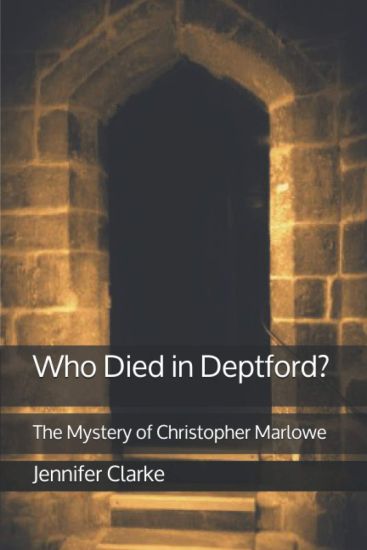
Who Died in Deptford?: The Mystery of Christopher Marlowe

Who Died in Deptford?: The Mystery of Christopher Marlowe

Jennifer Clarke

Independently Published
2019
nidottu
An investigation into the supposed death of Christopher Marlowe, and how he could have survived the attack in Deptford in May 1593. The controversy of Marlowe's death has lasted five centuries. Who Died in Deptford? investigates not only the murder on Deptford Strand but also the relationship between Shakespeare and Marlowe, Marlowe's spying career, his importance in Walsingham's secret service and the cause of Richard Baines hatred of Marlowe. This book presents a new and revolutionary theory as to the Shakespeare-Marlowe connection, the events in Vlissingen, Kyd's arrest and the Baines Note, and the outcome of the conspiracy at Mistress Bull's house in Deptford, which will change the view of Marlowe and Shakespeare forever.
Kaiser Wilhelm II

Kaiser Wilhelm II

Christopher (St Catherine'S College Clark

Longman
2000
nidottu
Kaiser Wilhelm II is one of the key figures in the history of twentieth-century Europe: King of Prussia and German Emperor from 1888 to the collapse of Germany in 1918 and a crucial player in the events that led to the outbreak of World War I. Following Kaiser Wilhelm's political career from his youth at the Hohenzollern court through the turbulent peacetime decades of the Wilhelmine era into global war and exile, the book presents a new interpretation of this controversial monarch and assesses the impact on Germany of his forty-year reign.
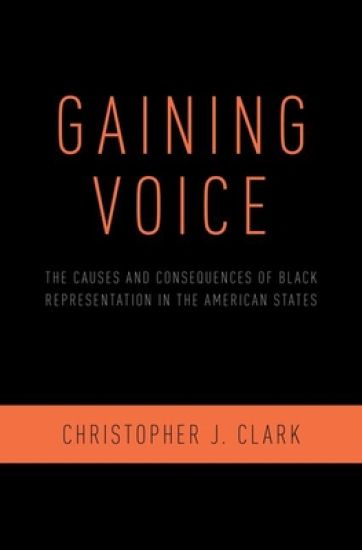
Gaining Voice

Gaining Voice

Christopher J. Clark

Oxford University Press Inc
2019
sidottu
Scholars studying the causes and consequences of political representation, particularly in terms of gender and race, often turn to a concept called descriptive representation. Descriptive representation tells us the degree to which elected officials resemble their constituents, and whether such a resemblance has a bearing on the way they legislate. In other words, do people vote for candidates of their same racial/ethnic background or gender? If they do, does this affect the type of policies an elected official pursues? Further, if citizens see people who look like them in office, does it have an effect on their political attitudes and participation? In this book, Christopher J. Clark argues that descriptive representation is a more multi-faceted phenomenon than previously shown, particularly when observed at the state level. He contends that black political involvement, political attitudes, and public opinion are contingent on more than being represented by a single black elected official. Rather, they hinge on the proportion of African Americans making up a state legislature--what Clark terms "black seat share"--as well as the degree to which that proportion reflects the demographic makeup of the state. As well, Clark pinpoints the critical mass of African American legislators necessary to initiate the creation of black caucuses, an important institution for minority representation. Clark bases his study on an examination of black representation in state legislatures between 1966 and 2010, looking particularly at black political opinion and involvement in the development of welfare and education policy.
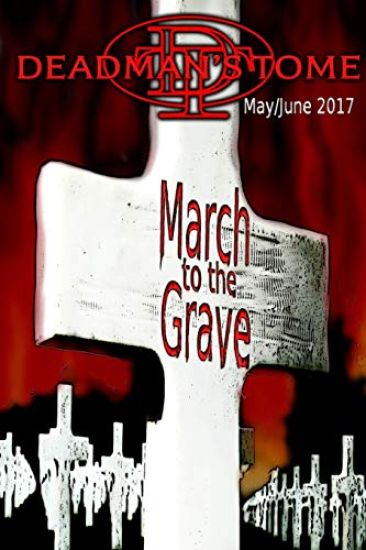
March to the Grave

March to the Grave

Christopher Pulo; Pete Clark; David J Wing

Lulu.com
2017
pokkari
March to the Grave is a very grim look at the horrors of war. Red Roses and White Flags delves deep into PTSD delirium. No Man's Land follows a fatally wounded soldier and tells of the importance of brotherhood. A Light Just Out of Range explores the chaotic and deplorable conditions of trench warfare. They Can Never Find Out might evoke empathy for a NAZI paranormal team. Guilt weighs heavy in The Blue Light as a wounded marine is haunted by the death of a child on the battlefield. Across The White Desert puts a small team against an unknown evil. Aftermath, the last story in this issue, is a clever parallel that I think would resonate with most veterans.
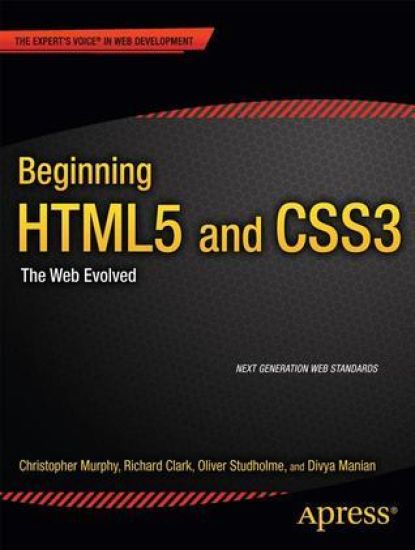
Beginning HTML5 and CSS3

Beginning HTML5 and CSS3

Christopher Murphy; Richard Clark; Oliver Studholme; Divya Manian

APress
2012
nidottu
Beginning HTML5 and CSS3 is your introduction to the new features and elements of HTML5—as a web developer you'll learn about all the leaner, cleaner, and more efficient code available now with HTML5, along with some new tools that will allow you to create more meaningful and richer content. For everyone involved in web design, this book also introduces the new structural integrity and styling flexibility of CSS 3—which means better-looking pages and smarter content in your website projects. For all forward-looking web professionals who want to start enjoying and deploying the new HTML5 and CSS3 features right away, this book provides you with an in-depth look at the new capabilities—including audio and video—that are new to web standards. You’ll learn about the new HTML5 structural sections, plus HTML5 and CSS3 layouts. You’ll also discover why some people think HTML5 is going to be a Flash killer, when you see how to create transitions and animations with these new technologies. So get ahead in your web development through the practical, step-by-step approaches offered to you in Beginning HTML5 and CSS3.
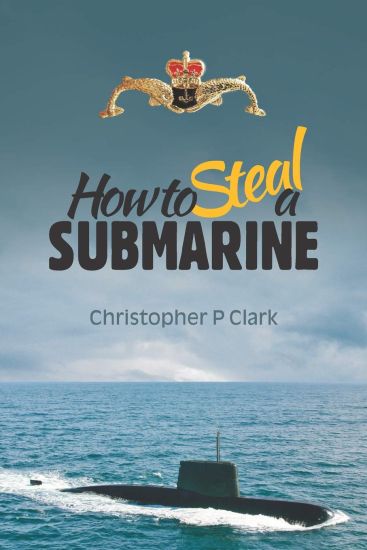
How to Steal a Submarine.

How to Steal a Submarine.

Christopher P. Clark

Independently Published
2018
nidottu
How to Steal a Submarine.Mr John Smith is an adopted son of a fabulously rich Lord but was ousted from the family when his father died. Having studied physics and hydrodynamics his passion was underwater travel and he was facinated with the achievements of the Russians, in their development of the super-cavitation torpedo about 15 years previously, with a speed of 200 Knots. John wanted to develop his own torpedo and extend the technology to a Nuclear Submarine thereby producing a super-cavitation Submarine that could travel at incredibly high speeds. Mr John Smith joined the Royal Navy and did produce his high-speed torpedo. He was transferred to the United States Navy where he eventually qualified as a Submarine Captain. He continued with his design and eventually an agreement was arrived at, between the US and UK governments, to build this radical submarine under the guidance of John. The Submarine would be built in Philadelphia and intended for the Royal Navy.Nearing build completion John became disillusioned and missed the wealth he enjoyed during his younger years. He was offered an enormous amount of money, by an agent of a third-party country, to steal the submarine. The plan was to incapacitate the crew and deliver the Submarine to a modified super-tanker.John had to select the 'doomed' crew and 8 accomplices who were given a fortune for their part of the plot. I joined the submarine as the senior Chief Petty Officer in the propulsion department. I formed part of a combined US and UK crew that sailed the vessel from Philadelphia and carried out initial sea trials. Once in the UK the new, all British, crew joined a took control of the Submarine. I was reunited with two old friends who were strangely very standoffish towards me. These two were part of John Smith's mutinous crew and knew they would be partly responsible for my death and so had to deal with that guilt.I had a serious drinking problem and had to maintain a high level of alcohol intake. Because of my senior position I could satisfy my needs without detection. Because of my problem I was able to thwart the theft of the Submarine and escape from it. There is a surprising twist to the end of this story.A cunning plot unfolds of how a Nuclear Submarine's crew can be incapacitated by a few, and the Submarine becoming lost to the nation. However, the most disturbing feature of this story is it could easily become reality.
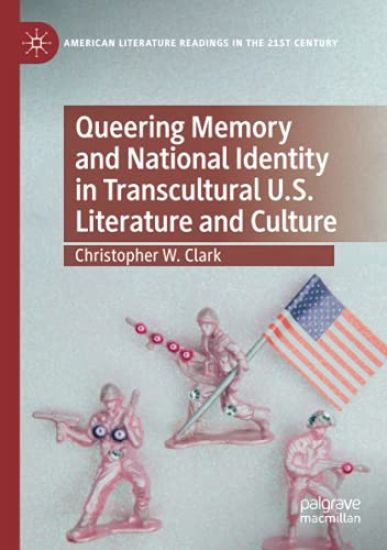
Queering Memory and National Identity in Transcultural U.S. Literature and Culture
This book examines the queer implications of memory and nationhood in transcultural U.S. literature and culture. Through an analysis of art and photography responding to the U.S. domestic response to 9/11, Iraq war fiction, representations of Abu Ghraib and Guantánamo Bay, and migrant fiction in the twenty-first century, Christopher W. Clark creates a queer archive of transcultural U.S. texts as a way of destabilizing heteronormativity and thinking about productive spaces of queer world-building. Drawing on the fields of transcultural memory, queer studies, and transculturalism, this book raises important questions of queer bodies and subjecthood. Clark traces their legacies through texts by Sinan Antoon, Mohamedou Ould Slahi among others, alongside film and photography that includes artists such as Nina Berman and Hasan Elahi. In all, the book queers forms of cultural memory and national identity to uncover the traces of injury but also spaces of regeneration.
Queering Memory and National Identity in Transcultural U.S. Literature and Culture
This book examines the queer implications of memory and nationhood in transcultural U.S. literature and culture. Through an analysis of art and photography responding to the U.S. domestic response to 9/11, Iraq war fiction, representations of Abu Ghraib and Guantánamo Bay, and migrant fiction in the twenty-first century, Christopher W. Clark creates a queer archive of transcultural U.S. texts as a way of destabilizing heteronormativity and thinking about productive spaces of queer world-building. Drawing on the fields of transcultural memory, queer studies, and transculturalism, this book raises important questions of queer bodies and subjecthood. Clark traces their legacies through texts by Sinan Antoon, Mohamedou Ould Slahi among others, alongside film and photography that includes artists such as Nina Berman and Hasan Elahi. In all, the book queers forms of cultural memory and national identity to uncover the traces of injury but also spaces of regeneration.