

Kirjahaku
Etsi kirjoja tekijän nimen, kirjan nimen tai ISBN:n perusteella.
1000 tulosta hakusanalla Clarence L. Partee
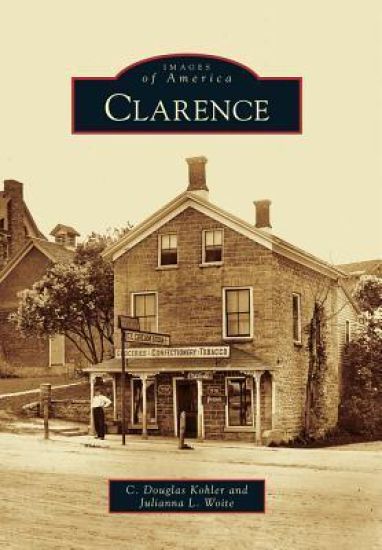
Located 12 miles northeast of Buffalo, Clarence is proud to be both a bustling suburb and the oldest town in Erie County. When the Town of Clarence was formed on March 11, 1808, it incorporated six settlements: Clarence Hollow, Harris Hill, Clarence Center, Wolcottsburg, Swormville, and East Amherst. Four years later, this area played a vital role in the War of 1812 by providing men for the American militia and housing refuges after the burning of Buffalo. During the 200 years since, Clarence has thrived as an agricultural community. Grown from such pioneer families as Van Tine, Harris, Ransom, Eshelman, Parker, and Lapp, Clarence remains home to 30,000 residents and has housed notable personalities like Wilson Greatbatch and Joan Baez. Clarence has featured the businesses of the National Gypsum Company and Greatbatch Industries and proudly boasts historical icons, such as the Spoor Hotel and the Goodrich-Landow Log Cabin.

Clarence Gagnon the Maria Chapdelaine Illustrations
Pomegranate Communications Inc,US
2020
sidottu

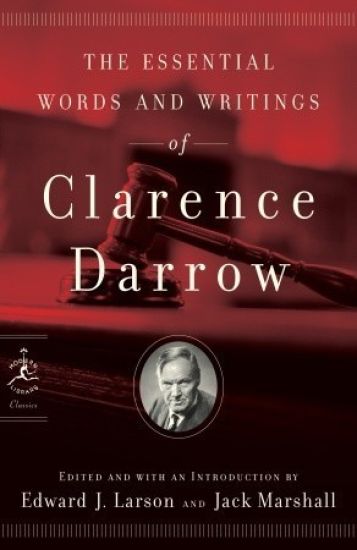
Winner of the Los Angeles Times Book Prize for Biography The definitive biography of Clarence Darrow, the brilliant, idiosyncratic lawyer who defended John Scopes in the "Monkey Trial" and gave voice to the populist masses at the turn of the twentieth century, thus changing American law forever. Amidst the tumult of the industrial age and the progressive era, Clarence Darrow became America's greatest defense attorney, successfully championing poor workers, blacks, and social and political outcasts, against big business, fundamentalist religion, Jim Crow, and the US government. His courtroom style--a mixture of passion, improvisation, charm, and tactical genius--won miraculous reprieves for men doomed to hang. In Farrell's hands, Darrow is a Byronic figure, a renegade whose commitment to liberty led him to heroic courtroom battles and legal trickery alike.
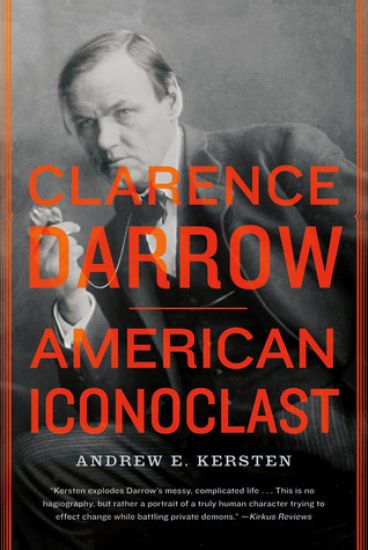
Clarence Darrow is best remembered as the defense attorney in some of the most famous (and infamous) cases in American legal history. With his brilliant closing argument that saved the thrill killers Leopold and Loeb from the gallows and his impassioned defense of John T. Scopes's right to teach evolution in the classroom, Darrow became a legend even in his own time. But such a towering reputation often obscures the man behind it, and attempts to shoehorn him into a single political party due to his long association with the labor movement have only further muddled his legacy. As the historian Andrew E. Kersten shows in this insightful biography of America's most celebrated lawyer, neither Darrow's courtroom performances nor his politics define his career or enduring importance. Going well beyond the familiar story of the socially conscious lawyer and drawing upon new archival records, Kersten reveals that Darrow was an iconoclast driven by the rising interference of corporations and government in ordinary working Americans' lives. In the face of the country's inexorable march toward modernity, Darrow dedicated himself to smashing systems of social control, fighting for liberty and individualism everywhere he went.
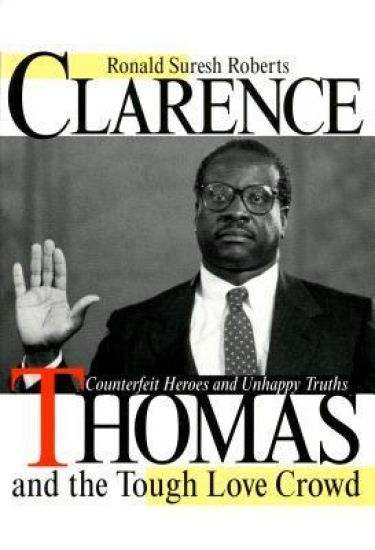
Clarence Thomas and the Tough Love Crowd
Ronald Suresh Roberts
New York University Press
1994
sidottu
In recent years, black neoconservatism has captured the national imagination. Clarence Thomas sits on the Supreme Court. Stephen Carter's opinions on topics ranging from religion to the confirmation process are widely quoted. The New Republic has written that black neoconservative Thomas Sowell was having a greater influence on the discussion of matters of race and ethnicity than any other writer of the past ten years. In this compelling and vividly argued book, Ronald Roberts reveals how this attention has turned an eccentricity into a movement. Black neoconservatives, Roberts believes, have no real constituency but, as was the case with Clarence Thomas, are held up?and proclaim themselves?as simply and ruthlessly honest, as above mere self-interest and crude political loyalties. They profess a concern for those they criticize, claiming to possess an objective truth which sets them apart from their critics in the establishment Left. They claim to be outsiders even while sustained by the culture's most powerful institutions. As they level attacks at the activist organizations they perceive as moribund, every significant argument they advance rests on fervent mantras of harsh truths and simple realities. Enlisting the ideal of impartiality as a partisan weapon, this Tough Love Crowd has elevated the familiar wisdom of Spare the rod and spoil the child to the arena of national politics. Turning to their own writings and proclamations, Roberts here serves up a devastating critique of such figures as Clarence Thomas, Shelby Steele, Stephen Carter, and V. S. Naipaul (Tough Love International). Clarence Thomas and the Tough Love Crowd marks the emergence of a provocative and powerful voice on our cultural and political landscape, a voice which holds those who subscribe to this polemically powerful ideology accountable for their opinions and actions.
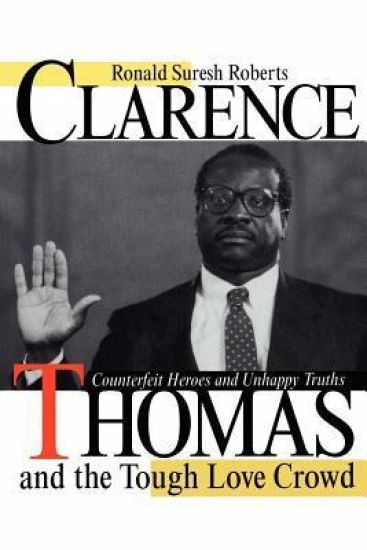
Clarence Thomas and the Tough Love Crowd
Ronald Suresh Roberts
New York University Press
1996
pokkari
In recent years, black neoconservatism has captured the national imagination. Clarence Thomas sits on the Supreme Court. Stephen Carter's opinions on topics ranging from religion to the confirmation process are widely quoted. The New Republic has written that black neoconservative Thomas Sowell was having a greater influence on the discussion of matters of race and ethnicity than any other writer of the past ten years. In this compelling and vividly argued book, Ronald Roberts reveals how this attention has turned an eccentricity into a movement. Black neoconservatives, Roberts believes, have no real constituency but, as was the case with Clarence Thomas, are held up?and proclaim themselves?as simply and ruthlessly honest, as above mere self-interest and crude political loyalties. They profess a concern for those they criticize, claiming to possess an objective truth which sets them apart from their critics in the establishment Left. They claim to be outsiders even while sustained by the culture's most powerful institutions. As they level attacks at the activist organizations they perceive as moribund, every significant argument they advance rests on fervent mantras of harsh truths and simple realities. Enlisting the ideal of impartiality as a partisan weapon, this Tough Love Crowd has elevated the familiar wisdom of Spare the rod and spoil the child to the arena of national politics. Turning to their own writings and proclamations, Roberts here serves up a devastating critique of such figures as Clarence Thomas, Shelby Steele, Stephen Carter, and V. S. Naipaul (Tough Love International). Clarence Thomas and the Tough Love Crowd marks the emergence of a provocative and powerful voice on our cultural and political landscape, a voice which holds those who subscribe to this polemically powerful ideology accountable for their opinions and actions.

The Tennessee, Green and Lower Ohio Rivers Expeditions of Clarence Bloomfield Moore
Clarence Bloomfield Moore
The University of Alabama Press
2002
nidottu
This oversized reprint volume presents original materials from Moore's northernmost expeditions conducted in the early 1900s as he surveyed areas of potential archaeological interest in the southeastern United States. Some of the sites he found were later targeted for major excavations during the days of the WPA/CCC. Many National Register Historic Sites are today located along the rivers he explored in this work. In many cases, however, Moore's report documents sites since destroyed by river action or by lake impoundments behind hydroelectric dams or by looters. As with all Moore's other investigations, his thorough documentation and collaboration with other scholars advanced understanding of aboriginal peoples and fueled debate among the experts. For instance, more than 296 burials were recovered from Indian Knoll on the Green River in Kentucky. Some graves included ceremonially ""killed"" artifacts, dogs buried with both adults and children, and exotic materials leading to speculations concerning origins, usage, and trade networks. Stone box graves were widespread and somewhat exclusive to this area, giving rise to early assumptions regarding kinship between scattered modern Indian tribes. Richard Polhemus has compiled a comprehensive inventory of Moore's work in Tennessee, Alabama, Mississippi and Kentucky and written a concise introduction to place the work in context. In so doing, he has made available to contemporary scholars of history, archaeology, and anthropology a trove of resource material on one of the most archaeologically rich and artifact-diverse regions in the nation.
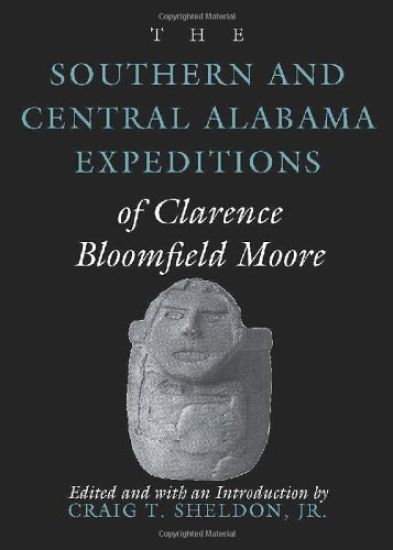
The Southern and Central Alabama Expeditions of Clarence Bloomfield Moore
Clarence Moore
The University of Alabama Press
2001
nidottu
Covering 19 years of excavations, this volume provides an invaluable collection of Moore's pioneering archaeological investigations along Alabama's waterways. In 1996, The University of Alabama Press published The Moundville Expeditions of Clarence Bloomfield Moore, which covered a large part of Moore's early archaeological expeditions to the state of Alabama. This volume collects the balance of Moore's Alabama expeditions, with the exception of those Moore made along the Tennessee River, which will be collected in another, forthcoming volume focusing on the Tennessee basin. This volume includes: Certain Aboriginal Remains of the Alabama River (1899); Certain Aboriginal Remains of the Tombigbee River(1901); a portion of Certain Aboriginal Remains of the Northwest Florida Coast (1901); The So-Called 'Hoe-Shaped Implement' (1903); Aboriginal Urn-Burial in the United States (1904); A Form of Urn-Burial on Mobile Bay (1905); Certain Aboriginal Remains of the Lower Tombigbee River (1905); Certain Aboriginal Remains on Mobile Bay and on Mississippi Sound (1905); a portion of Mounds of the Lower Chattahoochee and Lower Flint Rivers (1907); a portion of The Northwest Florida Coast Revisited(1918). Craig Sheldon's comprehensive introduction focuses both on the Moore expeditions and on subsequent archaeological excavations at sites investigated by Moore. Sheldon places Moore's archaeological work in the context of his times and against the backdrop of similar investigations in the Southeast. Sheldon discusses practical matters, such as the various assistants Moore employed and their roles in these historic expeditions. He provides brief vignettes of daily life on the Gopher and describes Moore's work habits, revealing professional and personal biographical details previously unknown about this enigmatic archaeologist.
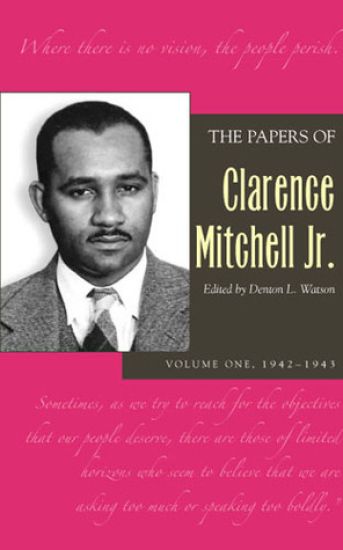
The Papers of Clarence Mitchell Jr., Volume I
Clarence Mitchell Jr.
Ohio University Press
2005
sidottu
Clarence Mitchell Jr. was the driving force in the movement for passage of civil rights laws in America. The foundation for Mitchell's struggle was laid during his tenure at the Fair Employment Practice Committee, where he led implementation of President Roosevelt's policy barring racial discrimination in employment in the national defense and war industry programs. Mitchell's FEPC reports and memoranda chart the beginning of the modern civil rights movement. The first two volumes of a projected five-volume documentary edition of The Papers of Clarence Mitchell Jr. illuminate the FEPC's work as a federal affirmative-action agency and the government's struggle to enforce the nation's antidiscrimination policy in industry, federal agencies, and labor unions. Subsequent volumes will trace Mitchell's successive enlistment of seven presidents in establishing and enforcing a permanent national nondiscrimination policy. Through his efforts, Congress passed the 1957, 1960, and 1964 Civil Rights Acts prohibiting discrimination in public accommodations, federal spending, and employment based on race, color, sex, and national origin; the 1965 Voting Rights Act; and the 1968 Fair Housing Act. Editor Denton L. Watson introduces and annotates Mitchell's writings, providing context and insight for students and scholars of civil rights history, government, law, and sociology.
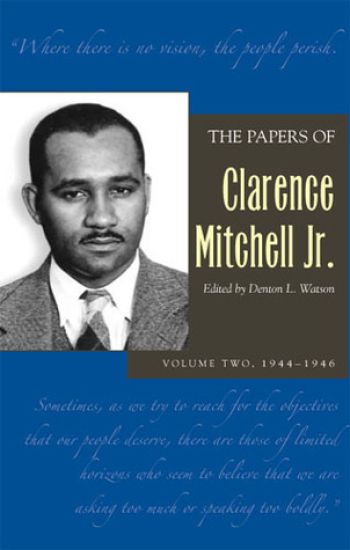
The Papers of Clarence Mitchell Jr., Volume II
Clarence Mitchell Jr.
Ohio University Press
2005
sidottu
Clarence Mitchell Jr. was the driving force in the movement for passage of civil rights laws in America. The foundation for Mitchell's struggle was laid during his tenure at the Fair Employment Practice Committee, where he led implementation of President Roosevelt's policy barring racial discrimination in employment in the national defense and war industry programs. Mitchell's FEPC reports and memoranda chart the beginning of the modern civil rights movement. The first two volumes of a projected five-volume documentary edition of The Papers of Clarence Mitchell Jr. illuminate the FEPC's work as a federal affirmative-action agency and the government's struggle to enforce the nation's antidiscrimination policy in industry, federal agencies, and labor unions. Subsequent volumes will trace Mitchell's successive enlistment of seven presidents in establishing and enforcing a permanent national nondiscrimination policy. Through his efforts, Congress passed the 1957, 1960, and 1964 Civil Rights Acts prohibiting discrimination in public accommodations, federal spending, and employment based on race, color, sex, and national origin; the 1965 Voting Rights Act; and the 1968 Fair Housing Act. Editor Denton L. Watson introduces and annotates Mitchell's writings, providing context and insight for students and scholars of civil rights history, government, law, and sociology.

The Papers of Clarence Mitchell Jr., Volume III
Clarence Mitchell Jr.
Ohio University Press
2010
sidottu
Born in Baltimore in 1911, Clarence Mitchell Jr. led the struggle for passage of the 1957 Civil Rights Act, the 1960 Civil Rights Act, the 1964 Civil Rights Act, the 1965 Voting Rights Act, and the 1968 Fair Housing Act. Volumes I (1942–1943) and II (1944–1946) of The Papers of Clarence Mitchell Jr., edited and annotated by Denton L. Watson, document the creation of the Fair Employment Practice Committee and its struggles to end discrimination in the war industries under the leadership of President Franklin D. Roosevelt Jr. Mitchell launched his career with the NAACP as a messianic advocate for the passage of civil rights laws by first creating programs for eliminating discriminatory employment practices in industry, labor unions, and the government. His subsequent focus included the NAACP's struggles to end segregation in the armed services and to eliminate Jim Crow in navy yards, schools on military posts, veterans hospitals, atomic energy installations, government restaurants, and many other federal establishments. Those struggles are carefully documented in the monthly and annual reports of the NAACP Labor Department and the NAACP Washington Bureau from 1946 to 1950 and from 1951 to 1954, which comprise companion volumes III and IV of The Papers of Clarence Mitchell Jr. The volumes are extensively supported by other documents in the appendix from the NAACP's archives. Volumes III and IV, furthermore, document the manner in which the NAACP utilized the newly created Leadership Conference on Civil Rights, a broad-based coalition of civil rights, civic, fraternal, labor, and religious organizations, in conjunction with the organization's branches, as its political fulcrum in implementing its developing legislative program in Congress. These volumes are an invaluable reference in tracing the NAACP's multifaceted struggle under Mitchell's leadership for passage of the civil rights laws.

The Papers of Clarence Mitchell Jr., Volume IV
Clarence Mitchell Jr.
Ohio University Press
2010
sidottu
Volume IV of The Papers of Clarence Mitchell Jr. covers 1951, the year America entered the Korean War, through 1954, when the NAACP won its Brown v. Board of Education case, in which the Supreme Court declared that segregation was discrimination and thus unconstitutional. The decision enabled Mitchell to implement the legislative program that President Truman's Committee on Civil Rights outlined in its landmark 1947 report, To Secure These Rights. The papers show how Mitchell persuaded President Truman to extend further the Fair Employment Practices Commission idea by issuing an executive order to enforce the nondiscrimination clause in government contracts with private industry; President Eisenhower further revised and strengthened this order. Mitchell expanded President Eisenhower's commitment to ending discrimination in federal funding by leading the struggle to get Congress to enact laws barring such practices in aid to education and all similar programs. Mitchell ultimately won the support of both presidents in ending segregation in many government-supported facilities and throughout the armed services. He expanded President Eisenhower's commitment to ending discrimination in federal funding by leading the struggle to get Congress to enact laws barring such practices in aid to education and all similar programs. Volumes III and IV are an invaluable reference in tracing the NAACP's multifaceted struggle under Mitchell's leadership for passage of the civil rights laws.
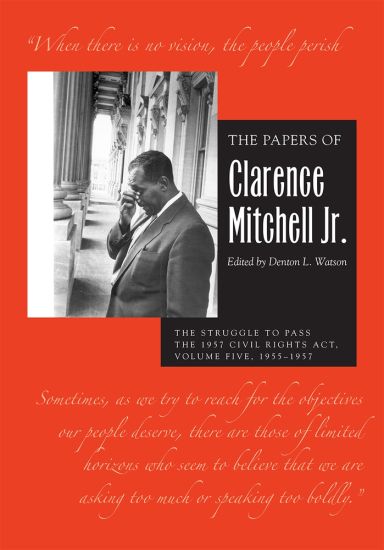
The Papers of Clarence Mitchell Jr., Volume V
Clarence Mitchell Jr.
Ohio University Press
2022
sidottu
Volume V of The Papers of Clarence Mitchell Jr. records the successful effort to pass the 1957 Civil Rights Act: the first federal civil rights legislation since 1875. Prior to the US Supreme Court's landmark 1954 decision in Brown v. Board of Education, the NAACP had faced an impenetrable wall of opposition from southerners in Congress. Basing their assertions on the court's 1896 "separate but equal" decision in Plessy v. Ferguson, legislators from the South maintained that their Jim Crow system was nondiscriminatory and thus constitutional. In their view, further civil rights laws were unnecessary. In ruling that legally mandated segregation of public schools was unconstitutional, the Brown decision demolished the southerners' argument. Mitchell then launched the decisive stage of the struggle to pass modern civil rights laws. The passage of the Civil Rights Act of 1957 was the first comprehensive lobbying campaign by an organization dedicated to that purpose since Reconstruction. Coming on the heels of the Brown decision, the 1957 law was a turning point in the struggle to accord Black citizens full equality under the Constitution. The act's passage, however, was nearly derailed in the Senate by southern opposition and Senator Strom Thurmond's record-setting filibuster, which lasted more than twenty-four hours. Congress later weakened several provisions of the act but—crucially—it broke a psychological barrier to the legislative enactment of such measures. The Papers of Clarence Mitchell Jr. is a detailed record of the NAACP leader's success in bringing the legislative branch together with the judicial and executive branches to provide civil rights protections during the twentieth century.
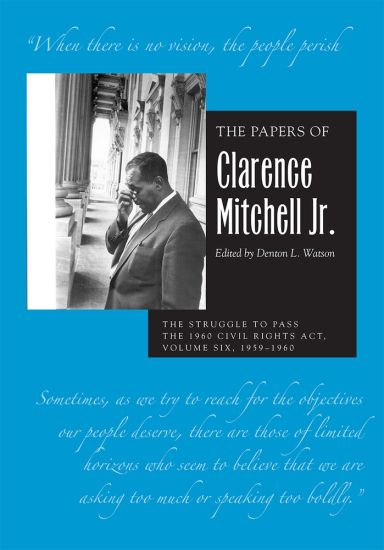
The Papers of Clarence Mitchell Jr., Volume VI
Clarence Mitchell Jr.
Ohio University Press
2022
sidottu
The Civil Rights Act of 1960 aimed to close loopholes in its 1957 predecessor that had allowed continued voter disenfranchisement for African Americans and for Mexicans in Texas. In early 1959, the newly seated Eighty-Sixth Congress had four major civil rights bills under consideration. Eventually consolidated into the 1960 Civil Rights Act, their purpose was to correct the weaknesses in the 1957 law. Mitchell's papers from 1959 to 1960 show the extent to which congressional resistance to the passage of meaningful civil rights laws contributed to the lunch counter sit-ins in Greensboro, North Carolina, and to subsequent demonstrations. The papers reveal how the repercussions of these events affected the NAACP's work in Washington and how, despite their dislike of demonstrations, NAACP officials used them to intensify the civil rights struggle. Among the act's seven titles were provisions authorizing federal inspection of local voter registration rolls and penalties for anyone attempting to interfere with voters on the basis of race or color. The law extended the powers of the US Commission on Civil Rights and broadened the legal definition of the verb to vote to encompass all elements of the process: registering, casting a ballot, and properly counting that ballot. Ultimately, Mitchell considered the 1960 act unsuccessful because Congress had failed to include key amendments that would have further strengthened the 1957 act. In the House, representatives used parliamentary tactics to stall employment protections, school desegregation, poll-tax elimination, and other meaningful civil rights reforms. The fight would continue. The Papers of Clarence Mitchell Jr. series is a detailed record of the NAACP leader's success in bringing the legislative branch together with the judicial and executive branches to provide civil rights protections during the twentieth century.

Clarence the pig and Smoky the purple horse have a great adventure and meet Edgar, a dog who hums.

Clarence and Smoky return! Clarence, our favorite city pig, Smoky the purple horse, and a whole new cast of characters all set out to see the sights in the big city. After visiting the park, the aquarium, and touring the harbor together, Smoky's health (and purple color) start to fade! Can Smoky live without fresh air, open space, and hay to eat? As the tall buildings, elevators and sidewalks close in on Smoky, Clarence faces a difficult decision. Through it all they discover that affection flourishes no matter where they go and that home truly is where the heart is clarence and the Purple Horse Bounce into Town is a wonderful story of an enduring friendship that truly knows no boundaries.

CLARENCE AMP THE GREAT SURPRISE
RowmanLittlefield
2005
sidottu