

Kirjahaku
Etsi kirjoja tekijän nimen, kirjan nimen tai ISBN:n perusteella.
1000 tulosta hakusanalla Clear Vision Publishing

Clear Nude: The lens and the nude
Clear Nude Publications
2014
nidottu
Clear Nude is a quarterly magazine that covers the nude form's global contemporary and underground photographic art scene. Each issue includes featured interviews, up-close stories, and large full-color photographs, taking you in the process of creating unique and, at times, provocative artwork that challenges the viewer. n the vein of lens-based, artistic nude, each addition will showcase new, established, and upcoming artists who push the envelope of the photographic nude. Rough the voice of curators, collectors, and even the models behind this unveiled art form- the magazine will also delve into the evolving discussion around the social and cultural impact of exhibiting the pictorial nude. Essays by: Lucas James, Selina Mayer, Dan Smith, Allicette Torres, Photographers featured: Samuel Lopez, Eli Sleepless, Kirk Anderson, Noe Lozano, Vince Sullivan, Selina Meyer, Allan Fredrick, Dave Rudin, Glenn Mcguire, Ivan Clemente, Jorgen Klausen, Justin N. Lane, Ren Hang, Keneilwe Mokoena.
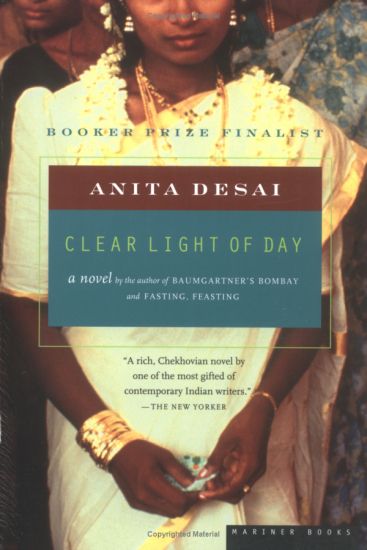
The classic novel by the author of Diamond Dust evokes the traumatic history of India after the departure of the British in a story of a Hindu family in Old Delhi and the complex relationships that develop among four people. Reprint.

A land of drought and flooding rains...and murder.Daisy's in trouble. She's desperate to get back to her brother, before he does something reckless and reveals their true identities, but her car is stalled in the middle of a flooded creek, with the water rising quickly.Dale is in no mood to rescue the woman about to be swept away by a raging tropical storm, who's clearly a city girl, unfamiliar with the country roads, and driving a completely unsuitable car. He has half a mind to leave her right where she is.Stranded on the wrong side of the creek, Daisy has no other option than to accept Dale's offer to spend the night at the luxury resort, Stormcloud Station. All of Daisy's plans to leave the station are thrown into chaos when a girl is found drowned in the creek and everyone become suspects in a murder investigation.Daisy has discovered that far north Queensland is a wholly inhospitable country, but it also has a man with mesmerizing dimples, whose kiss has captured her soul. But she hides a secret that would tear them apart.On a night full of chaos, Dale and Daisy uncover the truth about the killer. But how can Dale safeguard this willful, determined woman who owns his heart, when Daisy puts herself squarely in harm's way?
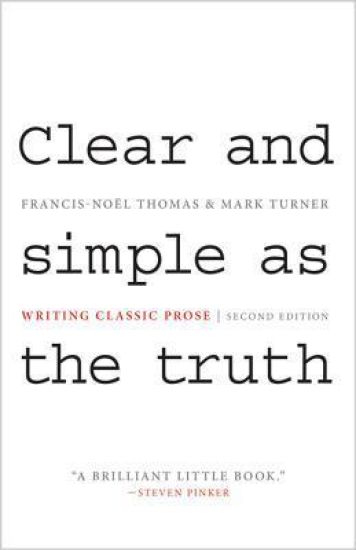
Clear and Simple as the Truth
Francis-Noël Thomas; Mark Turner
Princeton University Press
2011
pokkari
For more than a decade, Clear and Simple as the Truth has guided readers to consider style not as an elegant accessory of effective prose but as its very heart. Francis-Noel Thomas and Mark Turner present writing as an intellectual activity, not a passive application of verbal skills. In classic style, the motive is truth, the purpose is presentation, the reader and writer are intellectual equals, and the occasion is informal. This general style of presentation is at home everywhere, from business memos to personal letters and from magazine articles to student essays. Everyone talks about style, but no one explains it. The authors of this book do; and in doing so, they provoke the reader to consider style, not as an elegant accessory of effective prose, but as its very heart. At a time when writing skills have virtually disappeared, what can be done? If only people learned the principles of verbal correctness, the essential rules, wouldn't good prose simply fall into place? Thomas and Turner say no. Attending to rules of grammar, sense, and sentence structure will no more lead to effective prose than knowing the mechanics of a golf swing will lead to a hole-in-one. Furthermore, ten-step programs to better writing exacerbate the problem by failing to recognize, as Thomas and Turner point out, that there are many styles with different standards. The book is divided into four parts. The first, "Principles of Classic Style," defines the style and contrasts it with a number of others. "The Museum" is a guided tour through examples of writing, both exquisite and execrable. "The Studio," new to this edition, presents a series of structured exercises. Finally, "Further Readings in Classic Prose" offers a list of additional examples drawn from a range of times, places, and subjects. A companion website, classicprose.com, offers supplementary examples, exhibits, and commentary, and features a selection of pieces written by students in courses that used Clear and Simple as the Truth as a textbook.
Clear and Simple as the Truth
Francis-Noël Thomas; Mark Turner
Princeton University Press
2017
pokkari
Everyone talks about style, but no one explains it. The authors of this book do; and in doing so, they provoke the reader to consider style, not as an elegant accessory of effective prose, but as its very heart. At a time when writing skills have virtually disappeared, what can be done? If only people learned the principles of verbal correctness, the essential rules, wouldn't good prose simply fall into place? Thomas and Turner say no. Attending to rules of grammar, sense, and sentence structure will no more lead to effective prose than knowing the mechanics of a golf swing will lead to a hole-in-one. Furthermore, ten-step programs to better writing exacerbate the problem by failing to recognize, as Thomas and Turner point out, that there are many styles with different standards. In the first half of Clear and Simple, the authors introduce a range of styles--reflexive, practical, plain, contemplative, romantic, prophetic, and others--contrasting them to classic style. Its principles are simple: The writer adopts the pose that the motive is truth, the purpose is presentation, the reader is an intellectual equal, and the occasion is informal. Classic style is at home in everything from business memos to personal letters, from magazine articles to university writing. The second half of the book is a tour of examples--the exquisite and the execrable--showing what has worked and what hasn't. Classic prose is found everywhere: from Thomas Jefferson to Junichir? Tanizaki, from Mark Twain to the observations of an undergraduate. Here are many fine performances in classic style, each clear and simple as the truth. Originally published in 1994. The Princeton Legacy Library uses the latest print-on-demand technology to again make available previously out-of-print books from the distinguished backlist of Princeton University Press. These editions preserve the original texts of these important books while presenting them in durable paperback and hardcover editions. The goal of the Princeton Legacy Library is to vastly increase access to the rich scholarly heritage found in the thousands of books published by Princeton University Press since its founding in 1905.
Clear and Simple as the Truth
Francis-noël Thomas; Mark Turner
Princeton University Press
2017
sidottu
Everyone talks about style, but no one explains it. The authors of this book do; and in doing so, they provoke the reader to consider style, not as an elegant accessory of effective prose, but as its very heart. At a time when writing skills have virtually disappeared, what can be done? If only people learned the principles of verbal correctness, the essential rules, wouldn't good prose simply fall into place? Thomas and Turner say no. Attending to rules of grammar, sense, and sentence structure will no more lead to effective prose than knowing the mechanics of a golf swing will lead to a hole-in-one. Furthermore, ten-step programs to better writing exacerbate the problem by failing to recognize, as Thomas and Turner point out, that there are many styles with different standards. In the first half of Clear and Simple, the authors introduce a range of styles--reflexive, practical, plain, contemplative, romantic, prophetic, and others--contrasting them to classic style. Its principles are simple: The writer adopts the pose that the motive is truth, the purpose is presentation, the reader is an intellectual equal, and the occasion is informal. Classic style is at home in everything from business memos to personal letters, from magazine articles to university writing. The second half of the book is a tour of examples--the exquisite and the execrable--showing what has worked and what hasn't. Classic prose is found everywhere: from Thomas Jefferson to Junichir? Tanizaki, from Mark Twain to the observations of an undergraduate. Here are many fine performances in classic style, each clear and simple as the truth. Originally published in 1994. The Princeton Legacy Library uses the latest print-on-demand technology to again make available previously out-of-print books from the distinguished backlist of Princeton University Press. These editions preserve the original texts of these important books while presenting them in durable paperback and hardcover editions. The goal of the Princeton Legacy Library is to vastly increase access to the rich scholarly heritage found in the thousands of books published by Princeton University Press since its founding in 1905.
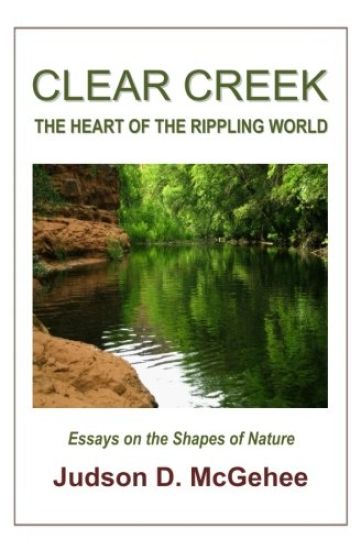
The diverse shapes of nature amid the equally diverse wonders of wild Arizona illuminate the world of Clear Creek. This collection features essays written for Judson D. McGehee's weekly column, "Northland Nature", which ran in the Arizona Daily Sun for over a decade. Influenced by writers such as John Muir and Henry Thoreau, the author has cultivated the art of the nature essay to chronicle his own wilderness journeys.Dr. McGehee taught for thirty years at Northern Arizona University, where he drew from his lifelong love of books and the outdoors to inspire his students in English and Creative Writing. As each essay leads the reader through an intimate, shared experience with nature, his words celebrate a passion for poetry and eloquent language-language that lovingly paints a portrait, capturing visions and details both great and small, and wholly transporting the reader to one place within a vast landscape, one moment within the rippling flow of time.
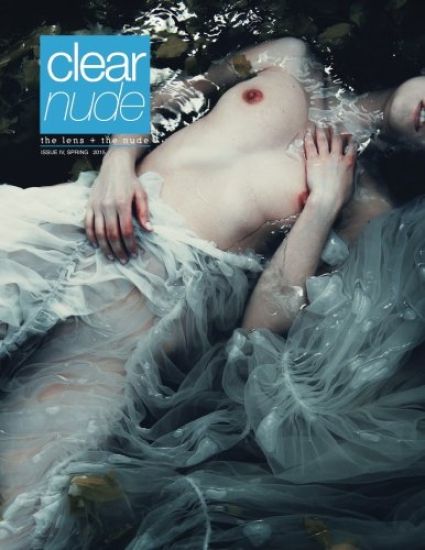
Clear Nude: The Lens + the Nude, Issue IV, Summer 2015
Allicette Torres
Clear Nude Publications
2015
nidottu
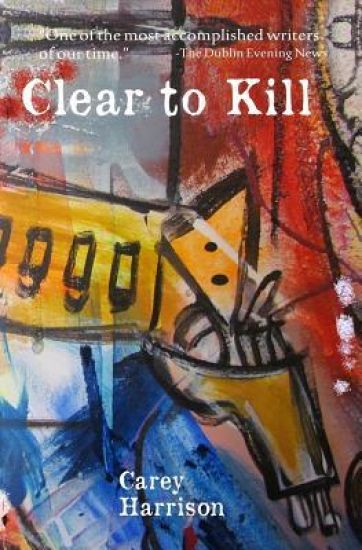
'Runt' Rawlinson, a British assassin, is dropped by parachute into France during WWII, to kill a traitor to the Resistance. But have they given him the right man? Runt thinks not, and alerts his masters. But the message from London remains the same: Clear To Kill.
This book gives clear guidance to good pronunciation and is written in an easily-accessible form. Many people can identify and solve their speech problems and significantly improve their voice by using tried and tested exercises. The systematic arrangement of the material with clear illustrations makes it easy for the layman to understand and work from effectively. This new edition contains additional exercises as well as an expanded chapter on Indistinct Speech.

Everything is energy—both seen and unseen, physical and immaterial. Our own personal energies are affected by the energies in our surrounding environments. Master the life-changing power of energy clearing and return to harmony with this breakthrough book by bestselling author, international energy expert, and intuitive and healer Joanne Brocas. Be introduced to different kinds of energy factors that at times can adversely affect you, your loved ones, your pets, and the atmosphere of your home/work environment. Learn easy steps to clear nonbeneficial energy and to restore harmony, vitality, and your soul's creative power—the exact power that we require to heal, to express our abilities, and to manifest our goals and deepest desires into reality. Through specific energy-clearing prayer treatments and with simple tools around your house, you can remove resistance, imbalance, and fear that can block or delay continued health, creativity, and ever-greater levels of abundance. Clear the energetic clutter to amplify your joy and improve your life!
Clear Sunshine of the Gospel upon the Indians in New England (1648)
Thomas Shepard
KESSINGER PUBLISHING CO
2003
pokkari
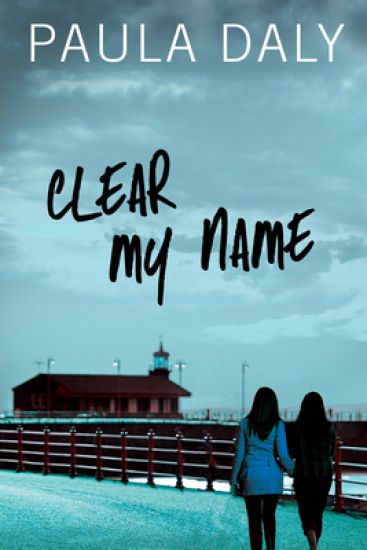
Paula Daly is widely acclaimed for her masterful plotting and thrilling page-turners. Now she delivers Clear My Name, a page-turning new thriller about an investigator, who in order to free her client, must confront secrets she has struggled a lifetime to hide.When Carrie was accused of brutally murdering her husband's lover, she denied it. She denied it again when they found her blood inside his house, again when they put her in front of a jury, and again when they sent her to prison. Now she's three years into her fifteen-year sentence, gradually losing hope and separated from her pregnant daughter, but she is still maintaining her innocence. Tess is the only paid employee of Innocence UK, a charity that helps clear people wrongfully convicted of crimes, and which accepts Carrie's case. But can she trust Carrie? Tess is no starry-eyed recent grad--her assumption is that "they're all lying."Meanwhile, Tess is also paired with Avril, a naive young investigator-in-training, with the hope that by mentoring her, she can eventually double the group's investigative workload. But Tess unexpectedly bolts when she's tipped off to a witness that could possibly prove Carrie didn't commit the crime. While Tess and Avril work the case, re-interviewing witnesses and testing assumptions made at the time of the arrest, the tension ratchets up in both the case and Tess's personal life.An innovative spin on the crime novel full of wicked twists readers won't see coming, Paula Daly's Clear My Name raises the stakes in a grave miscarriage of justice and proves that even in a cold case, things still run hot.
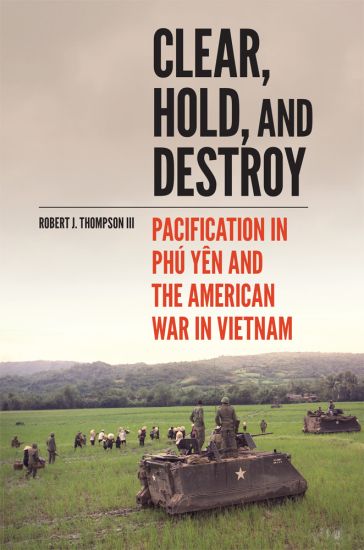
By the end of the American war in Vietnam, the coastal province of Phú Yên was one of the least-secure provinces in the Republic of Vietnam. It was also a prominent target of the American strategy of pacification - an effort, purportedly separate and distinct from conventional warfare, to win the 'hearts and minds' of the Vietnamese. In Robert J. Thompson III's analysis, the consistent, and consistently unsuccessful, struggle to place Phú Yên under Saigon's banner makes the province particularly fertile ground for studying how the Americans advanced pacification and why this effort ultimately failed. In March 1970, a disastrous military engagement began in Phú Yên, revealing the enemy's continued presence after more than three years of pacification. Clear, Hold, and Destroy provides a fresh perspective on the war across multiple levels, from those making and implementing policy to those affected by it. Most pointedly, Thompson contends that pacification, far from existing apart from conventional warfare, actually depended on conventional military forces for its application. His study reaches back into Phú Yên's storied history with pacification before and during the French colonial period, then focuses on the province from the onset of the American War in 1965 to its conclusion in 1975. A sharply focused, fine-grained analysis of one critical province during the Vietnam War, Thompson's work demonstrates how pacification is better understood as the foundation of U.S. fighting in Vietnam.
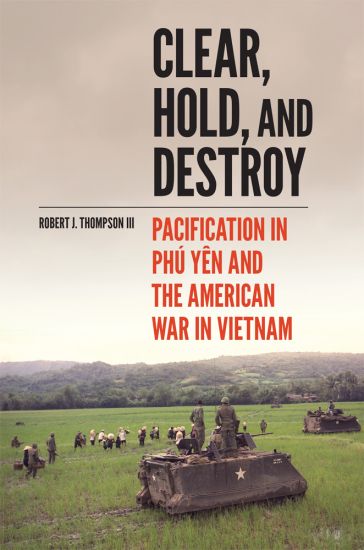
By the end of the American War in Vietnam, the coastal province of PhÚ YÊn was one of the least-secure provinces in the Republic of Vietnam. It was also a prominent target of the American strategy of pacification—an effort, purportedly separate and distinct from conventional warfare, to win the “hearts and minds” of the Vietnamese. In Robert J. Thompson III’s analysis, the consistent, and consistently unsuccessful, struggle to place PhÚ YÊn under Saigon’s banner makes the province particularly fertile ground for studying how the Americans advanced pacification and why this effort ultimately failed. In March 1970 a disastrous military engagement began in PhÚ YÊn, revealing the enemy’s continued presence after more than three years of pacification. Clear, Hold, and Destroy provides a fresh perspective on the war across multiple levels, from those making and implementing policy to those affected by it. Most pointedly, Thompson contends that pacification, far from existing apart from conventional warfare, actually depended on conventional military forces for its application. His study reaches back into PhÚ YÊn’s storied history with pacification before and during the French colonial period, then focuses on the province from the onset of the American war in 1965 to its conclusion in 1975. A sharply focused, fine-grained analysis of one critical province during the Vietnam War, Thompson’s work demonstrates how pacification is better understood as the foundation of U.S. fighting in Vietnam.
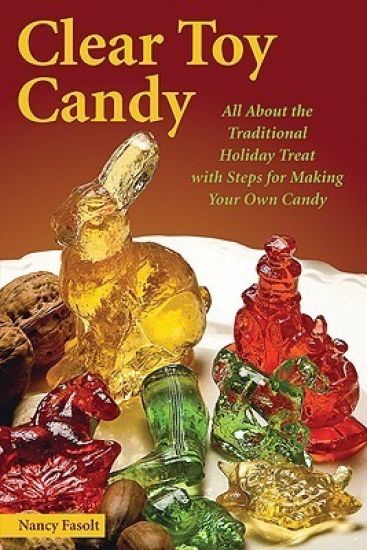
For generations, children have received Christmas gifts of hard, sweet, crystal-clear edible shapes of red, green, and yellow animals, trains, ships, and other objects called clear toy candy. The candy is made from a solution of sugar, water, corn syrup, and food colouring. The shapes are formed when the hot solution is poured into moulds in which the candy quickly hardens. This book provides tips and techniques for making the traditional candy, with information on ingredients, utensils, and the correct cooking conditions. A brief history of the candy and a discussion of the antique moulds make this book essential for all who want to carry on this delightful winter holiday tradition.