Kirjojen hintavertailu. Mukana 11 699 587 kirjaa ja 12 kauppaa.

Kirjahaku

Etsi kirjoja tekijän nimen, kirjan nimen tai ISBN:n perusteella.

1000 tulosta hakusanalla Condaminas

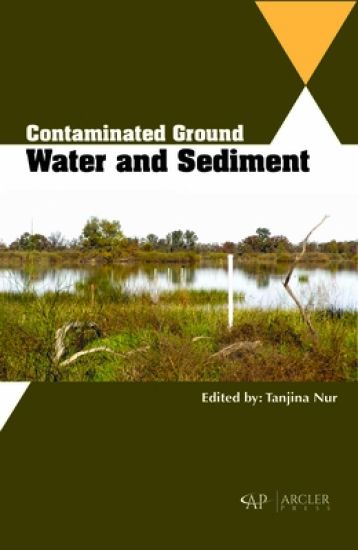
Contaminated Ground Water and Sediment
Soil, sediment, and groundwater contamination has been a major problem at these polluted sites, which need urgent remediation to protect public health and the environment. This book provides the reader with the comprehensive view necessary to understand and critically evaluate the design, implementation, and monitoring of phytoremediation at sites characterized by contaminated groundwater.
Contaminants in Agriculture

Contaminants in Agriculture

Hazem Shawky Fouda

Arcler Press
2024
sidottu
In recent decades, there has been an increase in the demand for food production. This is attributed to the growth of the human population and the development of new farming techniques. Innovative management solutions are required to make the most out of agricultural inputs while simultaneously reducing their off-site mobility and the impacts they have on the ecosystems. The primary contributors to the contamination of local soils, sediments, and streams are activities that are associated with horticulture, agriculture, and industrial output. Examples of agricultural pollutants include organic wastes such as manure and decaying plants; runoff from irrigation systems including salts and trace metals; microorganisms; pesticides, herbicides, and insecticides; and chemical herbicides, pesticides, and insecticides. Utilizing pollution management measures that are both effective and cost-effective is one way to produce more productive agricultural outputs. Applications of fertilizer that are targeted, appropriate, and well-balanced are important if one want to increase agricultural output while at the same time limiting their influence on the environment. To advance global crop production in a way that is both efficient and kind to the environment, every effort should be made to improve the availability and utilization of secondary and micronutrients, organic fertilizers, and techniques for soil conservation. This should be done without compromising the soil's overall health or its level of productivity. Taking this action is required to increase the crop yields. As a result of this, it is of the utmost importance to find solutions to the challenging issues that crop up on a regular basis in the agricultural industry. As a direct result of the data presented up top, we are thinking of writing a book with the working title Contaminants in Agriculture: Sources, Impacts, and Management. This book focuses on the many different outcomes that could be brought about by the existing scenario. It is our steadfast opinion that this volume will prove to be a resource that is important for anybody who is interested in agriculture or who is curious about agriculture.
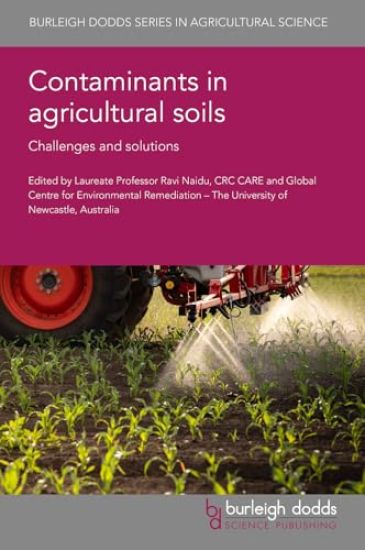
Contaminants in Agricultural Soils

Contaminants in Agricultural Soils

Burleigh Dodds Science Publishing Limited
2025
sidottu
It’s been estimated that around 24 billion tonnes of fertile topsoil is lost each year due to historic and ongoing pollution. With increasing pressure placed upon land as a resource, there is an urgent need to make better use of existing agricultural land, as well as remediate contaminated land for farming use.Contaminants in agricultural soils: Challenges and solutions provides a comprehensive overview of the major types of contaminants in agricultural soils. It considers key issues in dealing with contaminants such as advances in detection and risk assessment. The book also reviews recent advances in bioremediation and phytoremediation techniques to manage contaminants in soils.
Contaminated Land

Contaminated Land

Peter B. Meyer; Richard H. Williams; Kristen R. Yount

Edward Elgar Publishing Ltd
1995
sidottu
Contaminated land policy is a key concern of governments and policy makers across the globe, yet discussion has traditionally focused on the particular experience of the United States. This major new book develops a framework for assessing laws and regulations regarding contaminated land and polluted properties, their clean up and reuse, and the assignment of costs and responsibilities for reclamation.In Contaminated Land, the authors, a European and two Americans, lay out a framework for cross- national comparisons of policy contexts as well as ways of examining the outcomes of different approaches to contaminated land and systematically compare approaches to this issue in both the EU and US. The use of this framework leads to a reassessment of specific policies, such as the polluter pays principle, which may be more successful in the EU than it has been in the US, and subsidiarity which, while problematic in Europe, may hold promise in a US application. Specific issues discussed include the nature and extent of the contaminated land problem, legal implications, regulation in the US, the 1980 Comprehensive Environmental Liability, Compensation and Reclamation Act, European experience and EU environmental policy, integrated comparative analysis and some lessons for the future.Contaminated Land offers valuable insights on policy responses to the problem of badly polluted land from the perspectives of planning, economics and sociology. In particular, this volume offers frameworks for comparison of different national settings to help determine the preferred and most promising approaches to contaminated land in any social, economic and legal policy context.
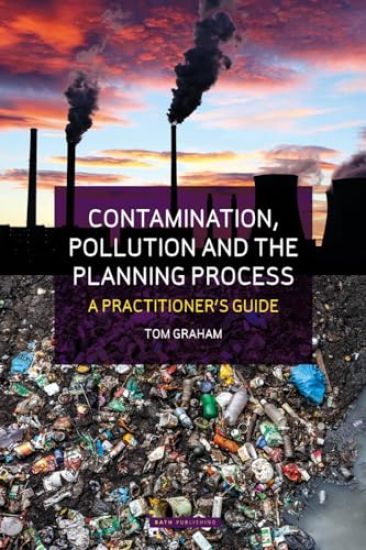
Contamination, Pollution & the Planning Process
Managing environmental issues in planning decisions is now an essential part of the process. The increasing pressure to develop brownfield sites and the publicity around the damage caused by air pollution are just two of the drivers for this growing area of planning practice. The difficulty is that the law relating to these problems is disparate and overseen by different agencies, with the answers hidden deep in often obscure guidance, regulations and case law. It is also developing rapidly as the provisions of the Environment Act 2021 begin to bite. Tom Graham's latest book aims to make some sense of this seemingly chaotic regime to provide developers, their advisors and the planning authorities with a coherent round up of the problems and how to address them by: setting out the main causes for concern created by for example landfill sites or abandoned mines providing practical insights on site and environmental impact assessments explaining the concepts such as air quality, toxicity and verification outlining how environmental law interacts with current planning law such as s106 of the Town and Country Planning Act offering drafting tips for any planning conditions Case studies and a set of invaluable appendices reproducing key guidance in full help to bring it all together, making the book an essential source of reference for everyone involved in developing potentially contaminated sites.
Contamination To Transformation: A True Story of Healing From the 99 After-Effects of Sexual Abuse (Incest) Plus, PTSD, Agoraphobia, Anorexia, Anxiety
Marilyn's abusers thought that their hidden dirty secrets would never be remembered by her, but they were wrong. All their sins were carefully recorded in her flashbacks, nightmares, night terrors, body memories and trauma triggers. The actual events were repressed for decades, but her body never forgot Contamination to Transformation is the second of four books written by Marilyn Elaine Lundberg, on the subject of child sexual abuse, and is carefully written as to not traumatize her readers. In this memoir, she allowed herself to go much deeper into the profound emotional pain and psychological trauma that she endured due to child sexual abuse, neglect and bullying.Stepping past the shame of incest, her goal was to be brutally honest and transparent in explaining what it was like to be a child living with Post-Traumatic Stress Disorder, Suicidal Depression, Anxiety, Anorexia, Multiple Personality Disorder, Dissociative Identity Disorder, Agoraphobia, Panic attacks and much more.Nightmares and night terrors arrived every night as she slept and brought horrendous pictures of brutal attacks, suffocation and babies dying. Suicides's voice was relentless for twenty-four long and agonizing years, telling her there was no hope, just die and be free of the pain forever Here's the fantastic news about her spiritual journey: suicide did not win this battle and she is here today to tell you about the miracles that restored her body, mind, soul and spirit Always remember: The abuse was never your fault Follow the step-by-step healing plan that is shown in this book Read the list of 99 After-Effects of Childhood Sexual Abuse, you are not alone REVIEW: I am a Marriage, Family and Child therapist and have worked with many people who have experienced trauma. This book would be excellent for a student going into the psychology field, for someone who is being traumatized or if you know someone who has been. This book explains what is happening in such an easy to understand way, yet giving accurate clinical facts. The best part is that it shows that there is hope for even those who feel hopeless. There is healing and here are some of the tools that work. Marilyn gives her email and I suggest you contact her. I have met her and she is not the same person, God has healed her.
Condamnation de l'Autriche Par Un Tribunal Européen
Condamnation de l'Autriche par un tribunal europeenDate de l'edition originale: 1859Ce livre est la reproduction fidele d'une oeuvre publiee avant 1920 et fait partie d'une collection de livres reimprimes a la demande editee par Hachette Livre, dans le cadre d'un partenariat avec la Bibliotheque nationale de France, offrant l'opportunite d'acceder a des ouvrages anciens et souvent rares issus des fonds patrimoniaux de la BnF.Les oeuvres faisant partie de cette collection ont ete numerisees par la BnF et sont presentes sur Gallica, sa bibliotheque numerique.En entreprenant de redonner vie a ces ouvrages au travers d'une collection de livres reimprimes a la demande, nous leur donnons la possibilite de rencontrer un public elargi et participons a la transmission de connaissances et de savoirs parfois difficilement accessibles.Nous avons cherche a concilier la reproduction fidele d'un livre ancien a partir de sa version numerisee avec le souci d'un confort de lecture optimal. Nous esperons que les ouvrages de cette nouvelle collection vous apporteront entiere satisfaction.Pour plus d'informations, rendez-vous sur www.hachettebnf.fr
Contaminations and Ethnographic Fictions

Contaminations and Ethnographic Fictions

Oscar Hemer

Springer Nature Switzerland AG
2020
sidottu
In an unusual merging of academic and literary practices, this volume attempts to identify a form (or forms) that is congenial with the subject of interrogation: the world in transition, with South Africa as the main focal point. Approaching anthropology from the position of the literary writer, Oscar Hemer here takes the reader through a kaleidoscope of perspectives—a stream-of-consciousness understanding of “writing the city” of Johannesburg, embedding ethnography in subjectivity; a challenge to binaries both temporal and gendered in examining the growth of the IT metropolis Bangalore to a combusting mega-city; an auto-ethnographic interweaving of fictional reportage with a close-reading of anthropological and philosophical treatises, including Mary Douglas’s Purity and Danger and Edouard Glissant’s Poetics of Relation, among others—to interrogate themes of transition, identity, purity and variation in the Western Cape. As the form transcends boundaries to create a methodological hybrid, creolization comes to the fore as a theoretical concept and as cultural practice.
Contaminations and Ethnographic Fictions

Contaminations and Ethnographic Fictions

Oscar Hemer

Springer Nature Switzerland AG
2021
nidottu
In an unusual merging of academic and literary practices, this volume attempts to identify a form (or forms) that is congenial with the subject of interrogation: the world in transition, with South Africa as the main focal point. Approaching anthropology from the position of the literary writer, Oscar Hemer here takes the reader through a kaleidoscope of perspectives—a stream-of-consciousness understanding of “writing the city” of Johannesburg, embedding ethnography in subjectivity; a challenge to binaries both temporal and gendered in examining the growth of the IT metropolis Bangalore to a combusting mega-city; an auto-ethnographic interweaving of fictional reportage with a close-reading of anthropological and philosophical treatises, including Mary Douglas’s Purity and Danger and Edouard Glissant’s Poetics of Relation, among others—to interrogate themes of transition, identity, purity and variation in the Western Cape. As the form transcends boundaries to create a methodological hybrid, creolization comes to the fore as a theoretical concept and as cultural practice.
Contaminants in Agriculture

Contaminants in Agriculture

Springer Nature Switzerland AG
2020
sidottu
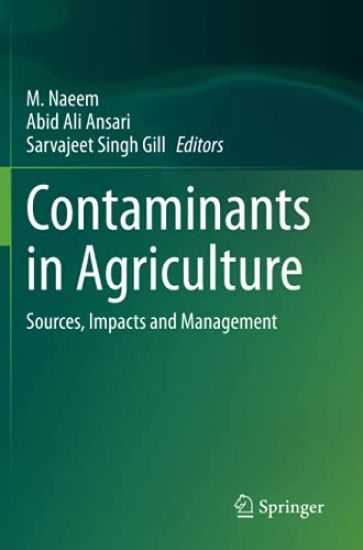
This comprehensive volume covers recent studies into agricultural problems caused by soil and water contamination. Considering the importance of agricultural crops to human health, the editors have focused on chapters detailing the negative impact of heavy metals, excessive chemical fertilizer use, nutrients, pesticides, herbicides, insecticides, agricultural wastes and toxic pollutants, among others, on agricultural soil and crops. In addition, the chapters offer solutions to these negative impacts through various scientific approaches, including using biotechnology, nanotechnology, nutrient management strategies, biofertilizers, as well as potent PGRs and elicitors. This book serves as a key source of information on scientific and engineered approaches and challenges for the bioremediation of agricultural contamination worldwide. This book should be helpful for research students, teachers, agriculturalists, agronomists, botanists, and plant growers, as well asin the fields of agriculture, agronomy, plant science, plant biology, and biotechnology, among others. It serves as an excellent reference on the current research and future directions of contaminants in agriculture from laboratory research to field application.
Contaminants in Agriculture

Contaminants in Agriculture

Springer Nature Switzerland AG
2021
nidottu
This comprehensive volume covers recent studies into agricultural problems caused by soil and water contamination. Considering the importance of agricultural crops to human health, the editors have focused on chapters detailing the negative impact of heavy metals, excessive chemical fertilizer use, nutrients, pesticides, herbicides, insecticides, agricultural wastes and toxic pollutants, among others, on agricultural soil and crops. In addition, the chapters offer solutions to these negative impacts through various scientific approaches, including using biotechnology, nanotechnology, nutrient management strategies, biofertilizers, as well as potent PGRs and elicitors. This book serves as a key source of information on scientific and engineered approaches and challenges for the bioremediation of agricultural contamination worldwide. This book should be helpful for research students, teachers, agriculturalists, agronomists, botanists, and plant growers, as well asin the fields of agriculture, agronomy, plant science, plant biology, and biotechnology, among others. It serves as an excellent reference on the current research and future directions of contaminants in agriculture from laboratory research to field application.
Contamination Mitigating Polymeric Coatings for Extreme Environments
?This volume provides perspectives on the approaches, mechanisms, test methods, durability considerations, and environmental concerns for contamination mitigating coatings and polymers with emphasis on their use in more extreme aerospace and marine terrestrial environments. Parts of the Volume are devoted to application of biomimetics to contamination mitigation polymeric coatings, low ice adhesion surfaces, insect residue adhesion resistance coatings, and marine biofouling mitigation materials. By juxtaposing ice insect, and marine mitigation approaches, researchers and users may more easily identify threads of similarity that will assist in future developments and potential applications in these areas. The volume is of interest to chemists and material scientists in providing awareness of both the need for efficacy in mitigating contamination and for appropriate coating durability; to physicists in providing better understanding of the interaction between the contaminant, the coated surface, and the surrounding environment; and to engineers in describing the need for better scale-up tests between laboratory and field environments.
Contamination Mitigating Polymeric Coatings for Extreme Environments
?This volume provides perspectives on the approaches, mechanisms, test methods, durability considerations, and environmental concerns for contamination mitigating coatings and polymers with emphasis on their use in more extreme aerospace and marine terrestrial environments. Parts of the Volume are devoted to application of biomimetics to contamination mitigation polymeric coatings, low ice adhesion surfaces, insect residue adhesion resistance coatings, and marine biofouling mitigation materials. By juxtaposing ice insect, and marine mitigation approaches, researchers and users may more easily identify threads of similarity that will assist in future developments and potential applications in these areas. The volume is of interest to chemists and material scientists in providing awareness of both the need for efficacy in mitigating contamination and for appropriate coating durability; to physicists in providing better understanding of the interaction between the contaminant, the coated surface, and the surrounding environment; and to engineers in describing the need for better scale-up tests between laboratory and field environments.
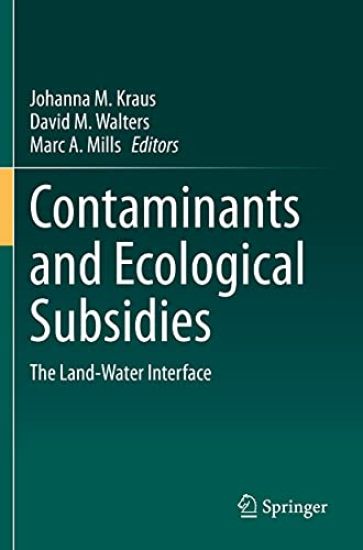
Contaminants and Ecological Subsidies

Contaminants and Ecological Subsidies

Springer Nature Switzerland AG
2020
sidottu
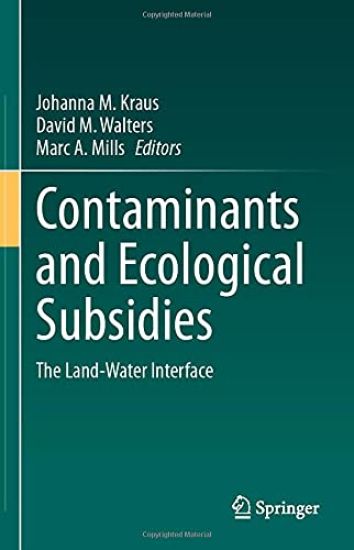
This volume explores the effects of aquatic contaminants on ecological subsidies and food web exposure at the boundary of aquatic and terrestrial ecosystems. It provides the first synthesis of the findings and principles governing the “dark side” of contaminant effects on ecological subsidies. Furthermore, the volume provides extensive coverage of the tools being developed to help managers and researchers better understand the implications of contaminants movement and their effects on natural resources and ecosystem processes. Aquatic and terrestrial ecosystems are linked through movements of energy and nutrients which subsidize recipient food webs. As a result, contaminants that concentrate in aquatic systems because of the effects of gravity on water and organic matter have the potential to impact both aquatic and terrestrial ecosystem processes. Within the last decade, increased attention has been paid to this phenomenon, particularly the effectsof aquatic contaminants on resource and contaminant export to terrestrial consumers, and the potential implications for management. This volume, curated and edited by three field leaders, incorporates empirical results, management applications and theoretical synthesis and is a key reference for academics, government researchers and consultants.
Contaminants and Ecological Subsidies

Contaminants and Ecological Subsidies

Springer Nature Switzerland AG
2021
nidottu
This volume explores the effects of aquatic contaminants on ecological subsidies and food web exposure at the boundary of aquatic and terrestrial ecosystems. It provides the first synthesis of the findings and principles governing the “dark side” of contaminant effects on ecological subsidies. Furthermore, the volume provides extensive coverage of the tools being developed to help managers and researchers better understand the implications of contaminants movement and their effects on natural resources and ecosystem processes. Aquatic and terrestrial ecosystems are linked through movements of energy and nutrients which subsidize recipient food webs. As a result, contaminants that concentrate in aquatic systems because of the effects of gravity on water and organic matter have the potential to impact both aquatic and terrestrial ecosystem processes. Within the last decade, increased attention has been paid to this phenomenon, particularly the effectsof aquatic contaminants on resource and contaminant export to terrestrial consumers, and the potential implications for management. This volume, curated and edited by three field leaders, incorporates empirical results, management applications and theoretical synthesis and is a key reference for academics, government researchers and consultants.
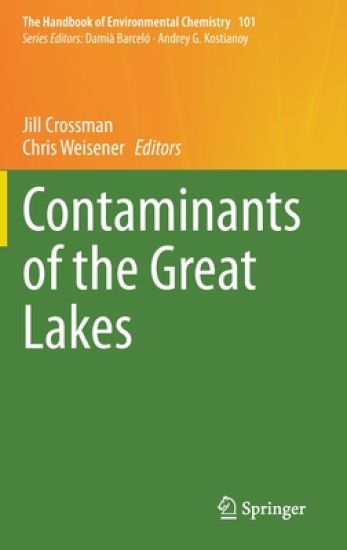
Contaminants of the Great Lakes

Contaminants of the Great Lakes

Springer Nature Switzerland AG
2020
sidottu
This book reviews the globally important freshwater resource of the Great Lakes, which is currently threatened by contaminants that compromise water quality and impact its ecological and economic health. Divided into four parts, this volume covers historic, current and emerging sources of contamination from heavy metals and persistent organic pollutants to microplastics; and identifies their ecological impacts. Due to factors ranging from rapidly changing land use practices, climate change and our emerging understanding of their impact on biological, chemical and physical interactions, the effectiveness of management strategies has proven highly variable. Continued enhancements in the rate of lake recovery are required to sustain the health of the Great Lakes. Accordingly, the book also explores recent advances in contaminant detection, along with future steps forwardin lake management approaches. Revealing our current knowledge gaps and providing a roadmap towards sustainable solutions, the book offers a valuable asset for scientists, managers and the public alike.
Contaminants of the Great Lakes

Contaminants of the Great Lakes

Springer Nature Switzerland AG
2021
nidottu
This book reviews the globally important freshwater resource of the Great Lakes, which is currently threatened by contaminants that compromise water quality and impact its ecological and economic health. Divided into four parts, this volume covers historic, current and emerging sources of contamination from heavy metals and persistent organic pollutants to microplastics; and identifies their ecological impacts. Due to factors ranging from rapidly changing land use practices, climate change and our emerging understanding of their impact on biological, chemical and physical interactions, the effectiveness of management strategies has proven highly variable. Continued enhancements in the rate of lake recovery are required to sustain the health of the Great Lakes. Accordingly, the book also explores recent advances in contaminant detection, along with future steps forwardin lake management approaches. Revealing our current knowledge gaps and providing a roadmap towards sustainable solutions, the book offers a valuable asset for scientists, managers and the public alike.