Inconvenients des climats hyperthermiques a chaleur constante et moyen d'y remedier, projet de sanatorium pour les pays tropicaux, reponse aux objections du Conseil superieur de sante des colonies, par le Dr Lucien Clement, ...Date de l'edition originale: 1894Ce livre est la reproduction fidele d une uvre publiee avant 1920 et fait partie d une collection de livres reimprimes a la demande editee par Hachette Livre, dans le cadre d un partenariat avec la Bibliotheque nationale de France, offrant l opportunite d acceder a des ouvrages anciens et souvent rares issus des fonds patrimoniaux de la BnF.Les uvres faisant partie de cette collection ont ete numerisees par la BnF et sont presentes sur Gallica, sa bibliotheque numerique.En entreprenant de redonner vie a ces ouvrages au travers d une collection de livres reimprimes a la demande, nous leur donnons la possibilite de rencontrer un public elargi et participons a la transmission de connaissances et de savoirs parfois difficilement accessibles.Nous avons cherche a concilier la reproduction fidele d un livre ancien a partir de sa version numerisee avec le souci d un confort de lecture optimal. Nous esperons que les ouvrages de cette nouvelle collection vous apporteront entiere satisfaction.Pour plus d informations, rendez-vous sur www.hachettebnf.fr
Une buse est un dispositif m canique con u pour contr ler le d bit, la vitesse, la direction et la pression du flux qui la traverse. Il existe diff rents types de buses. Dans une buse, la vitesse du fluide augmente au d triment de son nergie de pression. La tuy re est un dispositif d velopp et con u pour contr ler la direction du fluide qui s' coule dans un mouvement quelconque. Le r le principal de la tuy re est de contr ler les caract ristiques de l' coulement du fluide, tout comme d'augmenter la vitesse lorsqu'il sort de la chambre d'un syst me propulsif. Dans cette th se, l'analyse CFD (Computational Fluid Dynamic) permet d' tudier une tuy re supersonique surface variable avec des effets de frottement. L' tude vise trouver des moyens d'am liorer les performances des syst mes de tuy res. Elle se concentre principalement sur la conception et l'analyse d'une tuy re CRMC avec effet de frottement. Les r sultats sont pr sent s sous forme de contours et de graphiques. Un graphique repr sente les r sultats de l'analyse et de la CFD. Les r sultats montrent que le nombre de Mach augmente avec la distance axiale le long de la tuy re CRMC.
Coraje constante: Martin Luther King, Jr. y Jesucristo, de Tracy Emerick, Ph.D., es sin duda un texto sobresaliente y personal, lleno de matices, del que los lectores encontrar n innumerables ense anzas. Es un texto reputado tanto para lectores j venes como adultos, y facilitar h bilmente una mayor autoestima y una evoluci n del car cter sin esfuerzo.Ephantus M. of Hollywood Book ReviewValor constante es, en cierto modo, un manual. Como la pata del conejo, es el amuleto que conseguir que destaques a pesar de que te carcoma el impulso de empeque ecerte y encajar. Como cita el autor a Sun Tzu, perder batallas tiene su origen en el desconocimiento de uno mismo. Conocerse a s mismo requiere valor. El valor empieza aqu .Aaron Washington of Pacific Book ReviewEn el n cleo de la obra de Emerick, que invita a la reflexi n, est el deseo de vencer esta mentalidad temerosa que asola el mundo y de presentar una perspectiva fresca que ayude a los lectores a navegar por sus propios viajes vitales. El autor recurre h bilmente a otras fuentes para apoyar su tesis.Mihir Shah, of US Review of Books
Coraje constante: Martin Luther King, Jr. y Jesucristo, de Tracy Emerick, Ph.D., es sin duda un texto sobresaliente y personal, lleno de matices, del que los lectores encontrar n innumerables ense anzas. Es un texto reputado tanto para lectores j venes como adultos, y facilitar h bilmente una mayor autoestima y una evoluci n del car cter sin esfuerzo.Ephantus M. of Hollywood Book ReviewValor constante es, en cierto modo, un manual. Como la pata del conejo, es el amuleto que conseguir que destaques a pesar de que te carcoma el impulso de empeque ecerte y encajar. Como cita el autor a Sun Tzu, perder batallas tiene su origen en el desconocimiento de uno mismo. Conocerse a s mismo requiere valor. El valor empieza aqu .Aaron Washington of Pacific Book ReviewEn el n cleo de la obra de Emerick, que invita a la reflexi n, est el deseo de vencer esta mentalidad temerosa que asola el mundo y de presentar una perspectiva fresca que ayude a los lectores a navegar por sus propios viajes vitales. El autor recurre h bilmente a otras fuentes para apoyar su tesis.Mihir Shah, of US Review of Books
In these pages, few or many of you will hear the heart and the voice that speaks to me these things which I now write. However, I appeal to you at the outset: be as the noble Bereans. "For they received the message with great eagerness and examined the Scriptures every day to see if what Paul said was true" (Acts17:11 NIV). I have carried this message in my heart for a few years now. I awakened this day, January 6th, 2010 at 5 AM, feeling I needed to start this message and get it printed for the Body of Christ. Up front, I will tell you I am not a writer, but one thing I do know, the Holy Spirit is my teacher, and if we give any praise, we give it all to Him. I have been a Pastor of one of the best Churches in the world, Living Waters Fellowship in St. James, Missouri. We have some great elders in the Church, who know how to work in their calling. I am so thankful that God has set them in as such. You can find many books in the world right now, and some of them have turned out as really good works, which the body of Christ needs. You can get one for everything you can think of. But like we read in Amos, "Behold, the days come, saith the Lord God, that I will send a famine in the land, not a famine of bread (the World), nor a thirst for water (the Word), but of 'Hearing' the word of the Lord." Amos 8:11 From Strong's 8085 the word, "hearing" means to hear intelligently, attentively, and obediently. This message of the Kingdom of God might be like so many others, put on a shelf somewhere, and never picked up again. In the book of Revelation, seven times we read, "He that hath an ear, let him 'hear' what the Spirit saith unto the Churches." To me, this stands as the real need. In the Churches today, we have heard many things, but we need to hear them and put them into action. Consider Proverbs 14:15, 'The simple (immature: childish) believe every word; but the prudent man looks well to his going," and Proverbs 20:12, "The hearing ear, and the Seeing Eye, the Lord hath made even both of them." God has made both of them, so I can say, "Blessed are your eyes, for they see; and your ears, for they hear." Some will say, "Brother, we will understand it better by and by." After all, it is written, "Eye hath not seen, nor ear heard, neither have entered into the heart of men, the things which God hath prepared for them that love him" (1 Corinthians 2:9). I love Him, and you love Him. So Paul says, "But, 'look here, ' God hath revealed them unto us by his spirit; for the Spirit searcheth all things, yea, the deep things of God." 1 Corinthians 2:10 The Spirit prevails as the teacher, and we have His Spirit, don't we? Paul said we do. "Now we have received, not the spirit of the world, but the Spirit which is of God; that (in order that) we might know the things that are freely given to us of God" (1 Corinthians 2:12) Amen.
Africa suffers from two main diseases: poor management and a lack of vibrant entrepreneurial activity. The continent has the raw materials, the people, and the potential to be developed, and yet there remain barriers that prevent it from bettering itself. To promote entrepreneurship as an engine of economic development and growth, the author has developed a Quintuple Helix Model which advocates mutual cooperation and information sharing among the five helices and provides valuable guidelines to policymakers on how to build entrepreneurship ecosystems in sub-Saharan Africa. It goes on to examine the roles that government, donors, and public and private sectors play and how Africans themselves might take the development of entrepreneurial societies into their own hands. The book includes seven chapters that emphasize the key role that each of the five components could play in the development of entrepreneurial ecosystems. Entrepreneurship scholars, policy makers, and national and local governments of sub-Saharan Africa will value this insight as they strive to create a more favorable landscape for their citizenry.
The term organizational justice refers to perceptions of fairness within organizations. Justice as a social phenomenon has received a great deal of research attention from social psychologists. With new research on fairness in organizations, scholars in organizational behavior, industrial/organizational psychology, and managers are provided with practical orientations on how to create fair working environments. Although organizational justice is not a panacea for managers, it can help boost employee morale and cooperation. Perceptions of unfairness have been related to several negative reactions such as employee theft, lack of commitment, lawsuits, and recently aggressive behaviors in the workplace. Perceptions of fair treatment, on the other hand, have been related to attitudinal and behavioral outcomes such as employee commitment, trust, and cooperation that are conducive to organizational performance. The most important asset of any organization is its workforce and the way people are treated shapes attitudes and behaviors such as commitment, trust, performance, turnover, aggression, and all issues of human resources. As we are moving toward a more educated workforce, people want not only better jobs but also to be treated with respect and dignity in the workplace. We are entering an era in which issues of fairness in a diversity of forms will be high on the agenda of corporate management, thus a better understanding of issues of justice in modern organizations is imperative for human resource managers.
This book analyzes the impact of culture on employee justice judgments and reactions to perceptions of fairness and unfairness. I start this book with the following two questions. Why is a book on culture and organizational justice needed? What does such a book add to the extant literature on organizational justice, especially, after the publication of the landmark work of Colquitt and Greenberg (2005), Handbook of Organizational Justice? Although there are no easy answers to these questions, in the following lines, I explain the reasons why a book on culture and justice is not only needed but also timely. There are at least three reasons for which a book on culture and organizational justice is needed. First, a book on culture and organizational justice is needed because "there are indications that culture exerts very important and wide-ranging effects on justice behavior including even generally shaping the likelihood that individuals will experience feelings of injustice" (James, 1993, p. 22). Second, globalization has led to the interrelatedness of world economies.Thus, most organizations not only operate in several countries, but they also employ people from different nationalities and cultural backgrounds. The resulting challenge is to find new ways of managing a culturally diverse workforce. Third, justice is inherent to any organized social group. As examples of social systems, organizations are arenas of justice concerns because their members compete for limited resources. The resources for which they compete include tangibles, such as money but also intangibles, such as status, power, and prestige (e.g., Tajfel & Turner, 1979; Turner, 1985). In the following lines, I elaborate on the three reasons why a book on culture and organizational justice is needed and timely.
This book analyzes the impact of culture on employee justice judgments and reactions to perceptions of fairness and unfairness. I start this book with the following two questions. Why is a book on culture and organizational justice needed? What does such a book add to the extant literature on organizational justice, especially, after the publication of the landmark work of Colquitt and Greenberg (2005), Handbook of Organizational Justice? Although there are no easy answers to these questions, in the following lines, I explain the reasons why a book on culture and justice is not only needed but also timely. There are at least three reasons for which a book on culture and organizational justice is needed. First, a book on culture and organizational justice is needed because "there are indications that culture exerts very important and wide-ranging effects on justice behavior including even generally shaping the likelihood that individuals will experience feelings of injustice" (James, 1993, p. 22). Second, globalization has led to the interrelatedness of world economies.Thus, most organizations not only operate in several countries, but they also employ people from different nationalities and cultural backgrounds. The resulting challenge is to find new ways of managing a culturally diverse workforce. Third, justice is inherent to any organized social group. As examples of social systems, organizations are arenas of justice concerns because their members compete for limited resources. The resources for which they compete include tangibles, such as money but also intangibles, such as status, power, and prestige (e.g., Tajfel & Turner, 1979; Turner, 1985). In the following lines, I elaborate on the three reasons why a book on culture and organizational justice is needed and timely.
The Neuroscience of Organizational Behavior establishes the scientific foundations of organizational neuroscience, a nascent discipline that explores the neural correlates of human behavior in organizations. This timely and insightful book draws from several disciplines including the organizational sciences, neuroeconomics, cognitive psychology, social cognitive neuroscience and neuroscience to review the neuroscientific methods and techniques that organizational scholars can use to study the neural basis of organizational behavior.The topics discussed include the neural foundations of decision-making, leadership, fairness, trust and cooperation, emotions, ethics and morality, unconscious bias and diversity in the workplace. Organizational neuroscience can provide valuable insights for organizational scholars to develop new theories, refine existing theories, ask new questions or reformulate old questions.This book will not only serve as a resource for scholars and graduate students studying organizational behavior, it could also provide guidelines to managers in helping them to better understand and manage employees and organizations.
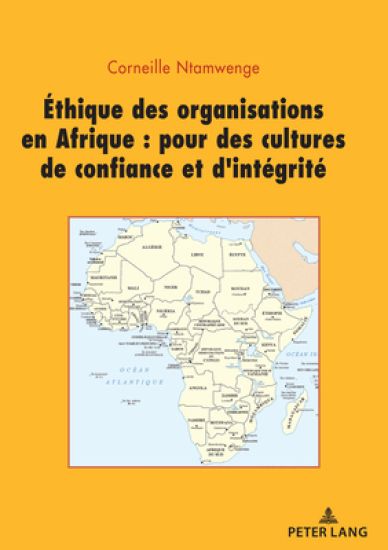
Pour encourager les pays africains promouvoir des cultures de confiance et d'int grit , l'auteur de ce livre recommande trois valeurs morales int rioriser confiance, cr dibilit et int grit . L'int gration effective de ces valeurs dans les r alit s organisationnelles d pend de la qualit des r sultats de la recherche au niveau local et r gional. Elle suppose l'institutionnalisation de l' thique. Ce livre clarifie les notions d'int grit , de cr dibilit et de confiance dans la vie organisationnelle. Il d gage ensuite des nouvelles pistes de recherche en thique, des difficult s d'op rer une r forme morale, des exigences de cette r forme et la n cessit de conna tre les forces hostiles l' thique dans les organisations africaines. L'administration publique et l'entreprise priv e lucrative constituent le point de d part des r flexions de l'auteur. Les textes utilis s sur ces deux secteurs organisationnels ont t publi s entre 1994 et 2014. L'auteur entreprend une lecture critique des codes d' thique de quatre pays d'Afrique centrale, avec une attention particuli re sur les objectifs des codes, sur leurs valeurs morales et sur leur mise en oeuvre. Cette critique s'effectue gr ce la litt rature disponible sur les valeurs morales inscrites dans les codes, sur les violations de l'int grit morale et de la dignit humaine et sur l' chec des projets de la lutte contre la corruption. La r flexion s'applique d'abord aux valeurs morales cl s des codes d' thique avant de se tourner vers la r sistance l'int gration de l' thique dans la vie organisationnelle et vers le devoir d'enraciner les valeurs retenues dans les structures organisationnelles. Ce livre se pr sente comme un tremplin pour entreprendre la recherche sur d'autres questions pertinentes, tels que la description des violations de l'int grit morale et l' thique dans le processus de validation, d'adoption et de mise en oeuvre des r formes socio conomiques. Il doit donc int resser les chercheurs en thique et en sciences sociales. Les r flexions de ce livre doivent clairer les investisseurs des entreprises extractives, les analystes des r formes politiques et conomiques et les agents de l'administration publique en Afrique.