Kirjojen hintavertailu. Mukana 12 016 292 kirjaa ja 12 kauppaa.

Kirjahaku

Etsi kirjoja tekijän nimen, kirjan nimen tai ISBN:n perusteella.

1000 tulosta hakusanalla Contrubting Authors

Constructing Paris in the Age of Revolution

Constructing Paris in the Age of Revolution

A. Potofsky

Palgrave Macmillan
2009
sidottu
Examining the social and political history of workers and entrepreneurs engaged in constructing the French capital from 1763-1815, this book argues that Paris construction was a core sector in which 'archaic' and 'innovative' practices were symbiotically used by guilds, the state, and enterprises to launch the commercial revolution in France.
Constructing Coleridge

Constructing Coleridge

A. Vardy

Palgrave Macmillan
2010
sidottu
Constructing Coleridge examines Coleridge's penchant for re-invention and carefully demonstrates how the Coleridge family editors followed his lead in constructing his posthumous reputation. Following his death in 1834, the family editors faced immediate scandals and sought to construct the Coleridge they preferred in these trying circumstances.
Constructing 21st Century U.S. Foreign Policy

Constructing 21st Century U.S. Foreign Policy

K. Schonberg

Palgrave Macmillan
2009
sidottu
This book argues that, in the years since the 9/11 attacks, socially constructed understandings of the identity of the United States and its friends and enemies have played a critical role in determining the course of U.S. foreign policy, in particular the Bush administration's choices with regard to the war on Iraq.
Constructing Mexico City

Constructing Mexico City

S. Glasco

Palgrave Macmillan
2010
sidottu
Constructing Mexico City: Colonial Conflicts over Culture, Space, and Authority examines the spatial, material, and cultural dimensions of life in eighteenth-century Mexico City, through programs that colonial leaders created to renovate and reshape urban environments.
Constructing Race in the French Atlantic World, 1534-1789
This book proposes the first expansive investigation of the emergence of racial idioms and hierarchies in the French Atlantic world from the sixteenth to the late eighteenth century. Drawing upon a wide variety of colonial and metropolitan sources, the author traces the ways in which early modern French metropolitan conceptualizations of social and religious order were deployed, challenged, and transformed to create new and racialized identities in the varied and evolving contexts of the French colonization of North America, the Antilles, Guiana, and West Africa. Ultimately, this study shows how these colonial developments contributed to the formulation of new understandings of the connection between race and national identity in both colonial and metropolitan settings during the decades leading up to the French and Haitian Revolutions.
Constructing Public Opinion

Constructing Public Opinion

Justin Lewis

Columbia University Press
2001
sidottu
Is polling a process that brings "science" into the study of society? Or are polls crude instruments that tell us little about the way people actually think? The role of public opinion polls in government and mass media has gained increasing importance with each new election or poll taken. Here Lewis presents a new look at an old tradition, the first study of opinion polls using an interdisciplinary approach combining cultural studies, sociology, political science, and mass communication. Rather than dismissing polls, he considers them to be a significant form of representation in contemporary culture; he explores how the media report on polls and, in turn, how publicized results influence the way people respond to polls. Lewis argues that the media tend to exclude the more progressive side of popular opinion from public debate. While the media's influence is limited, it works strategically to maintain the power of pro-corporate political elites.
Constructing Public Opinion

Constructing Public Opinion

Justin Lewis

Columbia University Press
2001
pokkari
Is polling a process that brings "science" into the study of society? Or are polls crude instruments that tell us little about the way people actually think? The role of public opinion polls in government and mass media has gained increasing importance with each new election or poll taken. Here Lewis presents a new look at an old tradition, the first study of opinion polls using an interdisciplinary approach combining cultural studies, sociology, political science, and mass communication. Rather than dismissing polls, he considers them to be a significant form of representation in contemporary culture; he explores how the media report on polls and, in turn, how publicized results influence the way people respond to polls. Lewis argues that the media tend to exclude the more progressive side of popular opinion from public debate. While the media's influence is limited, it works strategically to maintain the power of pro-corporate political elites.
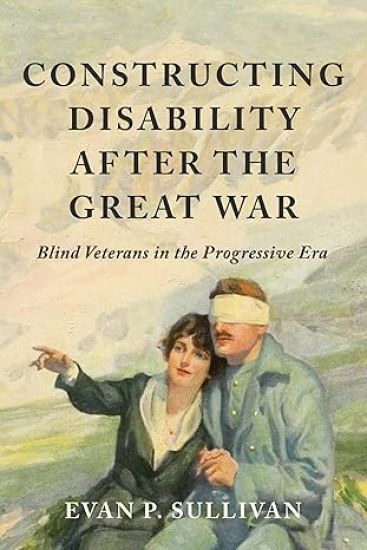
Constructing Disability after the Great War

Constructing Disability after the Great War

Evan P. Sullivan

UNIVERSITY OF ILLINOIS PRESS
2024
sidottu
As Americans--both civilians and veterans--worked to determine the meanings of identity for blind veterans of World War I, they bound cultural constructs of blindness to all the emotions and contingencies of mobilizing and fighting the war, and healing from its traumas. Sighted Americans’ wartime rehabilitation culture centered blind soldiers and veterans in a mix of inspirational stories. Veterans worked to become productive members of society even as ableism confined their unique life experiences to a collection of cultural tropes that suggested they were either downcast wrecks of their former selves or were morally superior and relatively flawless as they overcame their disabilities and triumphantly journeyed toward successful citizenship. Sullivan investigates the rich lives of blind soldiers and veterans and their families to reveal how they confronted barriers, gained an education, earned a living, and managed their self-image while continually exposed to the public’s scrutiny of their success and failures.
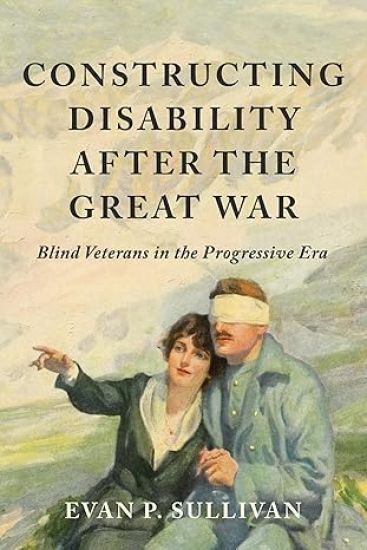
Constructing Disability after the Great War

Constructing Disability after the Great War

Evan P. Sullivan

UNIVERSITY OF ILLINOIS PRESS
2024
nidottu
As Americans--both civilians and veterans--worked to determine the meanings of identity for blind veterans of World War I, they bound cultural constructs of blindness to all the emotions and contingencies of mobilizing and fighting the war, and healing from its traumas. Sighted Americans’ wartime rehabilitation culture centered blind soldiers and veterans in a mix of inspirational stories. Veterans worked to become productive members of society even as ableism confined their unique life experiences to a collection of cultural tropes that suggested they were either downcast wrecks of their former selves or were morally superior and relatively flawless as they overcame their disabilities and triumphantly journeyed toward successful citizenship. Sullivan investigates the rich lives of blind soldiers and veterans and their families to reveal how they confronted barriers, gained an education, earned a living, and managed their self-image while continually exposed to the public’s scrutiny of their success and failures.
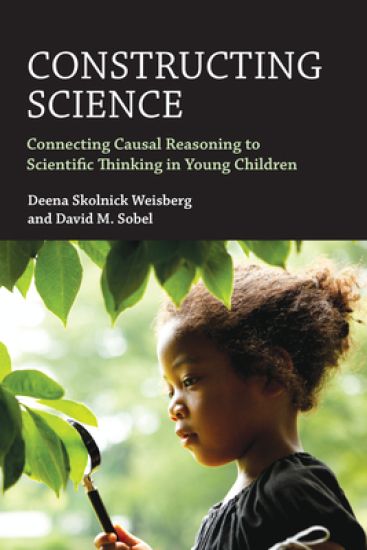
Constructing Science

Constructing Science

Deena Skolnick Weisberg; David M. Sobel

MIT PRESS LTD
2022
nidottu
An examination of children's causal reasoning capacities and how those capacities serve as the foundation of their scientific thinking. Young children have remarkable capacities for causal reasoning, which are part of the foundation of their scientific thinking abilities. In Constructing Science, Deena Weisberg and David Sobel trace the ways that young children's sophisticated causal reasoning abilities combine with other cognitive, metacognitive, and social factors to develop into a more mature set of scientific thinking abilities. Conceptualizing scientific thinking as the suite of skills that allows people to generate hypotheses, solve problems, and explain aspects of the world, Weisberg and Sobel argue that understanding how this capacity develops can offer insights into how we can become a more scientifically literate society. Investigating the development of causal reasoning and how it sets the stage for scientific thinking in the elementary school years and beyond, Weisberg and Sobel outline a framework for understanding how children represent and learn causal knowledge and identify key variables that differ between causal reasoning and scientific thinking. They present empirical studies suggesting ways to bridge the gap between causal reasoning and scientific thinking, focusing on two factors: contextualization and metacognitive thinking abilities. Finally, they examine children's explicit understanding of such concepts as science, learning, play, and teaching.
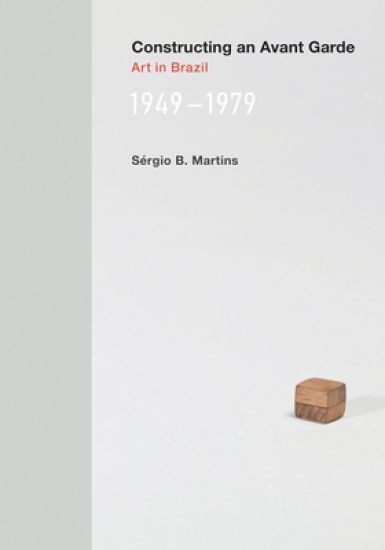
Constructing an Avant-Garde

Constructing an Avant-Garde

Sergio B. Martins

MIT PRESS LTD
2021
pokkari
How Brazilian postwar avant-garde artists updated modernism in a way that was radically at odds with European and North American art historical narratives. Brazilian avant-garde artists of the postwar era worked from a fundamental but productive out-of-jointness. They were modernist but distant from modernism. Europeans and North Americans may feel a similar displacement when viewing Brazilian avant-garde art; the unexpected familiarity of the works serves to make them unfamiliar. In Constructing an Avant-Garde, S rgio Martins seizes on this uncanny obliqueness and uses it as the basis for a reconfigured account of the history of Brazil's avant-garde. His discussion covers not only widely renowned artists and groups--including H lio Oiticica, Lygia Clark, Cildo Meireles, and neoconcretism--but also important artists and critics who are less well known outside Brazil, including M rio Pedrosa, Ferreira Gullar, Am lcar de Castro, Lu s Sacilotto, Antonio Dias, and Rubens Gerchman. Martins argues that artists of Brazil's postwar avant-garde updated modernism in a way that was radically at odds with European and North American art historical narratives. He describes defining episodes in Brazil's postwar avant-garde, discussing crucial critical texts, including Gullar's "Theory of the Non-Object," a phenomenological account of neoconcrete artworks; Oiticica, constructivity, and Mondrian; portraiture, self-portraiture, and identity; the nonvisual turn and missed encounters with conceptualism; and monochrome, manifestos, and engagement. The Brazilian avant-garde's hijacking of modernism, Martins shows, gained further complexity as artists began to face their international minimalist and conceptualist contemporaries in the 1960s and 1970s. Reconfiguring not only art history but their own history, Brazilian avant-gardists were able to face contemporary challenges from a unique--and oblique--standpoint.
Constructing Civility

Constructing Civility

Richard S. Park

University of Notre Dame Press
2017
nidottu
In Constructing Civility, Richard Park bridges Christian and Islamic political theologies on the basis of an Aristotelian ethics. He argues that modern secularism entails ideological commitments that can work against the promotion of public civility in pluralistic societies. A corrective outlook on public life and the public sphere is necessary, an outlook that aligns with and recovers the notion of the human good. Park develops a framework for a universally applicable public civility in multifaith and multicultural contexts by engaging the central concepts of the "image of God" (imago Dei) and "human nature" (fitra) in Roman Catholicism and Islam. The study begins with a critique of the social fragmentation and decline of public life found in modernity. Park's central contention is that the construction of public civility within Christian and Islamic political theologies is more promising and sustainable if it is reframed in terms of the human good rather than the common good. The book offers an illustration of the proposed framework of public civility in Mindanao, Philippines, an area that represents one of the longest-standing conflicts between Christian and Muslim communities. Park's sophisticated treatment brings together theology, philosophy, religious studies, intellectual history, and political theory, and will appeal to scholars in all of those fields.
Constructing Civility

Constructing Civility

Richard S. Park

UNIVERSITY OF NOTRE DAME PRESS
2022
sidottu
In Constructing Civility, Richard Park bridges Christian and Islamic political theologies on the basis of an Aristotelian ethics. He argues that modern secularism entails ideological commitments that can work against the promotion of public civility in pluralistic societies. A corrective outlook on public life and the public sphere is necessary, an outlook that aligns with and recovers the notion of the human good. Park develops a framework for a universally applicable public civility in multifaith and multicultural contexts by engaging the central concepts of the "image of God" (imago Dei) and "human nature" (fitra) in Roman Catholicism and Islam. The study begins with a critique of the social fragmentation and decline of public life found in modernity. Park's central contention is that the construction of public civility within Christian and Islamic political theologies is more promising and sustainable if it is reframed in terms of the human good rather than the common good. The book offers an illustration of the proposed framework of public civility in Mindanao, Philippines, an area that represents one of the longest-standing conflicts between Christian and Muslim communities. Park's sophisticated treatment brings together theology, philosophy, religious studies, intellectual history, and political theory, and will appeal to scholars in all of those fields.
Constructing the Child Viewer

Constructing the Child Viewer

Carmen Luke

Praeger Publishers Inc
1990
sidottu
Beginning from a poststructuralist position, Constructing the Child Viewer examines three decades of U.S. research on television and children. The book concludes that historical concepts of the child television viewer are products of discourse and cannot be taken to reflect objective, scientific truths about the child viewer. Widely disseminated constructs of the passive viewer, the active viewer, the interactive viewer, and the media literate viewer are seen as problematic. Nearly all academic studies published from 1948 to 1979 on the subject are included in this volume. Each receives close textual analysis, making this a useful bibliographic resource and reference book. Methodologically and theoretically, this is the first text of its kind to read the history of research on television and children as an archaeology of knowledge.Constructing the Child Viewer is an extensive bibliographical resource, a preliminary introduction to Foucault's discourse theory, and an experimental application of that theory to one major strand of the discourse of mass communications research. Students of educational psychology, sociology, and communications/media will find this work invaluable.
Contracting Out Government Services

Contracting Out Government Services

Paul Seidenstat

Praeger Publishers Inc
1999
sidottu
Privatization of government services in the United States has accelerated in the last two decades, especially at the state and local levels. This work focuses on contracting out—the most widely used method of privatization. Contributors from academia, consulting firms, government agencies, and private providers discuss the why and how of contracting out and examine the results of contracted services, including quality and cost measures of performance. Some chapters apply economic theory to contracting out. Others examine recent case studies of contracting out initiatives. The book begins with a thoughtful essay on the theory of privatization and examines the recent record of use in state and local governments. Section 1 takes an overview look at contracting out. Section 2 examines contracting in the criminal justice area as well as examples of contracting in such diverse areas as trash collection and the operation of golf courses. The final section looks in depth at the mechanics, obstacles, and effects of contracting. The book points out the pluses and minuses of contracting out and points to the lessons that can be learned from the recent history of this privatization technique.
Contracting for Development

Contracting for Development

Ruben Berrios

Praeger Publishers Inc
2000
sidottu
Development assistance, long seen as a giveaway to developing countries, is, according to Berríos' assessment, actually a giveaway to large for-profit U.S. contractors. Berríos shows that a small but influential number of contractors continue to be awarded most of the contracts, both in value and number, despite their average or substandard performance. Berríos documents the commercial considerations that drive U.S. development assistance. The increasing delivery of development aid in the form of contracts has led contractors to increase their weight and influence on USAID's programs. As Berríos contends, the reasons for giving aid often have little to do with helping other countries, because, instead, it ends up mainly helping U.S. firms. Little is known about contracting for development. The contracting process is often neither open nor competitive. Despite the talk of restructuring, USAID continues to award contracts that are unfavorable to the agency. Berríos documents the practices of private sector contracting, how they compete for USAID contracts, how they fit into the stated aims and needs of the agency, and what their performance evaluations say upon completion of contracts. Berríos also provides a sweeping review of U.S. development assistance policies, the trend toward privatization, the rhetoric about reinventing government, and the issue of past performance. A controversial assessment, this will be of interest to scholars, researchers, and policy makers involved with U.S. developmental strategies.
Constructing the Stable State

Constructing the Stable State

Kathleen H. Hawk

Praeger Publishers Inc
2002
sidottu
The United States and the international community intervened in a number of internal conflicts throughout the 1990s, generally justifying their actions on humanitarian grounds. In most cases, the external military intervention largely halted the fighting and allowed humanitarian assistance to be distributed. However, as Hawk makes clear, simply halting the fighting has not allowed these countries to create stable governments and harmonious societies.This study is based on the premise that if external actors—foreign governments, international organizations, and private groups—can not figure out how to lay a foundation for a stable, longer-term peace, there will be decreasing support for international intervention and peacekeeping/peacebuilding missions in the future. Although external actors have undertaken many activities in the aftermath of a military intervention in an attempt to consolidate peace, sufficient attention has not been paid to (re)constructing the state as a capable, effective, and legitimate entity. While (re)constructing the state is only a portion of what needs to be done to bring about a stable, long-term peace, it provides a necessary foundation upon which to structure the other activities. Through her examination of external actions in Somalia, Bosnia, and Kosovo, Hawk draws 23 lessons, nine of which are applicable to interventions in general and the remaining 14 specific to statebuilding efforts. This study will be of particular interest to scholars, students, and policymakers involved with conflict resolution and international relations.