Kirjojen hintavertailu. Mukana 11 372 932 kirjaa ja 12 kauppaa.

Kirjahaku

Etsi kirjoja tekijän nimen, kirjan nimen tai ISBN:n perusteella.

1000 tulosta hakusanalla Crystal Fraiser

Crystal Identification with the Polarizing Microscope

Crystal Identification with the Polarizing Microscope

R.E. Stoiber; S.A. Morse

Chapman and Hall
1994
nidottu
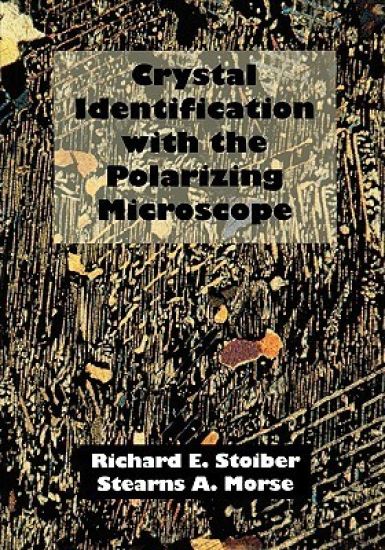
Some of the simpler measurements of optical mineralogy are so precise and powerful that they give satisfaction to beginning students. Not long after mastering the strike and dip of rock surfaces with the Brunton compass, many geology students are able to determine precisely the identity of quartz, or the anorthite content of plagioclase, or the magne­ sium ratio of pyroxene with the polarizing or petrographic microscope, by means of measuring refractive index to better than one part in a thousand. Very little training and almost no theory are needed to achieve these skills. But there inevitably comes a time when theory is needed, either to get on with the art, or simply to reconstruct from first principles what is going on, when rote memory fails. In this book we hope to provide both the rote methods and the theoretical background for practitioners at all levels of experience. We draw from several careers-ours, our colleagues', and our students' -in teaching the subject at various levels of sophistication. Our book is intended to serve the needs of industrial and forensic scientists as well as petrogra­ phers who deal with rocks. Much of our treatment is based on new research, both in matters of presentation and in the optical determination of minerals and other materials.
Crystal Growth - From Fundamentals to Technology
The book contains 5 chapters with 19 contributions form internationally well acknowledged experts in various fields of crystal growth. The topics are ranging from fundamentals (thermodynamic of epitaxy growth, kinetics, morphology, modeling) to new crystal materials (carbon nanocrystals and nanotubes, biological crystals), to technology (Silicon Czochralski growth, oxide growth, III-IV epitaxy) and characterization (point defects, X-ray imaging, in-situ STM). It covers the treatment of bulk growth as well as epitaxy by anorganic and organic materials.
Crystal Reports 2008 For Dummies

Crystal Reports 2008 For Dummies

Allen G. Taylor

John Wiley Sons Inc
2008
nidottu
A report is only useful if those who receive it understand what it means. Knowing how to use Crystal Reports gives you the edge in producing reports from your database that really are crystal clear. Crystal Reports 2008 For Dummies is a quick and easy guide to get you going with the latest version of this bestselling report-writing software. In fact, it’s so popular that previous editions have made it a bestseller too. Crystal Reports 2008 For Dummies gives you just what you should know to produce the reports you’ll need most often, including how to: Pull specific information from your database, sort and group it, and find the details you needUse dynamic or cascading promptsTroubleshoot and print reports and save time with templatesView reports on your LANWrite formulas to retrieve specific informationCreate and update OLAP reportsFormat reports, control page breaks, and even add graphics or Flash filesEnhance your reports with charts and mapsUse Crystal Reports in the enterprise There’s also a companion Web site with sample reports from the book and links to sites with more related information. With Crystal Reports 2008 For Dummies by your side, you’ll soon be able to create reports from simple to spectacular, whenever the need arises.
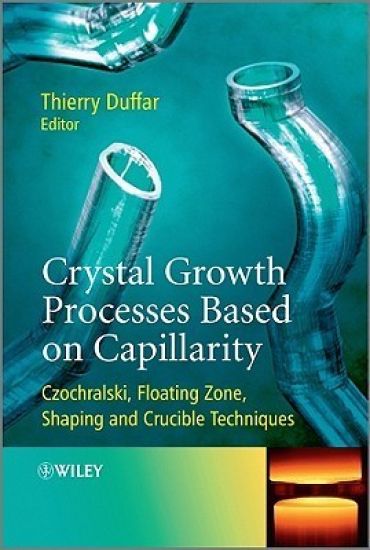
Crystal Growth Processes Based on Capillarity
Crystal Growth Processes Based on Capillarity closely examines crystal growth technologies, like Czochralski, Floating zone, and Bridgman. The up-to-date reference contains detailed technical and applied information, especially on the difficulty of crystal shape control. Including practical examples and software applications, this book provides both theoretical and experimental sections. Edited by a well-respected academic with over twenty-five years of experience in this field, the text is an excellent resource for professionals in crystal growth as well as for students in understanding the fundamentals and the technology of crystal growth.
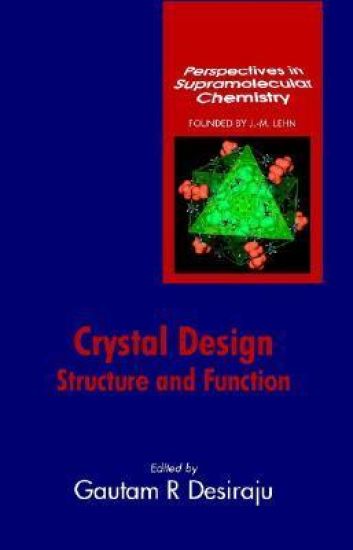
Crystal Design

Crystal Design

John Wiley Sons Inc
2003
sidottu
Perspectives in Supramolecular Chemistry relates recent developments and new exciting approaches in supramolecular chemistry. The series covers al areas from theoretical and modelling espects through organic and inorganic chemistry and biochemistry to materials, solid-state and polymer sciences reflecting the many and varied applications of supramolecular structures in modern chemistry. Crystal engineering is one of the fastest growing areas in supramolecular chemistry because it is able to define design strategies that link structure with properties of useful solids. Crystal Design is the first book that emphasises this continuity between what a crystal is and what a crystal can do. Written by experts, this book establishes connections between the structures of molecular materials and their properties and links the domains of intermolecular interactions, crystal structures and crystal properties. Without interactions there cannot be structures, and without worthwhile properties as a goal, there cannot be sufficient reason for designing structures. The many advances that have been made during this process are described in this book. Crystal Design follows on from an earlier volume in the series entitled The Crystal as a Supramolecular Entity. While the earlier volume was conceptual in its theme, this volume concerns methodology and practice, the nuts-and-bolts of crystal engineering. Among the topics covered are network structures, hydrogen bonds as design elements, microporous solids, polymorphism, ferromagnetism and sensors. The systems described cut across traditional organic and inorganic divisions of chemistry.
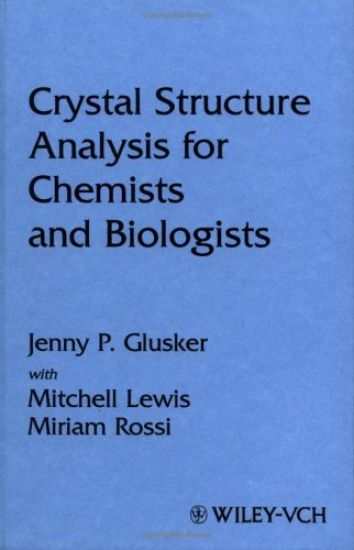
Crystal Structure Analysis for Chemists and Biologists

Crystal Structure Analysis for Chemists and Biologists

Jenny P. Glusker; Mitchell Lewis; Miriam Rossi

John Wiley Sons Inc
1994
sidottu
The fields of structural chemistry and biochemistry have blossomed in the last seventy years since X-ray diffraction was discovered in 1912. Dorothy Hodgkin, who obtained a Nobel Prize in 1965 for her X-ray diffraction work wrote 'a great advantage of X-ray analysis as a method of chemical structure analysis is its power to show some totally unexpected and surprising structure with, at the same time, complete certainty.' The results of all X-ray diffraction studies are used by chemists and buiochemists but these scientists need to be able to appreciate the significance and extent to which these results may be used. A number of books written for practicing crystallographers cover the theory and applications of X-ray diffraction, but few are of real practical use to non-specialists. In 'Crystal Structure Analysis for Biologists and Chemists', the general principles of crystal structure are presented in a highly readable way. The book of Glusker, who is internationally renowned, provides good coverage of theory, including data and understanding their significance.
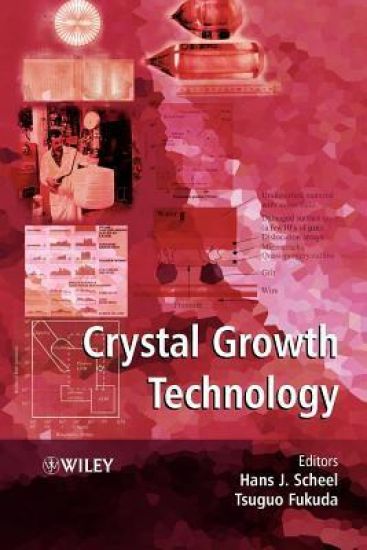
Crystal Growth Technology

Crystal Growth Technology

Hans J. Scheel; Tsuguo Fukuda

John Wiley Sons Inc
2004
nidottu
This volume deals with the technologies of crystal fabrication, of crystal machining, and of epilayer production and is the first book on industrial and scientific aspects of crystal and layer production. Highest-quality crystals and epitaxical layers form the base for many of industries technological advances, including telecommunication, computer and electric energy technology, and those technologies based on lasers and nonlinear-optic crystals. Furthermore, automobile electronics, audiovisual equipment and infrared night-vision all depend on high-quality crystals and epilayers, as do novel technologies currently in development and planned for the future. This book contains 29 contributions of leading crystal technologists covering the following topics: *General aspects of crystal growth technology *Silicon *Compound semiconductors *Oxides and halides *Crystal machining *Epitaxy and layer deposition Scientific and technological problems of production and machining of industrial crystals are discussed by top experts, most of the m from the major growth industries and crystal growth centres. It is anticipated that this volume will serve all scientists and engineers involved in crystal and epilayer fabrication. In addition, it will be useful for the users of crystals, for teachers and graduate students in materials sciences, in electronic and other functional materials, chemical and metallurgical engineering, micro-and optoelectronics including nanotechnology, mechanical engineering and precision-machining, microtechnology, and in solid-state sciences. Also consultants and specialists will profit from this book, as will those interested in crystals, epilayers, and their production for saving energy (GaN- and SiC-based high-power electronics and light-emitting diodes for illumination) and for renewable energy sources (economic high-efficiency solar cells and forthcoming laser-fusion energy).
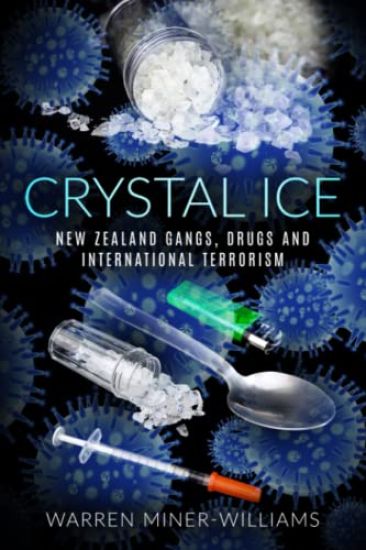
Crystal Ice

Crystal Ice

Warren Miner-Williams

National Library of New Zealand
2021
pokkari
Set in New Zealand, CRYSTAL ICE describes the empire of two brothers who own a successful Brazilian restaurant on Auckland's busy Viaduct Harbour. A restaurant that is the legitimate front for the manufacture of crystal methamphetamine that takes place on a small rural farm near Runciman, just south of Auckland. The meth lab is the money mine that funds the development of a genetically engineered variant of the 1918 Spanish flu. Unlike COVID-19 this is a weaponized virus so terrible that it has the potential to become a global pandemic, killing millions of people. CRYSTAL ICE also tells of an Auckland-based motorcycle gang called the Skorpions that has the distribution network that allows it to sell crystal methamphetamine in New Zealand and the mutualistic relationship that exists between the Croatian restaurateurs and the Skorpion leadership. It is a relationship that hinges on the Croatians successfully smuggling the precursor chemicals into the country and receiving 60% of the vast amounts of money generated by this illicit trade. When this relationship is threatened, by one of the Skorpion co-leaders withholding monies from the brothers, the Croatian's revenge is both swift and brutal, resulting in the execution of the renegade Skorpion leader. The killing is the catalyst to a series of events that ultimately threatens the illicit drug ring. Parallel to the power flux between the Croatians and the Skorpions is a young and na ve New Zealand Customs officer who gradually uncovers small and sometimes, seemingly insignificant clues that eventually leads him to discover the connection between the Croatian restaurateurs who manufacture the drugs, the Auckland motorcycle gang who distribute them and finally the terrorist cell that released the virus in the United States. Unlike "Contagion" written by Scott Burns in 2010 this is the story of a terrorist weaponized virus released by aerosol across the North Eastern states of America. Similar to COVID-19 the outbreak initially catches USAMRIID and the CDC off-guard. However, they soon implement the National Strategy for Pandemic Influenza and initiate inter-agency field teams to investigate and identify the point sources of contagion. This novel does not detail the effects COVID-19 has had on the United States, it only details the effect the fictional weaponized virus has had before its distribution was disrupted.
Crystal Gardens

Crystal Gardens

Amanda Quick

BERKLEY BOOKS
2013
pokkari
New York Times bestselling author Amanda Quick delivers "a promising start to a Victorian-era series"* with the first Ladies of Lantern Street novel... Evangeline Ames has rented a country cottage far from the London streets where she was recently attacked. Fascinated by the paranormal energy of nearby Crystal Gardens, she finds pleasure in sneaking past the wall to explore the grounds. And when her life is threatened again, she instinctively goes to the gardens for safety. Lucas Sebastian has never been one to ignore a lady in danger, even if she is trespassing on his property. Quickly disposing of her would-be assassin, he insists they keep the matter private. There are rumors enough already, about treasure buried under his garden and occult botanical experiments performed by his uncle--who died of mysterious causes. With Evangeline's skill for detection, and Lucas's sense of the criminal mind, they soon discover that they have a common enemy. And as the energy emanating from Crystal Gardens intensifies, they realize that to survive they must unearth what has been buried for too long.
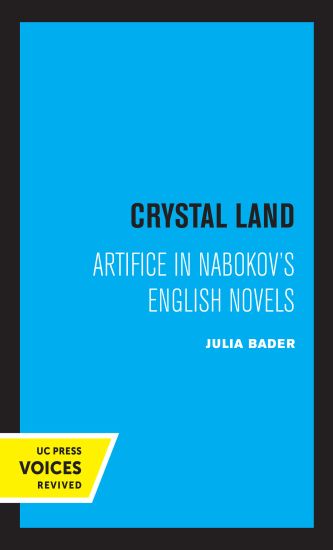
Crystal Land

Crystal Land

Julia Bader

University of California Press
2020
pokkari
Crystal Land: Artifice in Nabokov's English Novels is an in-depth exploration of Vladimir Nabokov's use of artistry and the theme of art across his English-language novels. The book investigates how Nabokov crafts intricate worlds where fiction mirrors the creative process itself. From playful word games and literary allusions to themes of obsession, identity, and mortality, Nabokov's works challenge readers to embrace the artificiality of art as a profound avenue for understanding consciousness and the human condition. This study emphasizes how his narratives blur the boundaries between reality and illusion, underscoring the transformative power of imagination. Through detailed analyses of works like Lolita, Pale Fire, and Ada, the book uncovers the recurring motifs and complex structures that define Nabokov's literary style. Each novel is presented as a unique network of symbols, reflective of the artist's craft and consciousness. By examining the intersections of humor, self-reflection, and narrative manipulation, Crystal Land offers readers a deeper appreciation of Nabokov’s artful storytelling and its capacity to reshape perceptions of reality and creativity. This title is part of UC Press's Voices Revived program, which commemorates University of California Press’s mission to seek out and cultivate the brightest minds and give them voice, reach, and impact. Drawing on a backlist dating to 1893, Voices Revived makes high-quality, peer-reviewed scholarship accessible once again using print-on-demand technology. This title was originally published in 1972.
Crystal Land

Crystal Land

Julia Bader

University of California Press
2021
sidottu
Crystal Land: Artifice in Nabokov's English Novels is an in-depth exploration of Vladimir Nabokov's use of artistry and the theme of art across his English-language novels. The book investigates how Nabokov crafts intricate worlds where fiction mirrors the creative process itself. From playful word games and literary allusions to themes of obsession, identity, and mortality, Nabokov's works challenge readers to embrace the artificiality of art as a profound avenue for understanding consciousness and the human condition. This study emphasizes how his narratives blur the boundaries between reality and illusion, underscoring the transformative power of imagination. Through detailed analyses of works like Lolita, Pale Fire, and Ada, the book uncovers the recurring motifs and complex structures that define Nabokov's literary style. Each novel is presented as a unique network of symbols, reflective of the artist's craft and consciousness. By examining the intersections of humor, self-reflection, and narrative manipulation, Crystal Land offers readers a deeper appreciation of Nabokov’s artful storytelling and its capacity to reshape perceptions of reality and creativity. This title is part of UC Press's Voices Revived program, which commemorates University of California Press’s mission to seek out and cultivate the brightest minds and give them voice, reach, and impact. Drawing on a backlist dating to 1893, Voices Revived makes high-quality, peer-reviewed scholarship accessible once again using print-on-demand technology. This title was originally published in 1972.
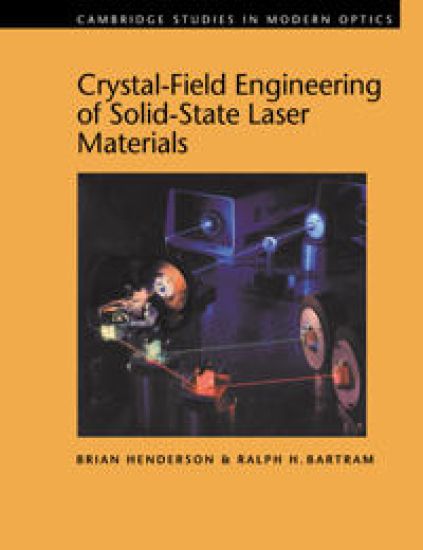
Crystal-Field Engineering of Solid-State Laser Materials

Crystal-Field Engineering of Solid-State Laser Materials

Brian Henderson; Ralph H. Bartram

Cambridge University Press
2005
pokkari
This book is concerned with the underlying science and design of laser materials. It emphasizes the principles of crystal–field engineering and discusses the basic physical concepts that determine laser gain and nonlinear frequency conversion in optical crystals. A concise review of the essential underlying science is presented, and the predictive capabilities of crystal-field engineering are developed to show how modification of the symmetry and composition of optical centres can improve laser performance. Applications of the principles of crystal-field engineering to a variety of optical crystals are also discussed in relation to the performances of laser devices. This book will be of considerable interest to physical, chemical and material scientists and to engineers involved in the science and technology of solid state lasers. It will be used by senior undergraduate and postgraduate students as well as by established scientists.
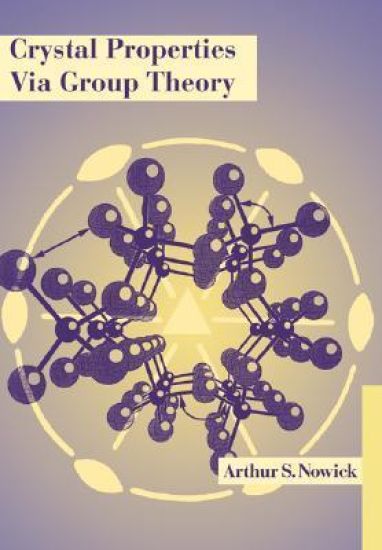
Crystal Properties via Group Theory

Crystal Properties via Group Theory

Arthur S. Nowick

Cambridge University Press
2005
pokkari
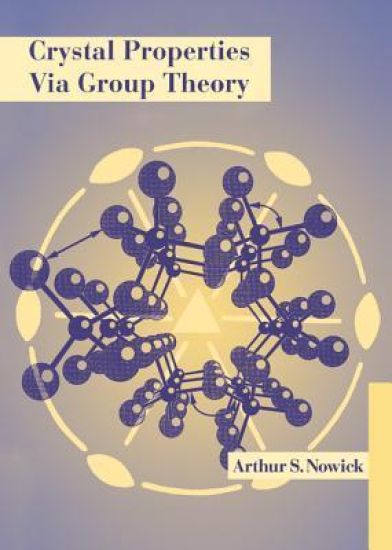
This book deals with the effect of crystal symmetry in determining the tensor properties of crystals. Although this is a well-established subject, the author provides a new approach using group theory and, in particular, the method of symmetry coordinates, which has not been used in any previous book. Using this approach, all tensors of a given rank and type can be handled together, even when they involve very different physical phenomena. Applications to technologically important phenomena as diverse as the electro-optic, piezoelectric, photoelastic, piezomagnetic, and piezoresistance effects, as well as magnetothermoelectric power and third-order elastic constants, are presented. Attention is also given to 'special magnetic properties', that is those that require the concepts of time reversal and magnetic symmetry, an important subject not always covered in other books in this area. This book will be of interest to researchers in solid-state physics and materials science, and will also be suitable as a text for graduate students in physics and engineering taking courses in solid-state physics.
Crystal Field Handbook

Crystal Field Handbook

Cambridge University Press
2007
pokkari
This book, first published in 2000, is based on the modern conceptual understanding of crystal fields. It provides readers with clear instructions and a set of computer programs for the phenomenological analysis of energy spectra of magnetic ions in solids. The text clarifies several issues that have historically produced confusion in this area, particularly the effects of covalency and ligand polarization on the energy spectra of magnetic ions. Readers are shown how to employ a hierarchy of parametrized models to extract as much information as possible from observed lanthanide and actinide spectra. This book of crystal field theory describes all of the available phenomenological models, together with the conceptual and computational tools necessary for their use. It will be of particular interest to graduate students and researchers working in the development of opto-electronic systems and magnetic materials.
Crystal Properties via Group Theory

Crystal Properties via Group Theory

Arthur S. Nowick

Cambridge University Press
1995
sidottu
This book describes the effect of crystal symmetry in determining the tensor properties of crystals. The author provides a new approach to the subject by using group theory and, in particular, the method of symmetry coordinates. Through this approach, all tensors of a given rank and type can be handled together, even when they involve very different physical phenomena. Applications to technologically important phenomena as diverse as the electro-optic, piezoelectric, photoelastic, piezomagnetic, and piezoresistance effects, as well as magnetothermoelectric power and third-order elastic constants, are presented. Attention is also given to ‘special magnetic properties’ that require the concepts of time reversal and magnetic symmetry, an important subject not always covered in other books in this area. This book will be of interest to researchers in solid state physics and materials science, and will be a suitable text for graduate students in physics and engineering taking courses in solid state physics.
Crystal Field Handbook

Crystal Field Handbook

Cambridge University Press
2000
sidottu
This book, first published in 2000, is based on the modern conceptual understanding of crystal fields. It provides readers with clear instructions and a set of computer programs for the phenomenological analysis of energy spectra of magnetic ions in solids. The text clarifies several issues that have historically produced confusion in this area, particularly the effects of covalency and ligand polarization on the energy spectra of magnetic ions. Readers are shown how to employ a hierarchy of parametrized models to extract as much information as possible from observed lanthanide and actinide spectra. This book of crystal field theory describes all of the available phenomenological models, together with the conceptual and computational tools necessary for their use. It will be of particular interest to graduate students and researchers working in the development of opto-electronic systems and magnetic materials.
Crystal-Field Engineering of Solid-State Laser Materials

Crystal-Field Engineering of Solid-State Laser Materials

Brian Henderson; Ralph H. Bartram

Cambridge University Press
2000
sidottu
This book is concerned with the underlying science and design of laser materials. It emphasizes the principles of crystal–field engineering and discusses the basic physical concepts that determine laser gain and nonlinear frequency conversion in optical crystals. A concise review of the essential underlying science is presented, and the predictive capabilities of crystal-field engineering are developed to show how modification of the symmetry and composition of optical centres can improve laser performance. Applications of the principles of crystal-field engineering to a variety of optical crystals are also discussed in relation to the performances of laser devices. This book will be of considerable interest to physical, chemical and material scientists and to engineers involved in the science and technology of solid state lasers. It will be used by senior undergraduate and postgraduate students as well as by established scientists.