This collection gathers together a number of Daniel Defoe's non-fiction writings on political and economic issues. The selection is designed to reflect the numerous facets of Defoe's economic and political thought. Each of the eight volumes includes an introduction.
This collection gathers together a number of Daniel Defoe's non-fiction writings on political and economic issues. The selection is designed to reflect the numerous facets of Defoe's economic and political thought. Each of the eight volumes includes an introduction.
This collection gathers together a number of Daniel Defoe's non-fiction writings on political and economic issues. The selection is designed to reflect the numerous facets of Defoe's economic and political thought. Each of the eight volumes includes an introduction.
W. Oberst; A. Busemann; W. Eckardt; O. Eggert; W. Feucheter; L. Hänert; Ch. von Hofe; K. Jutrow; H.-H. Kritzinger; A. Langhans; H. Lüscher; D.W. Marx; W. Nehring; K. Pannke; V. Schläfer
Dieser Buchtitel ist Teil des Digitalisierungsprojekts Springer Book Archives mit Publikationen, die seit den Anfängen des Verlags von 1842 erschienen sind. Der Verlag stellt mit diesem Archiv Quellen für die historische wie auch die disziplingeschichtliche Forschung zur Verfügung, die jeweils im historischen Kontext betrachtet werden müssen. Dieser Titel erschien in der Zeit vor 1945 und wird daher in seiner zeittypischen politisch-ideologischen Ausrichtung vom Verlag nicht beworben.
W M C Van Aalderen; M J I J Albers; A C E de Blécourt; G Bleijenberg; H Boxma; C Braet; O F Brouwer; B Derkx; H J y Van Drie; M Van Dijk; A M Van Furth; T M Van Gemert; R a Hirasing; H W C Hofland; E C a M Houdijk; L W a De Jong; R C J De Jonge; L J Kalverdijk; J K W Kieboom; C Kluft; C M F Kneepkens; H Knoop; F J M Van Leerdam; M M H Lub; T G J De Meij; E a J Peeters; S Scholten; A B Sprikkelman; D Tibboel; H L G Ter Waarbeek; J Walstra; B Wijnberg-Williams
From its first edition in 1979, Perspectives in Sociology has provided generations of undergraduates with a clear, reassuring introduction to the complications of sociological theory. This revised and updated edition features:a completely rewritten general introduction and conclusion;all-new introductions to each part, clarifying how each one builds on what came before;an updated set of formative questions at the end of each chapter;a comprehensive glossary of key terms.While retaining its emphasis and wealth of information on the founding figures of sociology, this sixth edition includes new tools that will allow students from related disciplines to access relevant sociological material quickly.
From its first edition in 1979, Perspectives in Sociology has provided generations of undergraduates with a clear, reassuring introduction to the complications of sociological theory. This revised and updated edition features:a completely rewritten general introduction and conclusion;all-new introductions to each part, clarifying how each one builds on what came before;an updated set of formative questions at the end of each chapter;a comprehensive glossary of key terms.While retaining its emphasis and wealth of information on the founding figures of sociology, this sixth edition includes new tools that will allow students from related disciplines to access relevant sociological material quickly.
This book is a representation of my thoughts, perceptions, and honest feelings on various subject matters. It serves as a microscopic view into my mind and heart. Some of these writings come from personal experiences, things I've seen, can relate to, or just my own opinions. I hope this will provide a personal insight into who Abe Lowe IV really is; Very complex, yet simple. W.E.I.R.D. So ride with me as I take you on a roller coaster through my cognitions, exploring emotions from different time frames of my life. There are a few valleys and peaks along this journey. It is my goal that the world today is projected through my eyes. I say what most think, but are afraid to say. Strap in and prepare yourself for departure. ALL ABOARD
William Dean Howells ( March 1, 1837 - May 11, 1920) was an American realist novelist, literary critic, and playwright, nicknamed "The Dean of American Letters". He was particularly known for his tenure as editor of The Atlantic Monthly, as well as for his own prolific writings, including the Christmas story "Christmas Every Day" and the novels The Rise of Silas Lapham and A Traveler from Altruria. Early life and family: William Dean Howells was born on March 1, 1837 in Martinsville, Ohio (now known as Martins Ferry, Ohio) to William Cooper Howells and Mary Dean Howells, the second of eight children. His father was a newspaper editor and printer who moved frequently around Ohio. In 1840, the family settled in Hamilton, Ohio, where his father oversaw a Whig newspaper and followed Swedenborgianism.Their nine years there were the longest period that they stayed in one place. The family had to live frugally, although the young Howells was encouraged by his parents in his literary interests. He began at an early age to help his father with typesetting and printing work, a job known at the time as a printer's devil. In 1852, his father arranged to have one of his poems published in the Ohio State Journal without telling him. Early career: In 1856, Howells was elected as a clerk in the State House of Representatives. In 1858, he began to work at the Ohio State Journal where he wrote poetry and short stories, and also translated pieces from French, Spanish, and German. He avidly studied German and other languages and was greatly interested in Heinrich Heine. In 1860, he visited Boston and met with writers James Thomas Fields, James Russell Lowell, Oliver Wendell Holmes, Sr., Nathaniel Hawthorne, Henry David Thoreau, and Ralph Waldo Emerson. He became a personal friend to many of them, including Henry Adams, William James, Henry James, and Oliver Wendell Holmes, Jr. In 1860 Howells wrote Abraham Lincoln's campaign biography Life Of Abraham Lincoln and subsequently gained a consulship in Venice. He married Elinor Mead on Christmas Eve 1862 at the American embassy in Paris. She was a sister of sculptor Larkin Goldsmith Mead and architect William Rutherford Mead of the firm McKim, Mead, and White. Among their children was architect John Mead Howells. Editorship and other literary pursuits: The Howells returned to America in 1865 and settled in Cambridge, Massachusetts. He wrote for various magazines, including the Atlantic Monthly and Harper's Magazine. In January 1866, James Fields offered him a position as assistant editor at the Atlantic Monthly; he accepted after successfully negotiating for a higher salary, though he was frustrated by Fields' close supervision. Howells was made editor in 1871, after five years as assistant editor, and he remained in this position until 1881. In 1869, he met Mark Twain with whom he formed a longtime friendship. But his relationship with journalist Jonathan Baxter Harrison was more important for the development of his literary style and his advocacy of Realism. Harrison wrote a series of articles for the Atlantic Monthly during the 1870s on the lives of ordinary Americans.Howells gave a series of twelve lectures on "Italian Poets of Our Century" for the Lowell Institute during its 1870-71 season. He published his first novel Their Wedding Journey in 1872, but his literary reputation soared with the realist novel A Modern Instance (1882), which described the decay of a marriage. His 1885 novel The Rise of Silas Lapham became his best known work, describing the rise and fall of an American entrepreneur of the paint business. His social views were also strongly represented in the novels Annie Kilburn (1888), A Hazard of New Fortunes (1890), and An Imperative Duty (1891).....
William Dean Howells ( March 1, 1837 - May 11, 1920) was an American realist novelist, literary critic, and playwright, nicknamed "The Dean of American Letters". He was particularly known for his tenure as editor of The Atlantic Monthly, as well as for his own prolific writings, including the Christmas story "Christmas Every Day" and the novels The Rise of Silas Lapham and A Traveler from Altruria. Early life and family: William Dean Howells was born on March 1, 1837 in Martinsville, Ohio (now known as Martins Ferry, Ohio) to William Cooper Howells and Mary Dean Howells, the second of eight children. His father was a newspaper editor and printer who moved frequently around Ohio. In 1840, the family settled in Hamilton, Ohio, where his father oversaw a Whig newspaper and followed Swedenborgianism.Their nine years there were the longest period that they stayed in one place. The family had to live frugally, although the young Howells was encouraged by his parents in his literary interests. He began at an early age to help his father with typesetting and printing work, a job known at the time as a printer's devil. In 1852, his father arranged to have one of his poems published in the Ohio State Journal without telling him. Early career: In 1856, Howells was elected as a clerk in the State House of Representatives. In 1858, he began to work at the Ohio State Journal where he wrote poetry and short stories, and also translated pieces from French, Spanish, and German. He avidly studied German and other languages and was greatly interested in Heinrich Heine. In 1860, he visited Boston and met with writers James Thomas Fields, James Russell Lowell, Oliver Wendell Holmes, Sr., Nathaniel Hawthorne, Henry David Thoreau, and Ralph Waldo Emerson. He became a personal friend to many of them, including Henry Adams, William James, Henry James, and Oliver Wendell Holmes, Jr. In 1860 Howells wrote Abraham Lincoln's campaign biography Life Of Abraham Lincoln and subsequently gained a consulship in Venice. He married Elinor Mead on Christmas Eve 1862 at the American embassy in Paris. She was a sister of sculptor Larkin Goldsmith Mead and architect William Rutherford Mead of the firm McKim, Mead, and White. Among their children was architect John Mead Howells. Editorship and other literary pursuits: The Howells returned to America in 1865 and settled in Cambridge, Massachusetts. He wrote for various magazines, including the Atlantic Monthly and Harper's Magazine. In January 1866, James Fields offered him a position as assistant editor at the Atlantic Monthly; he accepted after successfully negotiating for a higher salary, though he was frustrated by Fields' close supervision. Howells was made editor in 1871, after five years as assistant editor, and he remained in this position until 1881. In 1869, he met Mark Twain with whom he formed a longtime friendship. But his relationship with journalist Jonathan Baxter Harrison was more important for the development of his literary style and his advocacy of Realism. Harrison wrote a series of articles for the Atlantic Monthly during the 1870s on the lives of ordinary Americans.Howells gave a series of twelve lectures on "Italian Poets of Our Century" for the Lowell Institute during its 1870-71 season. He published his first novel Their Wedding Journey in 1872, but his literary reputation soared with the realist novel A Modern Instance (1882), which described the decay of a marriage. His 1885 novel The Rise of Silas Lapham became his best known work, describing the rise and fall of an American entrepreneur of the paint business. His social views were also strongly represented in the novels Annie Kilburn (1888), A Hazard of New Fortunes (1890), and An Imperative Duty (1891)....
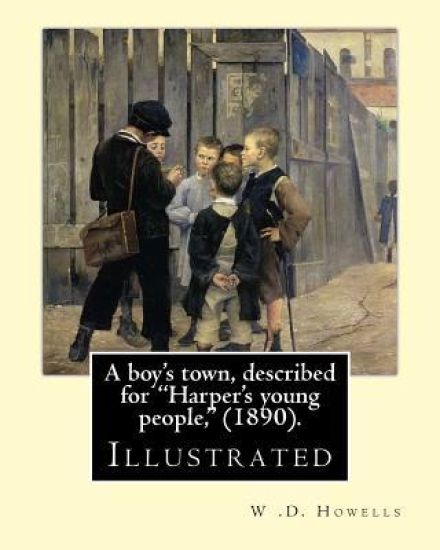
Describes the typical adventures of a mid-nineteenth-century boy from his third to eleventh years...... William Dean Howells ( March 1, 1837 - May 11, 1920) was an American realist novelist, literary critic, and playwright, nicknamed "The Dean of American Letters". He was particularly known for his tenure as editor of The Atlantic Monthly, as well as for his own prolific writings, including the Christmas story "Christmas Every Day" and the novels The Rise of Silas Lapham and A Traveler from Altruria. Early life and family: William Dean Howells was born on March 1, 1837 in Martinsville, Ohio (now known as Martins Ferry, Ohio) to William Cooper Howells and Mary Dean Howells, the second of eight children. His father was a newspaper editor and printer who moved frequently around Ohio. In 1840, the family settled in Hamilton, Ohio, where his father oversaw a Whig newspaper and followed Swedenborgianism.Their nine years there were the longest period that they stayed in one place. The family had to live frugally, although the young Howells was encouraged by his parents in his literary interests. He began at an early age to help his father with typesetting and printing work, a job known at the time as a printer's devil. In 1852, his father arranged to have one of his poems published in the Ohio State Journal without telling him. Early career: In 1856, Howells was elected as a clerk in the State House of Representatives. In 1858, he began to work at the Ohio State Journal where he wrote poetry and short stories, and also translated pieces from French, Spanish, and German. He avidly studied German and other languages and was greatly interested in Heinrich Heine. In 1860, he visited Boston and met with writers James Thomas Fields, James Russell Lowell, Oliver Wendell Holmes, Sr., Nathaniel Hawthorne, Henry David Thoreau, and Ralph Waldo Emerson. He became a personal friend to many of them, including Henry Adams, William James, Henry James, and Oliver Wendell Holmes, Jr. In 1860 Howells wrote Abraham Lincoln's campaign biography Life Of Abraham Lincoln and subsequently gained a consulship in Venice. He married Elinor Mead on Christmas Eve 1862 at the American embassy in Paris. She was a sister of sculptor Larkin Goldsmith Mead and architect William Rutherford Mead of the firm McKim, Mead, and White. Among their children was architect John Mead Howells. Editorship and other literary pursuits: The Howells returned to America in 1865 and settled in Cambridge, Massachusetts. He wrote for various magazines, including the Atlantic Monthly and Harper's Magazine. In January 1866, James Fields offered him a position as assistant editor at the Atlantic Monthly; he accepted after successfully negotiating for a higher salary, though he was frustrated by Fields' close supervision.
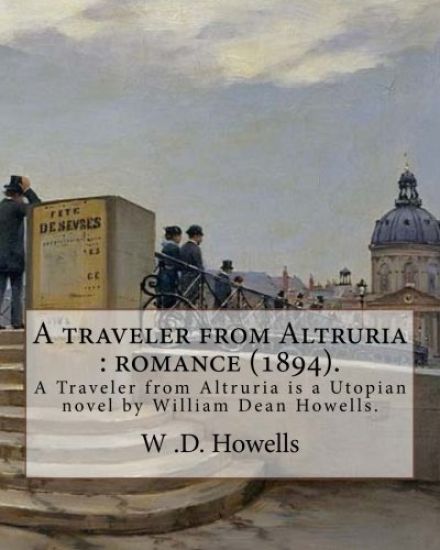
A Traveler from Altruria is a Utopian novel by William Dean Howells. It was first published in installments in The Cosmopolitan between November 1892 and October 1893, and eventually in book form by Harper & Brothers in 1894. The novel is a critique of unfettered capitalism and its consequences, and of the Gilded Age.Set during the early 1890s in a fashionable summer resort somewhere on the East Coast of the United States, the book is narrated by a Mr Twelvemough, a popular author of light fiction who has been selected to function as host to a visitor from the faraway island of Altruria called Mr Homos. Homos has come all the way to the United States to experience first-hand everyday life in the country which prides itself to represent democracy and equality, to see for himself how the principle that "all men are created equal" is being practiced. However, due to Altruria's secluded existence very little is known about that state, so Twelvemough and his circle of acquaintances, all of whom are staying at the same hotel, are more eager to learn something about Altruria than to explain American life and institutions. To their dismay, it becomes gradually clear to everyone involved in the conversations with Mr Homos-who in the course of the novel becomes less and less reluctant to talk about his own country-that the United States is greatly lagging behind Altruria in practically every aspect of life, be it political, economical, cultural, or moral. Thus, in the novel the island state of Altruria serves as a foil to America, whose citizens, compared to Altrurians, appear selfish, obsessed with money, and emotionally imbalanced. Mainly, A Traveller from Altruria is a critique of unfettered capitalism and its consequences, and of the Gilded Age in particular. In A Traveler from Altruria, Howells acknowledges the history of Utopian literature by having his group of educated characters refer to eminent representatives of that literary tradition such as Campanella (La citt del Sole, 1602) and Francis Bacon (New Atlantis, 1623), but also to quite recent authors like Edward Bellamy (Looking Backward, 1888) and William Morris (News from Nowhere, 1890). "With all those imaginary commonwealths to draw upon, from Plato, through More, Bacon, and Campanella, down to Bellamy and Morris, he has constructed the shakiest effigy ever made of old clothes stuffed with straw," says the professor, one of Homos's discussion partners, to his fellow Americans. "Depend upon it, the man is a humbug. He is not an Altrurian at all."...... William Dean Howells ( March 1, 1837 - May 11, 1920) was an American realist novelist, literary critic, and playwright, nicknamed "The Dean of American Letters".





![A Sermon, Preached Before the University of Cambridge, by H. W. C-T, D.D., Andc. [I.E. H. W. Coulhurst] ... Translated, Into English Metre, by H. W. Hopkins.](/covers/9781241166779.jpg)