Kirjahaku
Etsi kirjoja tekijän nimen, kirjan nimen tai ISBN:n perusteella.
1000 tulosta hakusanalla D W Hitz

What is it about the Irish that has kept them at each other's throats throughout this century? In this thought-provoking book, Professor Harkness charts the record of antagonistic aspirations that have divided Irish Nationalists from Irish Unionists (the latter, since 1920, being concentrated in the six Counties of Northern Ireland). Before the First World War, advocates of Irish Home rule opposed Unionist defenders of the United Kingdom. During and after the War, Irish Nationalist separatists struggled against the Unionist stronghold in the North East. When, in 1922, Ireland was divided between two unequal administrations, deadlock ensued. The Irish Free State became first a Dominion in the British Commonwealth and then, in 1949, the Irish Republic outside it. Northern Ireland soldiered on, a mere local administration devolved from Westminster, determined to remain part of the United Kingdom, but weakened by a divided population and by uncertain support from London. In 1972, after a fierce renewal of communal strife within Northern Ireland, London reasserted its rule over the province, sought an end to violent conflict, and pursued relations with Dublin to that end. The contrast of the Belfast-Dublin perspectives throughout this period are the substance of this book, yet the ongoing record of practical day-to-day operations is also part of the story. A multitude of contacts persisted across the Irish frontier, economic and social, sporting and cultural, religious and professionals, and to these too this book makes reference.
Written with the aim of broadening the subject base, this book focuses on those areas where topics in mechnaical, aeronautical and civil engineering employ common principles. Theoretical topics in solid mechanics are illustrated through many worked examples and exercises chosen to assist the reader in recognising the necessary problem solving techniques. The book is therefore suitable for both single discipline and broad-based courses that include mechanics as applied in engineering and design. The underlying theme is to show how the load carrying capacity of materials and structures used in engineering may be determined.

According to Ivar Berg's performance criteria, over half of the U.S. workforce is now underemployed. Using analysis based on U.S. and Canadian surveys of work and learning experiences and other documental data, author David Livingstone exposes the myth of the "learning enterprise" and argues that the major problem in education-work relations is not
An Introduction to the Theory of Large Deviations
D.W. Stroock
Springer-Verlag New York Inc.
1984
nidottu
These notes are based on a course which I gave during the academic year 1983-84 at the University of Colorado. My intention was to provide both my audience as well as myself with an introduction to the theory of 1arie deviations • The organization of sections 1) through 3) owes something to chance and a great deal to the excellent set of notes written by R. Azencott for the course which he gave in 1978 at Saint-Flour (cf. Springer Lecture Notes in Mathematics 774). To be more precise: it is chance that I was around N. Y. U. at the time'when M. Schilder wrote his thesis. and so it may be considered chance that I chose to use his result as a jumping off point; with only minor variations. everything else in these sections is taken from Azencott. In particular. section 3) is little more than a rewrite of his exoposition of the Cramer theory via the ideas of Bahadur and Zabel. Furthermore. the brief treatment which I have given to the Ventsel-Freidlin theory in section 4) is again based on Azencott's ideas. All in all. the biggest difference between his and my exposition of these topics is the language in which we have written. However. another major difference must be mentioned: his bibliography is extensive and constitutes a fine introduction to the available literature. mine shares neither of these attributes. Starting with section 5).
This book is available either individually, or as part of the specially-priced Arguments of the Philosphers Collection. The purpose of this series is to provide a contemporary assessment and history of the entire course of philosophical thought. Each book constitutes a detailed, critical introduction to the work of a philosopher of major influence and significance. It is sometimes said of Schopenhauer that he was not a very systematic thinker, but in the main structure of Schopenhauer’s major work Das Welt als Wille und Vorstellung is really quite clear, and contains a continuous argument which takes in the bulk of his philosophy. This volume looks at Schopenhauer's works.

More wide ranging, both geographically and chronologically, than any previous study, this well-illustrated book offers a new definition of Celtic art. Tempering the much-adopted art-historical approach, D.W. Harding argues for a broader definition of Celtic art and views it within a much wider archaeological context. He re-asserts ancient Celtic identity after a decade of deconstruction in English-language archaeology.Harding argues that there were communities in Iron Age Europe that were identified historically as Celts, regarded themselves as Celtic, or who spoke Celtic languages, and that the art of these communities may reasonably be regarded as Celtic art. This study will be indispensable for those people wanting to take a fresh and innovative perspective on Celtic Art.
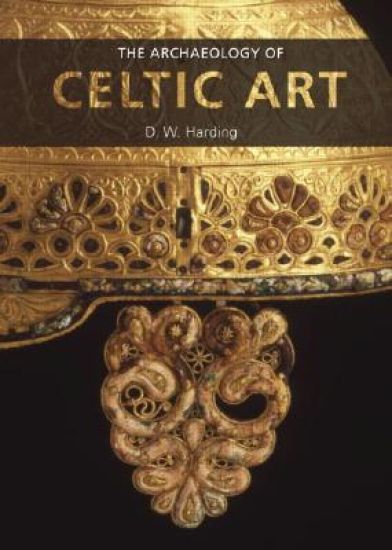
More wide ranging, both geographically and chronologically, than any previous study, this well-illustrated book offers a new definition of Celtic art. Tempering the much-adopted art-historical approach, D.W. Harding argues for a broader definition of Celtic art and views it within a much wider archaeological context. He re-asserts ancient Celtic identity after a decade of deconstruction in English-language archaeology.Harding argues that there were communities in Iron Age Europe that were identified historically as Celts, regarded themselves as Celtic, or who spoke Celtic languages, and that the art of these communities may reasonably be regarded as Celtic art. This study will be indispensable for those people wanting to take a fresh and innovative perspective on Celtic Art.
This book is available either individually, or as part of the specially-priced Arguments of the Philosphers Collection. The purpose of this series is to provide a contemporary assessment and history of the entire course of philosophical thought. Each book constitutes a detailed, critical introduction to the work of a philosopher of major influence and significance. It is sometimes said of Schopenhauer that he was not a very systematic thinker, but in the main structure of Schopenhauer’s major work Das Welt als Wille und Vorstellung is really quite clear, and contains a continuous argument which takes in the bulk of his philosophy. This volume looks at Schopenhauer's works.
Experience and the growth of understanding (International Library of the Philosophy of Education Volume 11)
D.W. Hamlyn
Routledge
2009
sidottu
This volume examines some of the arguments that have been put forward over the years to explain the way in which understanding is acquired. The author looks firstly at the empricist thesis of genesis without structure, and secondly at the opposing theory, represented by Chomsky of structure without genesis. His greatest sympathy is with the theory of Piaget, who represents structure with genesis. He considers that Piaget's account is flawed, however, by its biological model and by its failure to deal adequately with the problem of objectivity. The second part of the book contains chapters on language, the differences between early and later learning, and on teaching. The book provides a general understanding of the principles that make it possible, and the differences between the ways in which they work at different stages.
Lifelong Learning is essential to all individuals and in recent years has become a guiding principle for policy initiatives, ranging from national economic competition to issues of social cohesion and personal fulfilment. However, despite the importance of lifelong learning there is a critical absence of direct, international evidence on its extent, content and outcomes.Lifelong Learning in Paid and Unpaid Work provides a new paradigm for understanding work and learning, documenting the active contribution of workers to their development and their adaptation to paid and unpaid work. Empirical evidence drawn from national surveys in Canada and eight related case studies is used to explore the current learning activities of those in paid employment, housework and volunteer work, addressing all forms of learning including: formal schooling, further education courses, informal training and self-directed learning, particularly in the context of organisational and technological change.Proposing an expanded conceptual framework for investigating the relationships between learning and work, the contributors offer new insights into the ways in which adult learning adapts to and helps reshape the wide contemporary world of work throughout the life course.
Experience and the growth of understanding (International Library of the Philosophy of Education Volume 11)
D.W. Hamlyn
Routledge
2012
nidottu
This volume examines some of the arguments that have been put forward over the years to explain the way in which understanding is acquired. The author looks firstly at the empricist thesis of genesis without structure, and secondly at the opposing theory, represented by Chomsky of structure without genesis. His greatest sympathy is with the theory of Piaget, who represents structure with genesis. He considers that Piaget's account is flawed, however, by its biological model and by its failure to deal adequately with the problem of objectivity. The second part of the book contains chapters on language, the differences between early and later learning, and on teaching. The book provides a general understanding of the principles that make it possible, and the differences between the ways in which they work at different stages.
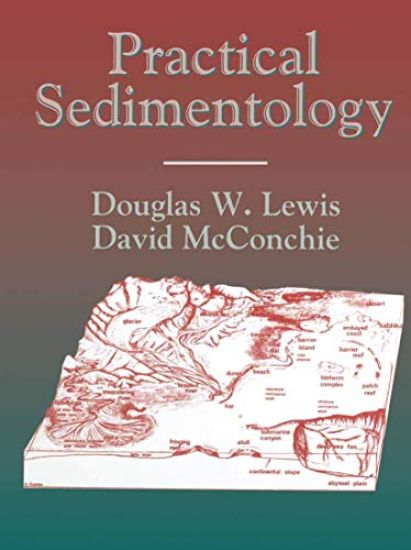
Sedimentology has neither been adequately popularized nor This book begins with a consideration of the complex end commonly taught as an interdisciplinary subject, and many product of processes and materials, the sedimentary environ workers in the areas of modem environment studies have very ment. It then proceeds to discuss the processes and materials limited knowledge of sedimentology. Practical Sedimentol themselves. The emphasis is on geological interpretations of ogy (henceforth PS) is designed to provide an introduction and ancient deposits, but most discussions are also relevant to review of principles and interpretations related to sedimentary modem sediments and can be used to predict environmental processes, environments, and deposits. Its companion volume, changes. A basic knowledge of geological jargon is antici Analytical Sedimentology (henceforth AS), provides "cook pated for users of this book; we try to define most of the more book recipes" for common analytical procedures dealing with esoteric terms in context, but if there are additional incom sediments, and an introduction to the principles and reference prehensible terms, refer to Bates and Jackson's Glossary of sources for procedures that generally would be performed by Geology (AGI, 1987). specialist consultants or commercial laboratories. Specialist sedimentologists will find in them useful reviews, whereas sci ACKNOWLEDGMENTS entists from other disciplines will find in them concepts and procedures that may contribute to an expanded knowledge of Many chapter drafts ofPS were critically reviewed by Dr. M.
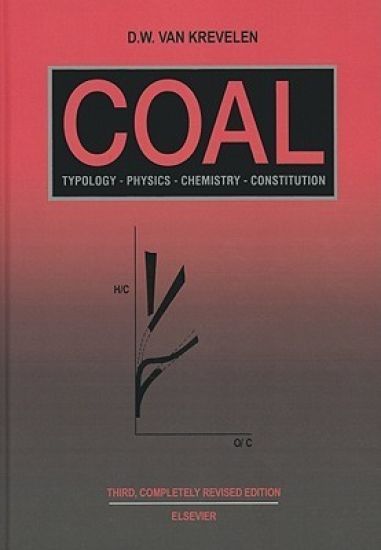
The first edition of the book Coal: Typology - Chemistry - Physics - Constitution appeared in 1961. In 1981 a new edition was published in which the text was unaltered proving that after 20 years the book was still considered a standard work in its field. The enormous activities in the 80's in the field of coal conversion processes (especially gasification and liquefaction) and the equally amazing development of instrumental techniques of observation and analysis prompted a complete revision and update of the book. The present edition contains 1000 pages compared to the 514 pages of its predecessors of 1961 and 1981. The number of illustrations has greatly increased from 253 to 574 and that of the tables from 76 to 208. These figures amply testify to the increase in coal research. Compared with its former editions, the present book treats a considerable number of new subjects: modern concepts of geotectonics and of organic geochemistry; the problem of pseudohomogeneity of vitrinite; developments of the classification and systematics of coals and coal components (macerals); an exposé on electron microscopy and the most important instrumental physical methods of analysis (FTIR, NMR, ESCA and analytical pyrolysis combined with gas chromatography and mass spectroscopy); the principles of physical-statistical structure analysis based on the concept of additivity of a large number of molar functions; a revision of Seyler's ideas of discrete steps in coalification; an essay on coal fluorescence; and the survey on magnetic properties - magnetic susceptibility and magnetic resonance - is considerably enlarged. A completely new chapter is added on cohesion and adhesion phenomena as found in coals. The chapter on solvent extraction and solubilisation is significantly enlarged and new concepts are discussed. The actions of hydrogen, molecular oxygen and oxidising agents on coal are updated and a newly written chapter treats the grand processes of coal conversion (combustion, gasification, carbonisation and liquefaction). Coal constitution in its diverse aspects is revised with a practically complete survey of many proposed coal models. Essays on synthetic coal analogues and on the simulation of natural coalification are added. Also new is the compendium, a set of comprehensive tables, containing the most important numerical data of this book in a fully comparative form. Every chapter has its own bibliography, divided into general references (leading books on the treated subject) and special references, which are quotations of scientific papers discussed in the text. The extensive subject index, complete index of names and the compendium are provided in order to facilitate usage as an encyclopedic work.


John, guilty of murder and at the brink of suicide, is given a path to redemption... or is it damnation?Diverted from the path of self-destruction after brutally murdering his unfaithful wife and best friend in a fit of passion, John is offered a possible road to redemption by an enigmatic stranger in service to a secret organization of righteous assassins. Deceived, John finds himself on the wrong side of the eternal battle for balance between Good and Evil.The Revelator is loaded with action, deceit, and suspense. It is a fast-paced and engaging read layered with nuance and deeper meaning. Is John just a pawn in a cosmic game of chess, or simply an unwitting victim or catalyst of The Butterfly Effect?