Kirjojen hintavertailu. Mukana 11 627 469 kirjaa ja 12 kauppaa.

Kirjahaku

Etsi kirjoja tekijän nimen, kirjan nimen tai ISBN:n perusteella.

1000 tulosta hakusanalla D. H. Lawrence

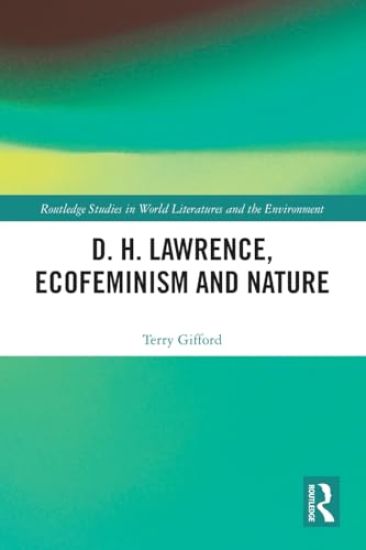
D. H. Lawrence, Ecofeminism and Nature

D. H. Lawrence, Ecofeminism and Nature

Terry Gifford

TAYLOR FRANCIS LTD
2024
nidottu
Shortlisted for the ASLE-UKI Prize for Best Academic MonographThis is the first ecocritical book on the works of D. H. Lawrence and also the first to consider the links between nature and gender in the poetry and the novels. In his search for a balanced relationship between male and female characters, what role does nature play in the challenges Lawrence offers his readers? How far are the anxieties of his characters in negotiating relationships that might threaten their sense of self derived from the same source as their anxieties about engaging with the Other in nature? Indeed, might Lawrence’s metaphors drawn from nature actually be the causes of human actions in The Rainbow, for example? The originality of Lawrence’s poetic and narrative strategies for challenging social attitudes towards both nature and gender can be revealed by new approaches offered by ecocritical theory and ecofeminist readings of his books. This book explores ecocritical notions to frame its ecofeminist readings, from the difference between the ‘Other’ and ‘otherness’ in The White Peacock and Lady Chatterley’s Lover, ‘anotherness’ in the poetry of Birds, Beasts and Flowers, psychogeography in Sea and Sardinia, emergent ecofeminism in Sons and Lovers, land and gender in The Boy in the Bush, gender dialogics in Kangaroo, human animality in Women in Love, trees as tests in Aaron’s Rod, to ‘radical animism’ in The Plumed Serpent. Finally, three late tales provide a reassessment of ecofeminist insights into Lawrence’s work for readers in the present context of the Anthropocene.
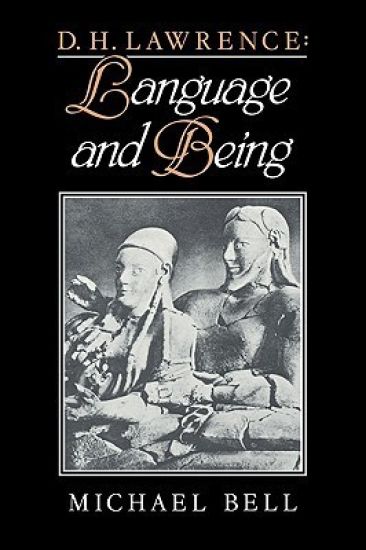
D. H. Lawrence: Language and Being

D. H. Lawrence: Language and Being

Michael Bell

Cambridge University Press
2008
pokkari
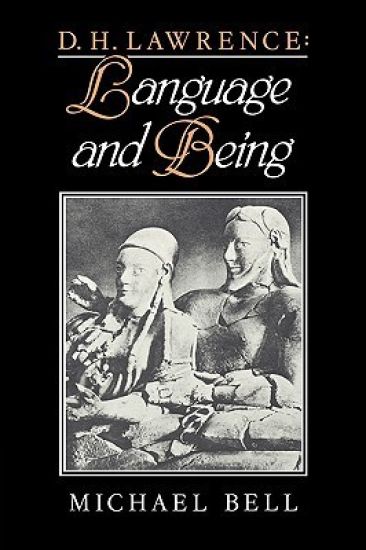
D. H. Lawrence once wrote that 'we have no language for the feelings'. The remark testifies to the struggle in his novels to express his sophisticated understanding of the nature of being through the intransigent medium of language. Michael Bell argues that Lawrence's unfashionable status stems from a failure to perceive within his informal expression the nature and complexity of his ontological vision. He traces the evolution of the struggle for its articulation through the novels, and looks at the way in which Lawrence himself made it a conscious theme in his writing. Embracing in this argument Lawrence's failures as a writer, his rhetorical stridency and also his primitivist extremism, Michael Bell creates a powerful and fresh sense of his true importance as a novelist.
D. H. Lawrence and the Bible

D. H. Lawrence and the Bible

T. R. Wright

Cambridge University Press
2009
pokkari
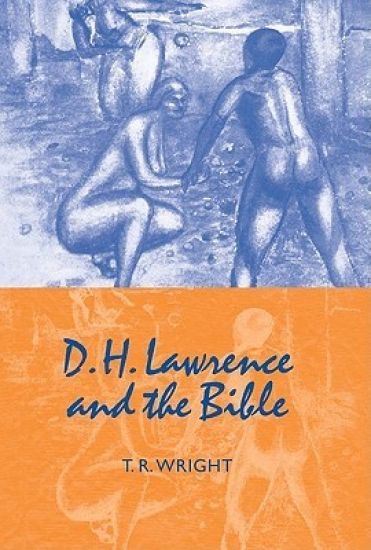
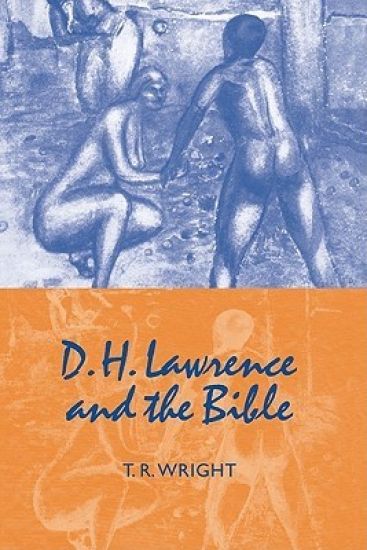
The Bible, as this book demonstrates, plays a key role in nearly all D. H. Lawrence's work. It supplies not only the inspiration but on occasion the target for his parody. In D. H. Lawrence and The Bible, Terry Wright establishes that Lawrence was familiar with the modernist critique of the Bible by higher critics and by anthropologists of religion. He also argues, however, that Lawrence's playful reworking of the Bible, like that of Nietzsche, anticipates postmodernism. After considering the extraordinary range of Lawrence's reading and the inter texts between the Bible and Lawrence's own writing, Wright engages in a theoretically informed but clear exploration of the textual dynamics of his writing. Lawrence's writing is seen to reveal a prolonged struggle to read the Bible in a much broader spirit than that encouraged by orthodox Christianity. Wright's study sheds light not only on his work but on the Bible on the creative process itself.
D. H. Lawrence's Non-Fiction

D. H. Lawrence's Non-Fiction

David Ellis; Mills Howard

Cambridge University Press
2009
pokkari
This is the first book devoted entirely to Lawrence's nonfictional writings. It focuses on a selection of representative texts, each of which is placed in an appropriate literary or historical context. These include the 'Study of Thomas Hardy', the two books about the Unconscious, the travel-writing - primarily Twilight in Italy and Sea and Sardinia - the largely autobiographical 'Introduction to Memoirs of the Foreign Legion by M. M' and the late 'thoughts in verse' called Pansies. David Ellis and Howard Mills challenge the automatic relegation to secondary status suffered by these works in the past and suggest a radical reassessment of Lawrence's literary profile of how his writings relate to one another and of where his greatest power and originality lie.
D. H. Lawrence: Language and Being

D. H. Lawrence: Language and Being

Michael Bell

Cambridge University Press
1992
sidottu
D. H. Lawrence once wrote that ‘we have no language for the feelings’. The remark testifies to the struggle in his novels to express his sophisticated understanding of the nature of being through the intransigent medium of language. Michael Bell argues that Lawrence’s currently unfashionable status stems from a failure to perceive within his informal expression the nature and complexity of his ontological vision. He traces the evolution of the struggle for its articulation through the novels, and looks at the way in which Lawrence himself made it a conscious theme in his writing. Embracing in this argument Lawrence’s failures as a writer, his rhetorical stridency and also his primitivist extremism, Michael Bell creates a powerful and fresh sense of his true importance as a novelist.
D. H. Lawrence: The Early Years 1885–1912

D. H. Lawrence: The Early Years 1885–1912

Worthen John

Cambridge University Press
1992
pokkari
The first volume of the three-volume Cambridge Biography of D. H. Lawrence draws on a wide range of documentary and oral sources, many of them hitherto unpublished, to reveal a complex portrait of an extraordinary man. It describes his upbringing in a small colliery town in Nottinghamshire, his years spent as a teacher and his disastrous sexual experiments with Jessie Chambers, Helen Corke and Alice Dax; provides a radical new account of his early relationship with Frieda Weekley, Lawrence’s ‘woman of a life-time’; and ends with the completion of his great autobiographical novel Sons and Lovers. This volume has already established itself as the most complete and authoritative account available.
D. H. Lawrence and the Bible

D. H. Lawrence and the Bible

T. R. Wright

Cambridge University Press
2000
sidottu
The Bible, as this book demonstrates, plays a key role in nearly all D. H. Lawrence's work. It supplies not only the inspiration but on occasion the target for his parody. In D. H. Lawrence and The Bible, Terry Wright establishes that Lawrence was familiar with the modernist critique of the Bible by higher critics and by anthropologists of religion. He also argues, however, that Lawrence's playful reworking of the Bible, like that of Nietzsche, anticipates postmodernism. After considering the extraordinary range of Lawrence's reading and the inter texts between the Bible and Lawrence's own writing, Wright engages in a theoretically informed but clear exploration of the textual dynamics of his writing. Lawrence's writing is seen to reveal a prolonged struggle to read the Bible in a much broader spirit than that encouraged by orthodox Christianity. Wright's study sheds light not only on his work but on the Bible on the creative process itself.
D. H. Lawrence's The Rainbow and Women in Love

D. H. Lawrence's The Rainbow and Women in Love

Doo-Sun Ryu

Peter Lang Publishing Inc
2005
sidottu
Focusing on D. H. Lawrence's concept of essential criticism , which was introduced in his posthumously published Study of Thomas Hardy and his statement that every work of art adheres to some system of morality. But it must contain the essential criticism on the morality to which it adheres , this book examines the ways in which Lawrence presents his ideas in his major novels The Rainbow and Women in Love. It explores how this concept plays a crucial role in his fiction as an other to the implied author's messages: functioning differently, as equivocation and creative strife, respectively, in The Rainbow and Women in Love, the concept helps to make these novels more dynamic that commonly realized.
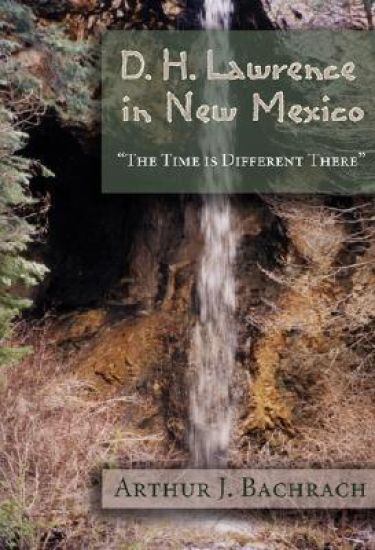
D. H. Lawrence in New Mexico

D. H. Lawrence in New Mexico

Arthur J. Bachrach

University of New Mexico Press
2006
nidottu
David Herbert Lawrence was born in Eastwood, England, in 1885. In 1914, he married Frieda Von Richtofen, a German national and distant cousin of the German war ace, 'The Red Baron' von Richthofen. While living on the Coast of Cornwall in 1917, they were harassed and accused of being spies for Germany. By 1921, the Lawrences were living in Italy and D. H. had won international acclaim for his writings. Mabel Dodge Sterne invited the pair to her home in Taos, New Mexico. Travelling by way of Ceylon, Australia, Tahiti, and, finally, San Francisco, the Lawrences set foot in New Mexico for the first time in 1922. Although he travelled all over the world, Lawrence was never as happy anywhere as he was in Taos. Arthur Bachrach has lived in Taos for over twenty years, and he has come to know people who freely recalled the Lawrences. They shared information about the circle of artists and friends who surrounded the Lawrences and their lifestyles. Bachrach provides information on Lawrence's writings and the influence living in the mountains of New Mexico had upon him. D. H. Lawrence died of tuberculosis while visiting France in 1930, and five years later, his ashes were placed in a memorial on his beloved Kiowa Ranch near Taos. Given to the University of New Mexico in the 1950s by D. H's widow, the ranch is known today as the D. H. Lawrence Ranch.
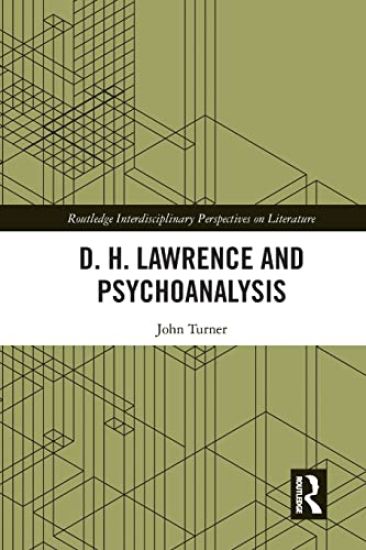
D. H. Lawrence and Psychoanalysis

D. H. Lawrence and Psychoanalysis

John Turner

TAYLOR FRANCIS LTD
2021
nidottu
This book opens out a wholly new field of enquiry within a familiar subject: it offers a detailed – yet eminently readable – historical investigation, of a kind never yet undertaken, of the impact of psychoanalysis (at a crucial moment of its history) on the thinking and writing of D.H. Lawrence. It considers the impact on his writing, through his relationship with Frieda Weekley, of the maverick Austrian analyst Otto Gross; it situates the great works of 1911-20 in relation to the controversial issues at stake in the Freud-Jung quarrel, about which his good friend, the English psychoanalyst David Eder, kept him informed; and it explores his sympathy with the maverick American analyst Trigant Burrow. It is a study to interest a literary audience by its close reading of Lawrence’s texts, and a psychoanalytic audience by its detailed consideration of the contribution made to contemporary debate by three comparatively neglected analytic thinkers.
D. H. Lawrence and Ambivalence in the Age of Modernity
D. H. Lawrence is renowned for his scathing criticism of the ruling class, industrialisation of the country and wartime patriotism. However, his texts bear the imprint of contemporary dominant ideologies and discourses of the period. Comparing Lawrence’s texts to various major and minor contemporary novels, journal articles, political pamphlets and history books, this book aims to demonstrate that Lawrence’s texts are ambivalent: his texts harbour the dynamism of conflicting power struggles between the subversive and the reactionary. For example, in some apparently apolitical texts such as The White Peacock and Movements in European History, reactionary ideologies and wartime propaganda are embedded. Some texts like Lady Chatterley’s Lover are intended to be a radical critique of the period wherein it was composed, but they also bear discernible traces of the contemporary frame of reference that they intend to subvert. Focusing on Lawrence’s stories and novels set in the mining countryside and the works composed under the impact of the First World War, this book establishes that Lawrence’s texts in fact consist of multiple layers that are often in conflict with each other, serving as a testimony to the age of modernity.
D. H. Lawrence and Ambivalence in the Age of Modernity
D. H. Lawrence is renowned for his scathing criticism of the ruling class, industrialisation of the country and wartime patriotism. However, his texts bear the imprint of contemporary dominant ideologies and discourses of the period. Comparing Lawrence’s texts to various major and minor contemporary novels, journal articles, political pamphlets and history books, this book aims to demonstrate that Lawrence’s texts are ambivalent: his texts harbour the dynamism of conflicting power struggles between the subversive and the reactionary. For example, in some apparently apolitical texts such as The White Peacock and Movements in European History, reactionary ideologies and wartime propaganda are embedded. Some texts like Lady Chatterley’s Lover are intended to be a radical critique of the period wherein it was composed, but they also bear discernible traces of the contemporary frame of reference that they intend to subvert. Focusing on Lawrence’s stories and novels set in the mining countryside and the works composed under the impact of the First World War, this book establishes that Lawrence’s texts in fact consist of multiple layers that are often in conflict with each other, serving as a testimony to the age of modernity.
D. H. Lawrence and Feminism

D. H. Lawrence and Feminism

Hilary Simpson

TAYLOR FRANCIS LTD
2024
sidottu
First published in 1982, D. H. Lawrence and Feminism discusses Lawrence’s work by examining it in relation to aspects of women’s history and the development of feminism. Two different modes of pre-war feminism which provide important themes in Lawrence’s early writings are examined in the opening chapters. The central chapters deal with the war, both as a catalyst for major changes in the position of women and as a point of no return in the development of Lawrence’s work. A final chapter looks at the way in which Lawrence used women as collaborator, and their writing as source material. This book will be of interest to students of literature, women’s studies and history.
D. H. Lawrence and Feminism

D. H. Lawrence and Feminism

Hilary Simpson

TAYLOR FRANCIS LTD
2026
nidottu
First published in 1982, D. H. Lawrence and Feminism discusses Lawrence’s work by examining it in relation to aspects of women’s history and the development of feminism. Two different modes of pre-war feminism which provide important themes in Lawrence’s early writings are examined in the opening chapters. The central chapters deal with the war, both as a catalyst for major changes in the position of women and as a point of no return in the development of Lawrence’s work. A final chapter looks at the way in which Lawrence used women as collaborator, and their writing as source material. This book will be of interest to students of literature, women’s studies and history.
D. H. Lawrence: Dying Game 1922–1930

D. H. Lawrence: Dying Game 1922–1930

David Ellis

Cambridge University Press
2011
pokkari
Originally published in 1998, the final volume of the Cambridge Biography of D. H. Lawrence chronicles his progress from leaving Europe in 1922 to his death in Venice in 1930. Based on much previously unfamiliar material, it describes his travels in Ceylon, Australia, the USA and Mexico in an increasingly desperate search for an ideal community. With his return to Europe in 1925, there is a detailed account of his rediscovery of painting, his battle against censorship, and the vitality with which he resisted the debilitating effects of tuberculosis. Kangaroo, The Plumed Serpent and Lady Chatterley's Lover are usually seen as the literary landmarks of these years; but this was the period in which Lawrence also wrote remarkable novellas, essays, criticism, short stories and poems. He is revealed here as a man both more complex and more humorous than is usually allowed, and exemplary in his resolute grappling with the central problems of his age.
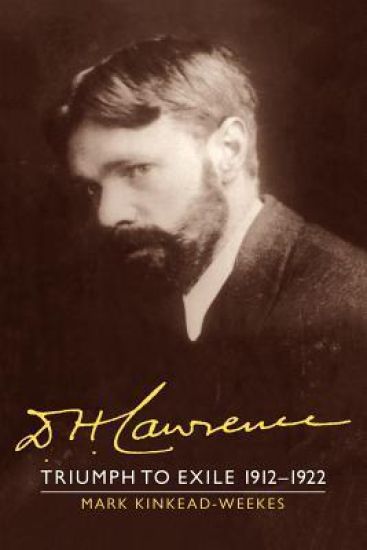
D. H. Lawrence: Triumph to Exile 1912–1922

D. H. Lawrence: Triumph to Exile 1912–1922

Mark Kinkead-Weekes

Cambridge University Press
2011
pokkari
This second volume of the acclaimed Cambridge Biography of D. H. Lawrence covers the years 1912–22, the period in which Lawrence forged his reputation as one of the greatest and most controversial writers of the twentieth century. During this period Lawrence produced the trio of novels with which he was to revolutionise English fiction over the next decade. It was a painful process: Sons and Lovers was crudely cut by its publisher; The Rainbow was destroyed by court order; and Women in Love took almost three years to find a publisher. This 1996 biography tells the writing life too, tracing the illuminating relations between man and manuscript, without confusing life and art. Drawing on previously unseen information from the Cambridge Editions of the Letters and Works, and original research, fresh light is shed on questions of Lawrence's sexuality, health, quarrels and friendships, which have been more often gossiped or theorised about than scrupulously examined.
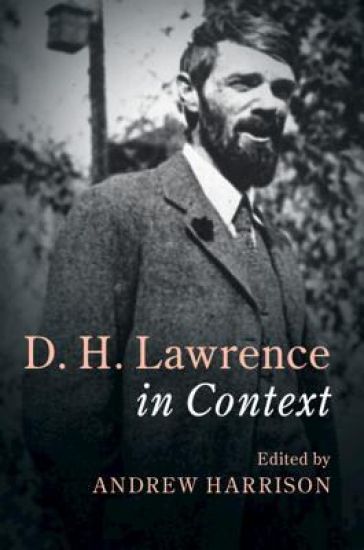
D. H. Lawrence In Context

D. H. Lawrence In Context

Cambridge University Press
2018
sidottu
This collection of original, concise essays by leading international scholars draws closely on the Cambridge Edition of the letters and works of D. H. Lawrence to provide up-to-date insights into the key contexts to the author's life, career and legacy. It opens with an overview of Lawrence's life as it is explored in biographies and revealed in his letters and writing, before reassessing his relationship to the contemporary literary marketplace, and his response to - and intervention in - a range of literary/cultural and social/historical contexts. It ends with sections on Lawrence's changing critical reception and his powerful legacy in the work of later authors and filmmakers. The essays present a detailed and nuanced picture of Lawrence as an enterprising professional author with a truly cosmopolitan outlook who engaged deeply and strongly with his contemporary culture, and with currents of thought across a range of disciplines.