Kirjojen hintavertailu. Mukana 11 342 296 kirjaa ja 12 kauppaa.

Kirjahaku

Etsi kirjoja tekijän nimen, kirjan nimen tai ISBN:n perusteella.

1000 tulosta hakusanalla David B.

A Best-Selling Hebrew Book of the Modern Era

A Best-Selling Hebrew Book of the Modern Era

David B. Ruderman

University of Washington Press
2014
sidottu
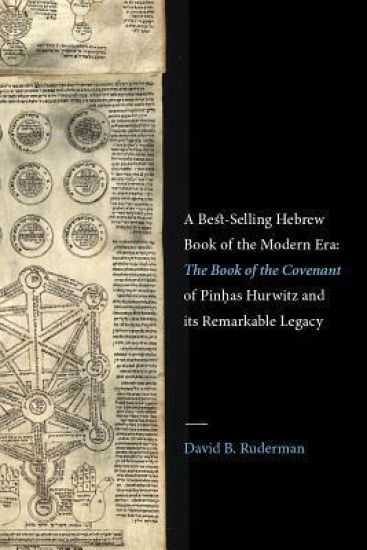
The history of a single book sheds light on the beginnings of modern Jewish thoughtIn 1797, in what is now the Czech Republic, Pin?as Hurwitz published Book of the Covenant. Nominally an extended commentary on a sixteenth-century kabbalist text, Pin?as's publication was in fact a compendium of scientific knowledge and a manual of moral behavior. Its popularity stemmed from its ability to present the scientific advances and moral cosmopolitanism of its day in the context of Jewish legal and mystical tradition. Describing the latest developments in science and philosophy in the sacred language of Hebrew, Hurwitz argued that an intellectual understanding of the cosmos was not at odds with but actually key to achieving spiritual attainment. In A Best-Selling Hebrew Book of the Modern Era, David Ruderman offers a literary and intellectual history of Hurwitz's book and its legacy. Hurwitz not only wrote the book, but also was instrumental in selling it, and his success ultimately led to the publication of more than forty editions in Hebrew, Ladino, and Yiddish. Ruderman provides a multidimensional picture of the book and the intellectual tradition it helped to inaugurate. Complicating accounts that consider modern Jewish thought to be the product of a radical break from a religious, mystical past, Ruderman shows how, instead, a complex continuity shaped Jewish society's confrontation with modernity.

Too High and Too Steep

Too High and Too Steep

David B. Williams

University of Washington Press
2015
sidottu
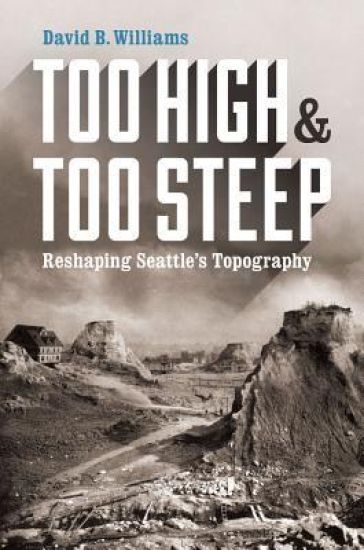
Residents and visitors in today's Seattle would barely recognize the landscape that its founding settlers first encountered. As the city grew, its leaders and inhabitants dramatically altered its topography to accommodate their changing visions. In Too High and Too Steep, David B. Williams uses his deep knowledge of Seattle, scientific background, and extensive research and interviews to illuminate the physical challenges and sometimes startling hubris of these large-scale transformations, from the filling in of the Duwamish tideflats to the massive regrading project that pared down Denny Hill.In the course of telling this fascinating story, Williams helps readers find visible traces of the city's former landscape and better understand Seattle as a place that has been radically reshaped.Watch the trailer: https://www.youtube.com/watch?v=af51FU8hHLIToo High and Too Steep was made possible in part by a grant from 4Culture's Heritage Program.
Too High and Too Steep

Too High and Too Steep

David B. Williams

University of Washington Press
2017
pokkari
Residents and visitors in today's Seattle would barely recognize the landscape that its founding settlers first encountered. As the city grew, its leaders and inhabitants dramatically altered its topography to accommodate their changing visions. In Too High and Too Steep, David B. Williams uses his deep knowledge of Seattle, scientific background, and extensive research and interviews to illuminate the physical challenges and sometimes startling hubris of these large-scale transformations, from the filling in of the Duwamish tideflats to the massive regrading project that pared down Denny Hill.In the course of telling this fascinating story, Williams helps readers find visible traces of the city's former landscape and better understand Seattle as a place that has been radically reshaped.Watch the trailer: https://www.youtube.com/watch?v=af51FU8hHLIToo High and Too Steep was made possible in part by a grant from 4Culture's Heritage Program.
Wesleyan University, 1831-1910

Wesleyan University, 1831-1910

David B. Potts

Yale University Press
1992
sidottu
This lively narrative connects Wesleyan University to economic, religious, urban, and educational developments in nineteenth-century America. David B. Potts places Wesleyan's history in contexts that illuminate the dynamics of institutional change and contribute new perspectives on the nation's colleges, culture, and society. Potts explores Wesleyan's origins as a local enterprise in which citizens of Middletown, Connecticut, supplied land, buildings, and endowment pledges for a college that they organized in concert with Methodist clergy in New York and New England. He traces the dissolution of this alliance and the emergence of a thoroughly denominational institution that initiated coeducation in 1872. A second shift in identity, achieved by 1910, led Wesleyan to discard Methodist control and the education of women in return for status as a New England liberal arts college. Drawing on a wide range of manuscript collections, newspapers, and other sources, Potts describes faculty professionalization, trustee philanthropy, student discrimination against blacks and women, early rumblings of religious fundamentalism, and efforts of prestige-conscious alumni who pulled the country college into a financial and cultural orbit around New York City. Throughout he compares Wesleyan's history to developments at other New England colleges and universities.
The Dynamics of Global Dominance

The Dynamics of Global Dominance

David B. Abernethy

Yale University Press
2002
pokkari
For centuries Europeans ruled vast portions of the world, as inhabitants of west European countries sailed to distant continents and took possession of territories whose societies and economies they set out to change. How and why did these farflung empires form, persist, and finally fall? David Abernethy addresses these questions in this magisterial survey of the rise and decline of European overseas empires. Abernethy identifies broad patterns across time and space, interweaving them with fascinating details of cross-cultural encounters. He argues that relatively autonomous profit-making, religious, and governmental institutions enabled west European countries to launch triple assaults on other societies. Indigenous people also played a role in their eventual subjugation by inviting Europeans to intervene in their power struggles. Abernethy finds that imperial decline was often the unanticipated result of wars among major powers. Postwar crises over colonies’ unmet expectations empowered movements that eventually took territories as diverse as the thirteen British North American colonies, Spain’s South American possessions, India, the Dutch East Indies, Vietnam, and the Gold Coast to independence. In advancing a theory of imperialism that includes European and non-European actors, and in analyzing economic, social, and cultural as well as political dimensions of empire, Abernethy helps account for Europe’s long occupation of global center stage. He also sheds light on key features of today’s postcolonial world and the legacies of empire, concluding with an insightful approach to the moral evaluation of colonialism.
Beethoven in German Politics, 1870-1989

Beethoven in German Politics, 1870-1989

David B. Dennis

Yale University Press
2005
pokkari
This absorbing book chronicles the exploitation of Beethoven's life and work by German political parties from the founding of the modern nation to the East German Revolution of 1989. Drawing on a wealth of previously untapped archival resources, David B. Dennis examines how politicians have associated Beethoven with competing visions of German destiny, thereby transforming art and artist into powerful national symbols.Dennis shows for the first time that propagandists of every persuasion have equated Beethoven's works with dogma. In the late nineteenth century, supporters of Bismarck and the German emperors endorsed a militaristic interpretation forged during the Franco-Prussian War, while opponents promoted portraits of Beethoven as revolutionary. In the First World War, Beethoven was drawn into the trenches, where Germans countered enemy allegations that they had forfeited the right to enjoy his music. Beethoven interpretations fragmented the Weimar Republic, as every faction formulated its own variation. The Nazi view of the composer as Führer was enforced in the Third Reich. After 1945, German views of Beethoven corresponded to the division of the nation, but when the Iron Curtain collapsed in 1989 one sentiment rose to dominance: that all people could become brothers, just as the composer had wished in his Ninth Symphony. By establishing connections between Beethoven's art and public policy, Dennis has written a book of compelling interest to historians, musicologists, and Beethoven enthusiasts alike.
Jacob's Legacy

Jacob's Legacy

David B. Goldstein

Yale University Press
2009
pokkari
A geneticist explains the science behind genetic history and what it has revealed about Jewish origins Who are the Jews? Where did they come from? What is the connection between an ancient Jewish priest in Jerusalem and today’s Israeli sunbather on the beaches of Tel Aviv? These questions stand at the heart of this engaging book. Geneticist David Goldstein analyzes modern DNA studies of Jewish populations and examines the intersections of these scientific findings with the history (both biblical and modern) and oral tradition of the Jews. With a special gift for translating complex scientific concepts into language understandable to all, Goldstein delivers an accessible, personal, and fascinating book that tells the history of a group of people through the lens of genetics.In a series of detective-style stories, Goldstein explores the priestly lineage of Jewish males as manifested by Y chromosomes; the Jewish lineage claims of the Lemba, an obscure black South African tribe; the differences in maternal and paternal genetic heritage among Jewish populations; and much more. The author also grapples with the medical and ethical implications of our rapidly growing command of the human genomic landscape. The study of genetics has not only changed the study of Jewish history, Goldstein shows, it has altered notions of Jewish identity and even our understanding of what makes a people a people.
The End of Genetics

The End of Genetics

David B. Goldstein

Yale University Press
2022
sidottu
An urgent plea for a broader understanding and awareness of the unconsidered dangers of new genetic technologies Since 2010 it has been possible to determine a person’s genetic makeup in a matter of days at an accessible cost for many millions of people. Along with this technological breakthrough there has emerged a movement to use this information to help prospective parents “eliminate preventable genetic disease.” As the prospect of systematically excluding the appearance of unwanted mutations in our children comes within reach, David B. Goldstein examines the possible consequences from these types of choices. Engaging and accessible, this clarion call for responsible and informed stewardship of the human genome provides an overview of what we do and do not know about human genetics and looks at some of the complex, yet largely unexplored, issues we must be most careful about as we move into an era of increasing numbers of parents exercising direct control over the genomes of their children.
Finding Your Way after the Suicide of Someone You Love

Finding Your Way after the Suicide of Someone You Love

David B. Biebel; Suzanne L. Foster

Zondervan
2005
nidottu
Help and Hope for an Unexpected JourneyDo real Christians commit suicide? Yes, they do. And for those left behind, the journey following such a tragedy is unbearably painful.Finding Your Way after the Suicide of Someone You Love is a compassionate and practical guide that addresses the intensely personal issues of survivors of suicide (SOS). This gentle and faith-affirming resource helps survivors know what to expect, especially during the first year following a suicide. It includes personal stories of survivors and suggestions on how to move beyond survival to live life again. Designed for use by individuals, couples, and SOS groups, this book offers help for parents, siblings, friends, and extended families, as well as practical guidelines for pastors, Christian counselors, and other church leaders.Topics include:What to do in the immediate aftermath of a suicideHandling guilt and understanding the role of depression in suicidesDealing with questions of faith and meaningCreating a support systemChoosing a Christian therapistTrusted resources and websites
Freedom in the Air

Freedom in the Air

David B. Dunson

Praeger Publishers Inc
1980
sidottu
The author focuses on two parallel folk trends: the Freedom Songs arising from the civil rights battles in the South and the topical songs composed by Northern writer/singers.
Frederick Douglass

Frederick Douglass

David B. Chesebrough

Greenwood Press
1998
sidottu
Frederick Douglass, once a slave, was one of the great 19th century American orators and the most important African American voice of his era. This book traces the development of his rhetorical skills, discusses the effect of his oratory on his contemporaries, and analyzes the specific oratorical techniques he employed.The first part is a biographical sketch of Douglass's life, dealing with his years of slavery (1818-1837), his prewar years of freedom (1837-1861), the Civil War (1861-1865), and postwar years (1865-1895). Chesebrough emphasizes the centrality of oratory to Douglass's life, even during the years in slavery. The second part looks at his oratorical techniques and concludes with three speeches from different periods. Students and scholars of communications, U.S. history, slavery, the Civil War and Reconstruction, and African American studies will be interested in this book.
Theodore Parker

Theodore Parker

David B. Chesebrough

Greenwood Press
1999
sidottu
Theodore Parker, a great orator of the mid-19th century, was a Unitarian clergyman who directed much of his oratory towards ecclesiastical and social reform. Parker challenged slavery and other social ills. As a volume in the Great American Orators series, the focus is on Parker's oratory and its effect on theology and the social structures of the mid-19th century. Biographical information pertains to those aspects of Parker's life that influenced and shaped his elocution and ideas. Parker's rhetoric and rhetorical techniques are examined. Three of Parker's important speeches are included, each with an introduction that places it in its proper context.This study will appeal to students of rhetoric, theology, and mid-nineteenth-century American religious history. The book is divided into two sections. The first concentrates on Parker's life, his role as an abolitionist, social reformer, and public order. Part Two scrutinizes three of Parker's most famous discourses. The author establishes Parker's place among mid-19th-century preachers.
Phillips Brooks

Phillips Brooks

David B. Chesebrough

Greenwood Press
2001
sidottu
Phillips Brooks, author of the carol O Little Town of Bethlehem, was the rector of the Trinity Episcopal Church in Boston for 22 years and the Bishop of Massachusetts for 15 months until his death in 1893. This volume in the Great American Orators series focuses on Brooks' oratorical style and the public's response to his rhetoric. Chesebrough provides a biographical sketch of Brooks' life emphasizing the development and use of his oratorical skills and placing him within the secular and ecclesiastical contexts of his times. Attention is given to Brooks' development as a public speaker and to his manner of sermon preparation and delivery. Three of Brooks' sermons are printed in their entirety: Abraham Lincoln, The Cradle of the Lord, and Help from the Hills, preceded by introductory remarks and a brief analysis of the sermon. This examination of Brooks' rhetoric will appeal to scholars of rhetoric and of American theology and American religious history, especially Episcopal history.
Charles G. Finney

Charles G. Finney

David B. Chesebrough

Greenwood Press
2001
sidottu
Though much has been written about Charles Finney, The Father of Modern Revivalism, most works have concentrated on his roles as an educator and political reformer. In this new study, Chesebrough examines the rhetorical skills and techniques that made Finney the first contemporary evangelist, one whose methods are still practiced today. A major force in many social reform movements of his time, most notably abolitionism, Finney introduced techniques to revivalist preaching that he used toward politically sophisticated ends. Chesebrough explores both his rhetoric and the effect it had on Finney's audiences, as well as the controversy this major figure often provoked.Following a survey of Finney's life, with special attention given to those aspects pertaining to the development of his oratory, Chesebrough considers the themes of Finney's sermons and lectures on both religious and political subjects. A third section details the rhetorical devices he introduced and employed, and the volume concludes with three of Finney's actual sermons, which reveal the ways in which this speaker commanded the attention of his audiences.
Facial Scar Management, An Issue of Facial Plastic Surgery Clinics of North America
This issue of Facial Plastic Surgery Clinics, guest edited by Dr. David Hom of the University of Cincinnati, is devoted to Facial Scar Management. Articles in this outstanding issue will focus on scar treatment of the forehead, periorbital region, cheek, nose, perioral and chin region, auricle region, scalp, neck, and oral mucosa. The issue will also address soft tissue management to minimize scarring, new scar treatments using lasers, and skin color and pigmentation in ethnic skin.
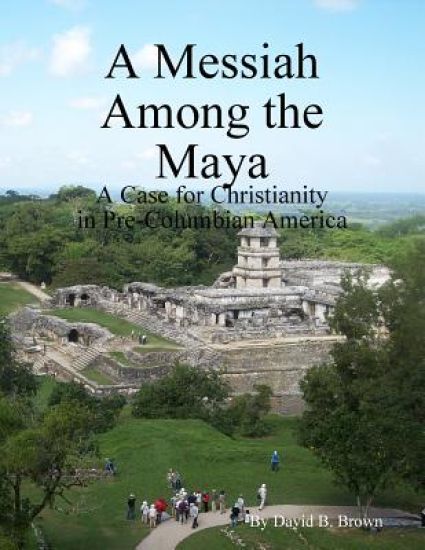
A Messiah Among the Maya

A Messiah Among the Maya

David B. Brown

Lulu.com
2019
nidottu
Understanding the sacred belief system of the Maya has historically been complex and confusing. This study reviews the BC Maya murals found at San Bartolo, the prolific inscriptions and bi-reliefs at Palenque and the enigmatic structural design at Teotihuacan to see what they have in common. From the in-depth research performed it is determined that the esoteric aspects that connect them all is...the Judeo-Christian gospel belief system. This tome provides detailed consideration of the imagery provided in artwork and structural design used in architecture to teach the fundamental tenants of the gospel to students who visited these sites anciently. This work is destined to be seminal to major changes that are about to take place in Central American archaeology and a long overdue rewriting of Western Civilization history.
Topics in Judaica Librarianship

Topics in Judaica Librarianship

David B Levy

Lulu.com
2019
sidottu
Contents: The importance of Judaica Genealogical Research as a subdiscipline of Judaica Librarianship: Methods, Strategies, and ancient genealogical archives to serve in the Ma'amadot; Censorship of Rambam's Sefer HaMadah and Moreh Nevukhim (for external censorship for instance of Talmudim; The Making of the JE (1901=1906) and EJ (1972); Rabbinic Reverence, Love, and Cherishing of Texts: People of the Books; Ethics, Politics, Hermeneutics, and Theology of Hebraica Translations: Is the Library of Tower of Babel?; Reel Librarians: The Image and stereotype of the librarian and Jewish librarian in Film, TV, and literature.