How can you draw out extraordinary ability from your child? What if you could gain insight from the greatest King to ever live on how to secure a legacy and pass on the baton to your son? Rediscover What David passed on (material assets, intellectual, relational and emotional etc) to the man who would at the height of his reign be called Earth
A divorce that cruelly unearthed lies, deceit, theft, abuse of trust and power, that severs a union with a partner who blithely alienates all loved ones, all family members: a final act of separation which, for spite and spite's sake alone, drags its opponent savagely across ten hideously pocked-marked months with idiotic wrangling; an absurd process that can, and did, empty the pockets of all but the gleeful lawyers; the outcome of which could seemingly hurl its survivor into the blackest abyss of despair or propel them, now unfettered, to the top of the highest mountain. I landed upon a mountaintop, literally. FOLLOWING IN THE FOOTSTEPS OF HENRY DAVID THOREAU.
Gene mapping is used in experimental genetics to improve the hardiness or productivity of animals or plants of agricultural value, to explore basic mechanisms of inheritance, or to study animal models of human inheritance. In human populations it is used as a first step to identify genes associated with human health and disease. This book presents a unified discussion of the statistical concepts applied in gene mapping, first in the experimental context of crosses of inbred lines and then in outbred populations, primarily humans. The development involves elementary principles of probability and statistics, which are implemented by computational tools based on the R programming language to simulate genetic experiments and evaluate statistical analyses. The viewpoint reflects the modern approach of using anonymous DNA markers distributed throughout the genome to identify regions likely to contain genes of interest. The reader is assumed to have some familiarity with probability/statistics and with elementary genetics. Important topics are reviewed in the first three chapters. The R programming language is developed in the text. Each chapter contains exercises, both theoretical and computational, some routine and others that are more challenging. The book is suitable for upper level undergraduate students or graduate students of genetics or statistics.
The immune system can deal effectively with the majority of viruses and bacteria, less effectively with parasites, and very poorly with cancer. Why is this so? Why are McFarlane Burnet's and Lewis Thomas' predictions that the immune system is in volved in ridding the body of cancer cells, encapsulated in the catchy phrase "immunologic surveillance," so difficult to experi mentally establish? Cancer differs from infectious agents in being derived from the host. Hence, it has been postulated that cancer cells lack anti gens that the immune system can recognize. They are not "im munogenic. " However, this argument is seriously weakened by the existence of numerous human autoimmune diseases, in which the immune system effectively recognizes and attacks a va riety of self tissues. Thus, the potential clearly exists for recogni tion of the surfaces of tumor cells. Professor Naor and his colleagues have written a book that explores another possible reason: cancer cells are recognized by the immune system-but is it possible that the consequence of recognition is inhibition of the immune system-by suppressor T cells or macrophages? The evolution of the malignant state may only occur in individuals who develop this suppression. This book reviews the evidence that suppressor cells, poorly characterized and difficult to study, may be of fundamental im portance in cancer. In fact, our incapacity to understand the na ture of suppressor cells and their mode of action is one of the ma jor problems in immunology research today.
Migration is among the central domestic and global political issues of today. Yet the causes and consequences - and the relationship between migration and global markets – are poorly understood. Migration is both costly and risky, so why do people decide to migrate? What are the political, social, economic, and environmental factors that cause people to leave their homes and seek a better life elsewhere? Leblang and Helms argue that political factors - the ability to participate in the political life of a destination - are as important as economic and social factors. Most migrants don't cut ties with their homeland but continue to be engaged, both economically and politically. Migrants continue to serve as a conduit for information, helping drive investment to their homelands. The authors combine theory with a wealth of micro and macro evidence to demonstrate that migration isn't static, after all, but continuously fluid.
Migration is among the central domestic and global political issues of today. Yet the causes and consequences - and the relationship between migration and global markets – are poorly understood. Migration is both costly and risky, so why do people decide to migrate? What are the political, social, economic, and environmental factors that cause people to leave their homes and seek a better life elsewhere? Leblang and Helms argue that political factors - the ability to participate in the political life of a destination - are as important as economic and social factors. Most migrants don't cut ties with their homeland but continue to be engaged, both economically and politically. Migrants continue to serve as a conduit for information, helping drive investment to their homelands. The authors combine theory with a wealth of micro and macro evidence to demonstrate that migration isn't static, after all, but continuously fluid.
Hothersall and Lovett's History of Psychology is a lively survey of the evolution of the field from 1850 to the present. Built around the lives of fascinating thinkers who proposed bold new ways of studying human behavior and mental processes, and telling the true stories behind their famous experiments, this textbook provides students with an intimate understanding of how psychology came to be what it is today. Thoroughly updated with the latest historical scholarship, the fifth edition includes greater focus on the contributions of women and people of color, and a new chapter on the late twentieth century and the cognitive revolution. It also features updated pedagogy such as chapter discussion questions and unique archival photographs, while instructor resources include a test bank, lecture slides, and an instructor manual.
Hothersall and Lovett's History of Psychology is a lively survey of the evolution of the field from 1850 to the present. Built around the lives of fascinating thinkers who proposed bold new ways of studying human behavior and mental processes, and telling the true stories behind their famous experiments, this textbook provides students with an intimate understanding of how psychology came to be what it is today. Thoroughly updated with the latest historical scholarship, the fifth edition includes greater focus on the contributions of women and people of color, and a new chapter on the late twentieth century and the cognitive revolution. It also features updated pedagogy such as chapter discussion questions and unique archival photographs, while instructor resources include a test bank, lecture slides, and an instructor manual.
Gene mapping is used in experimental genetics to improve the hardiness or productivity of animals or plants of agricultural value, to explore basic mechanisms of inheritance, or to study animal models of human inheritance. In human populations it is used as a first step to identify genes associated with human health and disease. This book presents a unified discussion of the statistical concepts applied in gene mapping, first in the experimental context of crosses of inbred lines and then in outbred populations, primarily humans. The development involves elementary principles of probability and statistics, which are implemented by computational tools based on the R programming language to simulate genetic experiments and evaluate statistical analyses. The viewpoint reflects the modern approach of using anonymous DNA markers distributed throughout the genome to identify regions likely to contain genes of interest. The reader is assumed to have some familiarity with probability/statistics and with elementary genetics. Important topics are reviewed in the first three chapters. The R programming language is developed in the text. Each chapter contains exercises, both theoretical and computational, some routine and others that are more challenging. The book is suitable for upper level undergraduate students or graduate students of genetics or statistics.
The immune system can deal effectively with the majority of viruses and bacteria, less effectively with parasites, and very poorly with cancer. Why is this so? Why are McFarlane Burnet's and Lewis Thomas' predictions that the immune system is in volved in ridding the body of cancer cells, encapsulated in the catchy phrase "immunologic surveillance," so difficult to experi mentally establish? Cancer differs from infectious agents in being derived from the host. Hence, it has been postulated that cancer cells lack anti gens that the immune system can recognize. They are not "im munogenic. " However, this argument is seriously weakened by the existence of numerous human autoimmune diseases, in which the immune system effectively recognizes and attacks a va riety of self tissues. Thus, the potential clearly exists for recogni tion of the surfaces of tumor cells. Professor Naor and his colleagues have written a book that explores another possible reason: cancer cells are recognized by the immune system-but is it possible that the consequence of recognition is inhibition of the immune system-by suppressor T cells or macrophages? The evolution of the malignant state may only occur in individuals who develop this suppression. This book reviews the evidence that suppressor cells, poorly characterized and difficult to study, may be of fundamental im portance in cancer. In fact, our incapacity to understand the na ture of suppressor cells and their mode of action is one of the ma jor problems in immunology research today.
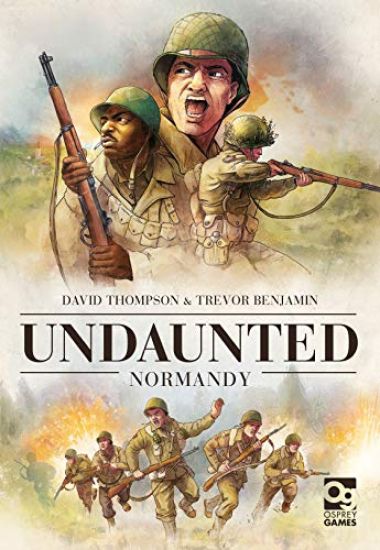
SHUT UP & SIT DOWN RECOMMENDSBGG GOLDEN GEEK AWARD-WINNERThe critically acclaimed, multi-award-winning World War II deck-building game.June, 1944. Through the D-Day landings, the Allies have seized a foothold on the beaches of Normandy. Now you must lead your troops forward as you push deeper into France and drive the German forces back. You will face intense resistance, machine gun fire, and mortar bombardment, but a great commander can turn the situation to their advantage!Undaunted: Normandy is the best-selling World War II deck-building game, placing you and your opponent in command of American or German forces fighting through a series of missions critical to the outcome of the war. Use your cards to seize the initiative, bolster your forces, or control your troops on the battlefield. Strong leadership can turn the tide of battle in your favour, but reckless decisions could prove catastrophic, as every casualty you take removes a card from your deck. Take charge amidst the chaos of battle, hold fast in the face of opposition, and remain undaunted.Players: 2Ages: 14+Playing Time: 45-60 minutes Contents: 108 cards, 18 large map tiles, dice, tokens, campaign booklet
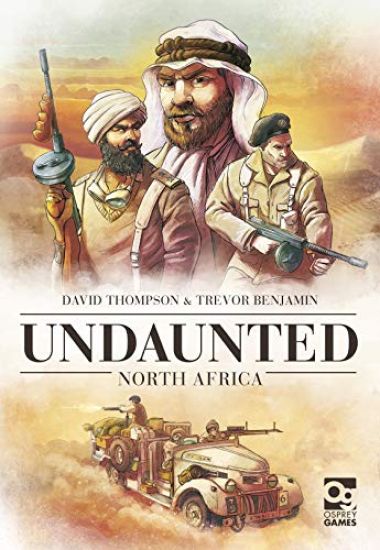
2021 BOARDGAMEGEEK GOLDEN GEEK AWARDS BEST 2-PLAYER GAMETHE DICE TOWER SEAL OF EXCELLENCEThe North African Campaign has begun. Take control of the British Army’s Long Range Desert Group and operate behind enemy lines or command the formidable Italian forces opposing them. In this standalone sequel to Undaunted: Normandy, players will once again lead their sides through a varied series of missions. As casualties mount, wounded units leave the players’ decks, forcing them to adapt in the face of changing tactical circumstances. Use your cards to strengthen your forces, deploy vehicles to advance rapidly across the battlefield, and seize the initiative as you determine the outcome of the North African Theatre.Ages: 14+Players: 2Playing Time: 45-60 minutesContents: 88 cards, 22 large map tiles, 4 dice, tokens, campaign booklet
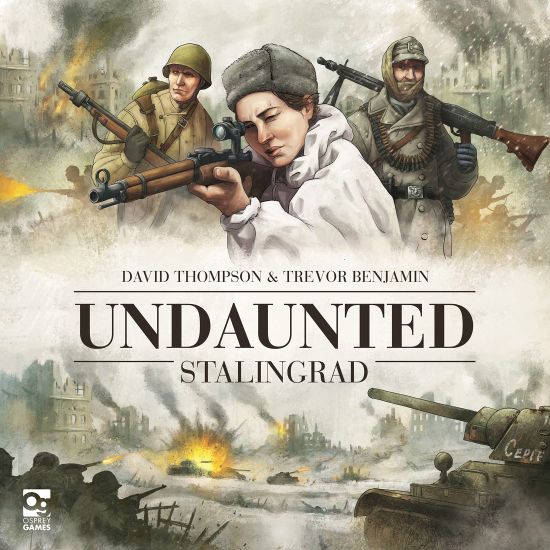
SHUT UP & SIT DOWN RECOMMENDS“The greatest World War II board game of all time” – Shut Up & Sit Down2022 GOLDEN GEEK AWARDS BEST 2-PLAYER GAMELead your stalwart troops to victory in this epic two-player campaign, played out in the war's most infamous city.Stalingrad, 1942. Before you awaits a gruelling conflict in this cornerstone battleground. As the bullets and bombs tear the city asunder, only through wits and valour can you seize the cornerstone of the entire Eastern Front and change the course of history.A heavy burden rests on your shoulders. Every casualty suffered in battle will weaken your forces for the entire campaign. Every bomb blast and mortar shell leaves the very ground for which you are fighting in further ruin. Every inch lost to the enemy brings you closer to the jaws of defeat. Over the course of up to fifteen branching scenarios, you will decide the fate of Stalingrad and, perhaps, the war itself. Even though the consequences of your actions will persist, the game itself can be fully reset and replayed, allowing you to explore every potential outcome.Undaunted: Stalingrad is a monumental standalone game that expands the series’ scope and challenge beyond anything that’s come before. Featuring more than 300 unique illustrations by Roland MacDonald and 150 evocative mission briefings written by acclaimed author Robbie MacNiven, immerse yourself in this campaign at the heart of the war.Ages: 14+Players: 2Playing Time: 45-75 minutesContents: 375 cards, 129 map tiles, 204 tokens, 4 dice, 4 booklets
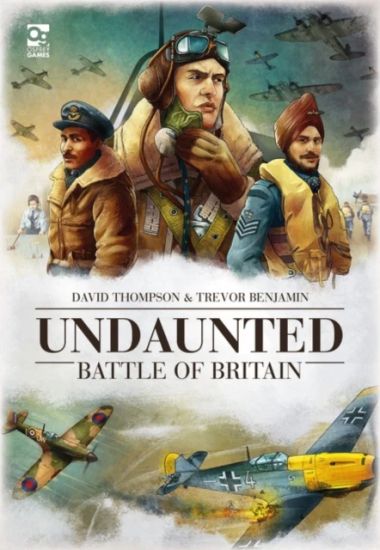
The RAF faces the Luftwaffe in this two-player deckbuilding game of aerial WWII combat. Summer, 1940. The German war machine has rolled through the continent in less than a year, crushing all before it. Britain is all that stands in the way of German victory in Europe. Command the pilots of the battle-tested Luftwaffe, looking to extinguish all resistance and pave the way to invasion, or the resourceful and determined RAF opposing them at every turn. Undaunted: Battle of Britain is a standalone game in the Undaunted series, adapting the core gameplay of the previous games to recreate the dynamic dogfighting of aerial combat. Maintain cohesion between your pilots, evade anti-aircraft artillery, and leverage talented aces to win the battle for the skies! Ages: 14+ Players: 2 Playing Time: 45-60 minutes Contents: 116 cards, 32 large map tiles, 4 dice, tokens, scenario booklet
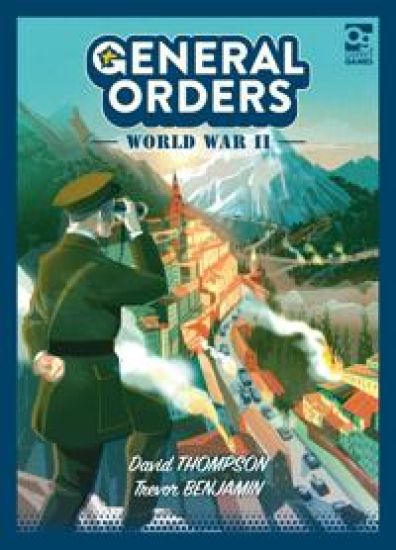
Take command of Axis and Allied troops at the height of World War II in the first ever worker-placement wargame, brought to you by the designers of the Undaunted series.General Orders: World War II pits competing commanders against each other in a tug of war for control over a crucial Second World War battlefield, either in the mountains of Italy or the islands of the Pacific. Players strive to seize crucial strategic assets that unlock special abilities, and prevent their opponents doing the same. Balance the desire to gain these advantages with the need to secure supply lines, ward off aerial assault and artillery barrages, and protect your vulnerable headquarters, in this compact and elegant two-player game.From critically acclaimed design duo David Thompson and Trevor Benjamin, General Orders: WWII combines the dynamic tactical gameplay of a traditional wargame with the cut-throat decision-making of worker-placement games.Ages: 14+Time: 30 minutesNumber of players: 2Components: 1 double-sided game board, 32 playing cards, 80+ wooden pieces, dice and tokens
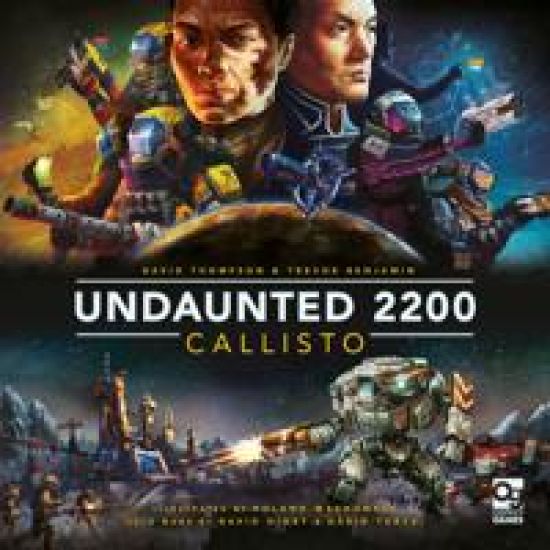
"This game is electric" – Shut Up & Sit DownThe award-winning Undaunted series takes to the stars: build your decks, ready your mechs, and battle for dominance over the bleak, resource-rich moon of Callisto.Jovian Moon Base - Callisto, 2200 CE. Tensions have arisen between the conglomerate of Earth’s leading corporations that funded the base, and the mining collective tasked with operating it. Protests have erupted, strikes been called, and contracts broken. Private security forces have been hired, industrial mining vehicles repurposed for combat, and long-disused military mechs reawoken. The battle for Callisto is about to begin: it's time to choose your side. Undaunted 2200: Callisto is a standalone game in the Undaunted series, adapting the core gameplay of previous games to a new science fiction setting. Play across stunningly illustrated map boards in two-player, four-player, and solo game modes. Navigate the barren lunar landscape, manoeuvre to seize dominant high-ground positions, and utilize your formidable mechs to gain control of Callisto and its precious resources. Ages: 14+ Players: 1/2/4 Playing Time: 45-60 minutes Contents: 4 double-sided boards, Rulebook, Solo Rulebook, 135+ playing cards, 70+ tokens, 12 dice
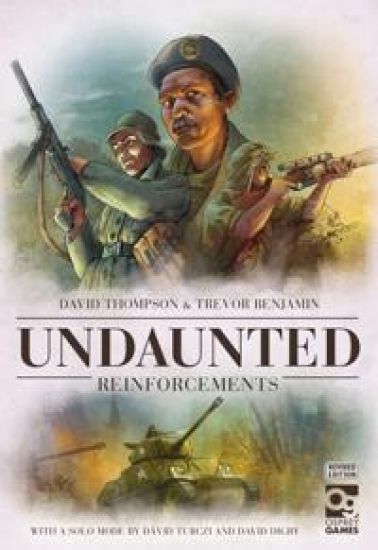
In North Africa, the Long Range Desert Group are a thorn in the sides of the Italian forces, disrupting vital lines of communication and striking at strategic targets ranging far and wide. In Normandy, US forces brace against a German counterattack, determined to maintain their foothold in the region. The fighting is intense and the outcome hangs on a knife-edge. With everything at stake, you desperately need reinforcements!Undaunted: Reinforcements is a modular expansion that introduces a range of new rules, scenarios, and units. Unleash the might of the German and American tanks and see how your new squad options fare against them in Undaunted: Normandy, or make use of mines, assault aircraft, and other new units as you attempt to outfox your opponent in Undaunted: North Africa. Whether you have only one or the other, you’ll be able to play Undaunted for the first time in a four-player mode, or test your mettle in a solo mode by Dávid Turczi and David Digby.Requires a copy of Undaunted: Normandy and/or Undaunted: North Africa to play. Cards from both core games are now included to ensure consistent card backs. Please note that the box depth for this Revised Edition has been reduced and the insert is no longer designed to function as an organiser for all three titles.Ages: 14+Players: 1/2/4Playing Time: 45-60 minutesContents: 249 cards, 150 oversized solo cards, tokens, two scenario bookletsFor exclusive new content, news, updates and information about errata please visit the Osprey website!
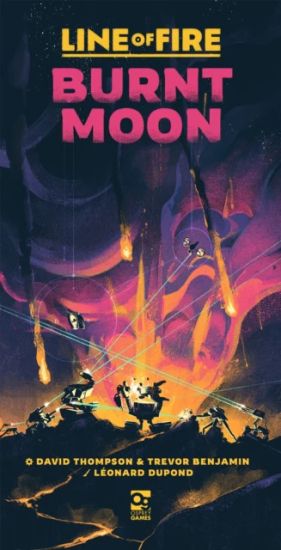
A two-player deck-building card game of machines warring across the volcanic surface of Io.A group of black-hat hackers known as POSIWID plots to hijack the moon, Io, and hold the entire Jovian power grid to ransom. Standing in their way are the ultra-corporate LFA, the constructors of the lunar energy facilities. Both sides have engaged a fleet of ROV – advanced remotely operated robots to battle across the treacherous landscape.The machines are activated. Initiate combat sequence. The battle for Io has begun.Line of Fire: Burnt Moon is a standalone two-player card game that fuses the lean deck-building of the award-winning Undaunted series with fast-paced lane-battling. Sharp decision-making and clever positioning combine in a nail-bitingly tense, endlessly replayable, and tactical experience.Age: 14+Time: 30 minsPlayers: 2Components: 81 Playing Cards, 4 Player Aids, 10 Terrain Tiles, 6 Fortification Tiles, 1 Gameplay Manual, 1 Action Manual