Kirjojen hintavertailu. Mukana 11 342 296 kirjaa ja 12 kauppaa.

Kirjahaku

Etsi kirjoja tekijän nimen, kirjan nimen tai ISBN:n perusteella.

1000 tulosta hakusanalla David C. Hester

Viva Cristo Rey!

Viva Cristo Rey!

David C. Bailey

University of Texas Press
1974
pokkari
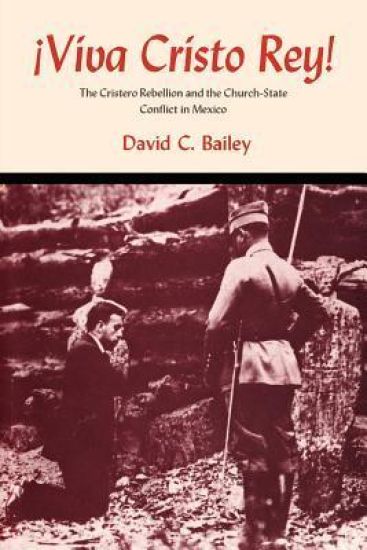
Between 1926 and 1929, thousands of Mexicans fought and died in an attempt to overthrow the government of their country. They were the Cristeros, so called because of their battle cry, ¡Viva Cristo Rey!-Long Live Christ the King! The Cristero rebellion and the church-state conflict remain one of the most controversial subjects in Mexican history, and much of the writing on it is emotional polemic. David C. Bailey, basing his study on the most important published and unpublished sources available, strikes a balance between objective reporting and analysis. This book depicts a national calamity in which sincere people followed their convictions to often tragic ends. The Cristero rebellion climaxed a century of animosity between the Catholic church and the Mexican state, and this background is briefly summarized here. With the coming of the 1910 revolution the hostility intensified. The revolutionists sought to impose severe limitations on the Church, and Catholic anti-revolutionary militancy grew apace. When the government in 1926 decreed strict enforcement of anticlerical legislation, matters reached a crisis. Church authorities suspended public worship throughout Mexico, and Catholics in various parts of the country rose up in arms. There followed almost three years of indecisive guerrilla warfare marked by brutal excesses on both sides. Bailey describes the armed struggle in broad outline but concentrates on the political and diplomatic maneuvering that ultimately decided the issue. A de facto settlement was brought about in 1929, based on the government’s pledge to allow the Church to perform its spiritual offices under its own internal discipline. The pact was arranged mainly through the intercession of U.S. Ambassador Dwight Morrow. His role in the conflict, as well as that of other Americans who decisively influenced the course of events, receives detailed attention in the study. The position of the Vatican during the conflict and its role in the settlement are also examined in detail. With the 1929 settlement the clergy returned to the churches, whereupon the Cristeros lost public support and the rebellion collapsed. The spirit of the settlement soon evaporated, more strife followed, and only after another decade did permanent religious peace come to Mexico.
Discovering the Olmecs

Discovering the Olmecs

David C. Grove

University of Texas Press
2014
sidottu
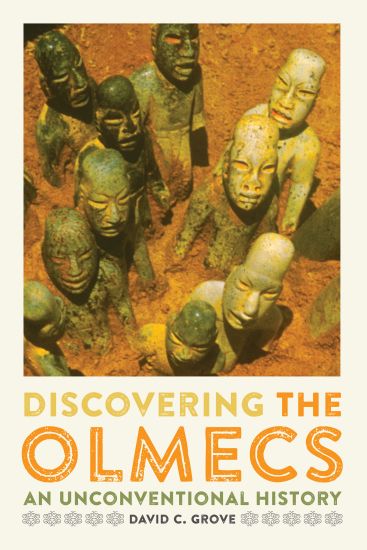
The Olmecs are renowned for their massive carved stone heads and other sculptures, the first stone monuments produced in Mesoamerica. Seven decades of archaeological research have given us many insights into the lifeways of the Olmecs, who inhabited parts of the modern Mexican states of Veracruz and Tabasco from around 1150 to 400 BC, and there are several good books that summarize the current interpretations of Olmec prehistory. But these formal studies don’t describe the field experiences of the archaeologists who made the discoveries. What was it like to endure the Olmec region’s heat, humidity, mosquitoes, and ticks to bring that ancient society to light? How did unforeseen events and luck alter carefully planned research programs and the conclusions drawn from them? And, importantly, how did local communities and individuals react to the research projects and discoveries in their territories?In this engaging book, a leading expert on the Olmecs tells those stories from his own experiences and those of his predecessors, colleagues, and students. Beginning with the first modern explorations in the 1920s, David Grove recounts how generations of archaeologists and local residents have uncovered the Olmec past and pieced together a portrait of this ancient civilization that left no written records. The stories are full of fortuitous discoveries and frustrating disappointments, helpful collaborations and deceitful shenanigans. What emerges is an unconventional history of Olmec archaeology, a lively introduction to archaeological fieldwork, and an exceptional overview of all that we currently know about the Olmecs.
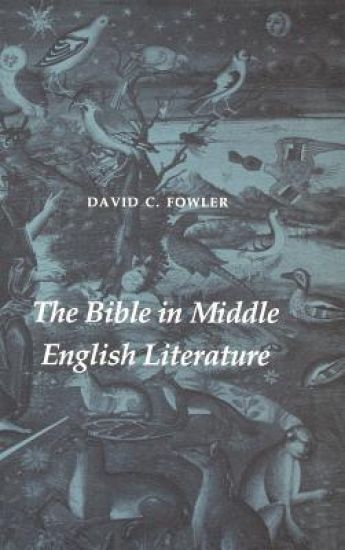
The Bible in Middle English Literature

The Bible in Middle English Literature

David C. Fowler

University of Washington Press
1984
sidottu
In this companion to his previous book, The Bible in Early English Literature, David Fowler completes his stimulating and broad-ranging study of medieval English literature in the light of biblical tradition. As in the first volume, he both provides a broad general view of literary trends and closely examines representative works that illustrate these trends.The author begins by discussing medieval drama in England--with special attention to the Cornish drama-- as revealed in the cycle plays that enacted the entire history of the world from Creation to Doomsday. He demonstrates how the drama grew out of the liturgy of the Church and developed into a parallel fashion with other kinds of vernacular literature in the later Middle Ages, and he offers a possible explanation of the origin of the morality play in England.This is followed by an examination of representative shorter medieval lyrics. Fowler shows that many of these lyrics were composed to memorialize particular "secular' and "religious" elements blended subtly and distinctively in Middle English lyrics, often with a complete harmony of sacred and sexual significance. A special section deals with Mary Magdalene in popular tradition, comparing her description in the Bible with her treatment in legend, drama, lyric poetry, and the ballad.The final three chapters focus on particular literary works which the author believes to be outstanding examples of poems composed in the biblical tradition. "The Parliament of Fowls" is selected as the best example of biblical influence in all of Chaucer. The work is seen as a Creation poem with its organizing principles derives from commentaries on the first chapter of Genesis--a new theory of the poem's structure which the author feels resolves many of the difficulties previously encountered by scholars.Fowler than treats several works of the "Pearl" poet--"Cleanness," "Patience," "Saint Erkenwald," and the "Pearl"--in their particular blend of humor, seriousness, and Christian serenity. In stark contrast, "Piers the Plowman," the final work dealt with, reflects the agony of the turmoil of late fourteenth-century England. The emphasis is on the historical significance of the poem: the importance of the A text as an ideological influence on the leadership of the Peasants' Revolt in 1381, and the exschatological implications of the later versions (B and C texts). "It is my hope," the author states, "that future studies of 'Piers' will increasingly take history into account and likewise study the versions of the poem separately. Until we learn to walk from this text out into history, we run the risk of missing the important message that this profound and troubling poem offers to twentieth-century man."This book will be of value both to scholars and students of medieval literature and religion and to general readers interested in the varied and intriguing ways that the Bible has influence vernacular literature.
The Life and Times of John Trevisa, Medieval Scholar

The Life and Times of John Trevisa, Medieval Scholar

David C. Fowler

University of Washington Press
1995
sidottu
John Trevisa (ca.1342-1402), perhaps the greatest of Middle English prose translators of Latin texts into English, was almost an exact contemporary of Geoffrey Chaucer. Trevisa was born in Cornwall, studies at Oxford, and was instituted vicar of Berkeley, a position he held until his death.Over a period of thirty-five years eminent medievalist David Fowler has pieced together an account of Trevisa's life and times by diligently seeking out documents bearing on his activities and translations. This has resulted in a cultural history of fourtheenth-century England that ranges from the administrative, geographical, and linguistic status of Cornwall to the curriculum of medieval university education, and from religious and secular conflicts to the administration of a substantial provincial household and the role of its aristocratic keepers in the Hundred Years War.Fowler provides an analysis of Trevis's known translations the "Gospel of Nicodemus", "Dialogus inter Militem et Clericum", FitzRalph's "Defensio Curatorum", the "Polychronicon", "De Regimine Principum" and "De Proprietatibus Rerum." He also advances the hypothesis that Trevisa was one of the scholars responsible for the first complete translation of the scriptures into English: the Wycliffite Bible. An appendix contains a collection of biographical and historical references designed to illustrate Fowler's contention that Trevisa may have been responsible for the revisions of "Piers the Plowman" now known as the B and C texts.
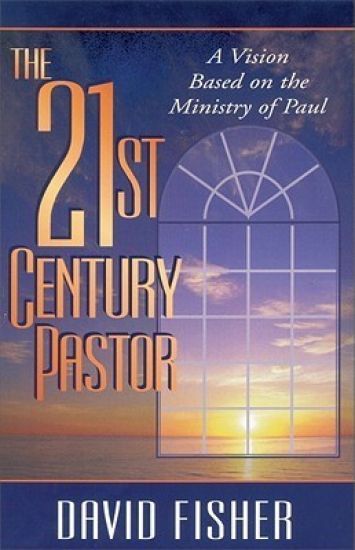
21st Century Pastor

21st Century Pastor

David C. Fisher

Zondervan
1996
nidottu
The third millennium. It's a time of tremendous opportunity for the church--and tremendous challenge. More than ever, pastors need a model for ministry that can equip them for the rigors of a restless, increasingly secularized culture. In the 21st Century Pastor, David Fisher explores the apostle Paul's concept of ministry to offer a paradigm that is both biblical and relevant. Paul's view is fleshed out with examples from Fisher's own twenty-five years of pastoral experience, presenting a roadmap for today's pastor that is scholarly, practical, dynamic, and inspiring. The 21st Century Pastor first addressees crucial issues of pastoral identity, the significance of geography, time, and ecclesiology. It then explores Paul's metaphors for ministry (jars of clay, farmers and builders, servants and stewards, and others) to reveal an accurate portrait of an effective, biblical pastor--the kind who will speak to the heart of modern culture rather than languish on its fringes. Filling the rare role of a pastor to pastors, Fisher's sage insights help pastors answer their own identity questions, empowering them to minister to a deeply needy society. Says Fisher, "Pastors who know what time it is will, in the name and power of God, create communities of faith where the values of the Gospel are embraced, taught, and lived out."
Religion in Postwar China

Religion in Postwar China

David C. Yu

Greenwood Press
1993
sidottu
This book discusses selected works on Chinese religion in the People's Republic of China (PRC) published since World War II. The work begins with brief overviews of religion in premodern and modern China, first by scholars in China, and then as understood by Western scholars. The bulk of the book consists of 1,005 annotated bibliographic entries--works by Chinese writers from the PRC and Western writers from East Asia, North America, and Europe. Though many entries deal with pre-1970 China, the emphasis is on the past two decades, which have been the most productive in the history of Western publications. The inclusion of some 200 entries for this time period by authors from China makes this an important work for students and scholars in contemporary Chinese religion.
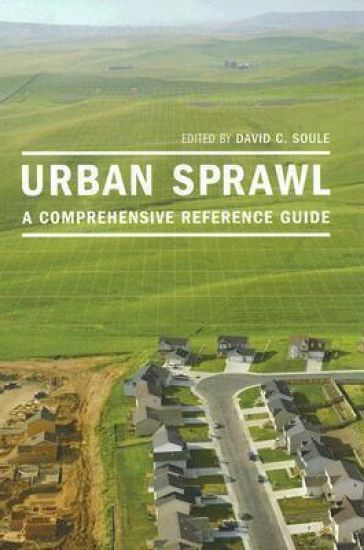
Urban Sprawl

Urban Sprawl

David C. Soule

Greenwood Press
2005
sidottu
Urban sprawl is an occurrence that has gained much national attention in recent years. It is not only an issue of land use, but also a legal, political, and social concern. It affects our schools, the environment, and race relations. Comprehensive enough for high school students and also appropriate for undergraduate students, this book delves into the challenges of urban sprawl by looking to some of America's top thinkers on the matter, including Robert Yaro, the President of the Regional Plan Association. Other cutting-edge articles include a preface about the emergence of sprawl by nationally syndicated columnist Neal Peirce, views about race and class by former mayor of Albuquerque David Rusk, and views from Curtis Johnson, president of the Citistates Group, about transportation dynamics. After reading a detailed definition of urban sprawl, students will then explore the dynamics, negative impact, analysis, other cross-cutting issues, and the agenda to deal with sprawl. Complete with a glossary, resources, and contact information for smart growth alliances, this book is extremely user-friendly even for students. Soule offers an unbiased viewpoint of this national event, while still keeping the information accessible to students as well as those who have little background in the matter.
Electromyography and Neuromuscular Disorders

Electromyography and Neuromuscular Disorders

David C. Preston; Barbara E. Shapiro

Elsevier - Health Sciences Division
2020
sidottu
Successfully correlate electrodiagnostic findings and neuromuscular ultrasound with key clinical findings with Electromyography and Neuromuscular Disorders, 4th Edition. This popular text is the go-to resource for clinicians at all levels of experience who have an interest in neuromuscular medicine, including those studying for the AANEM board exam. An easy-to-read writing style, abundant case studies, and online videos help you master the electrodiagnostic evaluation and improve safety and accuracy. Helps you diagnose neuromuscular disorders more quickly and accurately, and correlate electromyographic and clinical findings. Explains complex subject matter in an easy-to-understand, user-friendly manner. Includes dozens of detailed, cross-sectional anatomy drawings to ensure correct EMG needle placement and avoid neurovascular injuries. Features new chapters on Neuromuscular Ultrasound, as well as incorporating neuromuscular ultrasound in the evaluation of clinical neuromuscular disorders along with electrodiagnostic studies in many of the clinical chapters. Provides up-to-date information on iatrogenic complications of electrodiagnostic studies and newly defined genetic neuromuscular conditions. Includes online access to more than 70 videos that allow you to see and hear the EMG waveforms discussed in the text. Enhanced eBook version included with purchase. Your enhanced eBook allows you to access all of the text, figures, and references from the book on a variety of devices.
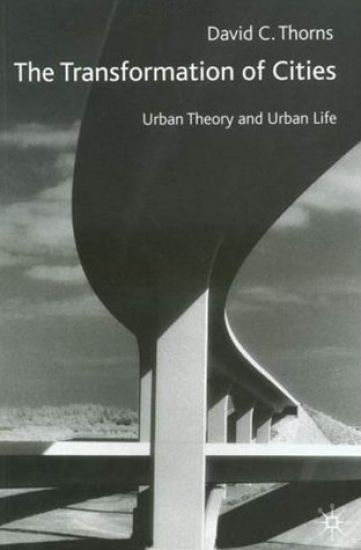
The Transformation of Cities

The Transformation of Cities

David C. Thorns

Red Globe Press
2002
nidottu
The aim of the book is to examine the transformation of the city in the late 20th century and explore the ways in which city life is structured. The shift from modern-industrial to information/consumption-based 'post-modern' cities is traced through the text. The focus is not just on America and Europe but also explores cities in other parts of the world as city growth in the twenty first century will be predominantly outside of these regions.
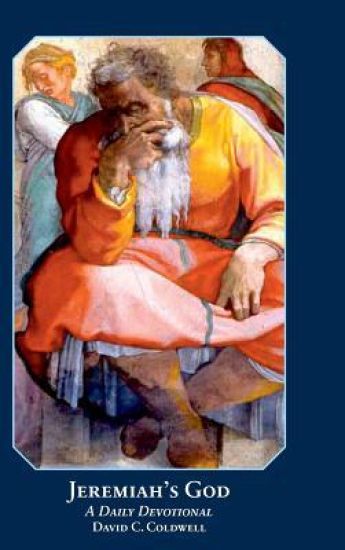
Jeremiah's God (2018 revised edition)

Jeremiah's God (2018 revised edition)

David C Coldwell

Lulu.com
2018
sidottu
Jeremiah was a fascinating and complex man. As you learn more about him, I hope you will draw closer to his God. Jeremiah knew the Lord. He was aware that the Lord implements kindness, justice and righteousness on the earth (Jer. 9:24). May it be the same for you. This prophet lived in turbulent times, and many people today can identify with the difficulties that he faced. Jeremiah s God is a daily devotional book with 365 meditations from the Book of Jeremiah. Each daily reading exposits one or two verses and the reader can gain an understanding of the entire 52 chapters of Jeremiah in one year. To aid the reader s personal use of these studies, each reading concludes with a question or application.
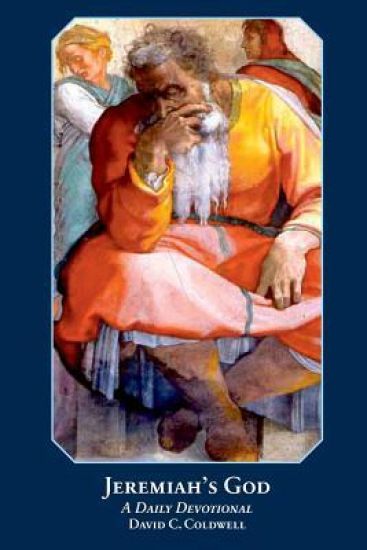
Jeremiah's God 2018 Revised Edition

Jeremiah's God 2018 Revised Edition

David C Coldwell

Lulu.com
2018
pokkari
Jeremiah was a fascinating and complex man. As you learn more about him, I hope you will draw closer to his God. Jeremiah knew the Lord. He was aware that the Lord implements kindness, justice and righteousness on the earth (Jer. 9:24). May it be the same for you. This prophet lived in turbulent times, and many people today can identify with the difficulties that he faced. Jeremiah s God is a daily devotional book with 365 meditations from the Book of Jeremiah. Each daily reading exposits one or two verses and the reader can gain an understanding of the entire 52 chapters of Jeremiah in one year. To aid the reader s personal use of these studies, each reading concludes with a question or application.
Ideology and Educational Reform

Ideology and Educational Reform

David C. Paris

Routledge
2019
sidottu
Ten years of educational reform have not brought dramatic improvements. In Ideology and Educational Reform, David Paris traces the underlying ideological problems that make genuine reform difficult. These include different and often conflicting beliefs concerning the proper role of public education as well as the public's natural ambivalence about schools as government agencies. Paris describes three major themes in public education—common school, human capital, and clientelism. He critically evaluates current policies and explores proposed reforms associated with each of these topics, including moral education, the school-economy relationship, school choice, and the delivery of social services. Paris proposes better ways for dealing with ideological problems in school practice, and suggests appropriate directions for policy reform.
The Medieval Chinese Oliogarchy

The Medieval Chinese Oliogarchy

David C Johnson

TAYLOR FRANCIS LTD
2020
sidottu
Most modern scholars recognize that there were great differences between China's ruling elite in the middle and late traditional period; many have called the period up through the T'ang dynasty "aristocratic," in contrast to the more meritocratic and socially mobile age that followed. But until now there has been no serious effort to discover how the social elite was defined in medieval times, and who belonged to it. David Johnson discusses in detail medieval definitions of the social elite, and, with the help of several manuscripts of the ninth century, identifies the families that belonged to that class.
The Medieval Chinese Oliogarchy

The Medieval Chinese Oliogarchy

David C Johnson

TAYLOR FRANCIS LTD
2022
nidottu
Most modern scholars recognize that there were great differences between China's ruling elite in the middle and late traditional period; many have called the period up through the T'ang dynasty aristocratic, in contrast to the more meritocratic and socially mobile age that followed. But until now there has been no serious effort to discover how the social elite was defined in medieval times, and who belonged to it. David Johnson discusses in detail medieval definitions of the social elite, and, with the help of several manuscripts of the ninth century, identifies the families that belonged to that class.
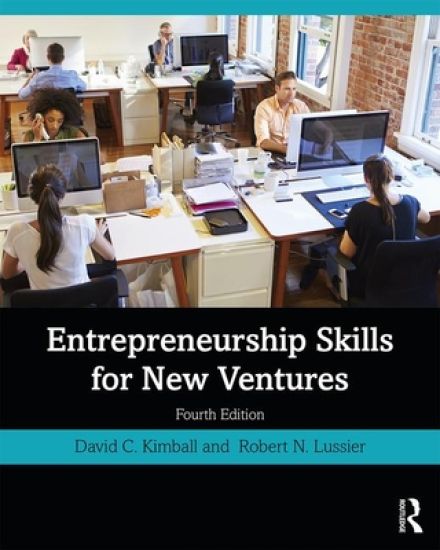
Entrepreneurship Skills for New Ventures

Entrepreneurship Skills for New Ventures

David C. Kimball; Robert N. Lussier

Routledge
2020
sidottu
As business schools expand their entrepreneurship programs and organizations seek people with entrepreneurial skills, it has become clear that the skills and mindset of an entrepreneur are highly valued in all business contexts. This latest edition of Entrepreneurship Skills for New Ventures continues to focus on helping students develop entrepreneurial skills, whether they seek to become entrepreneurs or employees.Focusing on the entrepreneurial start-up process, the fourth edition of Entrepreneurship Skills for New Ventures takes the reader through the steps of selecting, planning, financing, and controlling the new venture. The authors cover multiple forms of new ventures, as well as ways to utilize entrepreneurial skills in other contexts, encouraging students to engage with the material and apply it to their lives in ways that make sense for them. Skill development features include: New exercise on analyzing the lean entrepreneurship option Entrepreneurial profiles of small-business owners Personal applications for students to apply questions to their new venture or a current business Global and domestic cases Elevator pitch assignments that put students in the venture capitalist position Application exercises and situations covering specific text concepts Business plan prompts to help students construct a business plan over the course of a semesterFeaturing pedagogical tools like review questions and learning outcomes, as well as online materials that expand upon skill development and offer instructor resources, the fourth edition of Entrepreneurship Skills for New Ventures is the perfect resource for instructors and students of entrepreneurship.
Entrepreneurship Skills for New Ventures

Entrepreneurship Skills for New Ventures

David C. Kimball; Robert N. Lussier

Routledge
2020
nidottu
As business schools expand their entrepreneurship programs and organizations seek people with entrepreneurial skills, it has become clear that the skills and mindset of an entrepreneur are highly valued in all business contexts. This latest edition of Entrepreneurship Skills for New Ventures continues to focus on helping students develop entrepreneurial skills, whether they seek to become entrepreneurs or employees.Focusing on the entrepreneurial start-up process, the fourth edition of Entrepreneurship Skills for New Ventures takes the reader through the steps of selecting, planning, financing, and controlling the new venture. The authors cover multiple forms of new ventures, as well as ways to utilize entrepreneurial skills in other contexts, encouraging students to engage with the material and apply it to their lives in ways that make sense for them. Skill development features include: New exercise on analyzing the lean entrepreneurship option Entrepreneurial profiles of small-business owners Personal applications for students to apply questions to their new venture or a current business Global and domestic cases Elevator pitch assignments that put students in the venture capitalist position Application exercises and situations covering specific text concepts Business plan prompts to help students construct a business plan over the course of a semesterFeaturing pedagogical tools like review questions and learning outcomes, as well as online materials that expand upon skill development and offer instructor resources, the fourth edition of Entrepreneurship Skills for New Ventures is the perfect resource for instructors and students of entrepreneurship.
Concursus and Concept Use in Karl Barth’s Doctrine of Providence
This book provides a fresh interpretation of Karl Barth’s doctrine of providence in Church Dogmatics III/3, emphasizing concursus—the cooperation between divine and human action. Challenging accusations of occasionalism, it highlights Barth’s christological reorientation of classical doctrine and advances a social-practical theology of concept use and norms. Through rigorous analysis, the author situates Barth within historical debates on providence, demonstrating Barth’s innovative christocentric approach that avoids occasionalism. The work uniquely incorporates social-practical theory to explain how theological norms function within Christian community practices. By addressing how Barth’s concepts of faith, obedience, and prayer mediate normative authority, this volume deepens readers’ understanding of Barth’s theology. It further provides theological and philosophical tools for recognizing and critiquing ideological distortions, offering a constructive vision of how divine providence shapes human language and practice. The book will be relevant to scholars and students of theology and philosophy of religion, particularly those focused on Karl Barth, Reformed theology, and theological method, as well as readers interested in contemporary debates on the intersection of divine action, human agency, and the formation of Christian norms.
Religion in Japanese Daily Life

Religion in Japanese Daily Life

David C. Lewis

Routledge
2019
nidottu
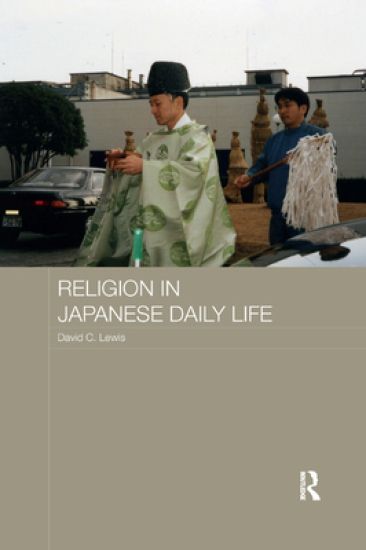
Are Japanese people religious – and, if so, in what ways? David Lewis addresses this question from the perspective of ordinary Japanese people in the context of their life cycles, and explores why they engage in religious activities. He not only discusses how Japanese people engage in different religious practices as they encounter new events in their lives but also analyses the attitudes and motivations behind their behaviour. Activities such as fortune-telling, religious rites in the workplace, ancestral rites and visits to shrines and temples are actually engaged in by many people who view themselves as ‘non- religious’ but express their motivations in terms other than the conventional ‘religious’ ones. This book outlines the religious options available, and assesses why people choose particular religious activities at various times in their lives or in specific circumstances. The author challenges some widespread assumptions about religion in urban and industrial contexts and also shows how some of the underlying motivations behind Japanese behaviour are expressed both in religious and non-religious forms.