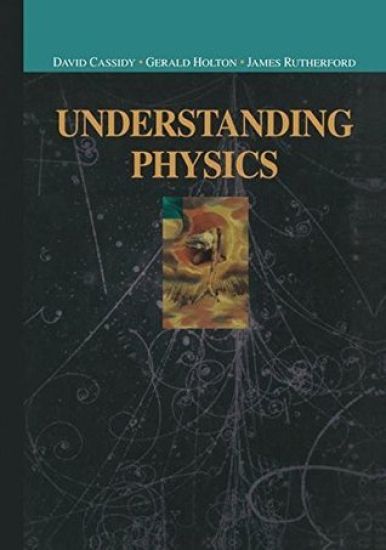
Understanding Physics provides a thorough grounding in contemporary physics while placing physics into its social and historical context. Based in large part on the highly respected Project Physics Course developed by two of the authors, it also integrates the results of recent pedagogical research. The text thus: - teaches about the basic phenomena in the physical world and the concepts developed to explain them - shows that science is a rational human endeavor with a long and continuing tradition, involving many different cultures and people - develops facility in critical thinking, reasoned argumentation, evaluation of evidence, mathematical modeling, and ethical values The treatment emphasizes not only what we know but also how we know it, why we believe it, and what effects that knowledge has: - Why do we believe the Earth and planets revolve around the Sun? - Why do we believe that matter is made of atoms? - How do relativity theory and quantum mechanics alter our conception of Nature and in what ways do they leave the classical concepts unchanged? - What impact does the knowledge of finite energy resources have on our society? - How have applications of fundamental science (such as the steam engine, the laser, the electric generator, the transistor) affected our lives? - How does the evidence for non-scientific ideas, such as UFOs, ESP, and the like, differ from the evidence for accepted scientific results?
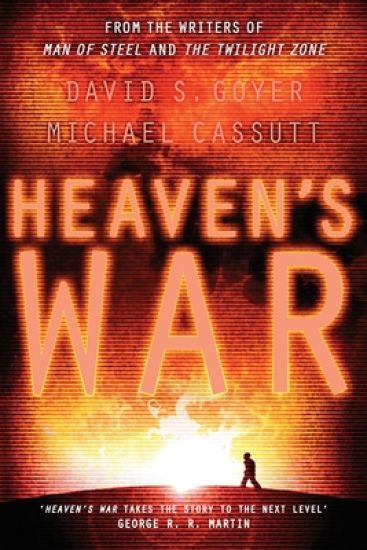
THEIR FIRST CHALLENGE IS TO SURVIVE... When an unidentified object is spotted hurtling towards Earth, two rival teams race to claim it. But the affectionately-named ‘Keanu’ conceals dangerous secrets. Instead of barren rock, astronauts discover a giant ship with an extra-terrestrial crew. A ship with a mission and a message: help us. A brave new frontier beckons, but it comes at a price. Without explanation, small groups of humans are transported from earth’s scientific communities to Keanu’s interior. Their first task is to stay alive. Their second, to explore their new home and locate their keepers. But above all, as the ship starts to break down around them, they must figure out why they were brought here and forge a path home.
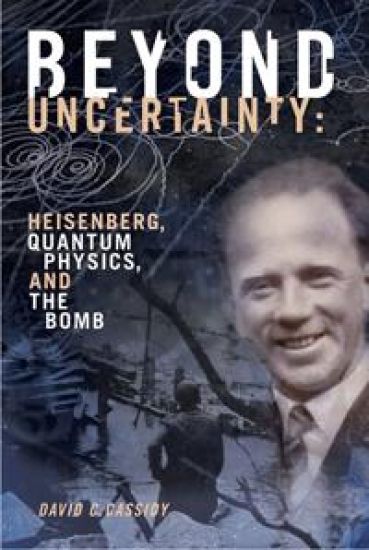
"A fascinating, well-documented biography." --New York Times Book Review "A monumental effort." --New York Review of Books "An excellent piece of science writing...Cassidy does not so much exculpate Heisenberg as explain him, with a transparency that makes this biography a pleasure to read." --Los Angeles Times "Cassidy has written the definitive biography of a great and tragic physicist." --Richard Rhodes, author of the Pulitzer Prize--winning The Making of the Atomic Bomb Since the fall of the Soviet Union, long-suppressed information has emerged on Werner Heisenberg's role in the Nazi atomic bomb project. In Beyond Uncertainty, Cassidy interprets this and other previously unknown material within the context of his vast research and tackles the vexing questions of a scientist's personal responsibility and guilt when serving an abhorrent military regime. David C. Cassidy is the author of Beyond Uncertainty: Heisenberg, Quantum Physics, and the Bomb; A Short History of Physics in the American Century; J. Robert Oppenheimer and the American Century; and Einstein and Our World. He is the recipient of the Abraham Pais Prize for History of Physics from the American Physical Society, the Science Writing Award from the American Institute of Physics, the Pfizer Award from the History of Science Society, and an honorary doctorate from Purdue University. Dr. Cassidy is Professor of Natural Sciences at Hofstra University and resides in Bay Shore, New York.
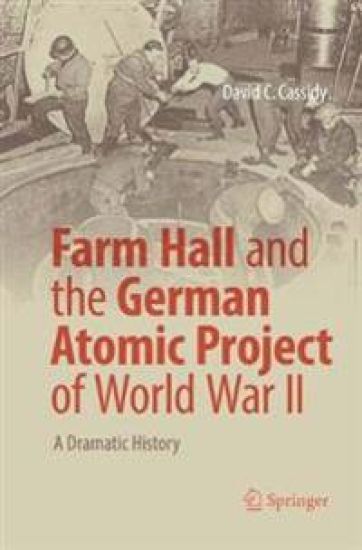
This gripping book brings back to life the events surrounding the internment of ten German Nuclear Scientists immediately after World War II. It is also an "eye-witness" account of the dawning of the nuclear age, with the dialogue and narrative spanning the period before, during and after atomic bombs were dropped on Japan at the end of the war. This pivotal historical episode is conveyed, along with the emotions as well as the facts, through drama, historical narrative, and photographs of the captive German nuclear scientists - who included Werner Heisenberg, Otto Hahn, and Max von Laue. The unique story that unfolds in the play is based on secretly recorded transcripts of the scientists’ actual conversations at Farm Hall, together with related documents and photographs.
This gripping book brings back to life the events surrounding the internment of ten German Nuclear Scientists immediately after World War II. It is also an "eye-witness" account of the dawning of the nuclear age, with the dialogue and narrative spanning the period before, during and after atomic bombs were dropped on Japan at the end of the war. This pivotal historical episode is conveyed, along with the emotions as well as the facts, through drama, historical narrative, and photographs of the captive German nuclear scientists - who included Werner Heisenberg, Otto Hahn, and Max von Laue. The unique story that unfolds in the play is based on secretly recorded transcripts of the scientists’ actual conversations at Farm Hall, together with related documents and photographs.
The Popper High School Study Book for Cello, Volume One presents exercises and studies to help cellists learn and perfect Etudes One through Five in David Popper's High School of Cello Playing, Op. 73. Each etude is broken down into short sections and taught. Difficulties such as shifts and string crossing are approached from a variety of perspectives, giving the cellist ultimate mastery over these cello etudes that are so essential to advanced study. The etudes studied in this volume are presented in their entirety at the end of the book. This book could be followed by The Popper High School Study Book, Volume Two.
The Popper High School Study Book for Cello, Volume Two presents exercises and studies to help cellists learn and perfect Etudes Six through Ten in David Popper's High School of Cello Playing, Op. 73. Each etude is broken down into short sections and taught. Difficulties such as shifts and string crossing are approached from a variety of perspectives, giving the cellist ultimate mastery over these cello etudes that are so essential to advanced study. The etudes studied in this volume are presented in their entirety at the end of the book. This book could be followed by The Popper High School Study Book, Volume Three.
This book presents insights into how affective educational experiences may be associated with youth criminal behaviour and the pathway to recidivism. It explores the perspectives and lived school experiences of five young adult male prison inmates, including while they were incarcerated as youths. Through these case studies, the book explores the relationship between affective engagement in education and recidivism.This book shows that participants were affectively disengaged from education prior to their initial incarceration in a youth detention facility, and that their disaffection before, during, and after youth incarceration both generated and impacted on their cognitive and behavioural disengagement from education. Moreover, a range of additional factors not directly causally related to their schooling were shown to have had a significant effect on their engagement in education. The book considers a number of key findings. First, the foundational role that a sense of belonging plays in how young people experience education and its relation to crime. Second, the importance of individualized transition plans for youth at risk, and youth offenders before, during, and after incarceration. Third, the extent to which successful transition from youth offending and recidivism hinges on interagency collaboration. This book will be beneficial to teacher educators, education researchers, criminologists and sociologists.
This book presents insights into how affective educational experiences may be associated with youth criminal behaviour and the pathway to recidivism. It explores the perspectives and lived school experiences of five young adult male prison inmates, including while they were incarcerated as youths. Through these case studies, the book explores the relationship between affective engagement in education and recidivism. This book shows that participants were affectively disengaged from education prior to their initial incarceration in a youth detention facility, and that their disaffection before, during, and after youth incarceration both generated and impacted on their cognitive and behavioural disengagement from education. Moreover, a range of additional factors not directly causally related to their schooling were shown to have had a significant effect on their engagement in education. The book considers a number of key findings. First, the foundational role that a sense of belonging plays in how young people experience education and its relation to crime. Second, the importance of individualized transition plans for youth at risk, and youth offenders before, during, and after incarceration. Third, the extent to which successful transition from youth offending and recidivism hinges on interagency collaboration. This book will be beneficial to teacher educators, education researchers, criminologists and sociologists.
Here is one of the few books that elucidates the wide range and complexity of special concerns intrinsic to the assessment of terminally ill patients and their families. Health care experts discuss psychosocial assessment and measurement and the ability of clinicians to accurately assess and track psychosocial functioning of patients and their families. Each chapter examine specific methodological considerations in terminal care. Several important content areas are discussed at length, including assessment of pain, assessment of distress in children, evaluation of cognitive functioning, and measurement of patient and family satisfaction.
"Over the past two decades, the United States has seen an intense debate about the composition of the federal judiciary. Are judges ""activists""? Should they stop ""legislating from the bench""? Are they abusing their authority? Or are they protecting fundamental rights, in a way that is indispensable in a free society? Are Judges Political? cuts through the noise by looking at what judges actually do. Drawing on a unique data set consisting of thousands of judicial votes, Cass Sunstein and his colleagues analyze the influence of ideology on judicial voting, principally in the courts of appeal. They focus on two questions: Do judges appointed by Republican Presidents vote differently from Democratic appointees in ideologically contested cases? And do judges vote differently depending on the ideological leanings of the other judges hearing the same case? After examining votes on a broad range of issues--including abortion, affirmative action, and capital punishment--the authors do more than just confirm that Democratic and Republican appointees often vote in different ways. They inject precision into an all-too-often impressionistic debate by quantifying this effect and analyzing the conditions under which it holds. This approach sometimes generates surprising results: under certain conditions, for example, Democrat-appointed judges turn out to have more conservative voting patterns than Republican appointees. As a general rule, ideology should not and does not affect legal judgments. Frequently, the law is clear and judges simply implement it, whatever their political commitments. But what happens when the law is unclear? Are Judges Political? addresses this vital question. "
Food security and environmental conservation are two of the greatest challenges facing the world today. It is predicted that food production must increase by at least 70% before 2050 to support continued population growth, though the size of the world's agricultural area will remain essentially unchanged. This updated and thoroughly revised second edition provides in-depth coverage of the impact of environmental conditions and management on crops, resource requirements for productivity and effects on soil resources. The approach is explanatory and integrative, with a firm basis in environmental physics, soils, physiology and morphology. System concepts are explored in detail throughout the book, giving emphasis to quantitative approaches, management strategies and tactics employed by farmers, and associated environmental issues. Drawing on key examples and highlighting the role of science, technology and economic conditions in determining management strategies, this book is suitable for agriculturalists, ecologists and environmental scientists.
Food security and environmental conservation are two of the greatest challenges facing the world today. It is predicted that food production must increase by at least 70% before 2050 to support continued population growth, though the size of the world's agricultural area will remain essentially unchanged. This updated and thoroughly revised second edition provides in-depth coverage of the impact of environmental conditions and management on crops, resource requirements for productivity and effects on soil resources. The approach is explanatory and integrative, with a firm basis in environmental physics, soils, physiology and morphology. System concepts are explored in detail throughout the book, giving emphasis to quantitative approaches, management strategies and tactics employed by farmers, and associated environmental issues. Drawing on key examples and highlighting the role of science, technology and economic conditions in determining management strategies, this book is suitable for agriculturalists, ecologists and environmental scientists.
This concise, easy to follow review of obstetric anesthesia follows the outline set forth by the American Board of Anesthesiology (ABA), making it an invaluable resource for in-service exam and board exams. The book is divided into four sections, beginning with maternal physiology, followed by maternal-fetal considerations, then pathophysiology of complicated pregnancy, and finally problems of term and delivery. Written at the fellow-level, it provides anesthesiology residents, obstetric anesthesiology fellows, and any anesthesiologist providing care to obstetric patients testable information for the boards, as well as practical tips for clinical practice.
Over the past two decades, the United States has seen a dramatic increase in the number and magnitude of punitive damages verdicts rendered by juries in civil trials. Probably the most extraordinary example is the July 2000 award of $144.8 billion in the Florida class action lawsuit brought against the cigarette manufacturers. More puzzling were two recent verdicts against the auto manufacturer BMW in Alabama. In identical cases, argued in the same court before the same judge, one jury awarded $4 million in punitive damages, while the other awarded no punitive damages at all. In cases involving accidents, civil rights and the environment, multimillion dollar punitive awards have been a subject of intense controversy. But how do juries actually make decisions about punitive damages? To find out, the authors - specialists in psychology, economics and the law - present the results of controlled experiments with over 600 mock juries involving the responses of more than 8,000 jury-eligible citizens. They find that although juries tended to agree in their moral judgements about the defendant's conduct, they rendered erratic and unpredictable dollar awards. Jurors also tended to ignore instructions from the judges; showed "hindsight bias", believing that what happened should have been foreseen; and penalized corporations that had based their decisions on careful cost-benefit analyses. While judges made many of the same errors, they performed better in some areas, suggesting that judges (or other specialists) may be better equipped than juries to decide punitive damages. With a wealth of new data and a host of provocative findings, this book documents a wide range of systematic bias in jury behaviour and should be valuable for anyone interested in punitive damages, jury behaviour, human psychology and the theory of punishment.