Kirjojen hintavertailu. Mukana 11 699 587 kirjaa ja 12 kauppaa.

Kirjahaku

Etsi kirjoja tekijän nimen, kirjan nimen tai ISBN:n perusteella.

1000 tulosta hakusanalla David E Dirden

Consuming Power

Consuming Power

David E. Nye

MIT Press
1999
pokkari
Nye uses energy as a touchstone to examine the lives of ordinary people engaged in normal activities.How did the United States become the world's largest consumer of energy? David Nye shows that this is less a question about the development of technology than it is a question about the development of culture. In Consuming Power, Nye uses energy as a touchstone to examine the lives of ordinary people engaged in normal activities. He looks at how these activities changed as new energy systems were constructed, from colonial times to recent years. He also shows how, as Americans incorporated new machines and processes into their lives, they became ensnared in power systems that were not easily changed: they made choices about the conduct of their lives, and those choices accumulated to produce a consuming culture. Nye examines a sequence of large systems that acquired and then lost technological momentum over the course of American history, including water power, steam power, electricity, the internal-combustion engine, atomic power, and computerization. He shows how each system became part of a larger set of social constructions through its links to the home, the factory, and the city. The result is a social history of America as seen through the lens of energy consumption.
America as Second Creation

America as Second Creation

David E. Nye

MIT Press
2004
pokkari
An exploration of the dialogue that emerged after 1776 between different visions of what it meant to use new technologies to transform the land.After 1776, the former American colonies began to reimagine themselves as a unified, self-created community. Technologies had an important role in the resulting national narratives, and a few technologies assumed particular prominence. Among these were the axe, the mill, the canal, the railroad, and the irrigation dam. In this book David Nye explores the stories that clustered around these technologies. In doing so, he rediscovers an American story of origins, with America conceived as a second creation built in harmony with God's first creation.While mainstream Americans constructed technological foundation stories to explain their place in the New World, however, marginalized groups told other stories of destruction and loss. Native Americans protested the loss of their forests, fishermen resisted the construction of dams, and early environmentalists feared the exhaustionof resources. A water mill could be viewed as the kernel of a new community or as a new way to exploit labor. If passengers comprehended railways as part of a larger narrative about American expansion and progress, many farmers attacked railroad land grants. To explore these contradictions, Nye devotes alternating chapters to narratives of second creation and to narratives of those who rejected it.Nye draws on popular literature, speeches, advertisements, paintings, and many other media to create a history of American foundation stories. He shows how these stories were revised periodically, as social and economic conditions changed, without ever erasing the earlier stories entirely. The image of the isolated frontier family carving a homestead out of the wilderness with an axe persists to this day, alongside later images and narratives. In the book's conclusion, Nye considers the relation between these earlier stories and such later American developments as the conservation movement, narratives of environmental recovery, and the idealization of wilderness.
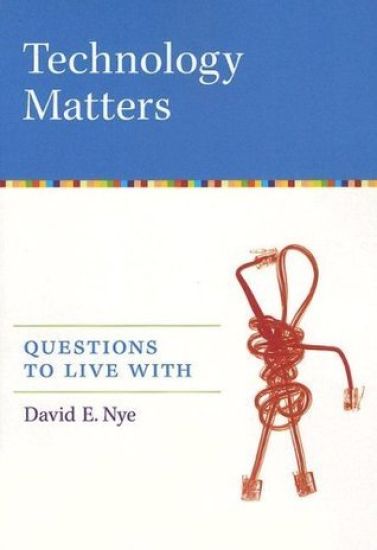
Technology Matters

Technology Matters

David E. Nye

MIT Press
2007
pokkari
Looks at ten central questions concerning humankind's relationship to technology, including "Does technology shape us, or do we shape it?" and "Are we using modern technology to create cultural uniformity or diversity?" Reprint.
From Vietnam to El Salvador

From Vietnam to El Salvador

David E. Spencer

Praeger Publishers Inc
1996
sidottu
Spencer provides a history of the FMLN guerrilla special forces—known collectively by the acronym FES—in El Salvador. Trained in Cuba and Vietnam and utilizing techniques taken from the Viet Cong and the North Vietnamese army, the FES terrorized the armed forces of El Salvador from 1981 to 1992. After reviewing their training, Spencer examines the major operations of the special forces and gives an in-depth discussion of their tactics and methods. He concludes with a look at the special forces groups in other Latin American countries. After reviewing their training, Spencer looks at the major operations of the special forces groups of three of the guerrilla factions—the FPL, ERP, and FAL—and provides an in-depth discussion of their major operation tactics and methods. He concludes with a look at the special forces groups in Argentina, Colombia, Cuba, Guatemala, Nicaragua, and Puerto Rico. This thorough examination of an often misunderstood approach to guerrilla warfare will be of great interest to researchers involved with contemporary low-intensity warfare and Latin American affairs.
Introducing Aesthetics

Introducing Aesthetics

David E. Fenner

Praeger Publishers Inc
2003
nidottu
This concise yet comprehensive introduction to the discipline of western aesthetical philosophy is focused directly on the central questions of aesthetics. Fenner arranges his analysis around four general themes—Experiences, Objects and Events, Meaning, and Judgment—that progress from issues of everyday experience to subjects of greater subtlety. Within these broader themes, Fenner explores such issues as The Aesthetic Attitude, Defining Art, and Reviewing Art Criticism.Although a historical organization is employed wherever a particular movement unfolds from earlier movements, the text's main organization is not motivated by an academic or historical treatment of the various topics. Instead, the topics themselves are of primary concern, in such a way that readers will come away with a complete overview of the canon of this highly significant area of western philosophy.
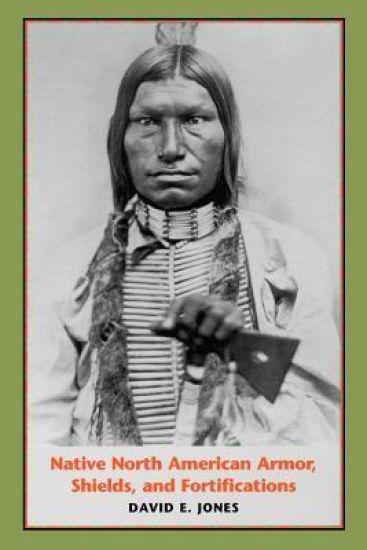
Native North American Armor, Shields, and Fortifications

Native North American Armor, Shields, and Fortifications

David E. Jones

University of Texas Press
2004
pokkari
From the Chickasaw fighting the Choctaw in the Southeast to the Sioux battling the Cheyenne on the Great Plains, warfare was endemic among the North American Indians when Europeans first arrived on this continent. An impressive array of offensive weaponry and battle tactics gave rise to an equally impressive range of defensive technology. Native Americans constructed very effective armor and shields using wood, bone, and leather. Their fortifications ranged from simple refuges to walled and moated stockades to multiple stockades linked in strategic defensive networks. In this book, David E. Jones offers the first systematic comparative study of the defensive armor and fortifications of aboriginal Native Americans. Drawing data from ethnohistorical accounts and archaeological evidence, he surveys the use of armor, shields, and fortifications both before European contact and during the historic period by American Indians from the Southeast to the Northwest Coast, from the Northeast Woodlands to the desert Southwest, and from the Sub-Arctic to the Great Plains. Jones also demonstrates the sociocultural factors that affected warfare and shaped the development of different types of armor and fortifications. Extensive eyewitness descriptions of warfare, armor, and fortifications, as well as photos and sketches of Indian armor from museum collections, add a visual dimension to the text.
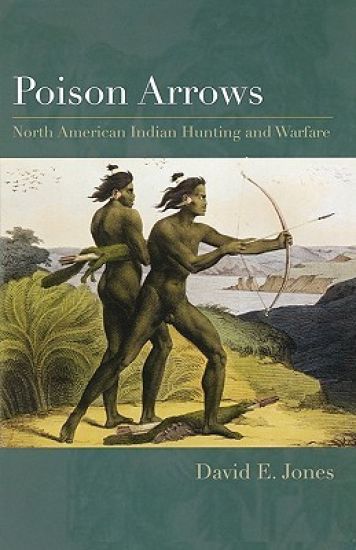
Poison Arrows

Poison Arrows

David E. Jones

University of Texas Press
2007
pokkari
Biological warfare is a menacing twenty-first-century issue, but its origins extend to antiquity. While the recorded use of toxins in warfare in some ancient populations is rarely disputed (the use of arsenical smoke in China, which dates to at least 1000 BC, for example) the use of "poison arrows" and other deadly substances by Native American groups has been fraught with contradiction. At last revealing clear documentation to support these theories, anthropologist David Jones transforms the realm of ethnobotany in Poison Arrows. Examining evidence within the few extant descriptive accounts of Native American warfare, along with grooved arrowheads and clues from botanical knowledge, Jones builds a solid case to indicate widespread and very effective use of many types of toxins. He argues that various groups applied them to not only warfare but also to hunting, and even as an early form of insect extermination. Culling extensive ethnological, historical, and archaeological data, Jones provides a thoroughly comprehensive survey of the use of ethnobotanical and entomological compounds applied in wide-ranging ways, including homicide and suicide. Although many narratives from the contact period in North America deny such uses, Jones now offers conclusive documentation to prove otherwise. A groundbreaking study of a subject that has been long overlooked, Poison Arrows imparts an extraordinary new perspective to the history of warfare, weaponry, and deadly human ingenuity.
American Indian Sovereignty and the U.S. Supreme Court

American Indian Sovereignty and the U.S. Supreme Court

David E. Wilkins

University of Texas Press
1997
pokkari
"Like the miner's canary, the Indian marks the shift from fresh air to poison gas in our political atmosphere; and our treatment of Indians, even more than our treatment of other minorities, reflects the rise and fall in our democratic faith," wrote Felix S. Cohen, an early expert in Indian legal affairs.In this book, David Wilkins charts the "fall in our democratic faith" through fifteen landmark cases in which the Supreme Court significantly curtailed Indian rights. He offers compelling evidence that Supreme Court justices selectively used precedents and facts, both historical and contemporary, to arrive at decisions that have undermined tribal sovereignty, legitimated massive tribal land losses, sanctioned the diminishment of Indian religious rights, and curtailed other rights as well.These case studies-and their implications for all minority groups-make important and troubling reading at a time when the Supreme Court is at the vortex of political and moral developments that are redefining the nature of American government, transforming the relationship between the legal and political branches, and altering the very meaning of federalism.
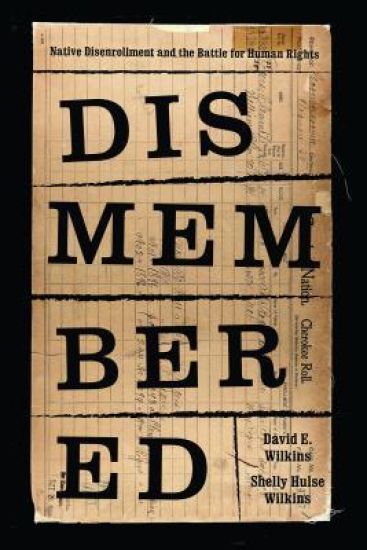
Dismembered

Dismembered

David E. Wilkins; Shelly Hulse Wilkins

University of Washington Press
2017
sidottu
While the number of federally recognized Native nations in the United States are increasing, the population figures for existing tribal nations are declining. This depopulation is not being perpetrated by the federal government, but by Native governments that are banishing, denying, or disenrolling Native citizens at an unprecedented rate. Since the 1990s, tribal belonging has become more of a privilege than a sacred right. Political and legal dismemberment has become a national phenomenon with nearly eighty Native nations, in at least twenty states, terminating the rights of indigenous citizens.The first comprehensive examination of the origins and significance of tribal disenrollment, Dismembered examines this disturbing trend, which often leaves the disenrolled tribal members with no recourse or appeal. At the center of the issue is how Native nations are defined today and who has the fundamental rights to belong. By looking at hundreds of tribal constitutions and talking with both disenrolled members and tribal officials, the authors demonstrate the damage this practice is having across Indian Country and ways to address the problem.
Dismembered

Dismembered

David E. Wilkins; Shelly Hulse Wilkins

University of Washington Press
2017
pokkari
While the number of federally recognized Native nations in the United States are increasing, the population figures for existing tribal nations are declining. This depopulation is not being perpetrated by the federal government, but by Native governments that are banishing, denying, or disenrolling Native citizens at an unprecedented rate. Since the 1990s, tribal belonging has become more of a privilege than a sacred right. Political and legal dismemberment has become a national phenomenon with nearly eighty Native nations, in at least twenty states, terminating the rights of indigenous citizens.The first comprehensive examination of the origins and significance of tribal disenrollment, Dismembered examines this disturbing trend, which often leaves the disenrolled tribal members with no recourse or appeal. At the center of the issue is how Native nations are defined today and who has the fundamental rights to belong. By looking at hundreds of tribal constitutions and talking with both disenrolled members and tribal officials, the authors demonstrate the damage this practice is having across Indian Country and ways to address the problem.
Battleground Berlin

Battleground Berlin

David E. Murphy; Sergei A. Kondrashev; George Bailey

Yale University Press
1999
pokkari
Battleground Berlin is the definitive, insider’s account of the espionage warfare in Berlin between CIA and KGB from 1945 to the construction of the Berlin Wall in 1961. Two intelligence veterans—major players on opposite sides of the Cold War—have joined in an unprecedented collaboration to tell the story. Basing their narrative on personal recollections, interviews with other CIA and KGB officers, and documents never before made public, the authors provide a vast number of new details of CIA’s infiltration of the new East German intelligence service; the construction, operation, and uncovering of the Berlin tunnel; and many other initiatives and countermoves dealing with the series of crises that racked Berlin and jeopardized an uneasy world peace during this period.Battleground Berlin illuminates some of the most compelling mysteries of the Cold War, including:· what really happened the night the Soviets "discovered" the Berlin Tunnel;· who ordered the building of the Berlin Wall—and why did the West seem so ill prepared;· how did infighting among Soviet leaders affect decisionmaking during the most critical moments of the Berlin crisis;· how did power struggles between KGB and its protégé, the dreaded East German security service, shape the political landscape of East Germany and heighten tension in West Berlin;· how much did the famous defector Otto John reveal to KGB—and why is he still unable to clear his name;· and much more.The book, an operational and organizational history of the world’s two most important secret service organizations during a critical time, unveils the vital connection between intelligence gathering and political decisionmaking at the highest levels. Full of intrigue and suspense, it is a story not to be forgotten.
Delinquency, Development, and Social Policy

Delinquency, Development, and Social Policy

David E. Brandt

Yale University Press
2005
sidottu
In this book, David E. Brandt examines the legal, psychological, and cultural issues relevant to understanding antisocial behavior in adolescence. Based on his own research and a broad analysis of recent work in the field, Brandt identifies the factors that are common in cases of delinquency.The discussion considers the long-term effects of social issues such as poverty as well as psychological issues such as the high levels of stress and anxiety suffered during childhood by many delinquents. He shows how a failure to meet the developmental needs of children—at both the family level and at a broader social and political level—is at the core of the problem of juvenile delinquency. Brandt concludes with an inquiry into how best to prevent delinquency. Programs that address the developmental needs of children, Brandt argues, are more effective than policing, juvenile courts, or incarceration.
Hollow Justice

Hollow Justice

David E. Wilkins

Yale University Press
2013
sidottu
This book, the first of its kind, comprehensively explores Native American claims against the United States government over the past two centuries. Despite the federal government’s multiple attempts to redress indigenous claims, a close examination reveals that even when compensatory programs were instituted, Native peoples never attained a genuine sense of justice. David E. Wilkins addresses the important question of what one nation owes another when the balance of rights, resources, and responsibilities have been negotiated through treaties. How does the United States assure that guarantees made to tribal nations, whether through a century old treaty or a modern day compact, remain viable and lasting?
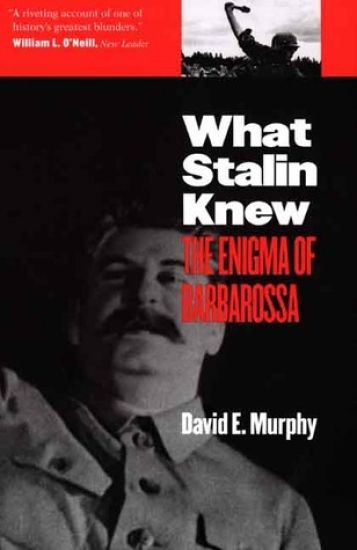
What Stalin Knew

What Stalin Knew

David E. Murphy

Yale University Press
2007
pokkari
“A riveting account of one of history’s greatest blunders.”—William L. O’Neill, The New Leader This extensively researched book illuminates many of the enigmas that have surrounded the Nazi invasion of the Soviet Union, offering keen insights into Stalin’s thinking and the reasons for his catastrophic blunder. “If, after the war, the Soviet Union had somehow been capable of producing an official inquiry into the catastrophe of 6/22—comparable in its mandate to the 9/11 commission here—its report might have read a little like [this book]. . . . Murphy brings to his subject both knowledge of Russian history and an insider’s grasp of how intelligence is gathered, analyzed and used—or not.”—Niall Ferguson, New York Times Book Review"A fascinating and meticulously researched account of mistaken assumptions and errors of judgment that culminated in Hitler’s invasion of Russia in June 1941. Never before has this fateful period been so fully documented."—Henry A. Kissinger
Neuropsychological Toxicology

Neuropsychological Toxicology

David E. Hartman

Kluwer Academic/Plenum Publishers
1995
sidottu
Greatly revised, the Second Edition presents an extended survey of this rapidly growing field. The book reviews the effects of industrial and pharmaceutical chemicals on human behavior, cognitive function, and emotional status. Features include two new chapters addressing key forensic issues and recent views on multiple chemical sensitivity, sick building syndrome, and psychosomatic disorders; current data on NIOSH and OSHA exposure levels for industrial toxins; and enhanced coverage of testing methods; studies of PET, SPECT, and BEAM imaging applied to neurotoxic exposure.
The Inheritance: The World Obama Confronts and the Challenges to American Power
Readers of The New York Times know David Sanger as one of the most trusted correspondents in Washington, one to whom presidents, secretaries of state, and foreign leaders talk with unusual candor. Now, with a historian's sweep and an insider's eye for telling detail, Sanger delivers an urgent intelligence briefing on the world America faces. In a riveting narrative, The Inheritance describes the huge costs of distraction and lost opportunities at home and abroad as Iraq soaked up manpower, money, and intelligence capabilities. The 2008 market collapse further undermined American leadership, leaving the new president with a set of challenges unparalleled since Franklin D. Roosevelt entered the Oval Office. Sanger takes readers into the White House Situation Room to reveal how Washington penetrated Tehran's nuclear secrets, leading President Bush, in his last year, to secretly step up covert actions in a desperate effort to delay an Iranian bomb. Meanwhile, his intelligence chiefs made repeated secret missions to Pakistan as they tried to stem a growing insurgency and cope with an ally who was also aiding the enemy-while receiving billions in American military aid. Now the new president faces critical choices: Is it better to learn to live with a nuclear Iran or risk overt or covert confrontation? Is it worth sending U.S. forces deep into Pakistani territory at the risk of undermining an unstable Pakistani government sitting on a nuclear arsenal? It is a race against time and against a new effort by Islamic extremists-never before disclosed-to quietly infiltrate Pakistan's nuclear weapons program. "Bush wrote a lot of checks," one senior intelligence official told Sanger, "that the next president is going to have to cash." The Inheritance takes readers to Afghanistan, where Bush never delivered on his promises for a Marshall Plan to rebuild the country, paving the way for the Taliban's return. It examines the chilling calculus of North Korea's Kim Jong-Il, who built actual weapons of mass destruction in the same months that the Bush administration pursued phantoms in Iraq, then sold his nuclear technology in the Middle East in an operation the American intelligence apparatus missed. And it explores how China became one of the real winners of the Iraq war, using the past eight years to expand its influence in Asia, and lock up oil supplies in Africa while Washington was bogged down in the Middle East. Yet Sanger, a former foreign correspondent in Asia, sees enormous potential for the next administration to forge a partnership with Beijing on energy and the environment. At once a secret history of our foreign policy misadventures and a lucid explanation of the opportunities they create, The Inheritance is vital reading for anyone trying to understand the extraordinary challenges that lie ahead.
2 Corinthians, Volume 8

2 Corinthians, Volume 8

David E. Garland

ZONDERVAN
2025
nidottu
Theologians have not often mined 2 Corinthians for its theological gemstones, but careful reading uncovers significant doctrinal insights. It is not just an occasional letter that battles those inside and outside of the congregation who have belittled Paul for lacking power and glory. He writes as a pastor dousing the flames of dissension, disgruntlement, toxic leadership, and deviant theology.Therefore, what he says can be meaningful to ministers today who may face the same kinds of problems and seek to live a cruciform ministry. The letter has relevance for the church universal, and Paul's responses to the various issues are grounded in a well-developed theological substructure. The letter offers profound insights into the Trinity, atonement, reconciliation, being in Christ, cruciform ministry, and the hope of the resurrection.
Luke

Luke

David E. Garland

Zondervan
2011
sidottu
Concentrate on the biblical author's message as it unfolds.Designed to assist the pastor and Bible teacher in conveying the significance of God's Word, the Zondervan Exegetical Commentary on the New Testament series treats the literary context and structure of every passage of the New Testament book in the original Greek.With a unique layout designed to help you comprehend the form and flow of each passage, the ZECNT unpacks:The key message.The author's original translation.An exegetical outline.Verse-by-verse commentary.Theology in application.While primarily designed for those with a basic knowledge of biblical Greek, all who strive to understand and teach the New Testament will benefit from the depth, format, and scholarship of these volumes.In this volume, David E. Garland offers pastors, students, and teachers a focused resource for reading Luke. Luke sought to assure believers about the truth of the gospel and to advance their understanding of God's ways in the world as revealed in Christ's ministry, death, and resurrection. Luke wrote as a historian, theologian, and pastor, and Garland's commentary strives to follow suit in assisting those who will preach and teach the text and those who seek to understand it better.