The Observation and Analysis of Stellar Photospheres describes the equipment, observational techniques, and analysis used in the investigation of stellar photospheres. This third edition builds on the success of the previous editions, improving the presentation, and revising topics and results to keep up to date with the latest research. The first half of the book develops the tools of analysis and the second half demonstrates how they can be applied. Topics covered include radiation transfer, models of stellar photospheres, spectroscopic equipment, observing stellar spectra, and techniques for measuring stellar characteristics. Useful real star data can be found throughout the text and in the appendices, and there are extensive references to the primary literature. This comprehensive textbook is suitable for advanced undergraduates and graduate students of stellar physics. Each chapter contains exercises to test understanding and a wealth of useful reference material is included.
The thirteenth-century poem Roman de la Rose is one of the most significant literary contributions of the Middle Ages. The poem is a composite work by two separate authors; the first part, By Guillaume de Lorris, has always been viewed as an unfinished fragment made complete thanks to the work of his continuator. In Self-Fulfilling Prophecies David F. Hult offers a reading of the 'first' poem by Guillaume, viewed within its literary and cultural context. The book ultimately places into question such modern literary concerns as 'authorial intentionality', 'unity', 'originality' and 'textual closure', and will therefore be of interest to students of literary theory as well as to those specialising in medieval French literature. English translations of quotations from the poems are provided to ensure that a broader audience will benefit from this clearly argued study.
Do memory abilities decline with aging? Are changes in memory universal or differential? Do they occur similarly or differently for all types of memory and to all aging persons? These are some of the principal questions explored in the Victoria Longitudinal Study and presented in this volume. Although there is a tremendous amount of research comparing the memory performance of younger and older adults, very few studies have followed the same older adults over time. Only through the use of such longitudinal methods can one directly observe changes in memory functioning with aging. This monograph reports longitudinal data following the same individuals over a six-year period. The authors consider a variety of theoretical and methodological issues related to memory and aging.
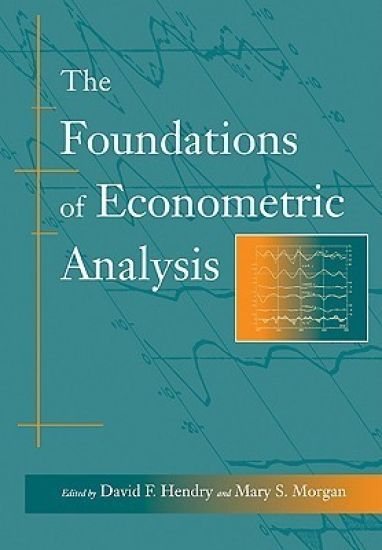
In this compelling 1995 book, David Hendry and Mary Morgan bring together the classic papers of the pioneer econometricians. Together, these papers form the foundations of econometric thought. They are essential reading for anyone seeking to understand the aims, method and methodology of econometrics and the development of this statistical approach in economics. However, because they are technically straightforward, the book is also accessible to students and non-specialists. An editorial commentary places the readings in their historical context and indicates the continuing relevance of these early, yet highly sophisticated, works for current econometric analysis. While this book provides a companion volume to Mary Morgan's acclaimed The History of Econometric Ideas, the editors' commentary both adds to that earlier volume and also provides a stand-alone and synthetic account of the development of econometrics.
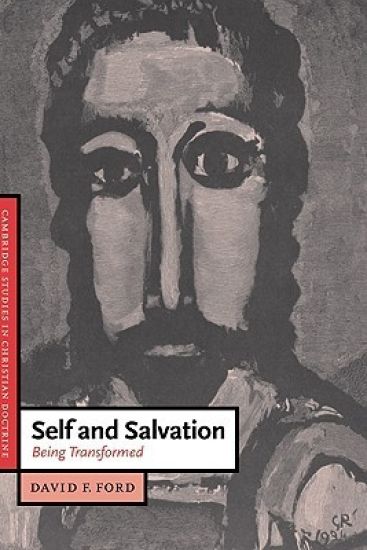
This eagerly awaited book by David F. Ford makes a unique and important contribution to the debate about the Christian doctrine of salvation. Using the pivotal image of the face, Professor Ford offers a constructive and contemporary account of the self being transformed. He engages with three modern thinkers (Levinas, Jüngel and Ricoeur) in order to rethink and reimagine the meaning of self. Developing the concept of a worshipping self, he explores the dimensions of salvation through the lenses of scripture, worship practices, the life, death and resurrection of Christ, and the lives of contemporary saints. He uses different genres and traditions to show how the self flourishes through engagement with God, other people, and the responsibilities and joys of ordinary living. The result is a habitable theology of salvation immersed in Christian faith, thought and practice while also being deeply involved with modern life in a pluralist world.
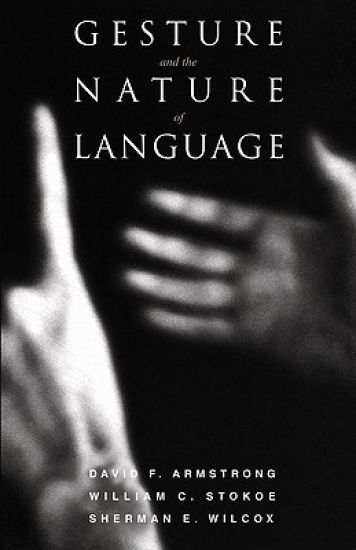
This book proposes a radical alternative to dominant views of the evolution of language, and in particular the origins of syntax. The authors argue that manual and vocal communication developed in parallel, and that the basic elements of syntax are intrinsic to gesture. They draw on evidence from areas such as primatology, anthropology, and linguistics, to present a groundbreaking account of the notion that language emerged through visible bodily action. They go on to examine the implications of their findings for linguistic theory and theories of the biological evolution of the capacity for language. Written in a clear and accessible style, Gesture and the Nature of Language will be indispensable reading for all those interested in the origins of language.
Do memory abilities decline with aging? Are changes in memory universal or differential? Do they occur similarly or differently for all types of memory and to all aging persons? These are some of the principal questions explored in the Victoria Longitudinal Study and presented in this volume. Although there is a tremendous amount of research comparing the memory performance of younger and older adults, very few studies have followed the same older adults over time. Only through the use of such longitudinal methods can one directly observe changes in memory functioning with aging. This monograph reports longitudinal data following the same individuals over a six-year period. The authors consider a variety of theoretical and methodological issues related to memory and aging.
German Expressionist Theatre: The Actor and the Stage considers the powerfully stylised, anti-realistic styles of acting on the German Expressionist stage from 1916 to 1921. It relates this striking departure from the dominant European acting tradition of realism to the specific cultural crises that enveloped the German nation during the course of its involvement in World War I. Unlike any of the very few publications in English on stage Expressionism, this book describes three distinct Expressionist acting styles, all of which in their own ways attempted to show how symbolic stage performance could be a powerful rhetorical resource for a culture struggling to come to terms with the crises of historical change. The examination of previously untranslated portions of Expressionist script and actor memoirs allows for an unprecedented focus on description and analysis of acting itself.
In this compelling 1995 book, David Hendry and Mary Morgan bring together the classic papers of the pioneer econometricians. Together, these papers form the foundations of econometric thought. They are essential reading for anyone seeking to understand the aims, method and methodology of econometrics and the development of this statistical approach in economics. However, because they are technically straightforward, the book is also accessible to students and non-specialists. An editorial commentary places the readings in their historical context and indicates the continuing relevance of these early, yet highly sophisticated, works for current econometric analysis. While this book provides a companion volume to Mary Morgan's acclaimed The History of Econometric Ideas, the editors' commentary both adds to that earlier volume and also provides a stand-alone and synthetic account of the development of econometrics.
Building on Schmitz's earlier work, Thank God They're on our Side, this is an examination of American policy toward right-wing dictatorships from the 1960s to the end of the Cold War. During the 1920s American leaders developed a policy of supporting authoritarian regimes because they were seen as stable, anti-communist, and capitalist. After 1965, however, American support for these regimes became a contested issue. The Vietnam War served to undercut the logic and rationale of supporting right-wing dictators. By systematically examining US support for right-wing dictatorships in Africa, Latin America, Europe, and Asia, and bringing together these disparate episodes, this book examines the persistence of older attitudes, the new debates brought about by the Vietnam War, and the efforts to bring about changes and an end to automatic US support for authoritarian regimes.
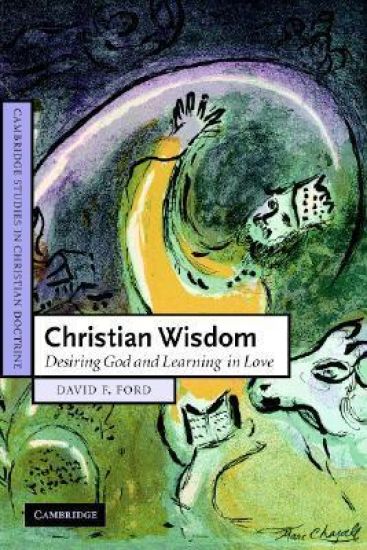
What is Christian wisdom for living in the twenty-first century? Where is it to be found? How can it be learnt? In the midst of diverse religions and worldviews and the demands and complexities of our world, David Ford explores a Christian way of uniting love of wisdom with wisdom in love. Core elements are the 'discernment of cries', the love of God for God's sake, interpretation of scripture, and the shaping of desire in faith. Case studies deal with inter-faith wisdom among Jews, Christians and Muslims, universities as centres of wisdom as well as knowledge and know-how and the challenge of learning disabilities. Throughout, there is an attempt to do justice to the premodern, modern and postmodern while grappling with scripture, tradition and the cries of the world today. Ford opens up the rich resources of Christianity in engaging with the issues and urgencies of contemporary life.
Building on Schmitz's earlier work, Thank God They're on our Side, this is an examination of American policy toward right-wing dictatorships from the 1960s to the end of the Cold War. During the 1920s American leaders developed a policy of supporting authoritarian regimes because they were seen as stable, anti-communist, and capitalist. After 1965, however, American support for these regimes became a contested issue. The Vietnam War served to undercut the logic and rationale of supporting right-wing dictators. By systematically examining US support for right-wing dictatorships in Africa, Latin America, Europe, and Asia, and bringing together these disparate episodes, this book examines the persistence of older attitudes, the new debates brought about by the Vietnam War, and the efforts to bring about changes and an end to automatic US support for authoritarian regimes.
What is Christian wisdom for living in the twenty-first century? Where is it to be found? How can it be learnt? In the midst of diverse religions and worldviews and the demands and complexities of our world, David Ford explores a Christian way of uniting love of wisdom with wisdom in love. Core elements are the 'discernment of cries', the love of God for God's sake, interpretation of scripture, and the shaping of desire in faith. Case studies deal with inter-faith wisdom among Jews, Christians and Muslims, universities as centres of wisdom as well as knowledge and know-how and the challenge of learning disabilities. Throughout, there is an attempt to do justice to the premodern, modern and postmodern while grappling with scripture, tradition and the cries of the world today. Ford opens up the rich resources of Christianity in engaging with the issues and urgencies of contemporary life.
In the same way that a garden is a rich and intertwined ecosystem where plants, air, soil, birds and bugs interact to grow and reproduce, today's emerging information landscape is an info-system, where content is produced, published, accessed, consumed, discussed, re-mixed and re-published. To be a "master learner" -- to be a teacher -- today, you must learn to work the info-system in order to cultivate new knowledge and skills from a continual flow of information. This book is a guide for teachers who seek to model for their students the practices of lifelong learning.
This book contains a truly remarkable breakthrough in reaching the inner voice. Even more importantly, the system has within it the ability to have this inner wisdom address an issue on demand. You can now pose a question and have it answered overnight! The mysteries of life and the best course for us to take through it are usually better understood within our sub-conscious mind. Now there is an opportunity to access this wisdom directly and be sure that the advice received is nothing but the best and entirely positive.
Pirate Princess Olivia Grace is having the adventure of a lifetime on a lonely little island.Her wild friends, the duckpanzee, penguelephant, and the lionocerous keep her company, but all she really wants is to get back to her Mommy and Daddy.Can the strange and wooly Captain Oxswamp help her? Find out in Pirate Princess Olivia and Captain Oxswamp
A thrilling graphic novel reimagining of Adventures of Huckleberry Finn that follows Jim, an enslaved man on a journey towards freedom, and his sidekick, Huck, in the antebellum South--from the team behind the Eisner Award-winning The Black Panther Party. Commonly regarded as one of the great American novels, Adventures of Huckleberry Finn has captured the hearts and imaginations of readers since 1885. But since its publication, critics have rightfully condemned Mark Twain's troubling portrayal of Black Americans as stereotypes and caricatures, with contemporary fans searching for a modern update to this iconic tale. Big Jim and the White Boy is a radical retelling of this American classic, centering the experiences of Jim, an enslaved Black man in search of his kidnapped wife and children, along with his cheeky sidekick, Huckleberry Finn. Jim and Huck's high-stakes adventures take them on an epic voyage across the antebellum South and Midwest, through Confederate war camps and runaway safe houses, into Old West standoffs, and on the road as covert Underground Railroad agents. Intertwined into the story of Jim and Huck are the stories of Jim's descendants in the 1930s, 1980s, and 2020s, making this a multigenerational family epic as well as an adventure story. Big Jim and the White Boy takes readers on a journey through Jim and Huck's past, present, and future, delving into their incredible friendship and years of adventures--a bond that transcends the gruesome racism of the Civil War era. With compelling artwork and riveting storytelling, David F. Walker and Marcus Kwame Anderson push the boundaries of The Adventures of Huckleberry Finn in this incredible graphic novel, exploring the triumphs and tribulations of Jim and his family, and finally giving his due as a hero of American literature.