Kirjojen hintavertailu. Mukana 12 016 292 kirjaa ja 12 kauppaa.

Kirjahaku

Etsi kirjoja tekijän nimen, kirjan nimen tai ISBN:n perusteella.

1000 tulosta hakusanalla David Grove

Vampires, Mummies and Liberals

Vampires, Mummies and Liberals

David Glover

Duke University Press
1996
pokkari
Nearly a hundred years after its debut in 1897, Dracula is still one of the most popular of all Gothic narratives, always in print and continually adapted for stage and screen. Paradoxically, David Glover suggests, this very success has obscured the historical conditions and authorial circumstances of the novel’s production. By way of a long overdue return to the novels, short stories, essays, journalism, and correspondence of Bram Stoker, Vampires, Mummies, and Liberals reconstructs the cultural and political world that gave birth to Dracula. To bring Stoker’s life into productive relationship with his writing, Glover offers a reading that locates the author within the changing commercial contours of the late-Victorian public sphere and in which the methods of critical biography are displaced by those of cultural studies. Glover’s efforts reveal a writer who was more wide-ranging and politically engaged than his current reputation suggests. An Irish Protestant and nationalist, Stoker nonetheless drew his political inspiration from English liberalism at a time of impending crisis, and the tradition’s contradictions and uncertainties haunt his work. At the heart of Stoker’s writing Glover exposes a preoccupation with those sciences and pseudo-sciences-from physiognomy and phrenology to eugenics and sexology-that seemed to cast doubt on the liberal faith in progress. He argues that Dracula should be read as a text torn between the stances of the colonizer and the colonized, unable to accept or reject the racialized images of backwardness that dogged debates about Irish nationhood. As it tracks the phantasmatic form given to questions of character and individuality, race and production, sexuality and gender, across the body of Stoker’s writing, Vampires, Mummies, and Liberals draws a fascinating portrait of an extraordinary transitional figure. Combining psychoanalysis and cultural theory with detailed historical research, this book will be of interest to scholars of Victorian and Irish fiction and to those concerned with cultural studies and popular culture.
Vampires, Mummies and Liberals

Vampires, Mummies and Liberals

David Glover

Duke University Press
1996
sidottu
Nearly a hundred years after its debut in 1897, Dracula is still one of the most popular of all Gothic narratives, always in print and continually adapted for stage and screen. Paradoxically, David Glover suggests, this very success has obscured the historical conditions and authorial circumstances of the novel’s production. By way of a long overdue return to the novels, short stories, essays, journalism, and correspondence of Bram Stoker, Vampires, Mummies, and Liberals reconstructs the cultural and political world that gave birth to Dracula. To bring Stoker’s life into productive relationship with his writing, Glover offers a reading that locates the author within the changing commercial contours of the late-Victorian public sphere and in which the methods of critical biography are displaced by those of cultural studies. Glover’s efforts reveal a writer who was more wide-ranging and politically engaged than his current reputation suggests. An Irish Protestant and nationalist, Stoker nonetheless drew his political inspiration from English liberalism at a time of impending crisis, and the tradition’s contradictions and uncertainties haunt his work. At the heart of Stoker’s writing Glover exposes a preoccupation with those sciences and pseudo-sciences-from physiognomy and phrenology to eugenics and sexology-that seemed to cast doubt on the liberal faith in progress. He argues that Dracula should be read as a text torn between the stances of the colonizer and the colonized, unable to accept or reject the racialized images of backwardness that dogged debates about Irish nationhood. As it tracks the phantasmatic form given to questions of character and individuality, race and production, sexuality and gender, across the body of Stoker’s writing, Vampires, Mummies, and Liberals draws a fascinating portrait of an extraordinary transitional figure. Combining psychoanalysis and cultural theory with detailed historical research, this book will be of interest to scholars of Victorian and Irish fiction and to those concerned with cultural studies and popular culture.
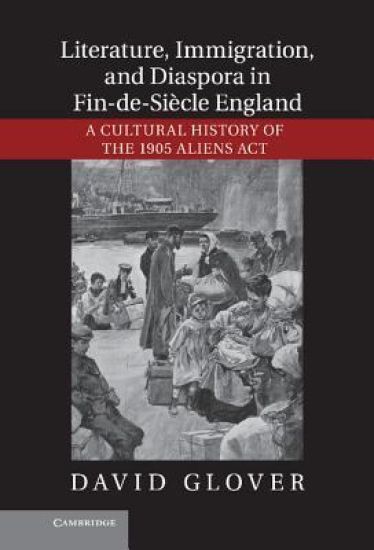
Literature, Immigration, and Diaspora in Fin-de-Siècle England
The 1905 Aliens Act was the first modern law to restrict immigration to British shores. In this book, David Glover asks how it was possible for Britain, a nation that had prided itself on offering asylum to refugees, to pass such legislation. Tracing the ways that the legal notion of the 'alien' became a national-racist epithet indistinguishable from the figure of 'the Jew', Glover argues that the literary and popular entertainments of fin de siècle Britain perpetuated a culture of xenophobia. Reconstructing the complex socio-political field known as 'the alien question', Glover examines the work of George Eliot, Israel Zangwill, Rudyard Kipling and Joseph Conrad, together with forgotten writers like Margaret Harkness, Edgar Wallace and James Blyth. By linking them to the beliefs and ideologies that circulated via newspapers, periodicals, political meetings, Royal Commissions, patriotic melodramas and social surveys, Glover sheds new light on dilemmas about nationality, borders and citizenship.
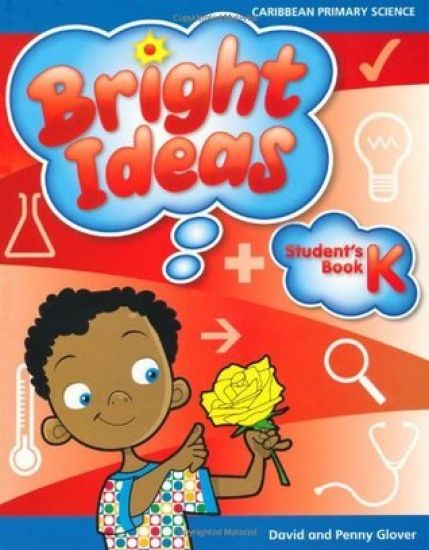
Bright Ideas: Primary Science Student's Book K

Bright Ideas: Primary Science Student's Book K

David Glover

Macmillan Education
2008
nidottu
Key features of the Student’s Books are: • scientific ideas introduced in a lively and entertaining way• content structured in lesson-sized topics with clearly stated objectives• graded language appropriate to student’s reading age• numerous practical activities using everyday materials• wide variety of paper-and-pencil exercises, discussion topics and suggestions for group work to promote interactive learning• Caribbean contexts and issues examined in depth• high quality illustrations and photographs• review exercises and end of unit tests• extensive glossary to develop student’s scientific vocabulary• internet links to promote independent research
Bright Ideas: Macmillan Primary Science

Bright Ideas: Macmillan Primary Science

David Glover

Macmillan Education
2008
nidottu
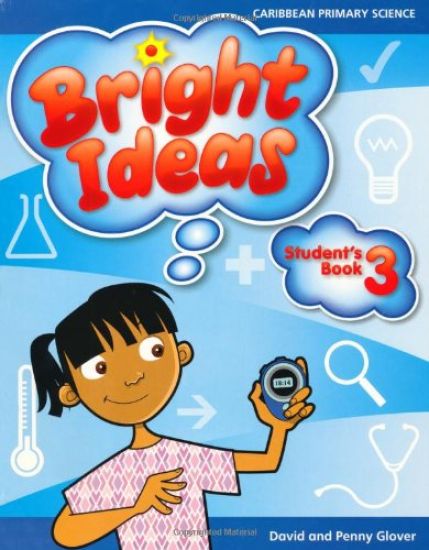
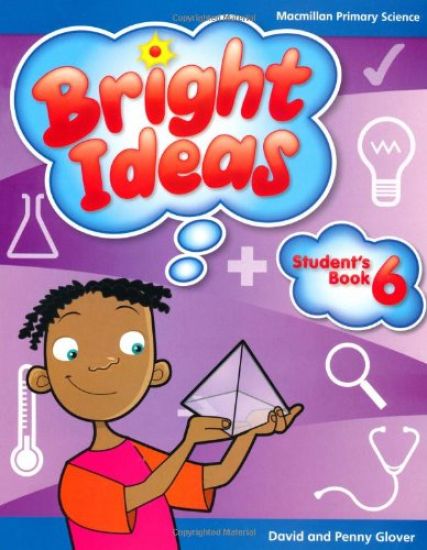
"Bright Ideas" is a new science course for all students in Caribbean primary schools. Developed to fulfil the requirements of primary science curricula throughout the region, the Student's Books and supporting materials promote a modern, student centred approach to science learning. There are seven full colour Student's Books from Kindergarten level to the final year of primary school. Workbooks to complement the Student's Books are available for each level of the course. Separate Teacher's Guides, with background information, teaching notes and support for remedial and extension activities are also available. This title features: scientific ideas introduced in a lively and entertaining way; content structured in lesson-sized topics with clearly stated objectives; graded language appropriate to student's reading age; numerous practical activities using everyday materials; wide variety of paper-and-pencil exercises, discussion topics and suggestions for group work to promote interactive learning; Caribbean contexts and issues examined in depth; high quality illustrations and photographs; review exercises and end of unit tests; extensive glossary to develop student's scientific vocabulary; and, internet links to promote independent research.
Bright Ideas: Macmillan Primary Science

Bright Ideas: Macmillan Primary Science

David Glover

Macmillan Education
2008
nidottu
"Bright Ideas" is a new science course for all students in Caribbean primary schools. Developed to fulfil the requirements of primary science curricula throughout the region, the Student's Books and supporting materials promote a modern, student centred approach to science learning. There are seven full colour Student's Books from Kindergarten level to the final year of primary school. Workbooks to complement the Student's Books are available for each level of the course. Separate Teacher's Guides, with background information, teaching notes and support for remedial and extension activities are also available. This title features: scientific ideas introduced in a lively and entertaining way; content structured in lesson-sized topics with clearly stated objectives; graded language appropriate to student's reading age; numerous practical activities using everyday materials; wide variety of paper-and-pencil exercises, discussion topics and suggestions for group work to promote interactive learning; Caribbean contexts and issues examined in depth; high quality illustrations and photographs; review exercises and end of unit tests; extensive glossary to develop student's scientific vocabulary; and, internet links to promote independent research.
Bright Ideas: Macmillan Primary Science

Bright Ideas: Macmillan Primary Science

David Glover

Macmillan Education
2009
nidottu
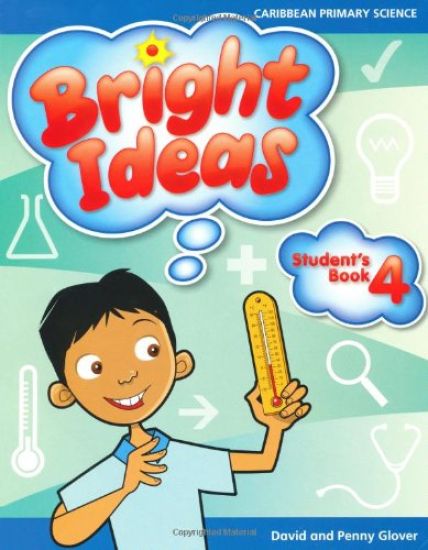
"Bright Ideas" is a new science course for all students in Caribbean primary schools. Developed to fulfil the requirements of primary science curricula throughout the region, the Student's Books and supporting materials promote a modern, student centred approach to science learning. There are seven full colour Student's Books from Kindergarten level to the final year of primary school. Workbooks to complement the Student's Books are available for each level of the course. Separate Teacher's Guides, with background information, teaching notes and support for remedial and extension activities are also available. This title features: scientific ideas introduced in a lively and entertaining way; content structured in lesson-sized topics with clearly stated objectives; graded language appropriate to student's reading age; numerous practical activities using everyday materials; wide variety of paper-and-pencil exercises, discussion topics and suggestions for group work to promote interactive learning; Caribbean contexts and issues examined in depth; high quality illustrations and photographs; review exercises and end of unit tests; extensive glossary to develop student's scientific vocabulary; and, internet links to promote independent research.
Bright Ideas: Macmillan Primary Science

Bright Ideas: Macmillan Primary Science

David Glover

Macmillan Education
2008
nidottu
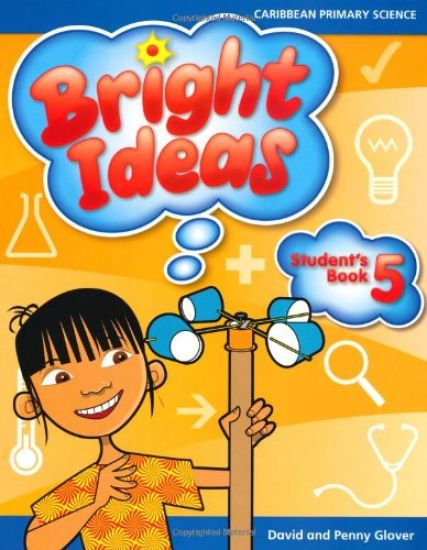
'Bright Ideas' is a new science course for all students in Caribbean primary schools. Developed to fulfil the requirements of primary science curricula throughout the region, the Student's Books and supporting materials promote a modern, student centred approach to science learning. There are seven full colour Student's Books from Kindergarten level to the final year of primary school. Workbooks to complement the Student's Books are available for each level of the course. Separate Teacher's Guides, with background information, teaching notes and support for remedial and extension activities are also available. Key features of the Student's Books are: scientific ideas introduced in a lively and entertaining way; content structured in lesson-sized topics with clearly stated objectives; graded language appropriate to student's reading age; numerous practical activities using everyday materials; wide variety of paper-and-pencil exercises, discussion topics and suggestions for group work to promote interactive learning; Caribbean contexts and issues examined in depth; high quality illustrations and photographs; review exercises and end of unit tests; extensive glossary to develop student's scientific vocabulary; and, internet links to promote independent research.
Bright Ideas: Macmillan Primary Science

Bright Ideas: Macmillan Primary Science

David Glover

Macmillan Education
2008
nidottu
'Bright Ideas' is a new science course for all students in Caribbean primary schools. Developed to fulfil the requirements of primary science curricula throughout the region, the Student's Books and supporting materials promote a modern, student centred approach to science learning. There are seven full colour Student's Books from Kindergarten level to the final year of primary school. Workbooks to complement the Student's Books are available for each level of the course. Separate Teacher's Guides, with background information, teaching notes and support for remedial and extension activities are also available. Key features of the Student's Books are: scientific ideas introduced in a lively and entertaining way; content structured in lesson-sized topics with clearly stated objectives; graded language appropriate to student's reading age; numerous practical activities using everyday materials; wide variety of paper-and-pencil exercises, discussion topics and suggestions for group work to promote interactive learning; Caribbean contexts and issues examined in depth; high quality illustrations and photographs; review exercises and end of unit tests; extensive glossary to develop student's scientific vocabulary; and, internet links to promote independent research.
Bright Ideas: Macmillan Primary Science

Bright Ideas: Macmillan Primary Science

David Glover

Macmillan Education
2008
nidottu
'Bright Ideas' is a new science course for all students in Caribbean primary schools. Developed to fulfil the requirements of primary science curricula throughout the region, the Student's Books and supporting materials promote a modern, student centred approach to science learning. There are seven full colour Student's Books from Kindergarten level to the final year of primary school. Workbooks to complement the Student's Books are available for each level of the course. Separate Teacher's Guides, with background information, teaching notes and support for remedial and extension activities are also available. Key features of the Student's Books are: scientific ideas introduced in a lively and entertaining way; content structured in lesson-sized topics with clearly stated objectives; graded language appropriate to student's reading age; numerous practical activities using everyday materials; wide variety of paper-and-pencil exercises, discussion topics and suggestions for group work to promote interactive learning; Caribbean contexts and issues examined in depth; high quality illustrations and photographs; review exercises and end of unit tests; extensive glossary to develop student's scientific vocabulary; and, internet links to promote independent research.
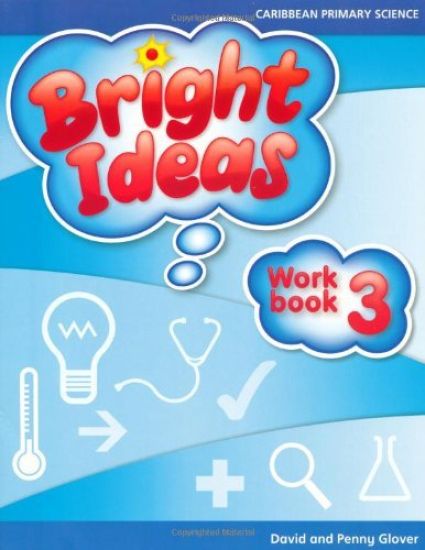
Bright Ideas: Primary Science Workbook 3

Bright Ideas: Primary Science Workbook 3

David Glover

Macmillan Education
2010
nidottu
Key features of the Workbooks are: • Scientific idea supported by a variety of lively and entertaining exercises• Activities to develop a scientific vocabulary• Carefully planned balance of writing, drawing, labelling, sequencing and other exercises • Content structured in lessons-sized topics clearly linked to the Student's Books• Graded language appropriate to student’s reading age• Caribbean contexts and examples Separate Teacher’s Guides, with background information, teaching notes and support for remedial and extension activities are also available.
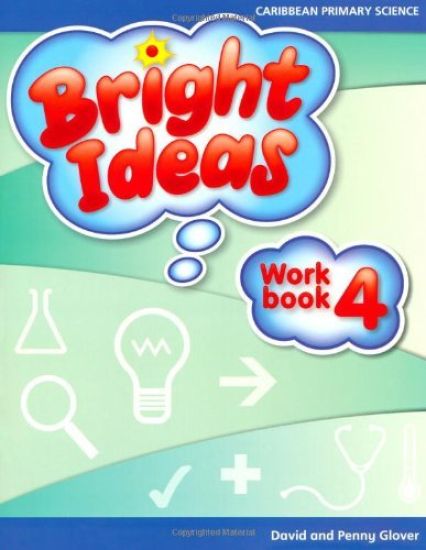
Bright Ideas: Primary Science Workbook 4

Bright Ideas: Primary Science Workbook 4

David Glover

Macmillan Education
2010
nidottu
Key features of the Workbooks are: • Scientific idea supported by a variety of lively and entertaining exercises• Activities to develop a scientific vocabulary• Carefully planned balance of writing, drawing, labelling, sequencing and other exercises • Content structured in lessons-sized topics clearly linked to the Student's Books• Graded language appropriate to student’s reading age• Caribbean contexts and examples Separate Teacher’s Guides, with background information, teaching notes and support for remedial and extension activities are also available.
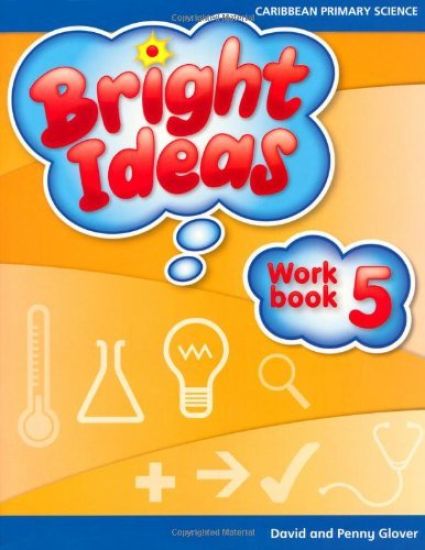
Bright Ideas: Primary Science Workbook 5

Bright Ideas: Primary Science Workbook 5

David Glover

Macmillan Education
2010
nidottu
Key features of the Workbooks are: • Scientific idea supported by a variety of lively and entertaining exercises• Activities to develop a scientific vocabulary• Carefully planned balance of writing, drawing, labelling, sequencing and other exercises • Content structured in lessons-sized topics clearly linked to the Student's Books• Graded language appropriate to student’s reading age• Caribbean contexts and examples Separate Teacher’s Guides, with background information, teaching notes and support for remedial and extension activities are also available.
Bright Ideas: Macmillan Primary Science Level 1 Teacher's Book
'Bright Ideas' is a new science course for all students in Caribbean primary schools. Developed to fulfil the requirements of primary science curricula throughout the region, the Student's Books and supporting materials promote a modern, student centred approach to science learning. There are seven full colour Student's Books from Kindergarten level to the final year of primary school. Workbooks to complement the Student's Books are available for each level of the course. Separate Teacher's Guides, with background information, teaching notes and support for remedial and extension activities are also available.Key features of the Student's Books are: scientific ideas introduced in a lively and entertaining way; content structured in lesson-sized topics with clearly stated objectives; graded language appropriate to student's reading age; numerous practical activities using everyday materials; wide variety of paper-and-pencil exercises, discussion topics and suggestions for group work to promote interactive learning; Caribbean contexts and issues examined in depth; high quality illustrations and photographs; review exercises and end of unit tests; extensive glossary to develop student's scientific vocabulary; and, internet links to promote independent research.
Bright Ideas: Macmillan Primary Science Level 2 Teacher's Book
'Bright Ideas' is a new science course for all students in Caribbean primary schools. Developed to fulfil the requirements of primary science curricula throughout the region, the Student's Books and supporting materials promote a modern, student centred approach to science learning. There are seven full colour Student's Books from Kindergarten level to the final year of primary school. Workbooks to complement the Student's Books are available for each level of the course. Separate Teacher's Guides, with background information, teaching notes and support for remedial and extension activities are also available.Key features of the Student's Books are: scientific ideas introduced in a lively and entertaining way; content structured in lesson-sized topics with clearly stated objectives; graded language appropriate to student's reading age; numerous practical activities using everyday materials; wide variety of paper-and-pencil exercises, discussion topics and suggestions for group work to promote interactive learning; Caribbean contexts and issues examined in depth; high quality illustrations and photographs; review exercises and end of unit tests; extensive glossary to develop student's scientific vocabulary; and, internet links to promote independent research.
Bright Ideas: Macmillan Primary Science Level 3 Teacher's Book
'Bright Ideas' is a new science course for all students in Caribbean primary schools. Developed to fulfill the requirements of primary science curricula throughout the region, the Student's Books and supporting materials promote a modern, student centred approach to science learning. There are seven full colour Student's Books from Kindergarten level to the final year of primary school. Workbooks to complement the Student's Books are available for each level of the course. Separate Teacher's Guides, with background information, teaching notes and support for remedial and extension activities are also available.Key features of the Student's Books are: scientific ideas introduced in a lively and entertaining way; content structured in lesson-sized topics with clearly stated objectives; graded language appropriate to student's reading age; numerous practical activities using everyday materials; wide variety of paper-and-pencil exercises, discussion topics and suggestions for group work to promote interactive learning; Caribbean contexts and issues examined in depth; high quality illustrations and photographs; review exercises and end of unit tests; extensive glossary to develop student's scientific vocabulary; and, internet links to promote independent research.
Bright Ideas: Primary Science Workbook K

Bright Ideas: Primary Science Workbook K

David Glover

Macmillan Education
2010
nidottu
Key features of the Workbooks are: • Scientific idea supported by a variety of lively and entertaining exercises• Activities to develop a scientific vocabulary• Carefully planned balance of writing, drawing, labelling, sequencing and other exercises • Content structured in lessons-sized topics clearly linked to the Student's Books• Graded language appropriate to student’s reading age• Caribbean contexts and examples Separate Teacher’s Guides, with background information, teaching notes and support for remedial and extension activities are also available.
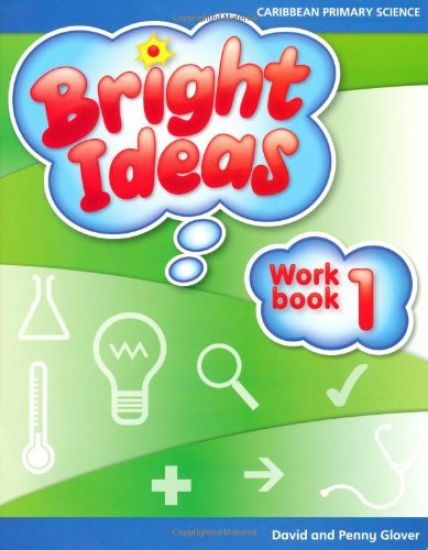
Bright Ideas: Primary Science Workbook 1

Bright Ideas: Primary Science Workbook 1

David Glover

Macmillan Education
2010
nidottu
Key features of the Workbooks are: • Scientific idea supported by a variety of lively and entertaining exercises• Activities to develop a scientific vocabulary• Carefully planned balance of writing, drawing, labelling, sequencing and other exercises • Content structured in lessons-sized topics clearly linked to the Student's Books• Graded language appropriate to student’s reading age• Caribbean contexts and examples Separate Teacher’s Guides, with background information, teaching notes and support for remedial and extension activities are also available.
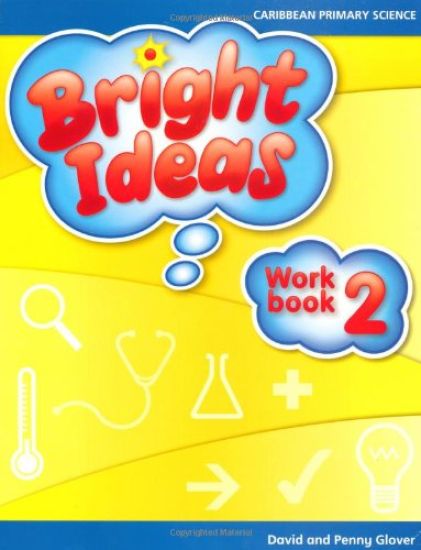
Bright Ideas: Primary Science Workbook 2

Bright Ideas: Primary Science Workbook 2

David Glover

Macmillan Education
2010
nidottu
Key features of the Workbooks are: • Scientific idea supported by a variety of lively and entertaining exercises• Activities to develop a scientific vocabulary• Carefully planned balance of writing, drawing, labelling, sequencing and other exercises • Content structured in lessons-sized topics clearly linked to the Student's Books• Graded language appropriate to student’s reading age• Caribbean contexts and examples Separate Teacher’s Guides, with background information, teaching notes and support for remedial and extension activities are also available.