Kirjojen hintavertailu. Mukana 11 717 486 kirjaa ja 12 kauppaa.

Kirjahaku

Etsi kirjoja tekijän nimen, kirjan nimen tai ISBN:n perusteella.

1000 tulosta hakusanalla David L

Crosstalk: Interviews Conducted by David Langford
Fifteen interviews in which David Langford -- winner of 29 Hugo Awards -- questions other science fiction and fantasy notables: Stephen Baxter, Kristen Britain, John Clute and John Grant, John Clute solo, George Hay, Tom Holt, Terry Pratchett with Jack Cohen and Ian Stewart, Terry Pratchett solo (twice), Christopher Priest, Alastair Reynolds, John Sladek, Bob Shaw, Kevin Smith, and Ian Watson. CROSSTALK collects all these conversations for the first time in book form.
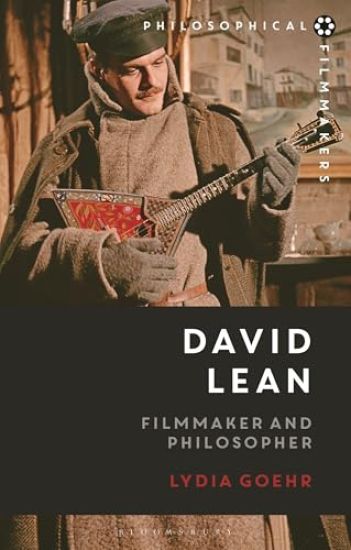
David Lean

David Lean

Lydia Goehr

BLOOMSBURY PUBLISHING PLC
2025
sidottu
David Lean’s extraordinary films enact themselves through the sights and sounds of the technologies of modernity: through trains, planes, ships, and automobiles – through the radio and the gramophone. His musical motifs are known worldwide: Lara’s theme in Zhivago; the Colonel Bogey March in Kwai; Estella’s motif in Great Expectations; Rosy’s motif in Ryan’s Daughter; Lawrence’s motif for his adventure in Arabia, and of course Rachmaninoff’s pounding chords in Brief Encounter. When, however, Lean described the process of cutting pictures as akin to the music flowing through them, what sort of music or musicality had he in mind: a classical or popular music, or a way of using musical form to mix up the meaning and material of his films? Lydia Goehr’s new book tracks the soundscape of Lean’s films not only through their musical scores, but also through the radios and gramophones that, at the start of Lean’s career, were becoming indispensable household commodities. The book begins and ends with a motif, running from the early domestic films situated in the English home, to the subsequent extensive epics of colony, commonwealth, and empire. The fidelities and infidelities of the domestic world are traced across to the loyalties and betrayals of nations in war and peace – dualities that are bound up in this book with the witty British filmmaker’s art itself
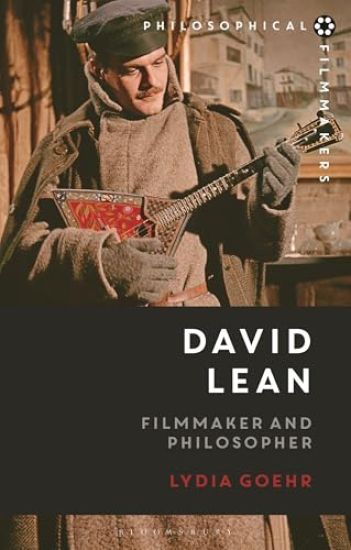
David Lean

David Lean

Lydia Goehr

BLOOMSBURY PUBLISHING PLC
2025
nidottu
David Lean’s extraordinary films work philosophically through the modern reproductive and transportive technologies of sight and sound: through trains, planes, ships, and automobiles, from one perspective, and through the modern technology of the radio and gramophone, from another.Lean’s musical motifs are known worldwide: Lara’s theme in Zhivago; the Colonel Bogey March in Kwai; Estella’s motif in Great Expectations; Rosy’s motif in Ryan’s Daughter; Lawrence’s motif for his adventure in Arabia, and of course Rachmaninoff’s pounding chords in Brief Encounter. When, however, Lean described his cutting of pictures as akin to how music flows through pictures, what sort of music or musicality had he in mind: a classical or popular music, or a way of using musical form to mix up the meaning and material of his films?Lydia Goehr’s new book tracks the soundscape in Lean’s films not only through the musical scores composed for the films, but also, and more, through the technology of radio and gramophone that, at the start of Lean’s career, were becoming indispensable household items for the home. The book begins and ends with a motif running from the early more domestic films locally situated in the English home to the later more extensive epics of colony, commonwealth, and empire. The fidelity-infidelity relationship defined by marriage extends to the loyalty-betrayal relationship regarding countries of war and peace—after which this relationship is extended to the witty British manner of making film as a perfected and not so perfected symphonic work of a great cutter’s art. Here, as few other books on Lean have emphasized, the influence of Noel Coward on Lean cannot be overestimated.
Dissertations on the Prophecies of the Old Testament. In two Parts. ... By David Levi, ... of 3; Volume 3
The 18th century was a wealth of knowledge, exploration and rapidly growing technology and expanding record-keeping made possible by advances in the printing press. In its determination to preserve the century of revolution, Gale initiated a revolution of its own: digitization of epic proportions to preserve these invaluable works in the largest archive of its kind. Now for the first time these high-quality digital copies of original 18th century manuscripts are available in print, making them highly accessible to libraries, undergraduate students, and independent scholars.The Age of Enlightenment profoundly enriched religious and philosophical understanding and continues to influence present-day thinking. Works collected here include masterpieces by David Hume, Immanuel Kant, and Jean-Jacques Rousseau, as well as religious sermons and moral debates on the issues of the day, such as the slave trade. The Age of Reason saw conflict between Protestantism and Catholicism transformed into one between faith and logic -- a debate that continues in the twenty-first century.++++The below data was compiled from various identification fields in the bibliographic record of this title. This data is provided as an additional tool in helping to insure edition identification: ++++British LibraryT122354The dedication in vol.1 is dated Oct. 15, 1793. In vol.2 the imprint reads: .. and sold by Johnson; and Walker, 1796; in vol.3 the imprint reads: .. and sold by Johnson; Sewel; and Walker, 1800.London: printed by D. Levi; and sold by Johnson; Kearsley; and Parsons and Walker, 1793?]-1800. 3v.; 8
Original Poems on Various Subjects. By David Love

Original Poems on Various Subjects. By David Love

David Love

Gale Ecco, Print Editions
2018
sidottu
The 18th century was a wealth of knowledge, exploration and rapidly growing technology and expanding record-keeping made possible by advances in the printing press. In its determination to preserve the century of revolution, Gale initiated a revolution of its own: digitization of epic proportions to preserve these invaluable works in the largest archive of its kind. Now for the first time these high-quality digital copies of original 18th century manuscripts are available in print, making them highly accessible to libraries, undergraduate students, and independent scholars.Western literary study flows out of eighteenth-century works by Alexander Pope, Daniel Defoe, Henry Fielding, Frances Burney, Denis Diderot, Johann Gottfried Herder, Johann Wolfgang von Goethe, and others. Experience the birth of the modern novel, or compare the development of language using dictionaries and grammar discourses. ++++The below data was compiled from various identification fields in the bibliographic record of this title. This data is provided as an additional tool in helping to insure edition identification: ++++British LibraryT075290London: printed for the author, 1791. iv, 1],8-25, 1]p.; 12
The Works of the Famous and Worthy Knight, Sir David Lindsay of the Mount, Alias, Lyon, King of Arms. Newly Corrected and Vindicate [sic] From the Former Errors Where-with They Were Corrupted
The 18th century was a wealth of knowledge, exploration and rapidly growing technology and expanding record-keeping made possible by advances in the printing press. In its determination to preserve the century of revolution, Gale initiated a revolution of its own: digitization of epic proportions to preserve these invaluable works in the largest archive of its kind. Now for the first time these high-quality digital copies of original 18th century manuscripts are available in print, making them highly accessible to libraries, undergraduate students, and independent scholars.Western literary study flows out of eighteenth-century works by Alexander Pope, Daniel Defoe, Henry Fielding, Frances Burney, Denis Diderot, Johann Gottfried Herder, Johann Wolfgang von Goethe, and others. Experience the birth of the modern novel, or compare the development of language using dictionaries and grammar discourses. ++++The below data was compiled from various identification fields in the bibliographic record of this title. This data is provided as an additional tool in helping to insure edition identification: ++++National Library of ScotlandT179671Edinburgh: printed by the heirs and successors of Andrew Anderson, anno Dom., 1716. 264p.; 12