Kirjojen hintavertailu. Mukana 11 342 296 kirjaa ja 12 kauppaa.

Kirjahaku

Etsi kirjoja tekijän nimen, kirjan nimen tai ISBN:n perusteella.

1000 tulosta hakusanalla David L. Block; Kenneth C. Freeman

Constitutional Fictions

Constitutional Fictions

David L Faigman

Oxford University Press Inc
2008
sidottu
David Faigman's Constitutional Fictions is the first book-length examination of the role of fact-finding in constitutional cases. Because the role of facts is central to the day-to-day realities of constitutional law, Faigman provides an extraordinarily important analysis of a subject that has been largely ignored by constitutional scholars. To show how contemporary facts play into constitutional analysis, Faigman examines some of the most controversial subjects of the late twentieth century, including physician-assisted suicide, abortion, sexual predators, free speech, and privacy. The Constitutional is popularly thought of as a static document that embodies fundamental values and foundational principles of governance. However, the values and principles that the Constitution embodies must be applied to the circumstances and challenges of changing times. Constitutional Fictions explains how contemporary facts should be incorporated into constitutional decisions, thus allowing the Constitution to endure for the ages
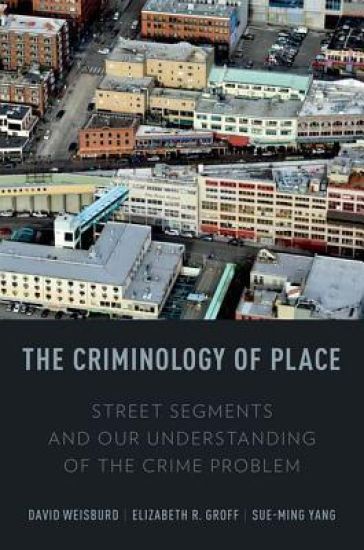
The Criminology of Place

The Criminology of Place

David L. Weisburd; Elizabeth R. Groff; Sue-Ming Yang

Oxford University Press Inc
2012
sidottu
The study of crime has focused primarily on why particular people commit crime or why specific communities have higher crime levels than others. In The Criminology of Place, David Weisburd, Elizabeth Groff, and Sue-Ming Yang present a new and different way of looking at the crime problem by examining why specific streets in a city have specific crime trends over time. Based on a 16-year longitudinal study of crime in Seattle, Washington, the book focuses our attention on small units of geographic analysis-micro communities, defined as street segments. Half of all Seattle crime each year occurs on just 5-6 percent of the city's street segments, yet these crime hot spots are not concentrated in a single neighborhood and street by street variability is tremendous. Weisburd, Groff, and Yang set out to explain why. The Criminology of Place shows how much essential information about crime is inevitably lost when we focus on larger units like neighborhoods or communities. Reorienting the study of crime by focusing on small units of geography, the authors identify a large group of possible crime risk and protective factors for street segments and an array of interventions that could be implemented to address them. The Criminology of Place is a groundbreaking book that radically alters traditional thinking about the crime problem and what we should do about it. "This is a very important book for policy-makers, practitioners and academics. The authors carefully and systematically build their case that effective crime prevention efforts must be focused first on a small number of high crime problem places. The detail of their arguments transforms hotspot policing and prevention in the same way keyhole surgery has transformed medical care. Their case is persuasive and, above all, evidence based" -- Peter Neyroud CBE QPM, University of Cambridge and Former Chief Constable and Chief Executive of the National Policing Improvement Agency
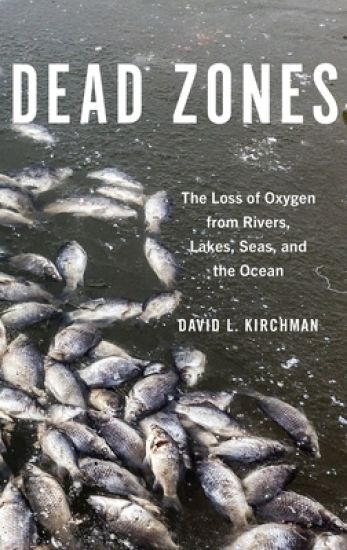
Dead Zones

Dead Zones

David L. Kirchman

Oxford University Press Inc
2021
sidottu
Dead zones are on the rise... Human activity has caused an increase in uninhabitable, oxygen-poor zones--also known as "dead zones"--in our waters. Oxygen is the third most abundant element in the universe, and it is a necessity for nearly all life on Earth. Yet many rivers, estuaries, coastal waters, and parts of the open ocean lack enough of it. In this book, David L. Kirchman explains the impacts of dead zones and provides an in-depth history of oxygen loss in water. He details the role the agricultural industry plays in water pollution, showcasing how fertilizers contaminate water supplies and kickstart harmful algal blooms in local lakes, reservoirs, and coastal oceans. Algae decomposition requires so much oxygen that levels drop low enough to kill fish, destroy bottom-dwelling biota, reduce biological diversity, and rearrange food webs. We can't undo the damage completely, but we can work together to reduce the size and intensity of dead zones in places like the Gulf of Mexico, Chesapeake Bay, and the Baltic Sea. Not only does Kirchman clearly outline what dead zones mean for humanity, he also supplies ways we can reduce their deadly impact on human and aquatic life. Nutrient pollution in some regions has already begun to decline because of wastewater treatment, buffer zones, cover crops, and precision agriculture. More needs to be done, though, to reduce the harmful impact of existing dead zones and to stop the thousands of new ones from cropping up in our waters. Kirchman provides insight into the ways changing our diet can reduce nutrient pollution while also lowering greenhouse gasses emitted by the agricultural industry. Individuals can do something positive for their health and the world around them. The resulting book allows readers interested in the environment--whether students, policymakers, ecosystem managers, or science buffs--to dive into these deadly zones and discover how they can help mitigate the harmful effects of oxygen-poor waters today.
Is the International Legal Order Unraveling?

Is the International Legal Order Unraveling?

David L. Sloss

OXFORD UNIVERSITY PRESS INC
2023
sidottu
This book grows out of the work of a study group convened by the American Branch of the International Law Association. The group had a mandate to examine threats to the rules-based international order and possible responses. The several chapters in the book-all of which are written by distinguished international law scholars--generally support the conclusion that the rules-based international order confronts significant challenges, but it is not unraveling--at least, not yet. Climate change is the biggest wild card in trying to predict the future. If the world's major powers--especially the United States and China--cooperate with each other to combat climate change, then other threats to the rules-based order should be manageable. If the world's major powers fail to address the climate crisis by 2040 or 2050, the other threats addressed in this volume may come to be seen as trivial in comparison. The book consists of fourteen chapters, plus an introduction. Three chapters address specific threats to the rules-based international order: climate change, autonomous weapons, and cyber weapons. Eight chapters address particular substantive areas of international law: jus ad bellum, jus in bello, trade law, investment law, anti-bribery law, human rights law, international criminal law, and migration law. The remaining chapters provide a range of perspectives on the past evolution and likely future development of the rules-based international order as a whole.
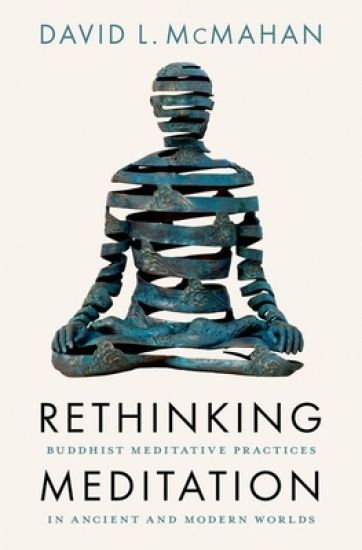
Rethinking Meditation

Rethinking Meditation

David L. McMahan

OXFORD UNIVERSITY PRESS INC
2023
sidottu
A dizzying array of meditation practices have emerged in the long and culturally diverse history of Buddhism. Yet if you are seeking out meditation today in North America and Europe-and, increasingly, in the rest of the world as well-you will likely encounter one particular type, often under the label "mindfulness." You will find it taught in Zen monasteries, Insight Meditation centers, health clubs, colleges, psychologists' offices, corporations, liberal Christian churches, prisons, and the US military. Countless articles in popular magazines promote its benefits, often depicting it as a panacea for problems as wide-ranging as anxiety, depression, heart disease, eating disorders, and psoriasis. There are books on mindfulness and meditation not only by Buddhist monks but also by medical doctors, psychologists, computer engineers, business consultants, and a US congressman. Meditation teachers will sometimes say that this is the same meditative practice that the Buddha taught over 2500 years ago, and which has been transmitted virtually unchanged down through the centuries to us today. The "cultural baggage" surrounding the practices has changed, but the essence is intact, and what it does for people, whether you're a Buddhist monk or a corporate executive, remains the same. Rethinking Meditation shows that the standard articulation of mindfulness did not come down to us unchanged from the time of the Buddha. Rather, it is a distillation of particular strands of Buddhist thought that have combined with western ideas to create a unique practice tailored to modern life. Rethinking Meditation argues that the relationship between meditative practices and cultural context is much more crucial than is suggested in typical contemporary articulations. David McMahan shows that most of the vast array of meditative practices that have emerged in Buddhist traditions have been filtered out of typical contemporary practice, allowing only a trickle of meditative practices through. This book presents a genealogy of some specific elements in classical Buddhist traditions that have fed into contemporary meditative practices-those that have made it through the filters of modernity. It asks: out of the many forms of Buddhist meditation that have developed over two-and-a-half millennia, how and why were particular practices selected to coalesce into the Standard Version today?
Microbes

Microbes

David L. Kirchman

OXFORD UNIVERSITY PRESS INC
2024
sidottu
For billions of years, microbes have produced and consumed greenhouse gases that regulate global temperature and in turn other aspects of our climate. The balance of these gases maintains Earth's habitability. Methane, a greenhouse gas produced only by microbes, may have kept Earth out of a deep freeze billions of years ago. Likewise, variations in carbon dioxide, another greenhouse gas released by microbes and other organisms, help to explain the comings and goings of ice ages over the last million years. Now we face a human-made climate crisis with drastic consequences. The complete story behind greenhouse gases, however, involves microbes and their role in natural ecosystems. Microscopic organisms are also part of the solution, producing biofuels and other forms of green energy which keep fossil fuels in the ground. Other microbes can be harnessed to reduce the release of methane and nitrous oxide from agriculture, and geoengineering solutions that depend on microbes could pull carbon dioxide out of the atmosphere. In this book, David L. Kirchman introduces a unique and timely contribution to the climate change conversation and the part microbes play in our past, present, and future. He takes readers into the unseen world behind the most important environmental problem facing society today and encourages us to embrace microbial solutions that are essential to mitigating climate change.
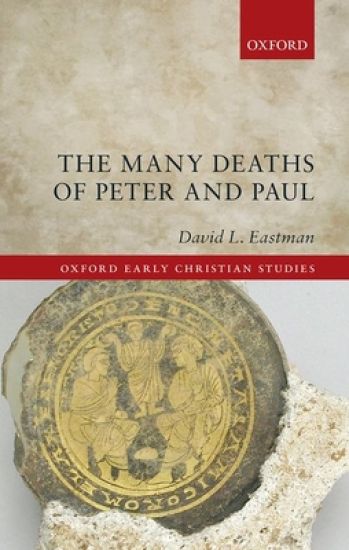
The Many Deaths of Peter and Paul

The Many Deaths of Peter and Paul

David L. Eastman

Oxford University Press
2019
sidottu
The early accounts of one of the most famous scenes in Christian history, the death of Peter, do not present a single narrative of the events, for they do not agree on why Peter requested to die in the precise way that he allegedly did. Over time, historians and theologians have tended to smooth over these rough edges, creating the impression that the ancient sources all line up in a certain direction. This impression, however, misrepresents the evidence. The reason for Peter's inverted crucifixion is not the only detail on which the sources diverge. In fact, such disagreement can be seen concerning nearly every major narrative point in the martyrdom accounts of Peter and Paul. The Many Deaths of Peter and Paul shows that the process of smoothing over differences in order to create a master narrative about the deaths of Peter and Paul has distorted the evidence. This process of distortion not only blinds us to differences in perspective among the various authors, but also discourages us from digging deeper into the contexts of those authors to explore why they told the stories of the apostolic deaths differently in their contexts. David L. Eastman demonstrates that there was never a single, unopposed narrative about the deaths of Peter and Paul. Instead, stories were products of social memory, told and re-told in order to serve the purposes of their authors and their communities. The history of the writing of the many deaths of Peter and Paul is one of contextualized variety.
Processes in Microbial Ecology

Processes in Microbial Ecology

David L. Kirchman

Oxford University Press
2018
sidottu
Microbial ecology is the study of interactions among microbes in natural environments and their roles in biogeochemical cycles, food web dynamics, and the evolution of life. Microbes are the most numerous organisms in the biosphere and mediate many critical reactions in elemental cycles and biogeochemical reactions. Because they are essential players in the carbon cycle and related processes, microbial ecology is a vital science for understanding the role of the biosphere in global warming and the response of natural ecosystems to climate change. This second edition has been fully revised, restructured, and updated while remaining concise and accessible. It discusses the major processes carried out by viruses, bacteria, fungi, protozoa and other protists - the microbes - in freshwater, marine, and terrestrial ecosystems. The focus is on biogeochemical processes, starting with primary production and the initial fixation of carbon into cellular biomass, before exploring how that carbon is degraded in both oxygen-rich (oxic) and oxygen-deficient (anoxic) environments. These processes are in turn affected by ecological interactions, including competition for limiting nutrients, viral lysis, and predation by various protists in soils and aquatic habitats. The book neatly connects processes occurring at the micron scale to events happening at the global scale, including the carbon cycle and its connection to climate change issues. A final chapter is devoted to symbiosis and other relationships between microbes and larger organisms. Microbes have huge impacts not only on biogeochemical cycles, but also on the ecology and evolution of more complex forms of life, including humans.
Processes in Microbial Ecology

Processes in Microbial Ecology

David L. Kirchman

Oxford University Press
2018
nidottu
Microbial ecology is the study of interactions among microbes in natural environments and their roles in biogeochemical cycles, food web dynamics, and the evolution of life. Microbes are the most numerous organisms in the biosphere and mediate many critical reactions in elemental cycles and biogeochemical reactions. Because they are essential players in the carbon cycle and related processes, microbial ecology is a vital science for understanding the role of the biosphere in global warming and the response of natural ecosystems to climate change. This second edition has been fully revised, restructured, and updated while remaining concise and accessible. It discusses the major processes carried out by viruses, bacteria, fungi, protozoa and other protists - the microbes - in freshwater, marine, and terrestrial ecosystems. The focus is on biogeochemical processes, starting with primary production and the initial fixation of carbon into cellular biomass, before exploring how that carbon is degraded in both oxygen-rich (oxic) and oxygen-deficient (anoxic) environments. These processes are in turn affected by ecological interactions, including competition for limiting nutrients, viral lysis, and predation by various protists in soils and aquatic habitats. The book neatly connects processes occurring at the micron scale to events happening at the global scale, including the carbon cycle and its connection to climate change issues. A final chapter is devoted to symbiosis and other relationships between microbes and larger organisms. Microbes have huge impacts not only on biogeochemical cycles, but also on the ecology and evolution of more complex forms of life, including humans.
Social Cognition and Interaction Training (SCIT)

Social Cognition and Interaction Training (SCIT)

David L. Roberts; David L. Penn; Dennis R. Combs

Oxford University Press Inc
2016
nidottu
Impairments in social functioning are among the hallmark characteristics of schizophrenia. These deficits predict relapse rate and may be independent of better-studied symptoms such as hallucinations. Additionally, studies indicate that social functioning is one of the most important domains for individuals with schizophrenia, many of whom consider social functioning to be a key area of unmet need. Social Cognition and Interaction Training (SCIT) is a group psychotherapy for individuals with schizophrenia and other psychotic disorders. Social cognition refers to the thinking processes that people use to navigate the social world. Deficits in social cognition hinder people with schizophrenia and other mental illnesses from living meaningful, socially connected lives. The SCIT Clinician Guide provides comprehensive instruction for mental health professionals to enhance social cognition and promote rewarding social lives for their clients. SCIT is appropriate for adults suffering from psychotic illness and who have interpersonal difficulties as a result. SCIT is particularly appropriate for individuals with symptoms of suspiciousness and paranoia. The authors summarize the rationale and theoretical underpinnings of SCIT, distinguish it from other treatments for psychosis, provide an overview of the intervention, explain the links between the intervention activities and the underlying theoretical model, and describe SCIT implementation session-by-session. SCIT is a 20- to 24-week group-based treatment that can be delivered by mental health clinicians of all levels in a wide range of community and hospital settings. SCIT uses exercises, games, discussion formats, and interactive social stimuli to target and improve specific areas of social cognitive dysfunction, and includes user-friendly tips and handouts for clients. It also provides web access to a library of videos, images and slide shows that are used to bring the SCIT training sessions to life.
The Death of Treaty Supremacy

The Death of Treaty Supremacy

David L. Sloss

Oxford University Press Inc
2016
sidottu
This book provides the first detailed history of the Constitution's treaty supremacy rule. It describes a process of invisible constitutional change. The treaty supremacy rule was a bedrock principle of constitutional law for more than 150 years. It provided that treaties are supreme over state law and that courts have a constitutional duty to apply treaties that conflict with state laws. The rule ensured that state governments did not violate U.S. treaty obligations without authorization from the federal political branches. In 1945, the United States ratified the UN Charter, which obligates nations to promote human rights for all without distinction as to race. In 1950, a California court applied the Charters human rights provisions along with the traditional supremacy rule to invalidate a state law that discriminated against Japanese nationals. The implications were shocking: the decision implied that the United States had abrogated Jim Crow laws throughout the South by ratifying the UN Charter. Conservatives reacted by lobbying for a constitutional amendment, known as the Bricker Amendment, to abolish the treaty supremacy rule. The amendment never passed, but Bricker's supporters achieved their goals through de facto constitutional change. Before 1945, the treaty supremacy rule was a mandatory constitutional rule that applied to all treaties. The de facto Bricker Amendment converted the rule into an optional rule that applies only to self-executing treaties. Under the modern rule, state governments are allowed to violate national treaty obligationsincluding international human rights obligationsthat are embodied in non-self-executing treaties.
A Field Guide to the Tiger Beetles of the United States and Canada

A Field Guide to the Tiger Beetles of the United States and Canada

David L. Pearson; C. Barry Knisley; Daniel P. Duran; Charles J. Kazilek

Oxford University Press Inc
2015
sidottu
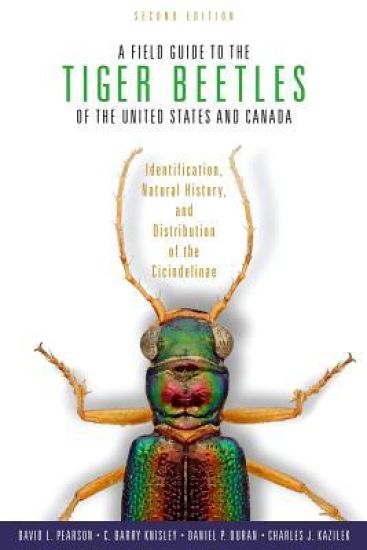
More than 2600 species of tiger beetles are found all over the world. In North America there are 116 species of tiger beetle, divided into 153 geographically distinct races. Detailed studies of their natural history, population dynamics, communities, patterns of worldwide species richness, and taxonomy of particular subgroups have produced much information. Tiger beetles are among the most widely investigated groups of insects, especially in terms of their ecology and geographic distribution. The first edition of A Field Guide to the Tiger Beetles of the United States and Canada, published in 2005, has served as a field and natural-history guide to all known species of tiger beetles found in North America above the Mexican border. The 2nd edition is a pleasant and comprehensible handbook of the identification, distribution, natural history, and habitat details of the 116 species of tiger beetles in North America. The updated handbook provides new information including observations of seasonality, range extensions and biology, a newly developed list of common names, and twenty-five artistically pleasing identification color plates. The second edition of A Field Guide to the Tiger Beetles of the United States and Canada provides essential information to recognize and easily identify tiger beetles for established naturalists and outdoor enthusiasts alike.
A Field Guide to the Tiger Beetles of the United States and Canada

A Field Guide to the Tiger Beetles of the United States and Canada

David L. Pearson; C. Barry Knisley; Daniel P. Duran; Charles J. Kazilek

Oxford University Press Inc
2015
nidottu
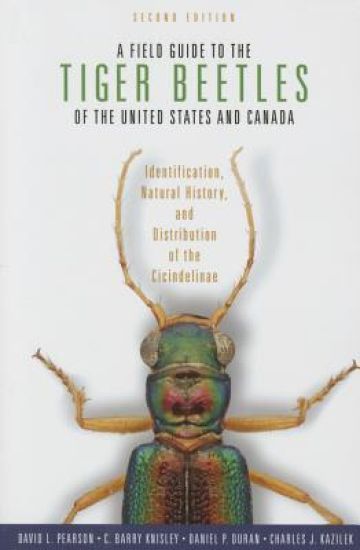
More than 2600 species of tiger beetles are found all over the world. In North America there are 116 species of tiger beetle, divided into 153 geographically distinct races. Detailed studies of their natural history, population dynamics, communities, patterns of worldwide species richness, and taxonomy of particular subgroups have produced much information. Tiger beetles are among the most widely investigated groups of insects, especially in terms of their ecology and geographic distribution. The first edition of A Field Guide to the Tiger Beetles of the United States and Canada, published in 2005, has served as a field and natural-history guide to all known species of tiger beetles found in North America above the Mexican border. The 2nd edition is a pleasant and comprehensible handbook of the identification, distribution, natural history, and habitat details of the 116 species of tiger beetles in North America. The updated handbook provides new information including observations of seasonality, range extensions and biology, a newly developed list of common names, and twenty-five artistically pleasing identification color plates. The second edition of A Field Guide to the Tiger Beetles of the United States and Canada provides essential information to recognize and easily identify tiger beetles for established naturalists and outdoor enthusiasts alike.
Improbable Scholars

Improbable Scholars

David L. Kirp

Oxford University Press Inc
2015
nidottu
No school district can be all charismatic leaders and super-teachers. It can't start from scratch, and it can't fire all its teachers and principals when students do poorly. Great charter schools can only serve a tiny minority of students. Whether we like it or not, most of our youngsters will continue to be educated in mainstream public schools. The good news, as David L. Kirp reveals in Improbable Scholars, is that there's a sensible way to rebuild public education and close the achievement gap for all students. Indeed, this is precisely what's happening in a most unlikely place: Union City, New Jersey, a poor, crowded Latino community just across the Hudson from Manhattan. The school district--once one of the worst in the state--has ignored trendy reforms in favor of proven game-changers like quality early education, a word-soaked curriculum, and hands-on help for teachers. When beneficial new strategies have emerged, like using sophisticated data-crunching to generate pinpoint assessments to help individual students, they have been folded into the mix. The results demand that we take notice--from third grade through high school, Union City scores on the high-stakes state tests approximate the statewide average. In other words, these inner-city kids are achieving just as much as their suburban cousins in reading, writing, and math. What's even more impressive, nearly ninety percent of high school students are earning their diplomas and sixty percent of them are going to college. Top students are winning national science awards and full rides at Ivy League universities. These schools are not just good places for poor kids. They are good places for kids, period. Improbable Scholars offers a playbook--not a prayer book--for reform that will dramatically change our approach to reviving public education.
Genocide and Political Groups

Genocide and Political Groups

David L. Nersessian

Oxford University Press
2010
sidottu
Genocide and Political Groups provides a comprehensive examination of the crime of genocide in connection with political groups. It offers a detailed empirical study of the current status of political groups under customary international law, as well as a comprehensive theoretical analysis of whether political genocide should be recognized as a separate crime by the international community. The book discusses whether a stand-alone crime of political genocide should be recognized under international law. It begins by examining the historical development of genocide and critically assessing the unique requirements of the crime. It then demonstrates that other international offences -notably crimes against humanity and war crimes- are not workable substitutes for a specific offence that protects political groups. This is followed by an analytical study of the protection of human groups under international law. The book proposes a new theory that links the protection of groups to individual rights of a certain character that give rise to the group's existence. It then applies that theory in evaluating whether political groups are legitimate candidates for specific protection from physical and biological destruction 'as such'. The writing includes an exhaustive analysis of state practice and opinio juris on the treatment of political groups. It empirically refutes claims that political groups are protected already from genocide by virtue of post-Convention developments in customary international law. In response to this legal reality, however, the book analyses the theoretical and public policy justifications for international criminal law and demonstrates that the international community would be well served by creating a separate international crime to address political genocide.
Health Measurement Scales

Health Measurement Scales

David L. Streiner; Geoffrey R. Norman; John Cairney

Oxford University Press
2014
nidottu
Clinicians and those in health sciences are frequently called upon to measure subjective states such as attitudes, feelings, quality of life, educational achievement and aptitude, and learning style in their patients. This fifth edition of Health Measurement Scales enables these groups to both develop scales to measure non-tangible health outcomes, and better evaluate and differentiate between existing tools. Health Measurement Scales is the ultimate guide to developing and validating measurement scales that are to be used in the health sciences. The book covers how the individual items are developed; various biases that can affect responses (e.g. social desirability, yea-saying, framing); various response options; how to select the best items in the set; how to combine them into a scale; and finally how to determine the reliability and validity of the scale. It concludes with a discussion of ethical issues that may be encountered, and guidelines for reporting the results of the scale development process. Appendices include a comprehensive guide to finding existing scales, and a brief introduction to exploratory and confirmatory factor analysis, making this book a must-read for any practitioner dealing with this kind of data.
Braddock's Defeat

Braddock's Defeat

David L. Preston

Oxford University Press Inc
2015
sidottu
On July 9, 1755, British and colonial troops under the command of General Edward Braddock suffered a crushing defeat to French and Native American enemy forces. The Battle of the Monongahela altered the trajectory of the Seven Years' War in America, greatly escalating the war and inexorably defining its military and political character. The Monongahela was an unprecedented rout of a modern and powerful British army by a predominantly Indian force, and as David Preston shows in this gripping new account, no other battle before 1775 had such a searing effect on the colonial British world. The culmination of a failed attempt to capture Fort Duquesne from the French, Braddock's Defeat was a pivotal moment in American and world history, ranking with the destruction of Varus's legions in the Teutoburg Forest, Noche Triste, St. Clair's Defeat, and the Little Bighorn as examples of imperial forces falling to indigenous foes. While the defeat is often said to have been caused by blundering and arrogance on the part of Braddock, Preston argues that this myth has depreciated the victory that Indian and French forces won by their superior discipline, tactical decisions, and leadership. The French Canadian officer Captain Beaujeu had greater tactical skill, better reconnaissance, and a battle plan that he effectively coordinated with Indian allies who brilliantly executed it, Preston shows. The Indians were the most effective and disciplined troops on the field on that decisive July day, especially in comparison to Braddock's poorly trained, amalgamated, and ultimately undisciplined Regulars. Reframing our understanding of the superiority of the French and Indian alliance, Preston also explores the long shadow cast by Braddock's Defeat over the 18th century and the American Revolution. The campaign had been an awakening to empire for many British Americans, spawning a sustained discourse on American identity and anticipating many of the empire's political and social divisions that became wider and deeper by the outbreak of the Revolution. It was the defining generational experience for many of British and American officers, including George Washington, Thomas Gage, and Horatio Gates, who carried their veteran experiences from the Seven Years' War forward into American Revolution. Rooted in extensive fieldwork on the campaign's geography and terrain and presenting an abundance of new evidence, Braddock's Defeat presents the fullest account yet of this defining moment in early American history.
Lachman's Case Studies in Anatomy

Lachman's Case Studies in Anatomy

David L. Seiden; Siobhan Corbett

Oxford University Press Inc
2013
nidottu
The fifth edition of Lachman's Case Studies in Anatomy is a thoroughly revised edition of a popular collection of 50 anatomical cases. Each chapter starts with a clinical case presentation, followed by diagnosis and therapy and then an extensive discussion of the anatomy that is relevant to the case. The patient presentations provide the history and physical examination findings in a format consistent with that which the student will utilize in clinical training. Diagnostic and therapeutic procedures that are discussed have been brought up-to-date and are consistent with current medical practice. Cases represent clinical encounters required in clerkship curricula. This should allow students to draw from this book throughout their four years in medical school. The scope of the book has been expanded to include embryological development by including three new cases of developmental abnormalities. Many new figures and have included many diagnostic images including radiographs, CT scans, MRIs and ultrasounds. To help the reader feel confident that the major anatomical points have been mastered, review questions and answers have been added at the end of each unit.
The Hopkins Touch

The Hopkins Touch

David L. Roll

Oxford University Press Inc
2013
sidottu
Franklin Roosevelt's friend and advisor Harry Hopkins, an Iowan social worker who became the president's political "point man" during World War II, was one of the most improbable and important political operators of the twentieth century. Having gained Roosevelt's trust assisting on campaigns and leading relief and jobs programs--including the WPA--during the 1930s, Hopkins helped the president confront the growing threat, and later the reality, of war. From the beginning, Hopkins grasped that the key to victory was the creation and maintenance of an Allied coalition of military power sustained by economic cooperation. He acted as the self-described "catalytic agent" between the Allied leaders, meeting frequently with Churchill and Stalin both before and long after Pearl Harbor and coordinating the $50 billion Lend-Lease program. David Roll's portrait of Hopkins discusses his early life and career, but emphasizes his role alongside FDR (and later Truman) in World War II, making use of previously private diaries and letters.
The Criminology of Place

The Criminology of Place

David L. Weisburd; Elizabeth R. Groff; Sue-Ming Yang

Oxford University Press Inc
2012
nidottu
The study of crime has focused primarily on why particular people commit crime or why specific communities have higher crime levels than others. In The Criminology of Place, David Weisburd, Elizabeth Groff, and Sue-Ming Yang present a new and different way of looking at the crime problem by examining why specific streets in a city have specific crime trends over time. Based on a 16-year longitudinal study of crime in Seattle, Washington, the book focuses our attention on small units of geographic analysis-micro communities, defined as street segments. Half of all Seattle crime each year occurs on just 5-6 percent of the city's street segments, yet these crime hot spots are not concentrated in a single neighborhood and street by street variability is tremendous. Weisburd, Groff, and Yang set out to explain why. The Criminology of Place shows how much essential information about crime is inevitably lost when we focus on larger units like neighborhoods or communities. Reorienting the study of crime by focusing on small units of geography, the authors identify a large group of possible crime risk and protective factors for street segments and an array of interventions that could be implemented to address them. The Criminology of Place is a groundbreaking book that radically alters traditional thinking about the crime problem and what we should do about it. "This is a very important book for policy-makers, practitioners and academics. The authors carefully and systematically build their case that effective crime prevention efforts must be focused first on a small number of high crime problem places. The detail of their arguments transforms hotspot policing and prevention in the same way keyhole surgery has transformed medical care. Their case is persuasive and, above all, evidence based" -- Peter Neyroud CBE QPM, University of Cambridge and Former Chief Constable and Chief Executive of the National Policing Improvement Agency