Kirjojen hintavertailu. Mukana 11 627 067 kirjaa ja 12 kauppaa.

Kirjahaku

Etsi kirjoja tekijän nimen, kirjan nimen tai ISBN:n perusteella.

1000 tulosta hakusanalla David M Pack

The Roman Republic

The Roman Republic

David M. Gwynn

Oxford University Press
2012
nidottu
The rise and fall of the Roman Republic occupies a special place in the history of Western civilization. From humble beginnings on the seven hills beside the Tiber, the city of Rome grew to dominate the ancient Mediterranean. Led by her senatorial aristocracy, Republican armies defeated Carthage and the successor kingdoms of Alexander the Great, and brought the surrounding peoples to east and west into the Roman sphere. Yet the triumph of the Republic was also its tragedy. In this Very Short Introduction, David M. Gwynn provides a fascinating introduction to the history of the Roman Republic and its literary and material sources, bringing to life the culture and society of Republican Rome and its ongoing significance within our modern world. ABOUT THE SERIES: The Very Short Introductions series from Oxford University Press contains hundreds of titles in almost every subject area. These pocket-sized books are the perfect way to get ahead in a new subject quickly. Our expert authors combine facts, analysis, perspective, new ideas, and enthusiasm to make interesting and challenging topics highly readable.

The Elements of Relativity

The Elements of Relativity

David M. Wittman

Oxford University Press
2018
sidottu
Relativity has much to offer for a well-rounded education. Yet books on relativity either assume a strong background in physics and math, aimed at advanced physics students, or, alternatively, offer a broad description with little intellectual challenge. This book bridges the gap. It aims at readers with essentially no physics or math background, who still find it rewarding to think rigorously. The book takes a "thinking tools" approach, by first making readers comfortable with a new thinking tool and then applying it to learn more about how nature works. By the end of the book, readers will have collected a versatile toolbox and will be comfortable using the tools to think about and really understand the intriguing phenomena they may have only heard about, including the twin paradox, black holes, and time travel. End-of-chapter exercises span a range of difficulty, allowing adventurous readers to stretch their understanding further as desired. Students who have studied, or are studying, relativity at a more mathematical level will also find the book useful for a more conceptual understanding.
The Elements of Relativity

The Elements of Relativity

David M. Wittman

Oxford University Press
2018
nidottu
Relativity has much to offer for a well-rounded education. Yet books on relativity either assume a strong background in physics and math, aimed at advanced physics students, or, alternatively, offer a broad description with little intellectual challenge. This book bridges the gap. It aims at readers with essentially no physics or math background, who still find it rewarding to think rigorously. The book takes a "thinking tools" approach, by first making readers comfortable with a new thinking tool and then applying it to learn more about how nature works. By the end of the book, readers will have collected a versatile toolbox and will be comfortable using the tools to think about and really understand the intriguing phenomena they may have only heard about, including the twin paradox, black holes, and time travel. End-of-chapter exercises span a range of difficulty, allowing adventurous readers to stretch their understanding further as desired. Students who have studied, or are studying, relativity at a more mathematical level will also find the book useful for a more conceptual understanding.
Does the Elephant Dance?

Does the Elephant Dance?

David M. Malone

Oxford University Press
2012
nidottu
India today looms large globally, where it hardly loomed at all twenty years ago. It is likely to be a key global actor throughout the twenty-first century and could well emerge soon as one of the top five global powers. Does the Elephant Dance? seeks to survey the main features of Indian foreign policy. It identifies elements of Indian history relevant to the topic; examines the role therein of domestic politics and internal and external security challenges, and of domestic and international economic factors; and in successive chapters delves into the specifics of India's policy within its South Asian neighbourhood, and with respect to China, the USA, West Asia (the Middle East), East Asia, Europe and Russia, and multilateral diplomacy. It also touches on Indian ties to Africa and Latin America and the Caribbean. India's "soft power", the role of migration in its policy, and other cross-cutting issues are analyzed, as is the role and approach of several categories of foreign policy actors in India. Substantive conclusions close out the volume, and touch, inter alia, on the absence of an organizing framework for Indian foreign policy.
The Formation of the Hebrew Bible

The Formation of the Hebrew Bible

David M. Carr

Oxford University Press Inc
2011
sidottu
In The Formation of the Hebrew Bible David Carr rethinks both the methods and historical orientation points for research into the growth of the Hebrew Bible into its present form. Building on his prior work, Writing on the Tablet of the Heart (Oxford, 2005), he explores both the possibilities and limits of reconstruction of pre-stages of the Bible. The method he advocates is a ''methodologically modest'' investigation of those pre-stages, utilizing criteria and models derived from his survey of documented examples of textual revision in the Ancient Near East. The result is a new picture of the formation of the Hebrew Bible, with insights on the initial emergence of Hebrew literary textuality, the development of the first Hexateuch, and the final formation of the Hebrew Bible. Where some have advocated dating the bulk of the Hebrew Bible in a single period, whether relatively early (Neo-Assyrian) or late (Persian or Hellenistic), Carr uncovers specific evidence that the Hebrew Bible contains texts dating across Israelite history, even the early pre-exilic period (10th-9th centuries). He traces the impact of Neo-Assyrian imperialism on eighth and seventh century Israelite textuality. He uses studies of collective trauma to identify marks of the reshaping and collection of traditions in response to the destruction of Jerusalem and Babylonian exile. He develops a picture of varied Priestly reshaping of narrative and prophetic traditions in the Second Temple period, including the move toward eschatological and apocalyptic themes and genres. And he uses manuscript evidence from Qumran and the Septuagint to find clues to the final literary shaping of the proto-Masoretic text, likely under the Hasmonean monarchy.
The Silent Language of Psychotherapy

The Silent Language of Psychotherapy

David M. Young

AldineTransaction
1998
nidottu
Therapeutic changes occur in many places, and among animals as well as humans. A theory that attempts to explain therapeutic changes should be based on principles that apply not only to those changes occurring during the hour, but also to those observed in the educational process, in interpersonal relations, and in the social milieu, as well as with animals. It would be desirable to discover principles broad enough to provide a deeper understanding of therapeutic change in this wide variety of situations.Experienced therapists appear to be similar in what they are doing, although they may disagree as to why they do it. In spite of the arguments about theoretical formulations, it can be observed that during an hour with a patient many psychotherapists may not follow their own theories too well. There probably is some relevance in a comparison of psychotherapy with a concept formation test: the subject gives the correct answers but is unable to state why he did so or what principles he followed in making his choices. The therapist, too, may help a patient but he is often uncertain as to "why" and "how." It is very likely that the effective principles in therapeutic work rest on processes that are more general than the specific principles advanced by different schools.This volume combines the elements of psychodynamic and cognitive behavioral therapy in a theoretical system that focuses on the importance of patient-therapist interaction, especially in terms of the exchange of subtle or covert communication cues. In this significantly updated and expanded edition of their classic text, Beier and Young analyze recent developments in new areas of practice facing today's therapist: managed care and the clinical impact of the control of healthcare delivery; and biological intervention and other issues related to psychotropic medication.
Rights of Inclusion

Rights of Inclusion

David M. Engel; Frank W. Munger

University of Chicago Press
2002
sidottu
"Rights of Inclusion" provides an innovative, accessible perspective on how civil rights legislation affects the lives of ordinary Americans. Based on eye-opening and deeply moving interviews with intended beneficiaries of the Americans with Disabilities Act (ADA), David M. Engel and Frank W. Munger argue for a radically new understanding of rights - one that focuses on their role in everyday lives rather than in formal legal claims. Although all 60 interviewees had experienced discrimination, none had filed a formal protest or lawsuit. Nevertheless, civil rights played a crucial role in their lives. Rights improved their self-image, enhanced their career aspirations and altered the perceptions and assumptions of their employees and coworkers - in effect producing more inclusive institutional arrangements. Focusing on these long-term life histories, Engel and Munger incisively show how rights and identity affect one another over time and how that interaction ultimately determines the success of laws such as the ADA. For anyone concerned with rights, disability and the law, "Rights of Inclusion" should be a landmark work.
Rights of Inclusion

Rights of Inclusion

David M. Engel; Frank W. Munger

University of Chicago Press
2003
nidottu
"Rights of Inclusion" provides an innovative, accessible perspective on how civil rights legislation affects the lives of ordinary Americans. Based on eye-opening and deeply moving interviews with intended beneficiaries of the Americans with Disabilities Act (ADA), David M. Engel and Frank W. Munger argue for a radically new understanding of rights - one that focuses on their role in everyday lives rather than in formal legal claims. Although all 60 interviewees had experienced discrimination, none had filed a formal protest or lawsuit. Nevertheless, civil rights played a crucial role in their lives. Rights improved their self-image, enhanced their career aspirations and altered the perceptions and assumptions of their employees and coworkers - in effect producing more inclusive institutional arrangements. Focusing on these long-term life histories, Engel and Munger incisively show how rights and identity affect one another over time and how that interaction ultimately determines the success of laws such as the ADA. For anyone concerned with rights, disability and the law, "Rights of Inclusion" should be a landmark work.
Colored Property

Colored Property

David M. P. Freund

University of Chicago Press
2007
sidottu
In "Colored Property", David M. P. Freund shows how federal intervention spurred a dramatic shift in the language and logic of racial integration in residential neighborhoods after World War II - away from invocations of a mythical racial hierarchy and toward talk of markets, property, and citizenship. Freund traces the emergence of a powerful public-private alliance that facilitated postwar suburban growth across the nation with federal programs that significantly favored whites. Then, showing how this national story played out in metropolitan Detroit, he demonstrates how whites learned to view discrimination not as an act of racism but as a legitimate response to the needs of the market. Illuminating government's powerful yet still-hidden role in the segregation of U.S. cities, "Colored Property" presents a dramatic new vision of metropolitan growth, segregation, and white identity in modern America.
Colored Property

Colored Property

David M. P. Freund

University of Chicago Press
2010
nidottu
In "Colored Property", David M. P. Freund shows how federal intervention spurred a dramatic shift in the language and logic of racial integration in residential neighborhoods after World War II - away from invocations of a mythical racial hierarchy and toward talk of markets, property, and citizenship. Freund traces the emergence of a powerful public-private alliance that facilitated postwar suburban growth across the nation with federal programs that significantly favored whites. Then, showing how this national story played out in metropolitan Detroit, he demonstrates how whites learned to view discrimination not as an act of racism but as a legitimate response to the needs of the market. Illuminating government's powerful yet still-hidden role in the segregation of U.S. cities, "Colored Property" presents a dramatic new vision of metropolitan growth, segregation, and white identity in modern America.
The Myth of the Litigious Society

The Myth of the Litigious Society

David M. Engel

University of Chicago Press
2016
sidottu
Why do Americans seem to sue at the slightest provocation? The answer may surprise you: we don't! For every "Whiplash Charlie" who sees a car accident as a chance to make millions, for every McDonald's customer to pursue a claim over a too-hot cup of coffee, many more Americans suffer injuries but make no claims against those responsible or their insurance companies. The question is not why Americans sue but why we don't sue more often, and the answer can be found in how we think about injury and personal responsibility. With this book, David M. Engel demolishes the myth that America is a litigious society. The sobering reality is that the vast majority of injury victims more than nine out of ten rely on their own resources, family and friends, and government programs to cover their losses. When real people experience serious injuries, they don't respond as rational actors. Trauma and pain disrupt their thoughts, and potential claims are discouraged by negative stereotypes that pervade American television and popular culture. (Think Saul Goodman in Breaking Bad, who keeps a box of neck braces in his office to help clients exaggerate their injuries.) Cultural norms make preventable injuries appear inevitable or the victim's fault. We're taught to accept setbacks stoically and not blame someone else. But this tendency to "lump it" doesn't just hurt the victims; it hurts us all. As politicians continue to push reforms that miss the real problem, we risk losing these claims as a way to quickly identify unsafe products and practices. Because injuries disproportionately fall on people with fewer resources, the existing framework creates a social underclass whose needs must be met by government programs all citizens shoulder while shielding those who cause the harm. It's time for America to have a more responsible, blame-free discussion about injuries and the law. With The Myth of the Litigious Society, Engel takes readers clearly and powerfully through what we really know about injury victims and concludes with recommendations for how we might improve the situation.
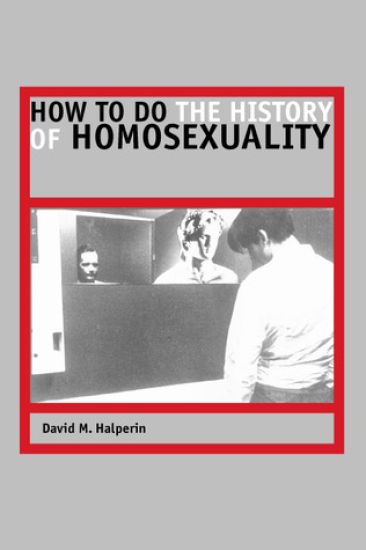
How to Do the History of Homosexuality

How to Do the History of Homosexuality

David M. Halperin

University of Chicago Press
2002
sidottu
David M. Halperin is one of the most eminent thinkers in the world of gay and critical studies. In this new work, he revisits and refines the argument he set forth in "One Hundred Years of Homosexuality": the idea that both hetero- and homosexuality are not biologically determined but, instead, socially constructed. "How to Do the History of Homosexuality" builds on this seminal argument, answers its critics and makes greater allowances for continuities in the history of sexuality. Above all, Halperin offers a vigorous defence of the historicist approach, one that sets a premium on the description of other societies in all their specificity and otherness instead of forcing them to fit our own conceptions of what sexuality is or ought to be. Dealing with male homosexuality and lesbianism, this volume first recovers the radical design of Michel Foucault's approach to the history of sexuality. Halperin salvages Foucault's teachings from common misapprehensions and misreadings, then makes them newly available to historians as an impetus for innovation in the field. Exploring the broader significance of historicizing desire, Halperin also questions the tendency among scholars to reduce sexuality to a mere series of classifications. Then, in a theoretical tour de force, he offers an altogether new strategy for approcaching the history of sexuality - one that rehabilitates the constructionist approach by readily acknowledging continuities across space and time. Controversial, impassioned and revelatory, "How to Do the History of Homosexuality" is a book that could only have been written by David M. Halperin. It should prove to be valuable reading for anyone interested in the history of sexuality.
How to Do the History of Homosexuality

How to Do the History of Homosexuality

David M. Halperin

University of Chicago Press
2004
nidottu
In this long-awaited book, David M. Halperin revisits and refines the argument he put forward in his classic One Hundred Years of Homosexuality: that hetero- and homosexuality are not biologically constituted but are, instead, historically and culturally produced. How to Do the History of Homosexuality expands on this view, updates it, answers its critics, and makes greater allowance for continuities in the history of sexuality. Above all, Halperin offers a vigorous defense of the historicist approach to the construction of sexuality, an approach that sets a premium on the description of other societies in all their irreducible specificity and does not force them to fit our own conceptions of what sexuality is or ought to be.Dealing both with male homosexuality and with lesbianism, this study imparts to the history of sexuality a renewed sense of adventure and daring. It recovers the radical design of Michel Foucault's epochal work, salvaging Foucault's insights from common misapprehensions and making them newly available to historians, so that they can once again provide a powerful impetus for innovation in the field. Far from having exhausted Foucault's revolutionary ideas, Halperin maintains that we have yet to come to terms with their startling implications. Exploring the broader significance of historicizing desire, Halperin questions the tendency among scholars to reduce the history of sexuality to a mere history of sexual classifications instead of a history of human subjectivity itself. Finally, in a theoretical tour de force, Halperin offers an altogether new strategy for approaching the history of homosexuality—one that can accommodate both ruptures and continuities, both identity and difference in sexual experiences across time and space.Impassioned but judicious, controversial but deeply informed, How to Do the History of Homosexuality is a book rich in suggestive propositions as well as eye-opening details. It will prove to be essential reading for anyone interested in the history of sexuality.
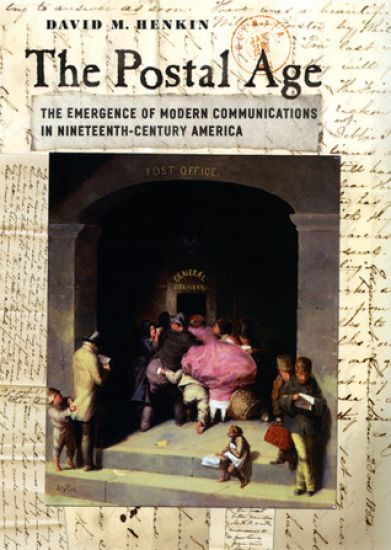
The Postal Age

The Postal Age

David M. Henkin

University of Chicago Press
2007
nidottu
Many of us may not realize that what we now call snail mail was once just as revolutionary as e-mail and text messages are today. As David M. Henkin argues in "The Postal Age", a burgeoning postal network initiated major cultural shifts during the nineteenth century, laying the foundation for the interconnectedness that now defines our ever-evolving world of telecommunications. This fascinating history traces these shifts from their beginnings in the mid-1800s, when cheaper postage, mass literacy, and migration combined to make the long-established postal service a more integral and viable part of everyday life. Through original correspondence and public discussions from the time period, Henkin tells the story of how Americans adjusted to a new world of long-distance correspondence, crowded post offices, junk mail, valentines, and dead letters. Throughout, "The Postal Age" paints a vibrant picture of a society where possibilities proliferated for personal and impersonal communications.
Deforestation in the Postwar Philippines

Deforestation in the Postwar Philippines

David M. Kummer

University of Chicago Press
1992
nidottu
The only quantitative deforestation study to focus on one country, this case analysis of the Philippines since 1946 yields more concrete data than previous cross-national studies. David Kummer's close examination of the interactions among political, economic, and cultural factors and their environmental consequences sheds light on similar situations in other countries.
People of Plenty

People of Plenty

David M. Potter

University of Chicago Press
1958
nidottu
America has long been famous as a land of plenty, but we seldom realize how much the American people are a people of plenty—a people whose distinctive character has been shaped by economic abundance. In this important book, David M. Potter breaks new ground both in the study of this phenomenon and in his approach to the question of national character. He brings a fresh historical perspective to bear on the vital work done in this field by anthropologists, social psychologists, and psychoanalysts. "The rejection of hindsight, with the insistence on trying to see events from the point of view of the participants, was a governing theme with Potter. . . . This sounds like a truism. Watching him apply it however, is a revelation."—Walter Clemons, Newsweek "The best short book on national character I have seen . . . broadly based, closely reasoned, and lucidly written."—Karl W. Deutsch, Yale Review
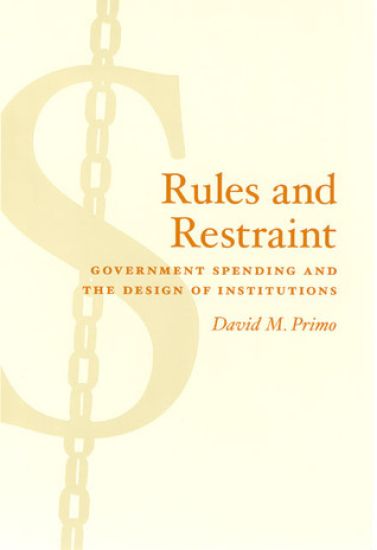
Rules and Restraint

Rules and Restraint

David M. Primo

University of Chicago Press
2007
sidottu
Government spending has increased dramatically in the United States since World War II despite the many rules intended to rein in the insatiable appetite for tax revenue most politicians seem to share. Drawing on examples from the federal and state governments, "Rules and Restraint" explains in lucid, nontechnical prose why these budget rules tend to fail, and proposes original alternatives for imposing much-needed fiscal discipline on our legislators. One reason budget rules are ineffective, David M. Primo shows, is that politicians often create and preserve loopholes to protect programs that benefit their constituents. Another reason is that legislators must enforce their own provisions, an arrangement that is seriously compromised by their unwillingness to abide by rules that demand short-term sacrifices for the sake of long-term gain. Convinced that budget rules enacted through such a flawed legislative process are unlikely to work, Primo ultimately calls for a careful debate over the advantages and drawbacks of a constitutional convention initiated by the states - a radical step that would bypass Congress to create a path toward change.
Rules and Restraint

Rules and Restraint

David M. Primo

University of Chicago Press
2007
nidottu
Government spending has increased dramatically in the United States since World War II despite the many rules intended to rein in the insatiable appetite for tax revenue most politicians seem to share. Drawing on examples from the federal and state governments, "Rules and Restraint" explains in lucid, nontechnical prose why these budget rules tend to fail, and proposes original alternatives for imposing much-needed fiscal discipline on our legislators. One reason budget rules are ineffective, David M. Primo shows, is that politicians often create and preserve loopholes to protect programs that benefit their constituents. Another reason is that legislators must enforce their own provisions, an arrangement that is seriously compromised by their unwillingness to abide by rules that demand short-term sacrifices for the sake of long-term gain. Convinced that budget rules enacted through such a flawed legislative process are unlikely to work, Primo ultimately calls for a careful debate over the advantages and drawbacks of a constitutional convention initiated by the states - a radical step that would bypass Congress to create a path toward change.
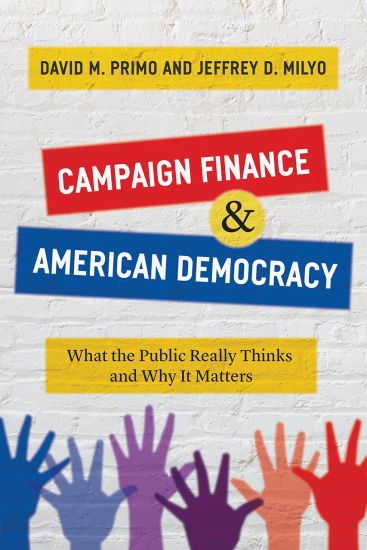
Campaign Finance and American Democracy

Campaign Finance and American Democracy

David M Primo; Jeffrey D Milyo

University of Chicago Press
2020
sidottu
In recent decades, and particularly since the Supreme court's controversial Citizens United decision, lawmakers and other elites have told Americans that stricter campaign finance laws are needed to improve people's faith in the election process, increase trust in the government, and counter cynicism toward politics more generally. But as David M. Primo and Jeffrey D. Milyo argue, politicians and the public alike would do well to reconsider the conventional wisdom in light of surprising empirical evidence to the contrary. Primo and Milyo probe original survey data to determine Americans' sentiments on the role of money in politics, what drives these sentiments, and why they matter. What Primo and Milyo find is that while many individuals support the idea of reform, they are also skeptical that reform would successfully limit corruption, which Americans believe stains almost every fiber of the political system. Moreover, support for campaign finance restrictions is deeply divided along party lines, reflecting the polarization of our times. Ultimately, Primo and Milyo contend, American attitudes toward money in politics reflect larger fears about the health of American democracy, fears that will not be allayed by campaign finance reform.
Campaign Finance and American Democracy

Campaign Finance and American Democracy

David M Primo; Jeffrey D Milyo

University of Chicago Press
2020
pokkari
In recent decades, and particularly since the Supreme court's controversial Citizens United decision, lawmakers and other elites have told Americans that stricter campaign finance laws are needed to improve people's faith in the election process, increase trust in the government, and counter cynicism toward politics more generally. But as David M. Primo and Jeffrey D. Milyo argue, politicians and the public alike would do well to reconsider the conventional wisdom in light of surprising empirical evidence to the contrary. Primo and Milyo probe original survey data to determine Americans' sentiments on the role of money in politics, what drives these sentiments, and why they matter. What Primo and Milyo find is that while many individuals support the idea of reform, they are also skeptical that reform would successfully limit corruption, which Americans believe stains almost every fiber of the political system. Moreover, support for campaign finance restrictions is deeply divided along party lines, reflecting the polarization of our times. Ultimately, Primo and Milyo contend, American attitudes toward money in politics reflect larger fears about the health of American democracy, fears that will not be allayed by campaign finance reform.